


Why Culturally Informed Therapy Changes Everything

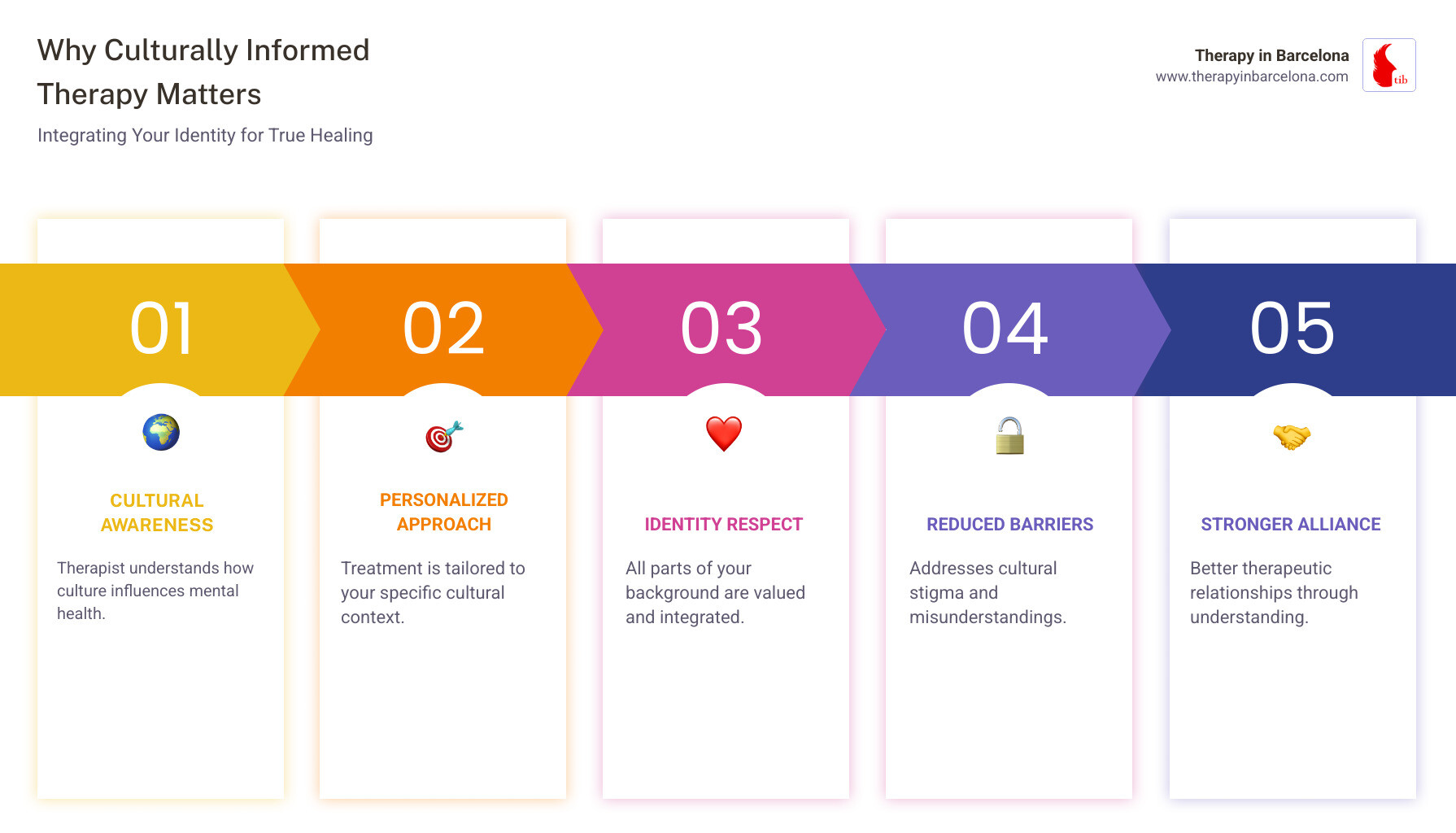
Culturally informed therapy is an approach that recognises and integrates your cultural background, beliefs, and values into the healing process. Unlike one-size-fits-all methods, it acknowledges that your identity shapes how you experience mental health, express distress, and seek help. This means your treatment is personalised, your background is respected, and cultural misunderstandings are reduced, leading to a stronger therapeutic relationship where you feel truly understood.
Have you ever felt like something was lost in translation during therapy? Not just language, but a deeper understanding of who you are? You’re not alone. Many internationals across Spain—from Barcelona to the growing hubs in Valencia and Málaga—find that standard therapy misses crucial parts of their story.
When cultural factors are ignored, the consequences are significant. Research shows many clients—especially those from racially and ethnically diverse backgrounds—leave therapy early, sometimes after the first session. The difference is profound when therapy gets it right. As one client shared, “It makes a huge difference when there’s someone that understands and doesn’t demonise your household.” This is what culturally informed therapy offers—a space where your whole identity is integrated into your healing journey.
For internationals in Spain, this approach is vital. Whether you’re dealing with homesickness in Madrid, identity confusion as a Third Culture Kid, or the dynamics of an intercultural relationship, therapy that honours your cultural background can be the key to genuine healing.
Why Your Culture Matters in Therapy
Your cultural background shapes everything—how you express emotions, what family means to you, and whether asking for help feels natural or shameful. In therapy, these differences are central to your healing.
Culturally informed therapy recognises that your unique experiences deserve a personalised approach. It understands that a collectivist mindset approaches relationships differently than an individualist one, or that mental health stigma varies dramatically across cultures. What looks like “resistance” to one therapist might be cultural wisdom to another.
Research shows how deeply culture influences our relationship with mental health. In some communities, emotional struggles are expressed through physical symptoms. Other cultures emphasise “saving face,” where seeking therapy might feel like bringing shame to your family. These are not obstacles, but important details that skilled therapists need to understand.
When cultural context is ignored, research shows early drop-out is common, particularly among racially and ethnically diverse clients. But when you feel understood—when your therapist gets the cultural meaning behind your words—the therapeutic alliance strengthens, making real change possible.
The Impact of Cultural Disconnect in Therapy
When therapy misses your cultural mark, it can feel like a conversation in two different languages. The consequences run deeper than frustration—they can cause harm.
Consider the story of ‘Sofia,’ a fictional character created to represent common client experiences. She shared that a previous therapist’s lack of cultural understanding made her feel “like an experiment,” spending half her sessions explaining cultural context instead of healing. This is not an isolated story; it is a symptom of a system that often treats cultural differences as complications.
For internationals in Barcelona, Valencia, or Madrid, this disconnect hits hard. You’re already adjusting to new social norms and a new way of life. Entering a therapeutic space where your values are not acknowledged can reinforce a sense of not belonging. Research backs this up: when rapport fails due to cultural misunderstanding, clients often stop seeking help altogether.
The Power of Being Understood
When therapy gets it right, you feel genuinely seen in all your complexity. When your therapist demonstrates cultural humility—asking thoughtful questions rather than making assumptions—you can stop explaining yourself and start healing. Research consistently shows that cultural attunement leads to stronger therapeutic alliances and better outcomes.
This might look like a therapist understanding why family obligations take priority over individual goals, or recognising that your communication style isn’t “indirect” but respectful and nuanced. As one client put it: “It makes a huge difference when there’s someone that understands and doesn’t demonise your household.” This understanding creates the safety you need to explore difficult emotions and build the life you want. When you don’t have to defend your cultural identity, you can focus on growing within it.
For expats across Spain—whether in Málaga, Valencia, or Barcelona—this kind of understanding isn’t a luxury. It’s essential for therapy that works.
The Core Pillars of a Culturally Informed Approach

What makes therapy culturally informed isn’t a checklist, but a therapist’s ongoing commitment to learning and seeing each client as a whole person. It’s a journey of continuous finding, self-reflection, and humble learning. This approach recognises that your culture isn’t just background noise—it’s the soundtrack that shapes your experience of emotions, relationships, and healing.
Cultural Awareness and Humility
Cultural awareness is understanding how your worldview is influenced by your background. But it must be paired with cultural humility. Cultural humility means a therapist approaches you with genuine curiosity, acknowledging their own biases and committing to learning from you, not imposing their own cultural lens.
Leigh Matthews, the Australian psychologist who founded Therapy in Barcelona, experienced this when she moved to Spain in 2011. She needed support to manage an intercultural marriage and life in a foreign country but couldn’t find an English-speaking therapist who understood the expat experience. This inspired her to create the service she needed.
A therapist practising cultural humility doesn’t assume they know your culture—they ask, listen, and learn. They understand the power dynamics in therapy and work to balance them.
Developing Cross-Cultural Skills for Effective Culturally Informed Therapy
Effective cross-cultural communication goes beyond language. At Therapy in Barcelona, our multilingual team offers support in English, and some of our therapists also speak German, French, Spanish, Afrikaans, Portuguese, Swedish, Austrian-German and Swiss-German, as expressing yourself in your preferred language is crucial. True skill, however, involves reading between the lines.
This means active listening to context and what’s unsaid, and understanding that non-verbal communication like eye contact and personal space varies across cultures. A skilled therapist adapts their communication style to what feels respectful for you, whether you prefer an ‘expert’ or a more collaborative approach. Respecting differences means acknowledging your perspective is valid, even if it differs from Western psychological frameworks.
Integrating Cultural Understanding into Your Sessions
In the therapy room, this starts with respectful curiosity. A culturally informed therapist asks open-ended questions to understand your unique worldview, not to categorise you. They might use frameworks like LEARN (Listen, Explain, Acknowledge, Recommend, Negotiate) to create a treatment plan that aligns with your values.
Most importantly, you remain the expert on your own experience. The therapist’s role is to help you explore how your cultural identity intersects with your mental health journey. They work with you to set goals that make sense within your value system, creating a path to wellbeing that is uniquely yours.
What Culturally Informed Therapy Looks Like in Practice
When therapy is truly culturally informed, your story is understood within the rich context of your heritage and journey. Imagine Sofia, a 35-year-old architect from Argentina living in Málaga. She is a fictional character, but her struggle to balance her collectivist family values with Spain’s individualistic work culture is a common story. When she feels guilty for missing a family event for a work deadline, a culturally informed therapist sees more than a work-life balance issue. They understand the tension between personalismo—the Latin American value on relationships—and European professional norms. This understanding shapes the entire therapeutic process.
A Deeper Understanding: The Culturally Informed Assessment

A culturally informed assessment goes beyond standard intake questions. Your therapist will explore:
- Your cultural identities and their importance to you.
- Your family’s beliefs about mental health and seeking help.
- Your immigration story, as moving to Barcelona for love or Valencia for work shapes your worldview.
- Your support networks, both here and back home.
- Experiences of discrimination or prejudice.
- Spiritual beliefs and traditional healing practices as resources.
This thorough approach might involve tools like a “culturagram”—a visual map of your cultural influences—to identify both challenges and hidden strengths.
Tailoring the Journey: Personalised Treatment
Once your therapist understands your cultural landscape, they adapt their approach. This isn’t just adding cultural decorations to a standard method; it’s fundamentally reshaping treatments to resonate with your values. Meta-analyses show that culturally adapted treatments are linked to better outcomes for many clients of colour.
Your treatment plan might include connecting with community resources, like other internationals in Barcelona. Your therapist may use storytelling and metaphors that feel familiar. Language also matters. At Therapy in Barcelona, we offer sessions in multiple languages because sometimes you need your mother tongue to access deep emotions. Traditional practices, like mindfulness or faith, are integrated respectfully as resources.
The Role of Family, Community, and Identity
Your mental health journey doesn’t happen in isolation. For many internationals, family obligations stretch across oceans. A culturally informed therapist understands that individual goals must often consider family harmony.
Community support looks different when you’re building it from scratch. Your therapist helps you manage this reality without shame. Identity shifts are especially complex for Third Culture Kids or those with bicultural identities, who may experience “cultural homelessness.” At Therapy in Barcelona, many of our therapists are expats who understand this in-between space, a topic we explore in our resources on cultural adjustment and embracing biculturalism.
Immigration history and discrimination are not just background details; they are often central to current struggles, whether it’s microaggressions in Valencia’s job market or feeling invisible in Madrid. Culturally informed therapy addresses these experiences head-on, allowing you to be whole without choosing between your heritage and your growth.
Finding Your Fit: How to Choose the Right Therapy
When you’re looking for mental health support in Spain, the choices can be overwhelming. Whether you’re in Barcelona, Valencia, or Málaga, understanding your options helps you find the right culturally informed therapy.
Comparing Your Options
Let’s break down what’s available to you as an international in Spain:
- Public system clinicians are affordable but often have long wait times. You’ll likely be assigned a therapist rather than choosing one, and cultural specialisation can be inconsistent. Your data also becomes part of public health records.
- Large online platforms offer quick access, often using algorithms for matching. While convenient, an algorithm can’t understand the nuances of the expat experience or the need for deep cultural sensitivity.
- Specialised private practices like Therapy in Barcelona offer a different approach. While it is a private-pay service, you get a personalised matching process with a real person who understands that the right therapeutic fit is about more than just availability.
Why a Specialised Practice Can Make a Difference
At Therapy in Barcelona, we know that culturally informed therapy is essential for healing. Our founder, Leigh Matthews—an Australian Psychologist who moved to Barcelona in 2011 built this practice because she couldn’t find the culturally sensitive support she needed as an immigrant.
Our personalised matching is key. We take time to understand your situation and cultural background to match you with a therapist who is genuinely equipped to understand your world. We are a group practice of highly qualified, psychology-trained therapists who collaborate and share knowledge to provide consistent, high-quality care. Many of our therapists are internationals themselves and speak English, and some also speak German, French, Spanish, Afrikaans, Portuguese, Swedish, Austrian-German and Swiss-German. They’ve walked similar paths and understand the challenges of building a life far from home.
We work with adults, couples, teens, and families, adapting evidence-based approaches like CBT, ACT, and Internal Family Systems to fit your story. We prioritise quality over volume, ensuring you get the right support. Strict confidentiality is non-negotiable; we don’t sell your data. We offer online therapy worldwide (including USA and Canada) and in-person sessions at our Barcelona office. Whether you’re in Madrid or Gran Canaria, we understand the complexities of international life in Spain.
Frequently Asked Questions about Culturally Informed Therapy
What if my therapist and I have different cultural backgrounds?
A therapist’s ability to provide culturally informed therapy doesn’t depend on sharing your exact background. What matters more is their commitment to cultural humility and genuine curiosity. A skilled therapist will listen, ask thoughtful questions, and adapt their approach to honour your experiences. That said, many clients find comfort with therapists who are also expats. At Therapy in Barcelona, many of our team members have this lived understanding.
How do I know if a therapist is culturally informed?
The best way is to ask directly. During an initial consultation, like our Free Discovery Call, you can ask about their experience with diverse or international clients. Listen for responses that show curiosity, not assumptions. A culturally informed therapist will also show this on their website and will ask about your background with genuine interest. At Therapy in Barcelona, this awareness is part of our intake process, where we pair you with someone who can connect with your experience. You can learn more in our Guide for Therapists on Cultural Sensitivity.
Can this type of therapy help with issues like homesickness or identity confusion?
Absolutely. Culturally informed therapy is ideal for these challenges. When you’re living between worlds as an expat in Valencia or a Third Culture Kid, these feelings are deeply connected to your cultural journey. This approach helps you process the unique grief of leaving home and develop coping strategies that make sense in your cultural context. It honours the complexity of living between cultures rather than pushing you to simply adapt. We explore these topics in our articles on expat challenges and biculturalism. For couples, we also offer specialised support, which you can learn about in our guide to Cross-Cultural Couples Therapy.
Your Whole Story Matters

There is something profound about bringing your whole self into a room—your heritage, struggles, and dreams. Culturally informed therapy creates this space, where no part of your identity needs to be left at the door. Your immigration story, family expectations, and the way you move between cultures all matter.
When therapy honours your complete identity, healing becomes possible in new ways. You are not just addressing symptoms; you are integrating all the complex parts of who you are. As one client shared, “I was very anxious to start therapy… I was met with no judgement in the way I thought about life and myself, which was very reassuring and calming.”
This is what we have built our practice around since 2011. Our international team of expat therapists understands what it means to build a life in a new country. We offer personalised matching because the right fit makes all the difference. Whether you connect with us through online therapy worldwide or meet us in-person in Barcelona, we are here to support you.
Your story didn’t begin when you moved to Spain—it has been unfolding across countries and cultures. Every chapter deserves to be heard.
If you’d like support in bringing all parts of yourself into focus, book a Free Discovery Call. You don’t have to face expat life alone.
