


Couples counseling topics are pivotal for nurturing healthy and lasting relationships. Understanding these topics can save not only your relationship but also improve personal growth.
Here’s a look at some key couples counselling topics to consider:
- Communication Patterns: Learn to break unhealthy habits.
- Emotional Intimacy: Address emotional wounds and trust issues.
- Trust and Infidelity: Rebuild trust with sincerity and openness.
- Intimacy and Sexual Compatibility: Align sexual needs and boundaries.
- Conflict Resolution: Develop skills to manage disagreements peacefully.
In the heart of our busy lives, where the chaos of everyday challenges meets the quiet need for understanding, couples often find themselves at a crossroads. This is where targeted therapy can work wonders. Couples therapy is not just about mending broken bridges; it’s about understanding communication skills, tackling relationship challenges, and reaping the therapy benefits that come from working together as a team. Relationships can be complex, but through guided therapy sessions, many couples have found the tools needed to thrive together.
I’m Leigh Matthews, an Australian Psychologist and Founder of Therapy in Barcelona. Our team’s couples therapy experience in addressing couples counselling topics has equipped us with insights that help partners steer the peaks and valleys of their relationships. As we dive deeper into these topics, you’ll find practical advice and strategies custom to meet the unique challenges of expat life.

Overview of Couples Counselling Topics Infographic – couples counselling topics infographic
Communication Patterns
Effective communication is the backbone of any healthy relationship. Yet, many couples struggle with negative communication patterns that can lead to misunderstandings and conflict. In couples counselling, addressing these patterns is often the first step towards healing and growth.
Negative Communication
Negative communication can manifest in various ways, such as sarcasm, criticism, or even silence. These habits can create a cycle of negativity that is hard to break. For instance, a couple may find themselves constantly arguing over trivial matters, not realising that their communication style is the root cause. In therapy, identifying these patterns is crucial. A therapist can help couples recognise these habits and work on replacing them with healthier alternatives.
Active Listening
Active listening is a skill that can transform how couples interact. It involves fully concentrating, understanding, and responding to your partner. In therapy, couples often practice active listening by paraphrasing what their partner has said to ensure understanding. This technique not only reduces misunderstandings but also shows your partner that you value their thoughts and feelings.
Example: Instead of interrupting, try saying, “What I hear you saying is…”
Empathy Building
Building empathy is another essential component of improving communication. When partners understand each other’s feelings and perspectives, they can respond with compassion rather than defensiveness. Therapy sessions often include exercises to foster empathy, such as role-playing or discussing past experiences that shaped each partner’s views.
Quote: “It is fairly easy for partners to take offense to a partner’s share of intimate feelings and emotions. A couple’s therapist can help in generating a setting that allows for both partners to openly share with validation, support, and encouragement.”

Empathy Building in Couples Therapy – couples counselling topics infographic
By focusing on these couples counselling topics, partners can develop a more harmonious and understanding relationship. As communication improves, so does the overall quality of the relationship, paving the way for deeper emotional intimacy and trust.
Next, let’s explore how emotional intimacy and vulnerability can further strengthen your bond.
Emotional Intimacy
Emotional intimacy is the heart of a strong relationship. It’s about feeling safe to express your innermost thoughts and emotions. But many couples find this challenging. Let’s break down the key elements: emotional needs, vulnerability, and trust issues.
Emotional Needs
Everyone has emotional needs. These can include feeling loved, valued, and understood. When these needs aren’t met, it can lead to dissatisfaction and disconnection. In couples counselling, therapists help partners identify and communicate their emotional needs. This understanding is crucial for building a supportive and nurturing relationship.
Example: One partner might need words of affirmation, while the other may need quality time.
Vulnerability
Being vulnerable means opening up and sharing your true self. It’s about letting your guard down and being honest about your feelings and fears. This can be difficult, especially if past experiences have taught you to protect yourself. In therapy, couples learn to accept vulnerability as a strength rather than a weakness. This openness can lead to a deeper connection and mutual understanding.
Quote: “If you don’t know what you feel in important areas of your relationship, it is like playing high stakes poker when you see only half your cards.”
Trust Issues
Trust is the foundation of emotional intimacy. Without it, relationships can become strained and insecure. Trust issues often arise from past betrayals or unmet expectations. In counselling, couples work on rebuilding trust by being honest and consistent. This process involves acknowledging past hurts and committing to new, healthier patterns.
Case Study: A couple struggling with trust after infidelity might focus on transparency and setting clear boundaries to rebuild their relationship.
By addressing these couples counselling topics, partners can foster a deeper emotional connection. As they learn to meet each other’s emotional needs, accept vulnerability, and rebuild trust, they lay the groundwork for a fulfilling and resilient relationship.
Next, we’ll dig into how trust and strategies for dealing with infidelity can further improve your relationship.
Trust and Infidelity
Trust is the cornerstone of any healthy relationship. Once broken, it can be challenging to rebuild. However, with dedication and the right strategies, couples can restore trust and even strengthen their bond. Let’s explore how.
Rebuilding Trust
Rebuilding trust is a gradual process. It requires patience, transparency, and a genuine desire to move forward. In couples counselling, therapists guide partners through this journey. They create a safe space for open discussions, allowing both parties to express their feelings and fears.
Key Steps to Rebuild Trust:
- Acknowledge Past Mistakes: Both partners must recognize and accept what went wrong. This involves taking responsibility for actions and understanding their impact.
- Consistent Honesty: Being truthful about feelings, actions, and intentions is crucial. Consistency in words and actions helps rebuild confidence.
- Patience and Understanding: Healing takes time. Both partners need to be patient with each other and understanding of their emotional responses.
Infidelity Strategies
Infidelity can be a significant breach of trust, but it doesn’t have to be the end of a relationship. With the right strategies, couples can work through the pain and find a path to healing.
Effective Strategies Include:
- Understanding the Root Cause: Dig into why the infidelity occurred. Was there a lack of communication, unmet needs, or personal issues? Understanding the ‘why’ can prevent future issues.
- Setting Boundaries: Establish clear boundaries about what is acceptable moving forward. This helps prevent misunderstandings and fosters a sense of security.
- Encouraging Forgiveness: While forgiveness is personal and can’t be forced, creating an environment where it can naturally occur is essential. This involves empathy, compassion, and a willingness to let go of past grievances.
Honesty
Honesty is not just about being truthful; it’s about being transparent and open. In the context of rebuilding trust, honesty means sharing thoughts and feelings without fear of judgment. It involves being upfront about intentions and actions, and it requires both partners to communicate openly.
Quote: “Trust is the foundational building block of a flourishing relationship. You create trust by doing what you say you will do.”
In conclusion, addressing trust issues and infidelity in couples counselling can pave the way for a stronger, more resilient relationship. By focusing on honesty, understanding the root causes, and setting boundaries, couples can rebuild trust and move forward with renewed commitment.
Next, we’ll explore how intimacy and sexual compatibility play a role in maintaining a healthy relationship.
Intimacy and Sexual Compatibility
Intimacy goes beyond physical connection. It’s about understanding each other’s sexual desires, respecting boundaries, and nurturing an emotional connection. Let’s explore how these elements contribute to a fulfilling relationship.
Sexual Desires
Every person has unique sexual desires and preferences. Openly discussing these with your partner is vital. It helps ensure both partners feel satisfied and understood. When couples share their desires, it fosters a deeper connection and reduces misunderstandings.
- Open Conversations: Encourage regular and honest discussions about what each partner enjoys. This can help in finding new ways to improve your relationship.
- Exploration: Be open to trying new things. Exploring each other’s fantasies can reignite passion and bring excitement back into your relationship.
Boundaries
Setting boundaries is crucial for a healthy sexual relationship. It ensures that both partners feel respected and safe.
- Clear Communication: Discuss what is comfortable and what is not. This can prevent any unwanted situations and ensure both partners are on the same page.
- Respect and Understanding: Always respect your partner’s boundaries and be understanding if they express discomfort. This builds trust and strengthens the emotional bond.
Emotional Connection
Emotional connection is the glue that holds intimacy together. Without it, even the most passionate relationships can feel empty.
- Nurturing Emotional Intimacy: Spend quality time together without distractions. Simple acts like holding hands, cuddling, or just being present can deepen your emotional connection.
- Vulnerability: Being open about your feelings and fears can strengthen your bond. When both partners are vulnerable, it fosters a sense of closeness and trust.
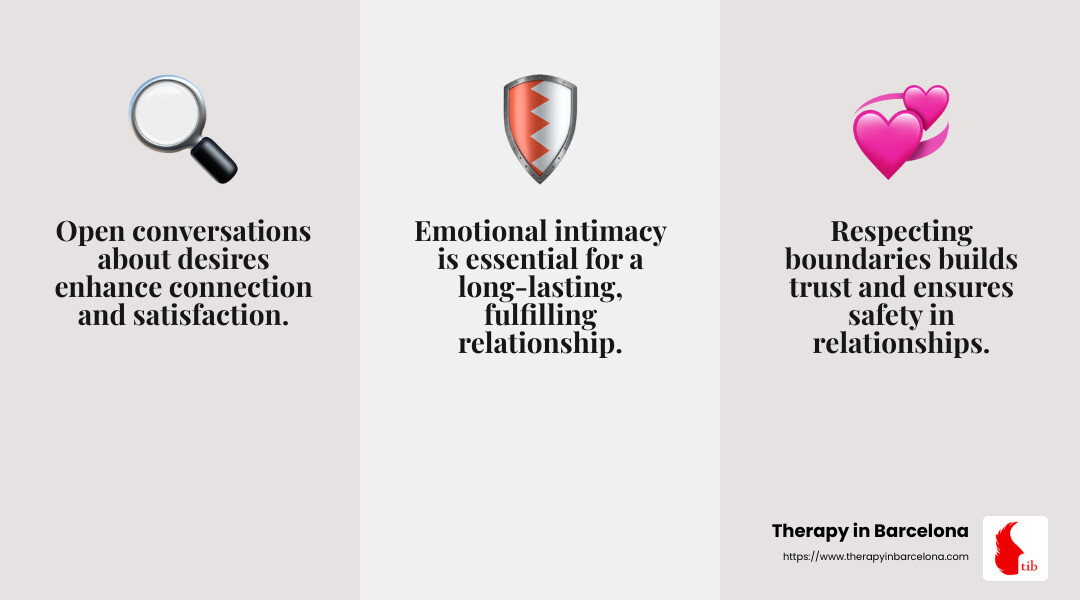
Emotional connection is key to a fulfilling relationship – couples counseling topics infographic
In couples counselling, addressing intimacy and sexual compatibility is essential for a thriving relationship. By understanding each other’s desires, setting clear boundaries, and nurturing emotional connections, couples can improve their intimacy and create a more fulfilling partnership.
Next, we’ll look into conflict resolution and how it impacts relationship dynamics.
Conflict Resolution
Every relationship faces conflicts. In couples counselling, understanding and addressing these conflicts is crucial for a healthy partnership. Let’s explore how recognizing conflict patterns, engaging in negotiation, and embracing compromise can transform your relationship.
Conflict Patterns
Recognizing patterns in conflicts can help prevent repeated arguments. Many couples fall into the same traps, leading to unresolved issues and frustration.
- Identify Triggers: Notice what commonly causes disagreements. Is it finances, household chores, or differing priorities? Knowing these triggers can help you avoid them or address them proactively.
- Reflect on Reactions: How do you respond during a conflict? Do you shut down, get defensive, or blame your partner? Understanding your reactions can help you manage them better.
Negotiation
Negotiation isn’t just for business deals. It’s a vital skill in relationships, helping partners find solutions that satisfy both parties.
- Open Dialogue: Encourage an open and honest discussion about the issue. Listen to your partner’s perspective without interrupting or jumping to conclusions.
- Find Common Ground: Look for areas where you both agree. This can be a starting point for finding a mutually acceptable solution.
Compromise
Compromise is about finding a middle ground. It doesn’t mean giving up your needs but finding a way to meet in the middle.
- Prioritise Needs: Understand what’s most important to each of you. Sometimes, giving a little can lead to a win-win situation.
- Be Willing to Adapt: Flexibility is key. Be open to adjusting your expectations and finding creative solutions that work for both partners.
Incorporating these strategies into your relationship can help you steer conflicts more effectively. By recognising conflict patterns, engaging in negotiation, and embracing compromise, you can create a more harmonious and understanding partnership.
Next, we’ll dig into how life transitions and stressors can impact your relationship and ways to cope together.
Life Transitions and Stressors
Life is full of changes. For couples, handling these transitions together can be challenging yet rewarding. Couples counseling topics often include career changes, relocation, and coping strategies to help steer these shifts. Let’s explore how these transitions can affect your relationship and ways to cope.
Career Changes
Changing jobs or careers can bring excitement and stress. It can affect your routine, finances, and even your relationship dynamics.
- Communicate Openly: Talk about how the career change might affect your time, responsibilities, and stress levels. Being open can prevent misunderstandings.
- Support Each Other: Offer encouragement and understanding. Celebrate successes and be there during tough times.
- Plan Together: Discuss how the change will impact your shared goals and finances. Adjust plans as needed to stay on track.
Relocation
Moving to a new place, especially to a different city or country, can be daunting. It involves leaving behind familiar surroundings and starting anew.
- Acknowledge Feelings: It’s normal to feel anxious or excited about the move. Talk about these emotions with your partner.
- Build a New Routine: Establish a new routine together to create a sense of stability. Explore your new environment and find activities you both enjoy.
- Stay Connected: Keep in touch with family and friends from your previous location. This can provide emotional support and a sense of continuity.
Coping Strategies
Life transitions can be stressful, but having strategies in place can help you manage them better.
- Practice Empathy: Understand that your partner might experience the transition differently. Be patient and supportive.
- Set Realistic Expectations: Transitions take time. Avoid putting pressure on yourselves to adjust immediately.
- Seek Support: Don’t hesitate to reach out for help. Counselling can provide guidance and a safe space to discuss your feelings.
Navigating life transitions together can strengthen your bond. By communicating openly, supporting each other, and having effective coping strategies, you can turn these challenges into opportunities for growth. Next, let’s explore the roles and responsibilities within a relationship and how to manage them effectively.
Roles and Responsibilities
In every relationship, roles and responsibilities play a crucial part in maintaining harmony. Managing household tasks, financial responsibilities, and decision-making can either bring couples closer or create tension if not handled well.
Household Tasks
Household chores are often a source of conflict. Who does what, and how often?
- Divide Tasks Fairly: Sit down together and list all the chores. Then, divide them based on your strengths, preferences, and availability. This can help prevent resentment.
- Be Flexible: Life is unpredictable. Be ready to adjust your roles if needed. If one partner is busier, the other might take on more tasks temporarily.
- Appreciate Each Other: A simple “thank you” goes a long way. Acknowledge each other’s efforts to keep the home running smoothly.
Financial Responsibilities
Money can be a sensitive topic, but tackle it head-on.
- Set a Budget: Work together to create a budget that covers all your expenses and savings goals. This sets a clear roadmap for financial success.
- Discuss Financial Goals: Talk about your short-term and long-term financial aspirations. Align your goals to avoid future conflicts.
- Regular Check-ins: Schedule regular meetings to review your finances. This helps keep both partners informed and engaged.
Decision-Making
Making decisions together strengthens your partnership. But it can also be challenging.
- Communicate Clearly: When making decisions, share your thoughts and listen to your partner’s perspective. This builds mutual respect and understanding.
- Seek Compromise: Not every decision will be a win-win. Be willing to compromise and find solutions that satisfy both partners.
- Respect Individual Expertise: If one partner is more knowledgeable in a certain area, trust their judgment. This can lead to better decision-making overall.
Balancing roles and responsibilities requires teamwork and communication. By dividing tasks fairly, managing finances together, and making joint decisions, couples can create a more harmonious and fulfilling partnership.
Next, let’s dig into how family dynamics can influence your relationship and ways to set healthy boundaries.
Family Dynamics
Family dynamics can have a big impact on a relationship. Understanding these influences is a key topic in couples counselling.
Family Influence
Our families shape who we are. They influence our beliefs, values, and how we handle relationships. Sometimes, these influences can cause tension between partners.
- Recognize Patterns: Look for recurring patterns in your relationship that might stem from your upbringing. Awareness is the first step to change.
- Open Discussions: Talk about your family backgrounds with each other. Sharing stories can build empathy and understanding.
- Support Each Other: Be supportive if your partner is struggling with family-related issues. A united front can strengthen your bond.
Cultural Differences
In multicultural relationships, cultural differences can add complexity but also richness to the partnership.
- Accept Diversity: Celebrate the differences between your cultures. It can be a chance to learn and grow together.
- Communicate Openly: Discuss cultural expectations and how they affect your relationship. This helps prevent misunderstandings.
- Find Common Ground: Identify shared values and traditions to create a unique culture for your relationship.
Boundary Setting
Setting boundaries with family members is crucial for a healthy relationship.
- Define Boundaries Together: Discuss and agree on what boundaries to set with each other’s families. This ensures you’re both on the same page.
- Be Consistent: Stick to the boundaries you establish. This shows respect for each other’s needs and strengthens your partnership.
- Handle Conflicts Calmly: If family members overstep, address the issue calmly and respectfully. This maintains harmony and reinforces your boundaries.
Understanding and managing family dynamics can lead to a more harmonious relationship. Next, let’s explore how financial management can affect your partnership and ways to handle financial stress together.
Financial Management
Money matters can be a major source of stress in relationships. In couples counselling, financial management is often a key topic.
Financial Stress
According to the American Psychological Association, 31% of couples find money to be a significant stressor. This stress can lead to arguments and strain the relationship.
- Open Conversations: Talk openly about money with your partner. Honesty is crucial to understanding each other’s financial concerns.
- Identify Stressors: Pinpoint what specifically about finances is causing stress. Is it debt, spending habits, or lack of savings? Knowing the root helps you tackle it effectively.
Budgeting
Creating a budget is a powerful tool to manage finances and reduce stress.
- Joint Budget: Develop a budget together. This ensures both partners are on the same page about income, expenses, and savings.
- Monthly Check-ins: Schedule regular meetings to review your budget. This keeps both of you accountable and allows for adjustments as needed.
- Prioritize Expenses: Decide together what expenses are most important. This helps align spending with your shared values.
Financial Goals
Setting financial goals gives direction and purpose to your budgeting efforts.
- Short and Long-term Goals: Discuss what you want to achieve financially, both in the near future and long-term. This could include paying off debt, saving for a house, or planning for retirement.
- Action Plan: Create a step-by-step plan to reach your financial goals. Break it down into manageable tasks to stay motivated.
- Celebrate Milestones: Acknowledge when you achieve financial milestones. Celebrating successes can strengthen your bond and keep you focused on future goals.
By addressing financial management in couples counselling, partners can learn to steer money issues together. This leads to a more harmonious and financially stable relationship.
Next, we will dig into the complexities of parenting and co-parenting, exploring how couples can align their parenting styles and make educational choices together.
Parenting and Co-Parenting
Parenting can be a rewarding yet challenging journey, especially when partners have different approaches. In couples counseling, topics like parenting styles, discipline, and educational choices are often explored to foster a supportive family environment.
Parenting Styles
Different parenting styles can lead to conflicts if not addressed. It’s crucial for partners to understand and respect each other’s approaches.
- Identify Your Styles: Are you more authoritative, permissive, or somewhere in between? Recognising your style helps in finding common ground.
- Discuss Differences: Openly discuss how your styles differ and why. This can prevent misunderstandings and foster cooperation.
- Find a Middle Ground: Work together to blend your styles into a unified approach. This ensures consistency for your children and strengthens your partnership.
Discipline
Discipline is a common area of contention. It’s important to agree on methods to maintain harmony.
- Set Clear Rules: Establish family rules and consequences together. This ensures both parents are on the same page and provides structure for the children.
- Be Consistent: Consistency in discipline is key. It helps children understand expectations and reduces confusion.
- Support Each Other: Back each other up when enforcing rules. This shows solidarity and reinforces your partnership as a united front.
Educational Choices
Education is a significant decision for parents. Aligning on educational choices helps avoid conflicts down the road.
- Discuss Priorities: What values do you want your child’s education to reflect? Discussing this helps in making informed decisions.
- Explore Options: Research different educational paths together, whether it’s public, private, or homeschooling. Understanding the pros and cons aids in making a choice that aligns with your values.
- Plan for the Future: Consider long-term educational goals. Planning ahead ensures you’re prepared for future decisions, like college or vocational training.
By addressing these couples counseling topics, partners can create a nurturing environment for their children. Aligning on parenting styles, discipline, and educational choices not only benefits the children but also strengthens the relationship.
Next, we will explore the importance of spending quality time together and how it can improve your relationship.
Quality Time
Spending quality time together is essential for nurturing a relationship. It strengthens emotional bonds and creates lasting memories. In couples counselling, topics like shared interests, hobbies, and leisure activities are often discussed to help partners connect on a deeper level.
Shared Interests
Finding common interests is a great way to spend time together. It helps couples bond over mutual passions and enjoy each other’s company.
- Explore New Activities: Try new things together, like hiking, cooking classes, or dance lessons. Exploring new activities can be exciting and invigorating.
- Refind Old Favorites: Revisit activities you both enjoyed in the past. This can rekindle fond memories and bring you closer.
- Make a List: Create a list of activities you both want to try. This ensures you always have options for spending quality time together.
Hobbies
Engaging in hobbies together can be a fun and fulfilling way to connect. It allows partners to share experiences and learn from each other.
- Share Your Hobbies: Introduce each other to your favorite hobbies. Whether it’s painting, gardening, or playing music, sharing can lead to new shared passions.
- Learn Together: Take up a new hobby as a couple. Learning something new together fosters teamwork and cooperation.
- Schedule Regular Time: Set aside regular time for hobbies. Consistency helps build a routine and makes quality time a priority.
Leisure Activities
Leisure activities provide a chance to relax and enjoy each other’s company without stress or pressure.
- Plan Date Nights: Regular date nights can be a simple yet effective way to maintain connection. Whether it’s a fancy dinner or a cozy movie night at home, the key is to focus on each other.
- Enjoy Spontaneity: Sometimes the best moments are unplanned. Be open to spontaneous trips and enjoy the thrill of the unexpected.
- Balance Individuality and Togetherness: While spending time together is important, it’s also crucial to balance it with individual pursuits. Respecting each other’s need for alone time can improve the time spent together.
By focusing on these couples counselling topics, partners can create a fulfilling and balanced relationship. Shared interests, hobbies, and leisure activities not only improve the quality of the relationship but also contribute to personal growth and shared happiness.
Next, we will dig into future plans and life goals, exploring how aligning aspirations can lead to a rewarding partnership.
Future Plans and Life Goals
Discussing future plans and life goals is a vital part of couples counseling. It helps partners align their visions for the future and work towards common aspirations.
Individual Aspirations
Each partner has unique dreams and ambitions. It’s important to recognise and support these individual aspirations.
- Identify Personal Goals: Take time to discuss what each person wants to achieve individually. This could be career ambitions, personal growth, or hobbies.
- Respect and Support: Encourage each other’s goals. Offer support and understanding as your partner pursues their dreams.
- Balance and Compromise: While individual goals are important, finding a balance with shared goals is key to a harmonious relationship.
Shared Goals
Creating shared goals helps couples build a unified vision for the future.
- Discuss Long-Term Plans: Talk about where you see yourselves in the future. This might include plans for a family, buying a home, or traveling.
- Set Achievable Milestones: Break down big goals into smaller, manageable steps. Celebrate each milestone as you reach it together.
- Regular Check-Ins: Schedule regular discussions to review your progress and make adjustments if needed. This ensures you stay on track and adapt to any changes.
Planning Together
Effective planning is crucial for achieving both individual and shared goals.
- Create a Vision Board: Visualise your future together with a vision board. Include images and words that represent your goals and aspirations.
- Develop a Plan: Work together to create a detailed plan for reaching your goals. This might involve financial planning, time management, or acquiring new skills.
- Stay Flexible: Life can be unpredictable. Be open to revisiting and revising your plans as circumstances change.
By focusing on these couples counseling topics, partners can ensure their futures align in a way that supports both individual and shared dreams. This collaborative approach fosters a strong, rewarding partnership that can weather life’s challenges.
Next, we’ll address frequently asked questions about couples counseling topics, providing insights into common concerns and challenges.
Frequently Asked Questions about Couples Counseling Topics
What do they talk about in couples counseling?
Couples counselling covers a wide range of topics, but communication problems are often at the forefront. Many couples struggle with negative communication patterns that lead to misunderstandings and unresolved conflicts. In therapy, partners learn about active listening and empathy to improve their interactions. By focusing on how they communicate, couples can build stronger connections and address issues more effectively.
What is the most common problem addressed in couples therapy?
Trust issues are among the most common challenges tackled in couples therapy. These can arise from past betrayals, infidelity, or even financial secrecy. Therapy provides a safe space for partners to explore these issues and work towards rebuilding trust. Alongside this, emotional intimacy is another frequent topic. Many couples find it difficult to express vulnerability and share their emotional needs, which can create distance in the relationship. Addressing these areas helps partners foster a deeper emotional connection.
How do you support each other in your personal and professional lives?
Supportive behavior is crucial for a healthy relationship. Couples counseling often focuses on how partners can better support each other in both personal and professional fields. This includes stress management techniques to help each other cope with life’s challenges. Trust plays a key role here; knowing that your partner has your back can significantly reduce stress and improve overall well-being. By learning to communicate supportively and manage stress together, couples can strengthen their bond and steer life’s ups and downs more effectively.
By addressing these couples counselling topics, partners can improve their relationship and work through common challenges. Whether it’s improving communication, rebuilding trust, or supporting each other’s goals, therapy offers tools and strategies that benefit both individuals and their partnership.
What’s next?
At Therapy in Barcelona, we understand that every couple is unique. That’s why we offer personalised therapist matching, ensuring you find a therapist who aligns with your specific goals and concerns. Our approach is not one-size-fits-all; it’s custom to meet the diverse needs of our clients, especially those navigating life as expats.
We pride ourselves on providing culturally sensitive support. Living in a new country brings its own set of challenges, from cultural differences to language barriers. Our couples therapy therapists are experienced in addressing these issues, helping you and your partner build a strong foundation in your relationship, no matter where you’re from.
Couples counseling is a journey of understanding and growth. It’s about learning to communicate better, rebuilding trust, and supporting each other through life’s challenges. By focusing on these key areas, we help couples create lasting change and a deeper connection.
If you’re ready to take the next step in strengthening your relationship, consider reaching out to us. Find how our couples counselling services can support you on this journey. Together, we can work towards a healthier, happier partnership.
More Articles You Might Like:
How Therapy in Barcelona Supports International Clients: English Therapy, CBT, and Couples Therapy Tailored for Internationals
The Strain of Moving Abroad on Relationships: Why Couples Therapy Can Be Your Lifeline
Couples Therapy – Common Topics in Couples Therapy
Couples Therapy: Navigating the Unique Challenges for Expat and Intercultural Couples
Couples Therapy: Strengthening Relationships Abroad – A Comprehensive Guide for Expats
