


Psychiatrist vs Psychotherapist: Understanding the Distinction for Expatriates
Navigating life in a new country can be thrilling yet challenging. For many expatriates dealing with cultural adjustment or loneliness, mental health support becomes essential. It’s crucial to understand the psychiatrist vs psychotherapist difference to choose the right help for your mental well-being. Here’s a quick breakdown:
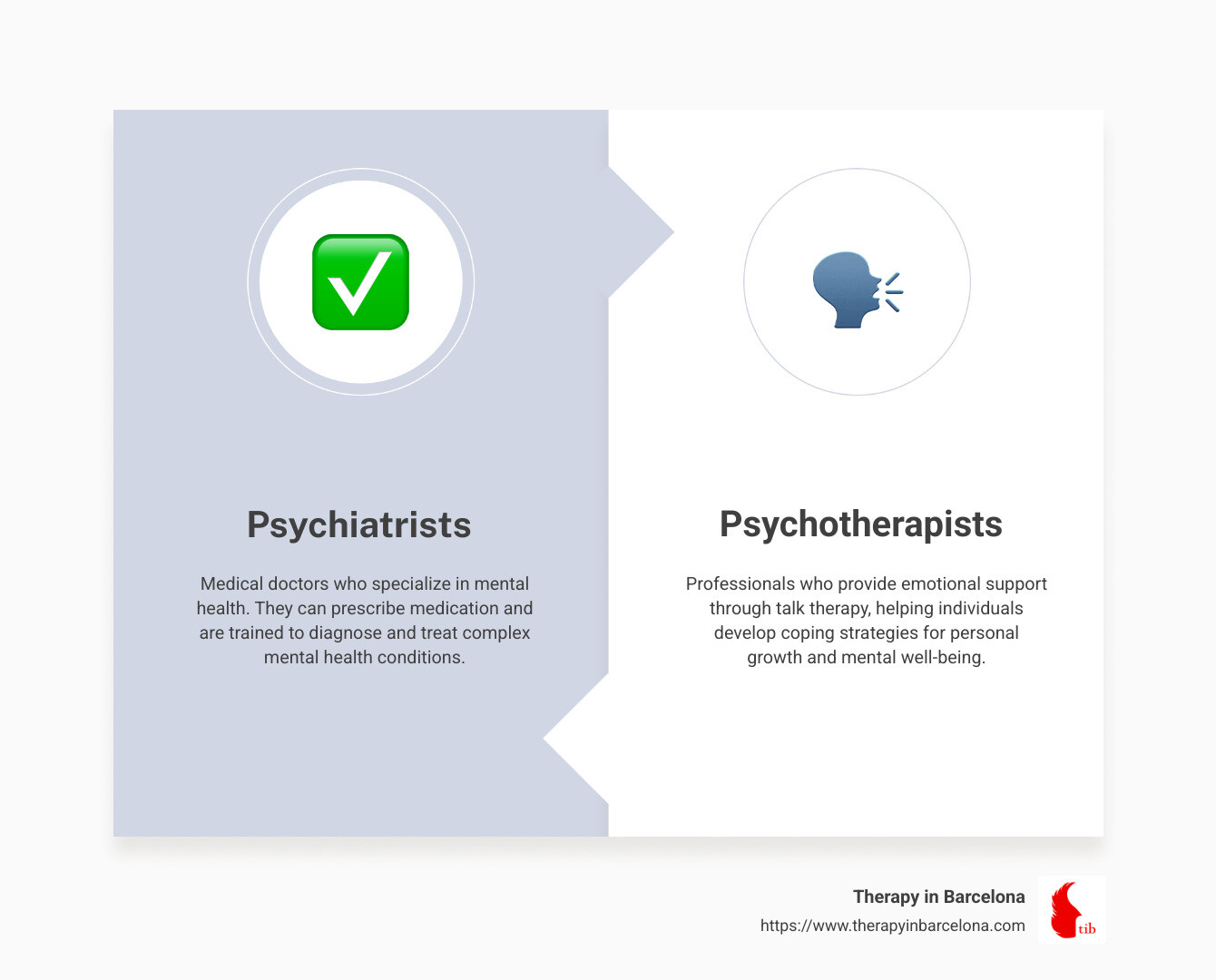
Psychiatrists: Medical doctors who can prescribe medication and treat complex mental health conditions. They diagnose and offer comprehensive care.
Psychotherapists: Professionals who provide emotional support and help you develop coping strategies through ‘talk therapy’.
Living abroad can bring stress, loneliness, and uncertainty. Mental health support that understands expatriate challenges can help you build stability, feel understood, and navigate change with more confidence. Culturally sensitive care is especially valuable when language, identity, and adjustment all affect your wellbeing.
For many expats, understanding whether to see a psychiatrist or psychotherapist can be the first step toward feeling better and building a healthier life in a new country.
Understanding the Roles
What is Psychology?
Psychology is the study of how people think, feel, and behave. It looks at mental processes, emotions, relationships, and development across life. Psychologists are not medical doctors, but they are trained to understand behaviour and support mental health using research-based approaches. Many work with people facing stress, anxiety, depression, or life challenges.
What is Psychiatry?
Psychiatry is the medical specialty that deals with mental health conditions. Psychiatrists are doctors with extra training in diagnosing and treating issues like depression, anxiety, and more complex disorders. Because they are medical professionals, they can prescribe medication and assess how physical and mental health may affect each other. Their work often focuses on diagnosis, medication management, and overall treatment planning.
What is Psychotherapy?
Psychotherapy, often referred to as ‘talk therapy,’ involves therapeutic conversations with individuals, groups, couples, or families. It aims to help people overcome stress, emotional issues, and relationship problems. A psychotherapist may use various approaches, such as cognitive behavioural therapy or psychoanalytic therapy, to support clients in understanding and managing their emotions and behaviours.
Unlike psychiatrists, psychotherapists may not prescribe medication. Instead, they focus on providing emotional support and developing coping strategies to improve mental well-being.

In the expat community, understanding these roles is vital for accessing the right type of mental health support. Whether it’s navigating the stress of cultural adjustment or managing feelings of loneliness, knowing the differences between these professionals can guide you to the most appropriate help.
Psychiatrist vs Psychotherapist: Key Differences
Navigating mental health support can be challenging, especially when deciding between a psychiatrist and psychotherapist. Both professionals offer valuable assistance, but their approaches and capabilities differ significantly.
Scope of Practice
Psychiatrists are medical doctors with a focus on mental health. They can diagnose mental illnesses and prescribe medication, offering a holistic view that considers both physical and psychological aspects. This approach is particularly beneficial for complex conditions that may require medication as part of the treatment plan.
Psychotherapists, however, provide emotional support through talk therapy. They work with individuals, couples, families, or groups to address emotional and psychological issues. While they don’t prescribe medication, their role is crucial in helping clients develop coping strategies and improve overall mental well-being.
Psychotherapists come from diverse backgrounds, including psychology and social work, and often have specialised training in various therapeutic approaches.
Treatment Methods
Medication vs Talk Therapy
A key difference between psychiatrists and psychotherapists is their treatment methods. Psychiatrists can prescribe medication, which is often necessary for conditions like severe depression, bipolar disorder, or schizophrenia. Medication can help manage symptoms effectively, but it might not be suitable for everyone due to potential side effects.
In contrast, psychotherapists use structured conversation and evidence-based therapy to help people understand their thoughts, emotions, and behaviour patterns. This approach is often helpful for anxiety, stress, relationship challenges, and other everyday mental health concerns. Research published in The Lancet Psychiatry shows that talk therapies, including Cognitive Behavioural Therapy (CBT), can be highly effective for some conditions and, in certain cases, may work as well as medication.
Cognitive Behavioural Therapy (CBT)
CBT is a popular form of psychotherapy that focuses on changing negative thought patterns. It is widely used for treating anxiety, depression, and other mental health issues. By helping clients replace negative thoughts with more positive ones, CBT can lead to significant improvements in mental health.
Psychoanalytic Therapy
Psychoanalytic therapy, another method used by psychotherapists, delves into unconscious processes and past experiences that influence current behaviour. This approach can be beneficial for individuals looking to understand deep-seated emotional issues and improve their self-awareness.
Understanding the differences in scope and methods between a psychiatrist and psychotherapist can help you make an informed decision about which professional to consult based on your specific needs. Whether it’s medication for a complex condition or talk therapy for emotional support, both roles are vital in the journey towards mental well-being.
Choosing Between a Psychiatrist and a Psychotherapist
Deciding whether to see a psychiatrist or a psychotherapist can be a pivotal step in your mental health journey. Let’s explore when each type of professional might be the best fit for you.
When to See a Psychiatrist
Medication Intervention
If you suspect that medication might be necessary, a psychiatrist is the go-to professional. They have the medical expertise to prescribe and manage medications, which can be crucial for treating severe mental health conditions. For example, individuals dealing with severe depression or bipolar disorder often find that medication helps stabilize their mood and symptoms.
Complex Mental Health Conditions
For those with complex mental health issues, such as schizophrenia or severe psychosis, a psychiatrist’s comprehensive approach is often required. They can assess both the physical and psychological aspects of these conditions, providing a well-rounded treatment plan.
While medication can be effective, it often comes with side effects. A psychiatrist will work with you to find the right balance, adjusting prescriptions as needed to minimize adverse effects.
When to See a Psychotherapist
Emotional Support and Coping Strategies
If your primary need is emotional support or developing coping strategies, a psychotherapist might be the better choice. They specialise in talk therapy, offering a safe space to explore your feelings and thoughts. This can be especially beneficial for dealing with stress, anxiety, or relationship issues.
Therapy Needs
Psychotherapists use a variety of therapeutic approaches, such as Cognitive Behavioural Therapy (CBT) or psychoanalytic therapy, to help clients understand and manage their emotions. Many people find that talk therapy empowers them to change negative thought patterns and improve their mental well-being.
For example, an expat who feels isolated and anxious after moving to a new country may benefit from working with a psychotherapist. Therapy can help them understand those feelings, build practical coping strategies, and adjust more confidently to life abroad.
In summary, the choice between a psychiatrist and a psychotherapist often depends on your symptoms and therapy needs. Whether it’s medication for complex conditions or talk therapy for emotional support, understanding your options can guide you toward the right professional.
Frequently Asked Questions about Psychiatrist vs Psychotherapist
Should I see a psychotherapist or psychiatrist?
The decision to see a psychotherapist or psychiatrist hinges on your specific mental health needs. If you’re experiencing emotional difficulties and are interested in talk therapy, a psychotherapist might be ideal. They provide a space to explore feelings and develop coping strategies through methods like Cognitive Behavioural Therapy (CBT).
However, if your situation requires medication, such as managing severe anxiety or depression, a psychiatrist is the professional to consult. They can prescribe and monitor medication, ensuring your treatment is comprehensive.
What is the difference between psychiatry and psychotherapy?
Psychiatry and psychotherapy differ mainly in their approaches and capabilities. Psychiatry is a medical field where psychiatrists diagnose mental health conditions and prescribe medication. They handle complex cases that might require a medical intervention.
Psychotherapy, on the other hand, focuses on talk therapy. Psychotherapists help clients process emotions and develop coping mechanisms. They don’t prescribe medication but instead use therapeutic techniques to aid mental well-being.
These two fields often overlap; many conditions benefit from a combination of both medication and talk therapy. For example, depression might be managed with antidepressants prescribed by a psychiatrist, alongside sessions with a psychotherapist to address underlying issues.
Can a psychotherapist be a psychiatrist?
Yes, a psychotherapist can also be a psychiatrist, but not all psychotherapists have a medical degree. Psychiatrists are medical doctors who can prescribe medication and may also offer psychotherapy. They undergo specialist training in both psychiatry and psychotherapy, allowing them to provide a dual approach to treatment.
However, many psychotherapists come from different backgrounds, such as psychology or social work, and specialize solely in talk therapy. It’s important to understand these distinctions to choose the right professional for your needs.
In summary, whether you need medication, talk therapy, or both, understanding the roles of psychiatrists and psychotherapists can help you make an informed decision.
Conclusion
Navigating mental health support in a new country can be daunting, but Therapy in Barcelona is here to make the journey easier. With a focus on personalised therapist matching, they ensure that each client finds the right fit for their unique needs. This custom approach is particularly beneficial for expats, who face distinct challenges when adapting to life abroad.
Therapy in Barcelona‘s commitment to providing culturally sensitive support sets them apart. Their team of multilingual therapists understands the complexities of expat life, from cultural adjustment to language barriers. This empathy and expertise create a supportive environment where internationals can feel understood and valued.
Whether you’re seeking help for emotional support or require medication management, Therapy in Barcelona offers a comprehensive range of services. Their dedication to matching clients with the most suitable therapist fosters effective therapeutic relationships, ultimately enhancing mental well-being.
By choosing Therapy in Barcelona, you’re not just finding a therapist; you’re joining a community that understands and supports your journey. For more information on their services and to start your healing journey, book a free discovery call.
