


The Truth About Marriage Counseling: Does It Really Work?
When relationships hit rough patches, many couples wonder: can marriage counselling work for us? The short answer is yes – and the research backs this up. Studies consistently show that marriage counseling helps approximately 70% of couples who try it. That’s an impressive success rate for any therapeutic intervention!
But what makes the difference between couples who thrive after counseling and those who don’t? The research points to several key factors that significantly boost your chances of success:
Both partners need to be motivated to make changes and actively participate in the process. When one person is dragging their feet, progress becomes much more challenging.
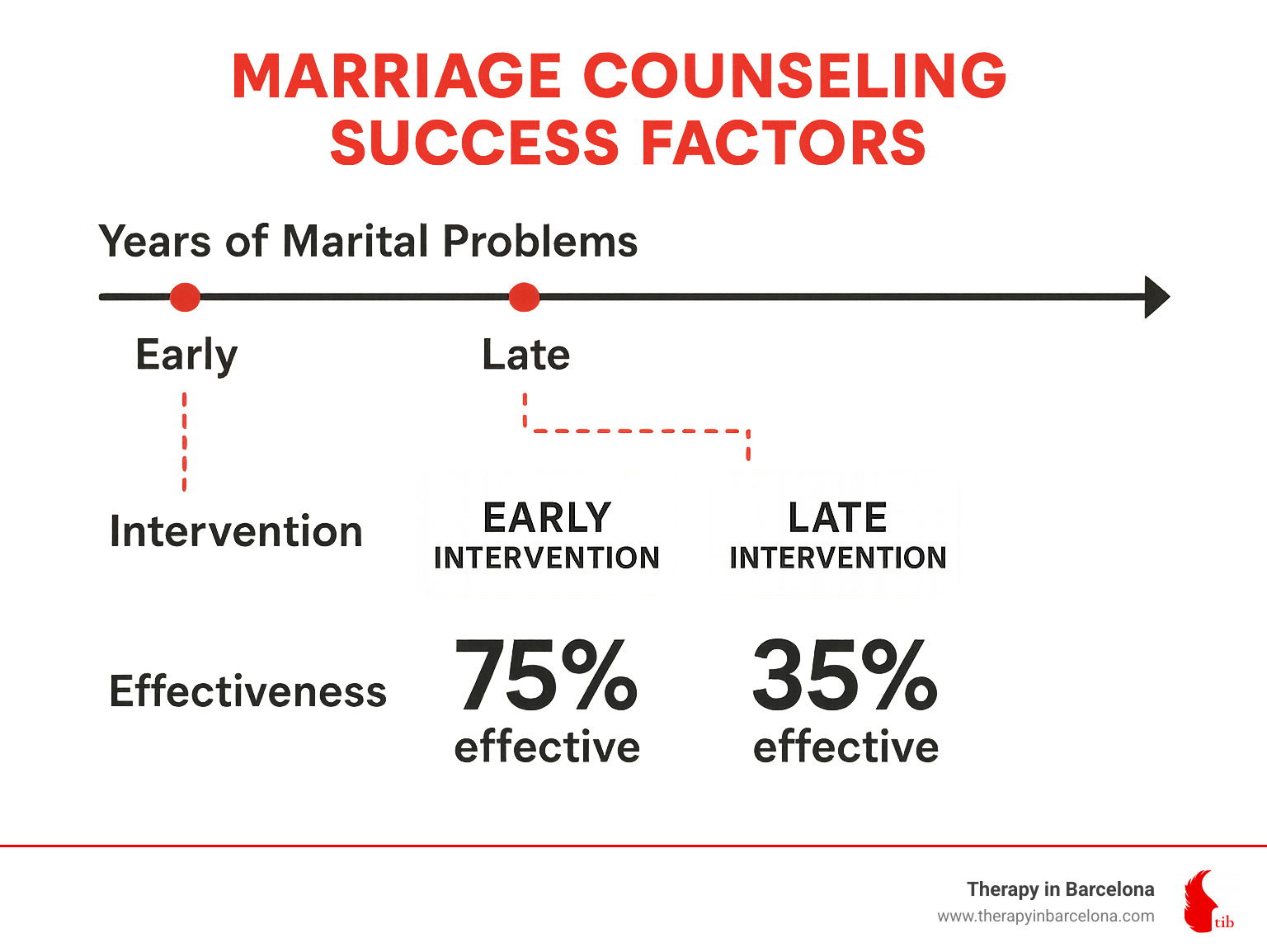
Seeking help early rather than waiting until problems are deeply entrenched makes a tremendous difference. Unfortunately, relationship researcher Dr. John Gottman found that most couples wait an average of six years of unhappiness before reaching out for professional support. By then, negative patterns have often become deeply rooted habits.
Working with a therapist who specializes in couples therapy is critical. Marriage counseling requires specific skills and approaches that differ from individual therapy. Therapy in Barcelona offer several highly qualified and experienced couples therapists who can also offer bilingual or trilingual support, depending on the languages you speak.
Practicing new skills between sessions helps cement what you’re learning. The couples who diligently complete their “homework” see the most significant improvements.
As therapist Terry Gaspard wisely notes, “Marriage counselling is hard work and there are no guarantees. But you are wise to invest the time to find out if your marriage can be improved.”
For international and expat couples living in Barcelona, relationship challenges often come with added layers of complexity. Cultural differences, language barriers, and the stress of living abroad can amplify tensions in even the strongest partnerships. These unique pressures require specialized understanding and support.
Whether you’re struggling with communication breakdowns, rebuilding trust after infidelity, or simply feeling disconnected, couples therapy offers a structured path forward. The process works by providing a neutral space with a trained professional who can help you identify unhelpful patterns and develop new ways of connecting.
The investment in professional help often yields benefits beyond just saving your relationship. According to the American Association for Marriage and Family Therapy, 90% of couples report improved emotional well-being after completing therapy, and nearly two-thirds experience better physical health as well.
What Is Marriage Counseling and How Does It Work?
Ever wondered what actually happens in a marriage counselling session? Imagine having a dedicated space where you and your partner can talk openly with someone who isn’t taking sides, but rather helping you understand each other better.
Marriage counselling (also called couples therapy) creates this safe haven where you can work through conflicts with professional guidance. Unlike individual therapy, marriage counselling treats your relationship as the “client,” focusing on how you interact as a pair.
“Couples therapy provides tools for communicating and asking for what you need,” explains therapist Tracy Ross. “A lot of couples tell me that it is the only hour they have during the week where they’re focused on each other, with no distractions.”
For expat couples in Barcelona, relationship challenges often come with extra layers of complexity. Cultural differences, language barriers, and the stress of building a life abroad can put additional strain on even the strongest partnerships. That’s why finding a therapist who truly understands cross-cultural dynamics can make all the difference in whether can marriage counselling work for your unique situation.
The Nuts-and-Bolts Process
When you begin marriage counselling, you’ll typically move through several key phases:
First comes the assessment stage, where your therapist gathers information about your relationship history and current challenges. This helps them understand your unique dynamics and patterns.
Next, you’ll work together on goal-setting, establishing clear objectives for what you hope to achieve. Your therapist will then introduce custom interventions – specific techniques and exercises designed for your particular needs.
Between sessions, you’ll likely have homework assignments that help reinforce new skills and insights. These might include communication exercises or mindfulness practices that strengthen your connection.
Throughout the process, regular progress reviews help measure improvement and adjust the approach when needed.
Most couples attend between 10-25 sessions, with research showing about 65.6% complete their therapy within 20 sessions. You’ll typically start with weekly meetings, gradually tapering to bi-weekly or monthly as you make progress.
Formats & Modalities
Marriage counselling comes in several formats to fit different needs and situations:
In-person sessions provide the traditional face-to-face experience in the therapist’s office, allowing for direct personal connection.
Online therapy via secure video platforms works wonderfully for busy schedules or when partners live in different locations – particularly helpful for international couples.
Intensive retreats offer concentrated therapy over several days, which can be ideal for couples in crisis or those with limited time.
Group therapy brings multiple couples together, providing valuable perspective and community support.
At Therapy in Barcelona, we offer both in-person sessions at our Eixample office and online therapy for internationals worldwide (except the USA and Canada).
Different therapeutic approaches may be used depending on what works best for your relationship:
Emotionally Focused Therapy (EFT) helps strengthen emotional bonds and understand attachment patterns that affect how you connect.
Cognitive Behavioral Therapy (CBT) addresses unhelpful thought patterns that might be creating roadblocks in your relationship.
Behavioral Couples Therapy (BCT) focuses on changing specific behaviors that affect relationship satisfaction.
The Gottman Method builds on Dr. John Gottman’s extensive research, emphasizing friendship, conflict management, and creating shared meaning in your relationship.
Imago Relationship Therapy which is form of relationship and couples therapy that focuses on transforming conflict into healing and growth through relational connection.
Each approach offers unique tools to help answer the question: can marriage counselling work for your specific relationship challenges? The right approach, combined with commitment from both partners, creates the foundation for meaningful change and renewed connection.
Can Marriage Counselling Work? Statistics & Realities
If you’re wondering “can marriage counselling work?” – the evidence is reassuringly strong. Research consistently shows that couples therapy is one of the most effective forms of psychological intervention available today.
The Journal of Marital and Family Therapy reports that marriage counselling has approximately a 70% success rate. This means that for most couples who commit to the process, meaningful improvement is the likely outcome. Even more encouraging, the American Association for Marriage and Family Therapy finds that 90% of couples who complete therapy report significantly improved emotional well-being.
For couples working with therapists trained in Emotionally Focused Therapy (EFT), the numbers are even more impressive – studies show 70-75% of distressed couples recover completely, with 90% showing substantial improvement overall. Perhaps most telling is that 98% of partners rate their therapy experience as good or excellent.
“Simply put, marriage counselling works!” as one prominent relationship center notes. “Your progress in repairing and rejuvenating your relationship is almost guaranteed if you put in the effort.”
Can marriage counselling work after infidelity?
Infidelity creates one of the deepest wounds a relationship can experience, but can marriage counselling work in these painful circumstances? The answer is a heartening yes.
Studies of couples using Emotionally Focused Therapy show that many relationships can rebuild trust after an affair within 8-12 sessions. The healing journey typically involves several key phases:
- Managing the initial emotional crisis and raw feelings
- Understanding the context and contributing factors to the affair
- Rebuilding trust through consistent transparency and reliability
- Developing a path toward forgiveness (which doesn’t mean forgetting)
- Creating a stronger, more resilient relationship moving forward
As therapist Amy McManus wisely points out, “What’s important is that partners build a shared, agreed-upon definition of fidelity within their own relationship.”
For therapy to succeed after infidelity, two conditions are essential: both partners must know about the affair, and both must genuinely want to repair the relationship. If one partner remains actively involved in an affair, meaningful progress is unlikely until that relationship ends.
Can marriage counselling work for intercultural couples?
Intercultural couples face unique challenges that often respond exceptionally well to specialized counselling. For expat couples in Barcelona, these challenges frequently include:
Different communication styles rooted in cultural backgrounds. What seems direct and honest to one partner might feel rude or confrontational to the other.
Mismatched expectations about gender roles, family involvement, or child-rearing approaches. These differences can create ongoing tension when not addressed openly.
Language barriers that lead to misunderstandings, even between fluent speakers. Nuance and emotional expression can be especially difficult in a non-native language.
Stress from navigating immigration, career changes, and social integration in a new country. These external pressures can strain even the strongest relationships.
Homesickness and cultural adjustment affecting relationship dynamics. When one partner feels more at home than the other, imbalances can develop.
At Therapy in Barcelona, our therapists bring both professional training and some have personal experience with cross-cultural relationships (and raising third culture kids). This unique perspective helps couples bridge cultural gaps while strengthening their emotional connection. In addition, each therapist is multilingual, frequently enabling an easier flow of communication when they speak both partners’ languages.
As our founder Leigh Matthews, an Australian psychologist who moved to Barcelona in 2011, understands firsthand: “Intercultural relationships can be incredibly rewarding but also complex. Having a therapist who understands both the psychological aspects of relationships and the lived experience of navigating cultural differences can make all the difference.”
Factors That Influence Outcomes (Success or Failure)
When you’re wondering “can marriage counselling work” for your relationship, it’s important to understand that results vary based on several key factors. While the statistics are promising, your specific situation will determine how effective therapy will be for you.
Mutual Motivation
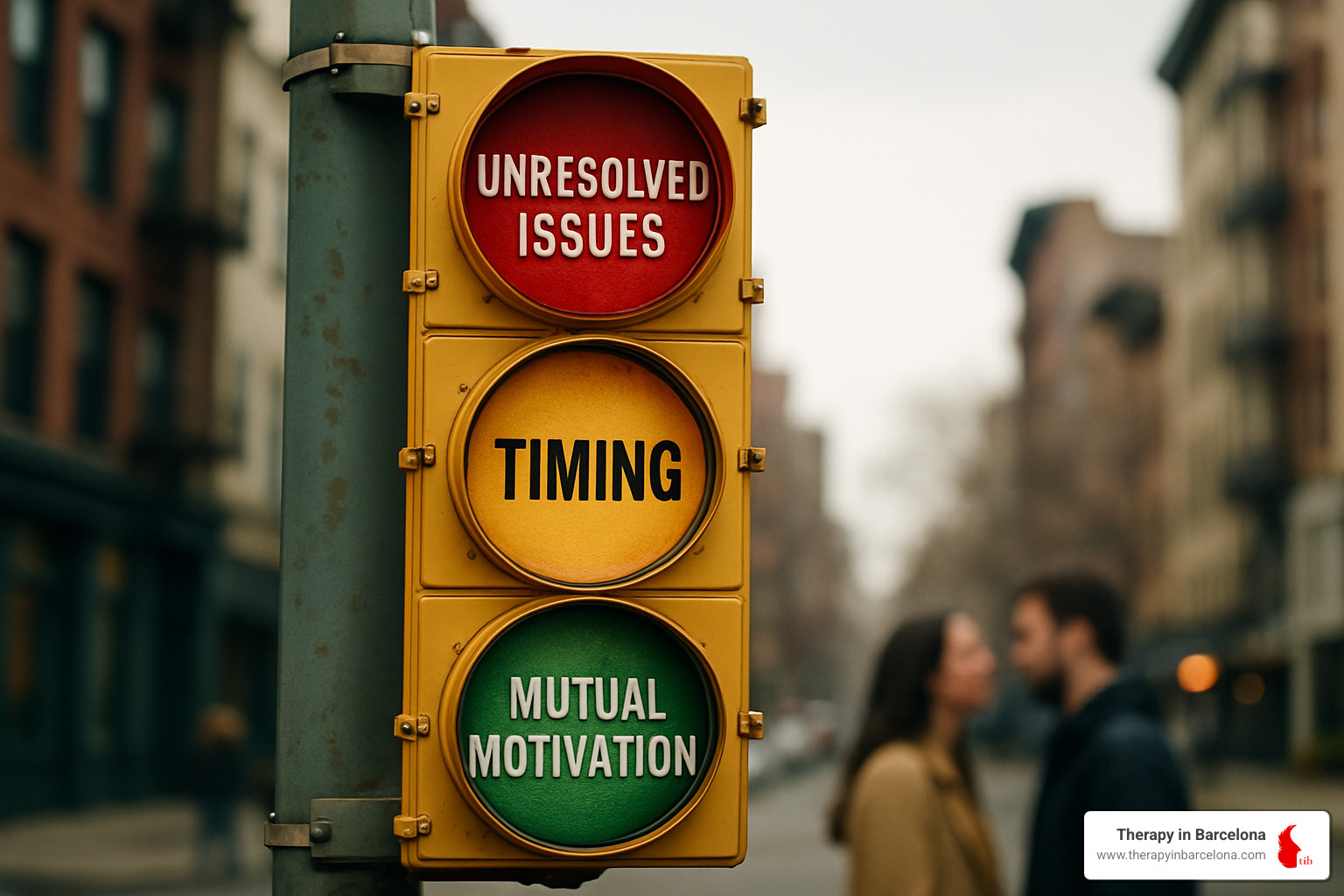
The truth is simple: when both partners genuinely want to improve their relationship, success rates soar. It’s not about showing up to tick a box or prove you “tried everything” before separating.
“If you go to couples therapy so you can say you ‘tried everything’ but aren’t truly there to try, it’s a set up for failure,” notes relationship expert Risa Ganel.
At Therapy in Barcelona, we often see the best results when both partners are willing to examine their own contributions to problems rather than focusing solely on changing their partner’s behavior.
Timing
Six-year delay statistic mentioned earlier? It’s absolutely crucial. Seeking help when problems first appear means working with fresher wounds rather than deeply entrenched patterns of resentment.
“Timing is everything when it comes to marriage counseling,” emphasizes therapist Terry Gaspard. Many expat couples face additional stressors when moving to Barcelona—new jobs, language barriers, cultural adjustments—that can accelerate relationship strain. Getting help early can prevent these challenges from becoming overwhelming.
Therapist Expertise
Finding the right therapist makes all the difference. A professional specifically trained in couples therapy—not just general counseling—brings specialized skills to manage conflict and guide productive conversations.
Dr. Kathy A. McMahon aptly notes that “True couples therapists are called ‘ninjas'” because of their ability to quickly de-escalate conflict and keep sessions productive even when emotions run high.
Not all therapists who claim to be couples therapists have trained in couples therapy so be sure to ask about the couples therapy therapist’s experience and training.
The Nature of Your Issues
Some relationship challenges respond better to therapy than others:
Communication problems, parenting differences, and intimacy issues typically see quick improvement with proper guidance. Trust issues and emotional distance take longer but remain very treatable. When addiction, untreated mental health conditions, or ongoing affairs are involved, progress often requires specialized approaches, individual therapy for partners and may take more time.
The Role of Therapist Expertise
Your therapist’s qualifications significantly impact your outcomes. At Therapy in Barcelona, we carefully match couples with therapists who have the right expertise for their specific situation.
A skilled couples therapist brings specialized training in relationship dynamics, experience with your specific issues (whether that’s infidelity, cultural differences, or communication breakdowns), and the ability to connect with both partners so neither feels the therapist is “taking sides.”
For expat couples in Barcelona, finding a therapist who understands the unique pressures of international relationships is invaluable. Our therapists bring both professional expertise and personal understanding of navigating cultural differences and the stress of building a life abroad.
Common Reasons Counselling Fails
When marriage counselling doesn’t work, these factors are typically involved:
One partner has already emotionally “checked out” and is merely going through the motions. Sometimes people use therapy to ease their guilt about wanting to leave or to show others they “tried everything.”
An undisclosed affair that hasn’t been revealed to the therapist or partner undermines the foundation of honesty needed for therapy to work.
Severe, untreated mental health issues often need to be addressed individually before couple work can progress effectively.
Domestic violence or abuse requires specialized treatment approaches before couples work can be considered safe.
Working with a therapist without specific training in couples therapy can lead to well-intentioned but ineffective interventions.
Waiting too long to seek help allows resentment to build to levels that can be difficult to repair.
As one of our therapists shared, “I never tell couples they’re not going to make it—the only way I would was if there was a physical threat.” Even in challenging cases, a skilled therapist can help couples either strengthen their relationship or part ways with greater understanding and less bitterness.
At Therapy in Barcelona, we believe in being transparent about when couples therapy might not be the right approach. We’ll help you determine if individual therapy might be more appropriate first, or if specialized services are needed before couples work can be effective.
Timing & Warning Signs: When to Book That First Session
Knowing when to reach out for help can make all the difference in your relationship journey. Like catching a small leak before it floods your home, addressing relationship issues early prevents deeper damage down the road.
Red Flags You Shouldn’t Ignore
You might wonder if what you’re experiencing warrants professional help. Trust your gut feeling. If something feels consistently off in your relationship, it probably is.
Frequent arguments that go nowhere are particularly telling. When you find yourselves having the same fight over and over with no resolution, it’s a sign your communication tools need upgrading. Similarly, emotional withdrawal – that feeling of living as roommates rather than lovers – can slowly erode your connection if left unaddressed.
Trust issues don’t heal on their own. Whether from broken promises or more serious breaches like infidelity, rebuilding trust requires skilled guidance. The same goes for a noticeable decline in physical intimacy, which often signals deeper emotional disconnects.
When you find yourselves growing apart with fewer shared interests, or facing constant financial conflicts, these tensions can create permanent rifts without intervention. Parenting disagreements that position you as opponents rather than teammates also benefit tremendously from a neutral third party’s perspective.
Major life transitions – like relocating to Barcelona as an expat – create unique stressors that can shake even solid relationships. If you’re contemplating separation but aren’t entirely sure, counseling offers clarity about whether the relationship can be saved.
For international couples in Barcelona, additional warning signs might include one partner thriving in Spanish culture while the other struggles to adapt, disagreements about your future abroad, or tension over maintaining family connections across continents.
Why Early Help Matters
Here’s a statistic worth repeating: couples typically wait an average of six years of unhappiness before seeking professional help. This delay dramatically reduces the chances of successful therapy.
“The more entrenched the problems, the longer it takes to resolve them,” explain relationship experts Linda and Charlie Bloom. “In some cases, irreparable damage can occur.”
Early intervention gives you several advantages. Negative patterns haven’t yet become your default mode. Resentment hasn’t accumulated to toxic levels. You both still care enough to make changes. And practically speaking, issues can often be resolved in fewer sessions when caught early.
Think of marriage counselling as relationship maintenance rather than emergency repair. Just as you wouldn’t wait for your car to completely break down before taking it to a mechanic, don’t wait until your relationship is on life support before seeking help.
At Therapy in Barcelona, we understand the unique challenges facing international couples. Our therapists bring both professional expertise and personal experience with cross-cultural relationships, offering support for couples that’s culturally sensitive and custom to your specific situation.
Making Marriage Counseling Work for You
Once you’ve decided to pursue couples counseling, there are several strategies that can truly improve your chances of success. Think of these as your relationship toolkit – practical approaches that help maximize the benefits of your therapy journey.
Set Clear Goals
Before your first session, take some time with your partner to discuss what you’re hoping to achieve. Having specific objectives helps focus your therapy and gives you concrete ways to measure progress.
“Just the simple act of scheduling time to work on your relationship together can have a huge effect on a couple,” shared one of our clients at Therapy in Barcelona.
Your goals for couples therapy might include improving communication during disagreements, rebuilding trust after a difficult period, reigniting emotional or physical intimacy, learning to parent as a team, or navigating a major life transition together. Being clear about what you want helps both you and your couples therapist work more effectively.
Active Participation
The most successful couples in therapy are those who fully engage in the process. This means being honest and vulnerable during your couples therapy sessions, even when it feels uncomfortable. It also means listening openly to your partner’s perspective, even when it differs from your own.
The focus should be on changing your own behaviors rather than trying to “fix” your partner. Complete any homework assignments your therapist suggests, and make a commitment to apply the tools and insights from your sessions in your daily interactions.
For expat couples, this might include practicing new communication techniques in both your native languages, or setting aside time to discuss cultural differences in a structured, supportive way.
Practice New Skills Between Sessions
The real change in marriage counseling happens between appointments. Couples who actively practice their new skills daily see dramatically better results than those who only engage during the therapy hour.
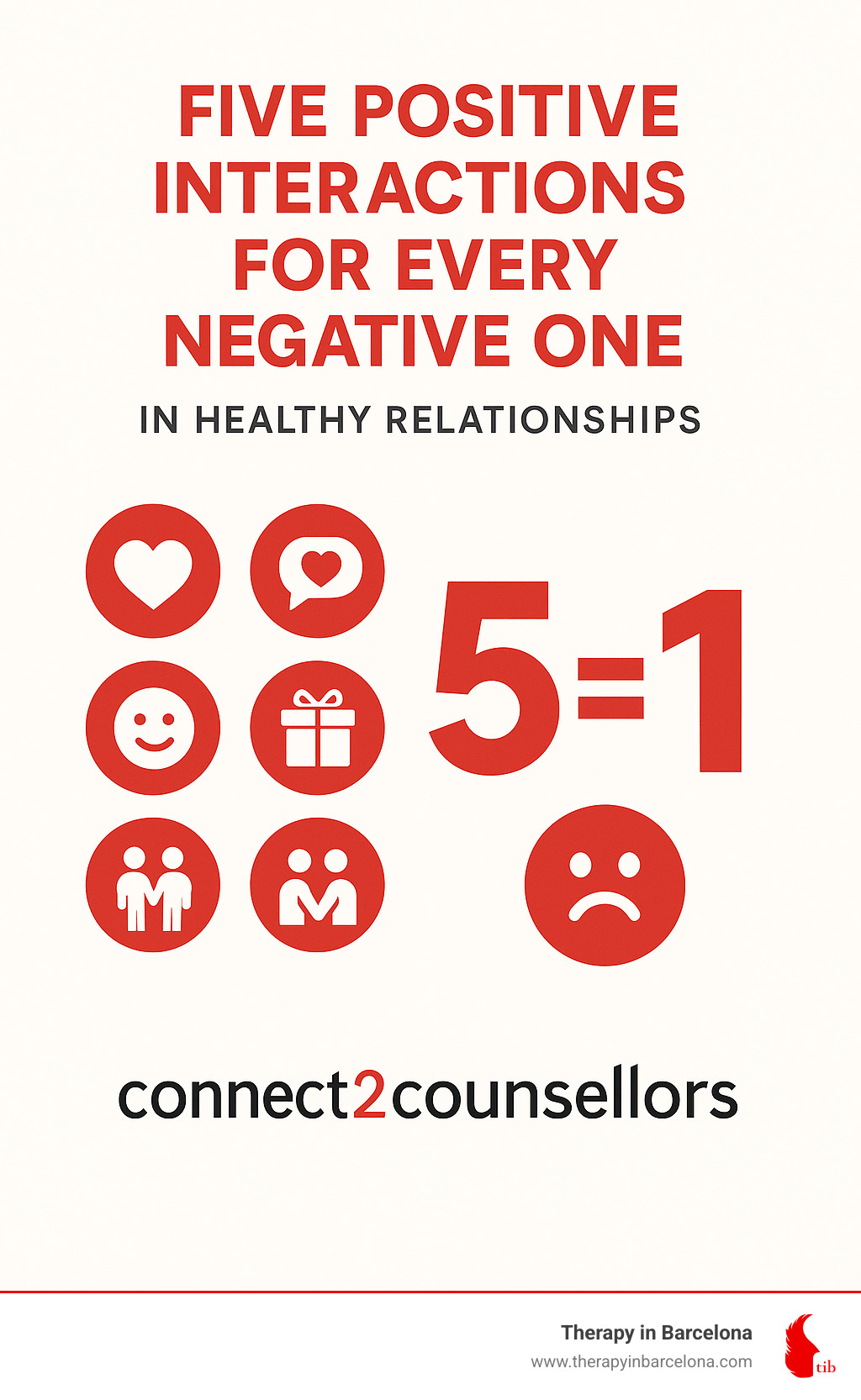
Dr. Gottman’s research highlights the importance of maintaining a five-to-one ratio of positive to negative interactions. This means creating five positive moments (like compliments, expressions of gratitude, or physical affection) for every negative interaction (criticism, complaint).
Other powerful between-session practices include:
Daily check-ins – Set aside 10-15 minutes of uninterrupted conversation time each day where you simply connect without distractions.
Appreciation rituals – Make a habit of sharing what you value about each other regularly.
“Time-outs” during heated arguments – Learn to recognize when a discussion is becoming too intense and agree to pause before things escalate.
“Turning toward” your partner’s bids for connection – Notice when your partner reaches out for attention, affection, or support, and respond positively.
As one Therapy in Barcelona client shared:
“Me and my partner manage to stop a loop of being angry between each other due to bad communication. Our therapist made the right questions to both of us and moderated our conversations, ending up in active listening and more understanding in our relationship.”
Choosing the Right Marriage Counsellor
Finding the right therapist is perhaps the most crucial factor in whether can marriage counselling work for you. It’s worth taking time to find someone both partners feel comfortable with.
Look for a therapist with specialized training in couples therapy (such as certifications in EFT, Gottman Method, Imago Relationship Therapy or other couples approaches). For international couples, cultural sensitivity and understanding of expat challenges is particularly important.
Consider language compatibility as well – at Therapy in Barcelona, we offer therapy in multiple languages to ensure you can express yourself fully. And don’t underestimate the importance of personal fit – both partners should feel understood and respected by the therapist.
At Therapy in Barcelona, we take matching seriously. Rather than simply assigning the next available therapist, we gather detailed information about your needs and preferences to ensure the best possible fit.
One client noted:
“I think the intake service is great. I like how thorough the intake is. I feel that I have been placed really well with the right therapists.”
More info about Your Guide to the Best Couples Counseling in Your Area
Boosting Success Between Sessions
Beyond the specific techniques your therapist recommends, there are several ways to support your relationship growth between appointments:
Schedule regular couple time without distractions. This means no phones, no kids, no work talk – just focused time to connect.
Practice new communication tools in low-stress situations before applying them to your bigger conflicts. This builds confidence and muscle memory for when you really need these skills.
Keep a relationship journal to track patterns, triggers, and improvements. This can help you notice progress that might otherwise go unrecognized.
Prioritize self-care so you can bring your best self to the relationship. It’s hard to be a good partner when you’re exhausted or depleted.
Seek support from friends or groups who validate your commitment to the relationship rather than those who might encourage you to give up when things get tough.
Change takes time. You’ll likely experience two steps forward, one step back – this is completely normal and part of the growth process. The key is persistence and a willingness to keep trying even when progress doesn’t feel linear.
Frequently Asked Questions about Can Marriage Counselling Work
How long before we see results?
Most couples notice some positive shifts within their first 3-5 sessions of marriage counseling. You might experience improved communication or feel a greater sense of hope early on. However, deeper, lasting changes typically unfold over a longer timeframe.
Research shows about two-thirds of couples complete their couples therapy journey within 20 sessions, though many find value in continuing with less frequent “maintenance” sessions to sustain their progress. Think of these as relationship tune-ups that help prevent old patterns from returning.
The timeline for your unique situation depends on several key factors:
“Couples at our center typically attend 10-25 sessions, though success rates improve with more sessions,” explains one experienced therapist. This makes sense – the more consistent practice you have with new relationship skills, the more natural they become.
If you’re living internationally in Barcelona, your timeline might also be influenced by cultural adjustment factors or language considerations. Our therapists understand these unique expat challenges and can help steer them alongside your relationship work.
Will counselling still help if only one of us is willing?
While marriage counselling works best as a team effort, individual therapy focused on relationship dynamics can still create meaningful change. If your partner is hesitant about joining you, don’t lose hope.
You might start by attending sessions individually and invite your partner to join you in couples therapy later when they feel more comfortable. Many reluctant partners eventually become curious about the positive changes they observe in you and decide to participate.
“If your partner isn’t keen, you can still start therapy solo, and they may join you with a couples therapist later when more comfortable,” notes one of our marriage counselors at Therapy in Barcelona.
When approaching a reluctant partner, try framing therapy as an opportunity to understand each other better rather than “fixing” anyone. Sometimes offering to attend a single no-commitment session together can help ease anxieties about the process.
Changes you make individually – like improving your communication style or managing your own reactions – can positively shift the entire relationship dynamic, sometimes inspiring your partner to engage later.
Is online marriage counselling as effective as face-to-face sessions?
While research on online couples therapy is still evolving, early studies show promising results. Many couples find that after an initial adjustment period, virtual sessions feel just as connected and effective as in-person work.
Online therapy offers several distinct advantages for busy international couples:
At Therapy in Barcelona, we use an online platform specifically for therapeutic work – it’s secure, user-friendly, and creates a comfortable environment for meaningful conversations. Many of our expatriate clients appreciate the flexibility of online sessions, especially when travel schedules or childcare arrangements make in-person meetings challenging.
For the most effective online experience, we recommend finding a private, quiet space without interruptions, ensuring a reliable internet connection, and minimizing digital distractions by turning off notifications and closing other apps.
Our therapists are skilled at creating connection through the screen and will help you adjust to the online format. They’ve worked with couples across continents, time zones, and cultural backgrounds, bringing that same warmth and expertise to every virtual session.
Conclusion
So, can marriage counselling work? The evidence overwhelmingly suggests yes—when couples approach it with the right mindset and commitment. With success rates of 70-90% reported across multiple studies, couples therapy offers a proven path to healing and strengthening relationships.
Think of marriage counselling as a journey rather than a quick fix. Like any worthwhile journey, your chances of reaching your destination improve when you:
- Start early, before problems become deeply entrenched
- Ensure both partners genuinely want to work on the relationship
- Find a therapist who specializes in couples work and connects well with both of you
- Practice new skills between sessions consistently
- Be patient while maintaining steady effort
For expat and international couples in Barcelona, relationship challenges often come with extra layers. Cultural differences, language barriers, and distance from support networks can intensify normal relationship stresses. Working with a therapist who understands these unique pressures can make all the difference in your journey.
As one Therapy in Barcelona client shared:
“Our therapist was welcoming, approachable and nice to work with from the first minute. The first session was already resourceful and we left the room with some insights to reflect on.”
Even healthy relationships aren’t perfect. As Anne Pascale Stein wisely notes: “Attachment theory suggests that good enough, meaning healthy, relationships consist of 30% attunement and 70% rupture and repair.” Marriage counselling equips you with the tools to steer that essential repair process with greater skill and understanding.
Whether you’re working through communication breakdowns, rebuilding trust after a painful experience, or simply wanting to strengthen an already good relationship, professional guidance can help you create the connection you truly want.
The good news? You don’t have to figure it out alone. If you are looking for a couples therapy therapists near you, Therapy in Barcelona offers both in-person and online couples therapy with therapists who deeply understand the unique challenges of international relationships. Our team consists of professionals who are all expats themselves, bringing both professional expertise and personal understanding to your sessions.
Ready to see if couples therapy could help your relationship? Take that first step—it’s often the hardest, but also the most important.
