


Strengthening Your Bond: Practical Marital Therapy Exercises

For those searching for marital therapy exercises to strengthen their connection, here are some highly effective techniques:
- Active Listening: Fully focusing on your partner to understand their perspective.
- Love Maps: Learning and updating your knowledge of your partner’s inner world.
- Gratitude Practice: Regularly expressing appreciation for your partner.
- “I” Statements: Communicating your feelings without blame.
- Weekly Check-ins: Dedicated time to discuss relationship health and needs.
Relationships, much like the vibrant city of Barcelona, are full of life and constant change. They need consistent care to flourish, especially when challenges arise. Whether you are an expat navigating new cultural landscapes or simply looking to deepen your bond, marital therapy exercises offer practical tools to help your partnership thrive.
These exercises are not only for couples in crisis. They can also be a simple, proactive way to strengthen your relationship, build resilience, and create more joy together. When practised regularly, even small habits like these can help you feel more connected, understood, and supported in everyday life.
They help you improve communication, foster emotional intimacy, and learn to steer disagreements more constructively. It’s about building a stronger, happier, and more connected life together, wherever you are in the world.
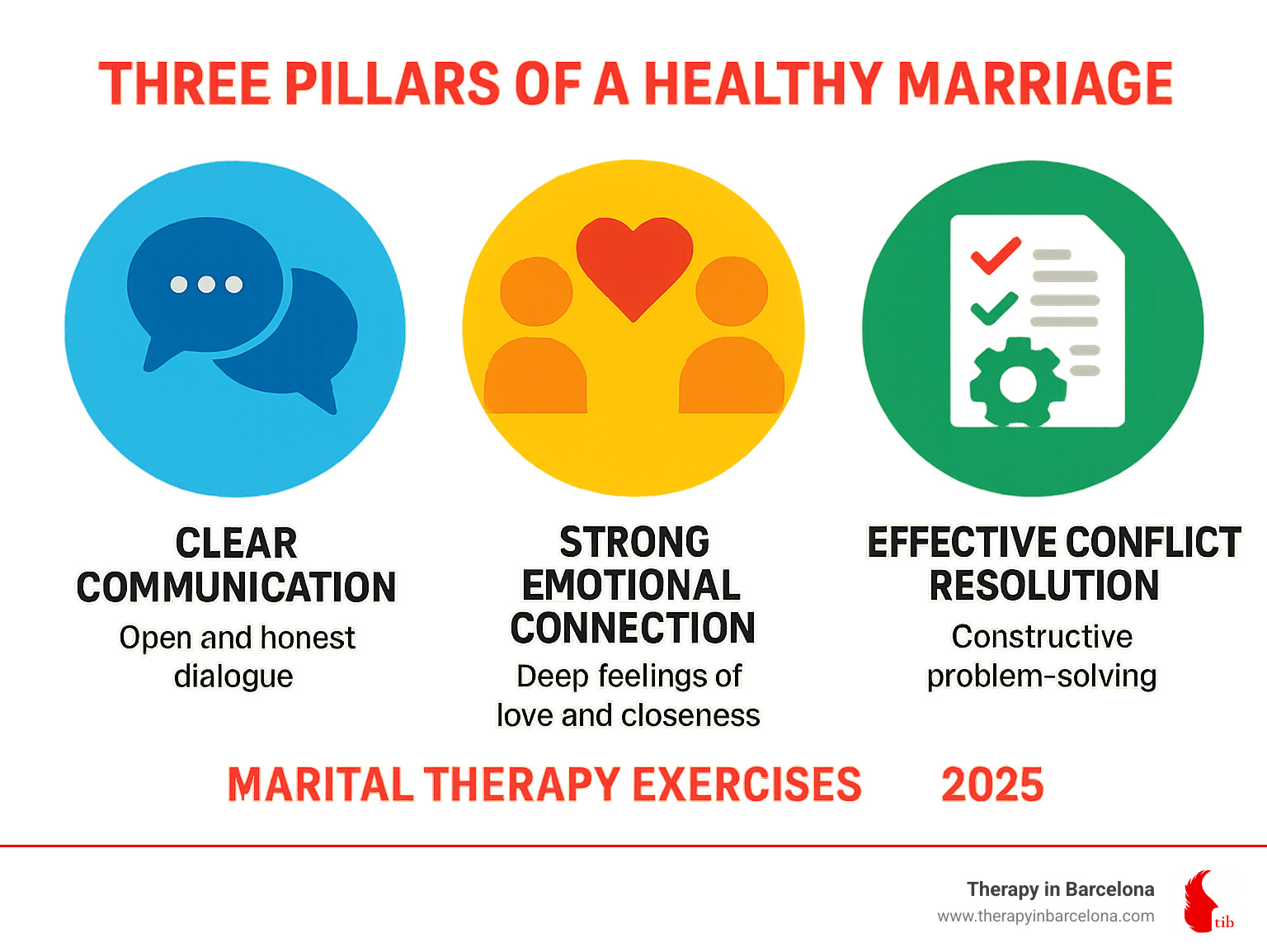
Rebuilding Your Foundation: Exercises for Communication and Connection
A common problem for many couples is a breakdown in communication, leading to emotional distance. It can feel like you’re more like roommates than partners. The good news is that reconnecting and rebuilding your foundational friendship is entirely possible with the right tools and effort.
Effective communication is the bedrock of a happy, long-lasting relationship, a fact consistently supported by scientific research on communication and relationship satisfaction. If you’re keen to dive deeper, you can find more info about couples communication therapy on our website.
Master Active Listening and Validation
Active listening is a powerful marital therapy exercise because it forces you to tune in to your partner, rather than just waiting for your turn to speak.
The Speaker-Listener Technique is a structured way to ensure both partners feel heard. One person (the speaker) shares their thoughts using “I” statements (e.g., “I feel frustrated when…” instead of “You always…”). The listener’s job is to listen without interrupting and then summarise what they heard.
This isn’t about agreeing, but showing you understand. Phrases like, “So, what I hear you saying is…” are incredibly powerful. As experts explain, validation is about acknowledging your partner’s feelings and showing you’re making an effort to understand them. This practice, central to approaches like Imago Dialogue, helps dissolve blame and deepen your connection.
Deepen Your Knowledge with Gottman’s Love Maps
At the start of a relationship, you naturally soak up the small details of each other’s world. Over time, stress and routine can make that knowledge feel outdated. Dr. John Gottman calls this shared understanding your “Love Maps,” and keeping them current helps couples stay close.

Love Maps are a detailed understanding of your partner’s psychological world—their hopes, dreams, and worries. This is an ongoing process. You can use open-ended questions like, “What’s something you’re looking forward to this week?” or take a Love Map Quiz together. It’s a fun way to stay connected and remind yourselves of the unique person you chose, ensuring you’re not just living side-by-side, but truly growing together.
Create Connection Rituals and Regular Check-ins
In the whirlwind of daily life, connection rituals and regular check-ins are invaluable marital therapy exercises. They are dedicated moments to touch base, creating shared meaning and preventing resentment from building up.
A great tool is the Daily Temperature Check, a quick 15-minute chat to share:
- Appreciations: Something positive you noticed about your partner.
- New Information: A key update from your day.
- Puzzles: Something you’re trying to figure out.
- Complaints with Requests: Gently voice a concern with a clear, actionable request (no blame!).
- Wishes/Hopes/Dreams: Something you’re looking forward to.
For a deeper discussion, a Weekly Relationship Check-In (30-45 minutes) is your time to discuss what’s working, what could be better, and to express gratitude. Treat these check-ins as non-negotiable appointments for your relationship. Consistency is key; small, consistent efforts lead to significant, lasting improvements, a vital part of the art of healing in therapy.
Fostering Intimacy Through Fun Marital Therapy Exercises
Intimacy, both emotional and physical, is the heart of a thriving marriage. When trust has been damaged, rebuilding this connection can feel daunting. However, many effective marital therapy exercises are designed to nurture this vital bond.
One powerful approach, Emotionally Focused Therapy (EFT), focuses on shifting emotional patterns to create a more secure attachment. You can find more on Emotionally Focused Therapy and how it can benefit couples, especially those navigating intercultural waters.
The Power of Vulnerability and Appreciation
Vulnerability can feel scary, but as researcher Brené Brown explains in her famous 2010 TED Talk on vulnerability, it’s the bedrock of deep emotional intimacy. It’s about having the courage to be seen. Sharing your fears, insecurities, or unmet needs with your partner creates a safe space for empathy and understanding to grow.

Alongside vulnerability, expressing appreciation is vital. Don’t just assume your partner knows you value them. Try this simple marital therapy exercise: the 5-Minute Appreciation Practice. Each day, take five minutes to tell your partner three specific things you appreciate about them. This small habit shifts your focus from frustrations to the positives in your relationship, creating a more supportive atmosphere.
Creative Exercises to Rekindle the Spark
Sometimes, relationships need a shake-up to bring back the fun. These marital therapy exercises are about creating new, happy memories together.
- Digital Detox Date Night: Set aside an evening where all devices are banished. This encourages genuine engagement, whether you cook a meal, take a walk, or simply talk without interruptions.
- Sensate Focus: Often used in sex therapy, this exercise builds intimacy through non-pressured, structured touching exercises. It starts with non-genital touch, focusing purely on the sensation, which helps couples explore physical intimacy and communicate desires safely.
- Role-Reversal: During a disagreement, try stepping into your partner’s shoes. Articulate their feelings and perspective as if they were your own. It’s a fantastic way to build empathy and understand the emotions driving the conflict.
- Shared Hobbies and Experiences: Recapture the spirit of your early days by finding a new shared passion. Learning a new language (perhaps Spanish, if you’re an expat in Barcelona!), trying a new cuisine, or exploring a new neighbourhood creates fresh memories and keeps your relationship vibrant.
Healing Past Hurts: Exercises for Trust and Forgiveness
When trust is broken, resentment and past hurts can linger. While these complex issues often benefit from professional guidance, some marital therapy exercises can start the healing journey. Working through forgiveness can significantly boost marital satisfaction, as shown in research on forgiveness and marital satisfaction.
- The Forgiveness Letter: The wronged partner writes a letter (which doesn’t have to be sent) expressing their hurt, anger, and hope for healing. Its main purpose is to help process emotions.
- Taking Accountability and Making Amends: A genuine apology involves taking full responsibility, showing sincere remorse, and asking what you can do to make things right. Consistent, trustworthy behaviour is key to rebuilding safety.
- Relationship Timeline: Together, map out your relationship history, noting both wonderful and challenging events. This can help you spot patterns, acknowledge past hurts, and celebrate your resilience as a couple.
Navigating Conflict and Planning Your Future Together
Conflict is a normal part of any close relationship. Strong relationships are not conflict-free. They are built on how well both people handle disagreements, repair after tension, and move forward together. Learning to argue in healthier ways and make plans as a team can be powerful marital therapy exercises. You can find more about why at home couples therapy ideas can transform your relationship on our website.
From Fighting to Problem-Solving: The Gottman Approach
Do your arguments go in circles? Dr. John Gottman identified four destructive communication patterns, “The Four Horsemen of the Apocalypse”: criticism, contempt, defensiveness, and stonewalling. The good news is you can replace them with healthier approaches.
- Use a Softened Start-up: Instead of criticising your partner’s character (“You’re so lazy!”), express a complaint about a specific behaviour (“I feel overwhelmed when the dishes aren’t done”).
- Use the “Pause Button” Technique: When discussions escalate and you feel overwhelmed (or “flooded”), agree to take a break for 5-20 minutes to calm down. This prevents reactive responses that can worsen conflicts.
- Use the Aftermath of a Fight Guide: After a disagreement, discuss what triggered you and what you both could do differently next time. This turns arguments into opportunities for growth.
Aligning Your Paths: Goal Setting and Vision Boarding
As a couple, it’s important to know you’re heading in the same direction. Goal-setting and vision boarding are fantastic marital therapy exercises for aligning your future aspirations.

- Shared Values Exercise: Discuss your core individual values to find common ground and articulate your shared relationship values. Understanding your partner’s viewpoint, even when it differs, is crucial.
- Couples Vision Board Creation: This is a fun, creative way to visualise your shared future. Together, create a collage of images and words representing your joint dreams for your life together.
- Set Shared Goals: Beyond the vision board, set concrete goals. This could involve finances (saving for a trip), health (exercising together), or personal development (learning a new skill). A shared calendar can help track progress and celebrate successes.
DIY vs. Professional Help: Knowing When to Call a Therapist
You’ve started a wonderful journey with these marital therapy exercises, and it’s empowering to take your relationship’s well-being into your own hands. These tools are powerful for growth and connection. But it’s also wise to know when to bring in a guide. Recognising when professional support is needed isn’t a sign of weakness—it’s a profound act of strength and care for your partnership.
When DIY Marital Therapy Exercises Are a Great Start
At-home marital therapy exercises are an excellent starting point for couples seeking relationship enrichment or navigating the minor communication snags every relationship encounters. They’re fantastic for proactive strengthening, building resilience against future bumps in the road. If you’ve been feeling a little disconnected, these practices are wonderful for enhancing connection and learning new skills like empathy and constructive conflict resolution before major issues arise.
Red Flags: Signs You Need Professional Couples Counselling
While DIY exercises are beneficial, there are times when a trained couples therapist is invaluable. Couples often wait an average of six years before seeking counselling, by which point patterns are deeply entrenched. Our advice? Don’t wait. Here are some clear ‘red flags’ that it’s time to reach out:
- Constant Fighting with No Resolution: If every discussion spirals into a heated argument, or you’re trapped in the cycle of Dr. Gottman‘s “Four Horsemen”—criticism, contempt, defensiveness, and stonewalling.
- Infidelity or Major Trust Issues: Healing from betrayal almost always requires a neutral third party to facilitate open communication and rebuild trust.
- Emotional or Physical Abuse: This is non-negotiable. If any form of abuse is present, safety is the priority. DIY exercises are not appropriate; professional help is essential and urgent.
- Feeling Hopeless or Resentful: If a sense of hopelessness or deep resentment persists and your own efforts aren’t working.
- Considering Separation: If ending the relationship is a frequent thought, a therapist can provide a safe space to explore all paths forward.
- Individual Issues Impacting the Relationship: When individual challenges like depression, anxiety, or past trauma affect the relationship dynamic.
Large platforms and public services can help, but they may not offer the personalised, culturally aware support many expat couples need. Therapy in Barcelona provides a compassionate, tailored approach for each relationship, with support available in Barcelona or online. If you want to explore whether counselling is the right next step, read the truth about marriage counseling and how it can help.
Frequently Asked Questions about Marital Therapy Exercises
How often should we do these exercises?
Think of your relationship like a garden—it thrives with consistent care, not sporadic effort. The magic lies in consistency over intensity.
Some marital therapy exercises, like the 5-Minute Appreciation Practice, are great daily. Others, like the Weekly Relationship Check-In, are perfect for a dedicated weekly slot. More in-depth exercises, like creating a Vision Board, might happen less frequently. The goal is to find a rhythm that works for both of you and make it a habit. Small, consistent efforts build a resilient, connected partnership over time.
What if my partner is resistant to trying these exercises?
This is a common concern. A partner might feel hesitant or awkward, worrying it feels too “clinical.” Here are some gentle ways to encourage participation:
- Start small and fun: Suggest one simple, lighthearted exercise first, like a Digital Detox Date Night.
- Explain the ‘why’: Focus on the positive benefits for you both. Frame it as something to make you feel closer and argue less.
- Lead by example: Start a gratitude practice yourself and share your appreciations for them. Your positive change might inspire them.
- Frame it as a team activity: Emphasise that you’re in this together to make your relationship stronger.
If resistance persists, a single session with a therapist can help introduce these concepts in a less daunting way. Patience and understanding are key.
Can these exercises help expat or intercultural couples?
Absolutely! In fact, these marital therapy exercises can be transformative for expat and intercultural couples. Living abroad brings unique challenges: navigating cultural differences, language barriers, and isolation from support networks. These stressors can amplify relationship issues.
These exercises provide a structured way to address these dynamics. Active listening and role-reversal are invaluable when different communication styles lead to misunderstandings. Shared vision boarding helps align your dreams for a new life together, and regular check-ins provide a vital space to process the emotional toll of expat life. Intentionally creating your own unique “couple culture” through these shared rituals becomes even more vital.
At Therapy in Barcelona, we specialise in providing culturally sensitive support to expats. Our therapists, many of whom are expats themselves, understand these nuances and can help you apply these exercises in a way that resonates with your specific experiences. You can find more information about navigating challenges for expat couples on our website.
Conclusion: Your Journey to a Stronger Partnership Starts Today
Your relationship truly is one of the most precious investments you’ll ever make in life. Just like a flourishing garden, it thrives with consistent care, gentle attention, and the right tools at your fingertips.
These marital therapy exercises are so much more than just techniques; they are heartfelt invitations. Invitations to connect more deeply, to understand each other on a new level, and to grow together as a stronger, more resilient team.
The core messages we want you to take away are simple yet powerful. Being proactive in your relationship is absolutely essential. Connection isn’t a fixed state, but a beautiful, ongoing practice. And importantly, reaching out for support is never a sign of weakness; it’s a profound act of strength and love for your partnership.
Whether you decide to explore these exercises on your own, right from the comfort of your home, or you choose to seek guidance from a professional, every single step you take towards a healthier, happier marriage is a step well worth celebrating.
If you ever find yourselves needing a little extra support, or if the unique challenges of your expat journey feel too overwhelming to steer alone, please know that Therapy in Barcelona is here for you. We pride ourselves on offering truly culturally sensitive support, with a team of psychology-trained therapists who deeply understand the complexities of life abroad. Our unique personalised therapist matching process ensures you find the perfect professional to guide you along your distinct path to healing and growth.
Ready to take that first brave step towards a more connected and fulfilling relationship? We’re here to help. Simply book your free discovery call with Therapy in Barcelona today.
