


Demystifying the Basics: What is Therapy?

What is therapy — often called psychotherapy or talk therapy — is a professional, structured process in which a trained mental health professional helps you understand and work through troubling thoughts, emotions, and behaviours. Here is a quick overview:
- What it is: A collaborative relationship between you and a qualified therapist, focused on your emotional well-being and personal growth
- What it is not: A casual chat, a medical diagnosis, or a sign that something is seriously wrong with you
- Who it is for: Anyone — not just people with a specific diagnosis — who wants support with persistent worry, stress, relationships, life transitions, or simply feeling more like themselves
- How it works: Through regular sessions (typically 45 to 60 minutes), you and your therapist identify patterns, build coping skills, and work toward goals you set together
- How long it takes: This varies widely. Some approaches like Cognitive Behavioural Therapy (CBT) can be effective in as few as 5 to 20 sessions. Others are longer-term, depending on your needs
If you have ever Googled “do I need therapy?” at midnight, you are not alone. Most people who eventually find their way to a therapist’s couch — or these days, a video call — spent a long time wondering whether their problems were “bad enough” to warrant help. They are not dramatic. They are not broken. They are just human.
Despite its benefits, therapy is often misunderstood as only for times of crisis. In reality, it can help with everyday challenges, from work stress and relationship difficulties to adjusting to life abroad or simply feeling stuck.
According to Gallup research, around 23% of US adults have seen a mental health professional — nearly double the figure from two decades ago.
That shift reflects something real: people are increasingly willing to treat their mental well-being with the same seriousness they give their physical health. And the evidence backs them up.
Psychotherapy has been shown by the American Psychological Association to be as effective as medication for a range of emotional struggles, and its effects tend to last longer.
This guide covers everything you need to know — what therapy actually is, the different types, how to find a good fit, what to expect in a session, and how to know if it is working. Whether you are considering therapy for the first time or returning after a break, you will find clear, honest answers here.
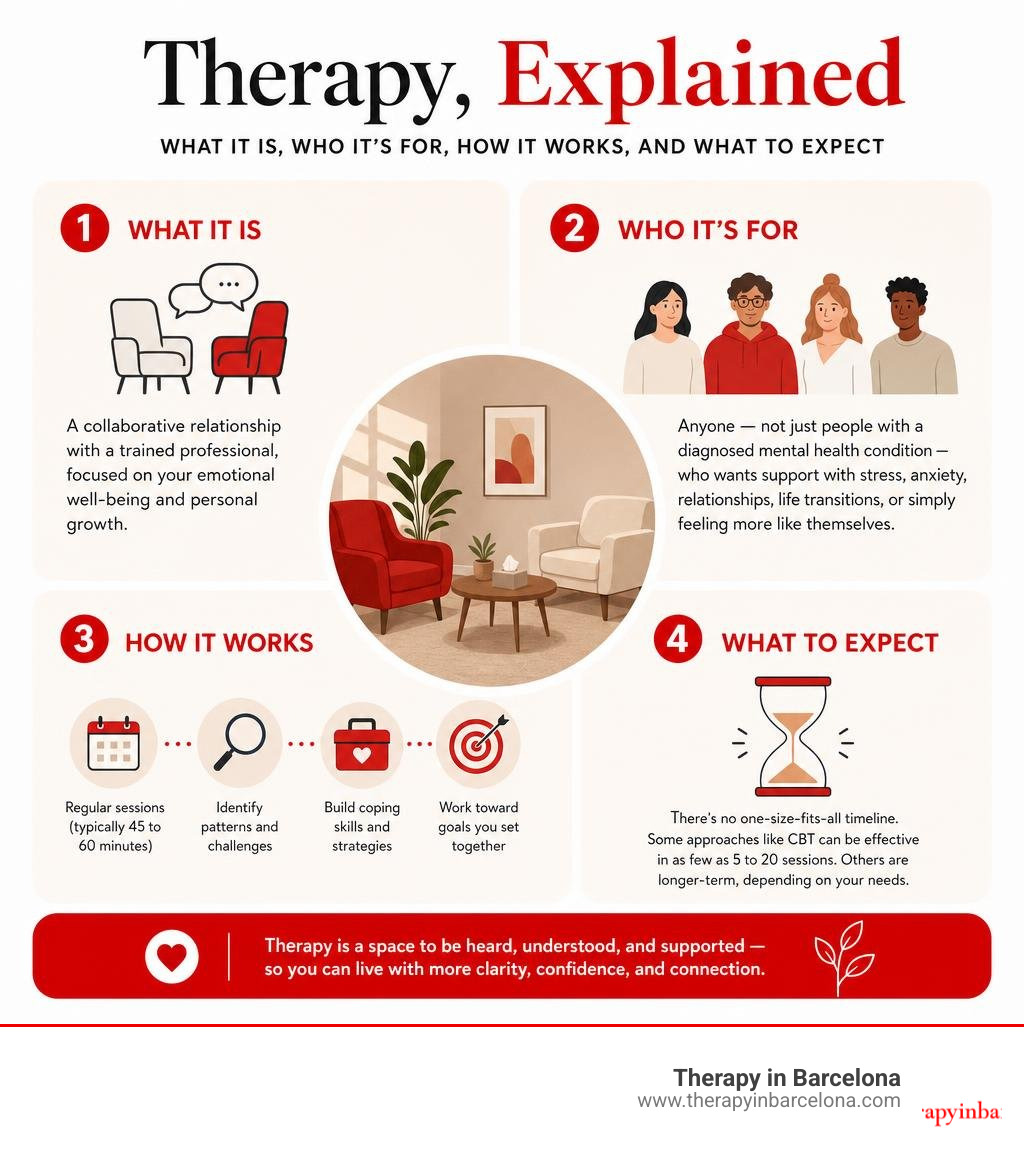
At its core, psychotherapy is an interpersonal treatment based on psychological principles. It is a collaborative partnership between a trained professional and a client seeking help.
If you want to understand the deeper layers of this practice, you can explore Your Guide to Psychotherapy: What It Is and How It Can Help to see how the clinical and everyday aspects connect.
Many people associate the word “therapy” with clinical settings, but it is actually a broad term. According to the Mayo Clinic’s overview of psychotherapy, talk therapy is a highly effective way to address emotional difficulties and life stresses by speaking with a psychologist, psychiatrist, or another qualified mental health provider.
It helps you identify and change troubling emotions, thoughts, and behaviours, relieving emotional distress and helping you regain control of your life.
What is therapy’s primary goal?
The primary goal of therapy is not to “fix” you, because you are not a broken machine. Instead, it aims to help you build self-awareness, develop healthy coping strategies, achieve symptom relief, and make positive behavioural changes.
As explained in our guide Therapy Is…, the therapeutic journey is a gradual process of self-discovery. It gives you the space to step back, notice your automatic reactions, and choose how you want to respond to life’s challenges.
Rather than simply venting, you work with a professional to understand the root of your struggles and build practical tools to handle future difficulties.
The historical shift to the “talking cure”
The concept of talk therapy has a fascinating history. In the late 19th century, a patient named Bertha Pappenheim (known historically as “Anna O.”) was receiving treatment from physician Josef Breuer. She coined the term “talking cure” to describe how discussing her symptoms and underlying feelings helped relieve her distress.
This breakthrough inspired Sigmund Freud to develop psychoanalysis, which you can read about in detail on the Wikipedia page for Psychotherapy. Over the decades, the field evolved from the medical model of treating “illness” to a humanistic model that prioritises personal growth.
Through all these changes, researchers have consistently found that the single most important predictor of success in therapy is the “therapeutic alliance” — the quality of the trust, rapport, and collaboration between the therapist and the client.

The Different Types of Therapy and How They Work
There are hundreds of named therapeutic approaches available today. However, you do not need to understand all of them to find relief. Most modern practitioners draw from a few core, evidence-based modalities.
The National Institute of Mental Health (NIMH) guide to psychotherapies highlights that the most effective approach is one tailored specifically to your unique needs and goals.
Cognitive Behavioural Therapy (CBT)
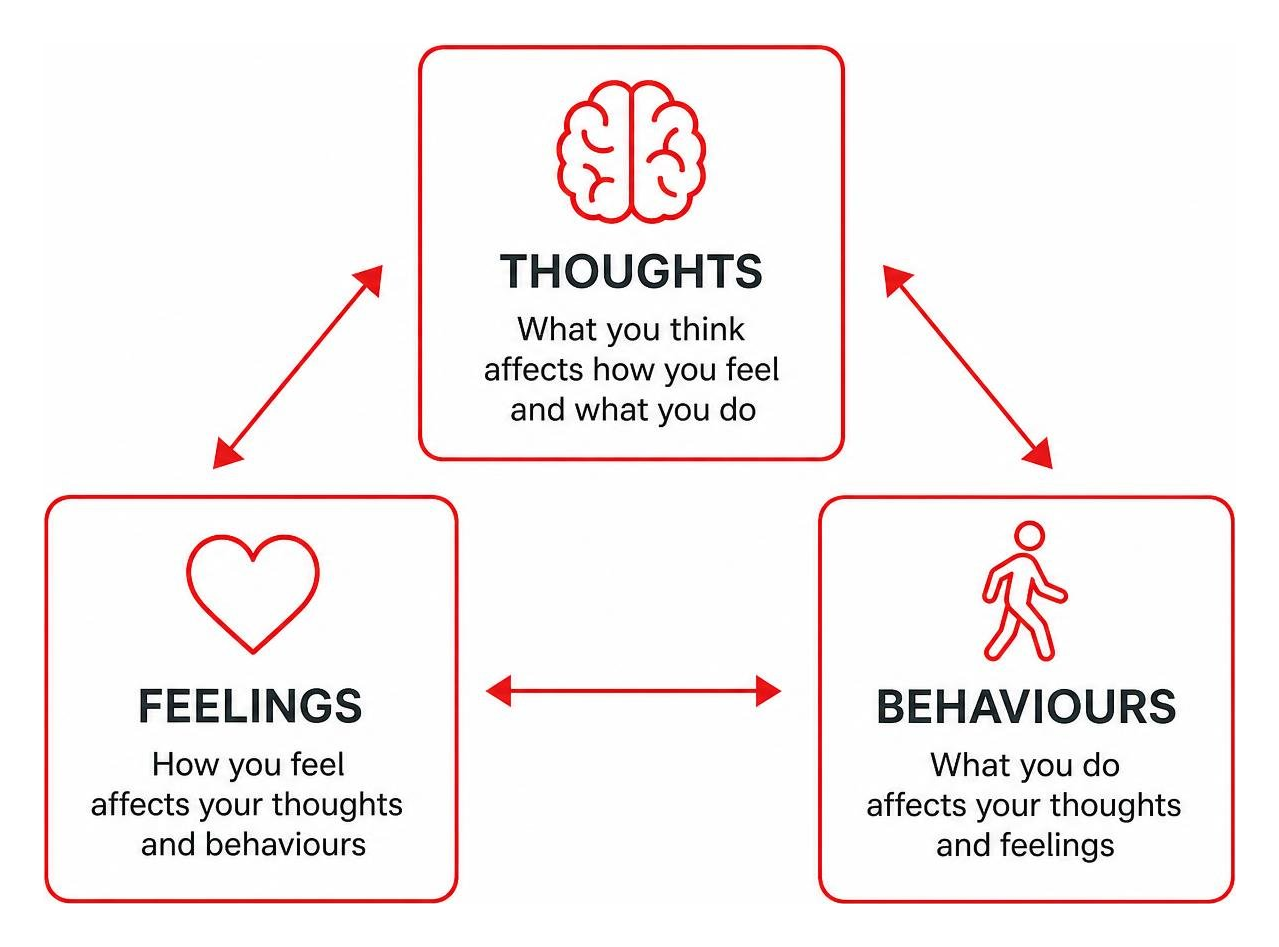
Cognitive Behavioural Therapy (CBT) is a highly structured, practical, and goal-oriented approach. It is based on a simple premise: our thoughts, feelings, and behaviours are deeply interconnected. When we get stuck in negative or inaccurate thinking patterns, our emotions and actions suffer too.
During CBT, you work with your therapist to identify these automatic, unhelpful thoughts and test whether they are actually true. It often involves “homework” — such as keeping a thought diary or gradually facing situations you tend to avoid.
Because of its structured nature, CBT is typically a short-term treatment, often ranging from 5 to 20 sessions. If you are living abroad and looking for structured support, you can learn more about how we apply this approach in our guide on CBT and Couples Therapy Tailored for Internationals.
Acceptance and Commitment Therapy (ACT) and Mindfulness
While CBT focuses on challenging and changing negative thoughts, Acceptance and Commitment Therapy (ACT) takes a different route. ACT helps you develop psychological flexibility. Instead of fighting or trying to eliminate uncomfortable thoughts and feelings, you learn to accept them as natural human experiences.
By combining mindfulness practices with cognitive defusion (learning to see thoughts as just words, not absolute truths), ACT helps you stop struggling with your emotions. This frees up your energy to focus on values-based action — taking practical steps toward the things that truly matter to you.
For expats trying to find their footing in a new country, this values-focused approach can be incredibly grounding, as explored in Therapy for Internationals: Finding Your Path to Well-being.
Relational and Couples Modalities
We do not live in a vacuum, and our mental health is deeply tied to our relationships. Relational therapies, including the Gottman Method and Imago Relationship Therapy, focus on how we interact with the people closest to us.
These modalities help couples and individuals break out of painful, repetitive communication loops. By practising active listening and learning to express vulnerability safely, clients can rebuild trust and intimacy.
If you are working through relationship hurdles, our resource Finding Your Fit: A Guide to Relationships Therapy provides a clear roadmap for resolving conflict and strengthening your bond.
How Therapy Differs from Talking to a Friend
When people are going through a tough time, they often ask: “Why should I pay to talk to a therapist when I can just talk to my friends for free?” It is a fair question. Good friendships are vital for our emotional health, but therapy serves an entirely different purpose.
To help you understand the difference, here is a breakdown of how the two experiences compare across key areas:
Professional Boundaries and Training
- Talking to a Friend: Friends care about you, but they do not have clinical training. They might offer well-meaning advice based on their own life experiences, which may or may not apply to your situation.
- Talking to a Therapist: Therapists undergo years of postgraduate training and clinical supervision. They understand human development, relational dynamics, and evidence-based techniques to guide you through deep-seated patterns safely.
Objectivity and Perspective
- Talking to a Friend: Friends are personally involved in your life. Because they want to protect you or avoid conflict, they might agree with you even when you are in the wrong, or they might struggle to remain neutral.
- Talking to a Therapist: A therapist is an objective, impartial professional. They provide a safe space where you can explore your thoughts without worrying about hurting their feelings or damaging a personal relationship.
Focus and Attention
- Talking to a Friend: Healthy friendships require a two-way street. You listen to their problems, and they listen to yours. If you talk about your struggles for too long, you might feel guilty or worry about burning them out.
- Talking to a Therapist: Therapy has a strictly unilateral focus. The session is 100% about you. You do not have to ask how your therapist is doing, and you never have to worry about taking up too much space.
Confidentiality and Safety
- Talking to a Friend: While friends try to keep secrets, there is no legal guarantee of privacy. Social dynamics can change, and personal details can sometimes slip.
- Talking to a Therapist: Therapists are legally and ethically bound by strict confidentiality guidelines, which we discuss in detail below. This creates a secure container where you can share your deepest worries without fear of social repercussions.
For a deeper look at why these structural limits are so important for your healing, you can read our article Why Can’t We Be Friends? Understanding Ethical Boundaries in Therapy.
Your Mental Health Journey Abroad
Moving to a new country is often painted as an exciting adventure. But behind the beautiful pictures of sunny plazas lies a complex reality. Relocation is one of life’s most significant stressors, bringing a wave of cultural adjustment, language barriers, and isolation.

Many internationals find that their usual coping mechanisms do not work as well in a foreign environment. Without their familiar support network of family and long-time friends, even small setbacks can feel overwhelming.
Understanding the impact of this transition is crucial, which is why we discuss it openly in The Importance of Mental Health During Relocation.
What is therapy like for expats in Spain?
For expats and digital nomads living in Spain, starting therapy can feel intimidating. Language barriers make it hard to express complex emotions, and local public health systems can be difficult to navigate.
Many expats experience unexpected loneliness after relocating, even in exciting new destinations. Feeling isolated or homesick is common, and working with an English-speaking therapist who understands the challenges of expat life can help you rebuild confidence and find your footing.
Whether you are looking for online therapy in Valencia, a physical session in Madrid, or support in Málaga, Alicante, Gran Canaria, Sevilla, Marbella, or Zaragoza, finding a culturally sensitive professional is key.
Our article 12 Compelling Reasons Internationals and Digital Nomads Should Consider Therapy explores how tailored support can help you move from simply surviving abroad to truly thriving.
Choosing between public systems, large platforms, and private care
When looking for mental health support in Spain, you generally have three paths:
- The Public Healthcare System: This is a low-cost option, but it often comes with long waiting lists, limited session times, and no guarantee of finding an English-speaking provider.
- Large Online Platforms: These platforms offer convenience, but they often use automated matching systems, have high therapist turnover, and raise privacy concerns regarding how your personal data is handled.
- Local Private Practices: Private practices like Therapy in Barcelona offer personalised, culturally sensitive care, with careful therapist matching and greater privacy than large online platforms.
Frequently Asked Questions About Psychotherapy
Is therapy confidential and what are the limits?
Yes. Legal confidentiality is a cornerstone of the therapeutic relationship. What you say in your sessions stays between you and your therapist. This strict privacy is essential for building the trust needed to discuss sensitive issues.
However, there are a few legally mandated exceptions to this rule, designed to prevent harm. A therapist must break confidentiality if:
- There is an immediate, clear threat that you will harm yourself or someone else (in which case, they will work with you on safety planning)
- There is reason to suspect the abuse or neglect of a child, elderly person, or vulnerable adult
- A court of law issues a legal subpoena for records
For a detailed look at how these boundaries protect you, see Setting Healthy Boundaries in Therapy: What You Need to Know.
How much does therapy cost and what are the options?
Therapy is a significant investment in your long-term mental health and well-being. Because we operate as a private-pay service, our fees reflect the high level of training, experience, and personalised care our team provides.
While we do not bill insurance companies directly, many international health insurance plans offer out-of-network reimbursement for psychological services. Additionally, some of our therapists offer sliding scale fees for those with genuine financial need.
If you have questions about costs, session lengths, or logistics, we answer them directly in Starting Therapy: 10 Honest Questions You Might Be Asking and Deserve Straight Answers To.
What is the difference between a therapist, psychologist, and psychiatrist?
Understanding the different titles in mental health can be confusing. Here is a quick guide to who does what:
- Psychiatrist: A medical doctor who has specialised in psychiatry. They operate primarily under the medical model, meaning they can identify specific mental health conditions and manage medication. They rarely provide long-term talk therapy.
- Psychologist: A professional with an advanced degree in psychology. They are trained in psychological testing, research, and talk therapy, but they do not prescribe medication in Spain.
- Psychotherapist: A general term for a trained professional who provides talk therapy. This can include psychologists, social workers, and counsellors who have completed specialised postgraduate training in therapeutic modalities.
If you are trying to figure out which professional is right for your current situation, read our comprehensive guide on The Difference Between Psychiatrists, Psychologists and Psychotherapists.
Your Path Forward
Taking the first step toward therapy is a brave decision. It is an investment in your relationships, your career, and your peace of mind.
At Therapy in Barcelona, we understand how challenging it can be to manage life’s ups and downs, especially when you are far from home.
Founded in 2011 by Leigh Matthews — an Australian Psychologist and expat who experienced the challenges of adapting to a new culture — our practice is built on empathy, professional excellence, and deep cultural sensitivity.
We do not believe in a one-size-fits-all approach. We take the time to understand your unique story, matching you with a qualified, psychology-trained professional from our international team who truly fits your needs.
Whether you prefer to meet in person at our central Eixample office or prefer the flexibility of online sessions, we are here to support you.
If you are ready to start your journey toward healing and growth, Book Your Free Discovery Call today. Let’s work together to help you feel at home in your mind, wherever you are in the world.
