


Therapy for career stress is crucial in today’s work environment, where many people feel overwhelmed by their job demands. Experiencing stress at work is normal, and a little stress can even boost motivation and engagement. However, chronic work stress can seriously impact mental health, leading to anxiety, depression, and even physical ailments like headaches and insomnia.
Here’s a quick guide to understand the key effects and signs of career stress:
- Mental Health Impact: Chronic stress can lead to anxiety and depression, making everyday tasks feel impossible.
- Physical Symptoms: This includes fatigue, headaches, and trouble sleeping, which diminish overall well-being.
- Decreased Work Performance: Stress often results in poorer concentration and lowered productivity, creating a frustrating cycle.
- Relationship Strains: Work stress affects personal relationships, leading to conflicts and reducing quality of life.
At Therapy in Barcelona, we understand these struggles deeply and offer support custom to those navigating the international work setting.
As Leigh Matthews, an Australian psychologist and founder of Therapy in Barcelona, aptly puts it, recognizing and addressing career stress early can prevent it from spiraling into more significant issues. It’s about creating resilience and a balanced life, no matter where you are in your career or across the globe.
By acknowledging and treating these stressors, individuals can reclaim a sense of balance and control over their work and personal life. Stay connected as we explore therapies and tools that can transform how you manage career stress and maintain better mental health.

Understanding Career Stress
Career stress is a common challenge for many people, especially in high-pressure roles or unfamiliar environments. Let’s explore some core factors contributing to stress at work.
Workload
One of the most significant contributors to career stress is workload. Many employees feel overwhelmed by the sheer volume of tasks they must complete. This is especially true in roles where resources are limited, and expectations remain high. When the workload becomes unmanageable, it can lead to burnout, affecting both mental and physical health.
Control Issues
Lack of control over one’s job or projects can also heighten stress levels. Imagine being unable to influence the outcome of your work or being excluded from decision-making processes. This lack of autonomy can leave employees feeling powerless and frustrated. As noted in the research, not having control over work-related situations is a significant stressor.
Ambiguity
Unclear job roles or expectations contribute to workplace stress. When employees are unsure of their responsibilities or how their performance is measured, it leads to confusion and anxiety. This ambiguity can make it difficult to prioritize tasks and meet goals, further increasing stress levels.
Toxic Environment
A toxic work environment can significantly impact mental health. This includes dealing with difficult colleagues, supervisors, or clients. Tensions in professional relationships can create a hostile atmosphere, making it hard to focus and perform well at work. Additionally, environments where harassment or discrimination occur can exacerbate stress and lead to more severe mental health issues.
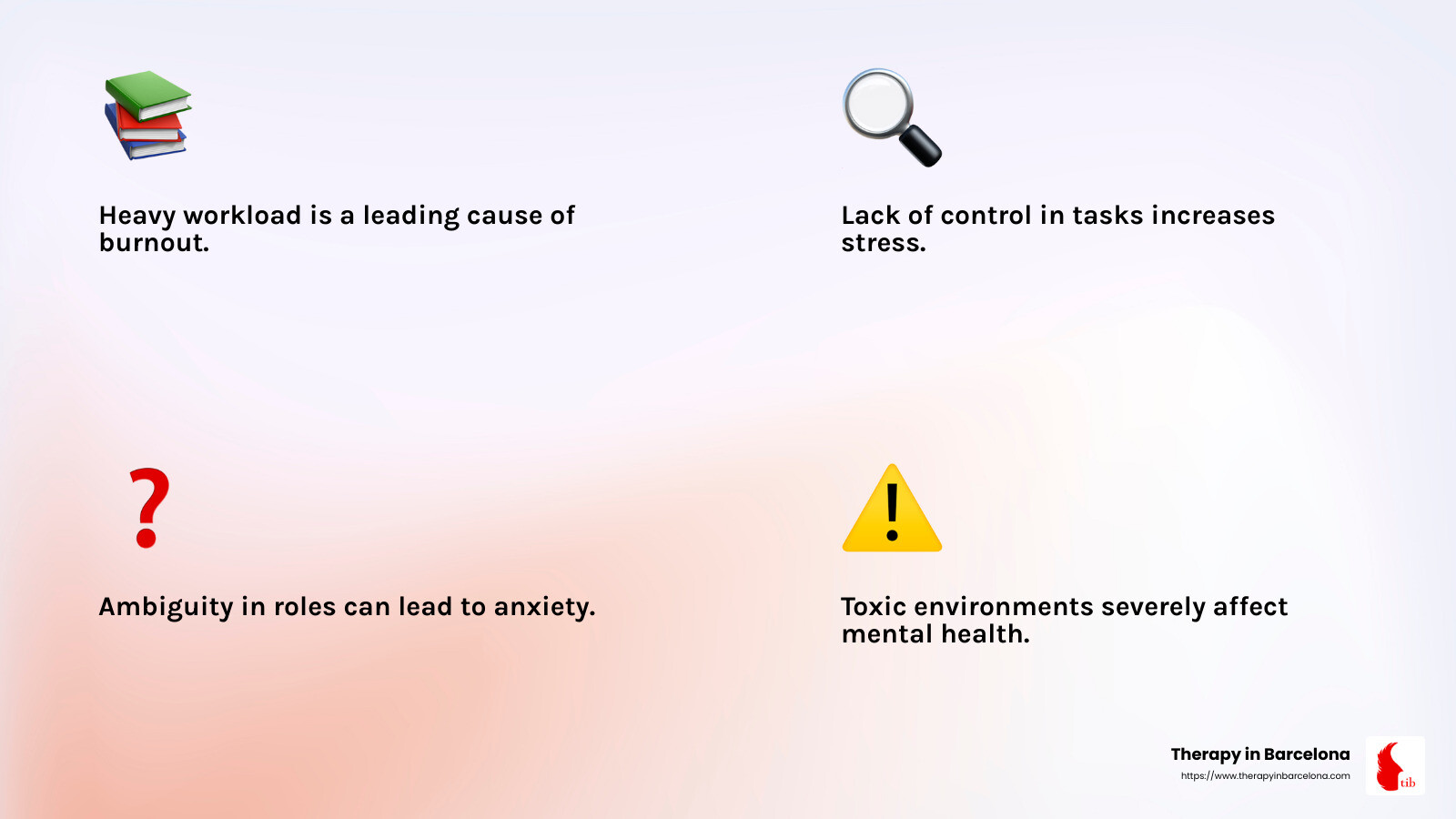
By understanding these factors, individuals can better identify the sources of their stress and seek appropriate support. Therapy in Barcelona offers custom solutions to help manage these stressors, creating a healthier work-life balance. Stay tuned as we dig into effective therapies for managing career stress.
Effective Therapies for Career Stress
Navigating the challenges of career stress can feel overwhelming, but there are effective therapies that can help. Let’s explore three popular approaches: Cognitive Behavioral Therapy (CBT), Mindfulness-Based Stress Reduction (MBSR), and Dialectical Behavioral Therapy (DBT).
Cognitive Behavioral Therapy (CBT)
CBT is a powerful tool for managing career stress. It focuses on changing negative thought patterns that can lead to stress and anxiety. By identifying and altering these thoughts, you can improve your emotional response to stressful situations.
Take Emily, for instance. She’s a fictional representation of many expats in Barcelona. Emily found herself overwhelmed by her demanding job. Through CBT, she learned to recognize her negative thinking patterns and replace them with more positive and productive thoughts. This helped her manage her stress and regain confidence in her work.

Mindfulness-Based Stress Reduction (MBSR)
Mindfulness practices, such as meditation and deep breathing, are at the heart of MBSR and Third Wave Therapy. These techniques encourage present-moment awareness, helping you stay grounded and reduce stress.
Incorporating mindfulness into your daily routine can be as simple as taking a few minutes each day to focus on your breath. This practice can reduce stress levels, improve concentration, and improve overall well-being. Research suggests that mindfulness not only helps in managing stress but also boosts resilience and emotional regulation.
Dialectical Behavioral Therapy (DBT)
DBT combines cognitive and behavioral techniques with mindfulness strategies. It’s particularly effective for managing intense emotions and improving distress tolerance.
DBT equips you with coping strategies to handle difficult work situations. For example, if you’re faced with a challenging project, DBT can help you manage your emotions and stay focused on finding solutions. This approach is especially useful for those in high-pressure roles where stress is a constant companion.
These therapies offer valuable tools for managing career stress. By exploring these options, you can find the support you need to create a healthier, more balanced work life. Stay tuned as we explore additional strategies for managing career stress.
Cognitive Behavioral Therapy (CBT) or Rational Emotive Behavioral Therapy (REBT) for Career Stress
Cognitive Behavioral Therapy (CBT) and REBT are highly effective approaches for tackling career stress. It helps you identify and change negative thought patterns that contribute to stress and anxiety.
Negative Thoughts and Stress Management
Negative thoughts can creep in when work gets tough. They might tell you that you’re not good enough or that you’ll never meet your deadlines. These thoughts can increase stress and make it hard to concentrate. CBT works by helping you recognize these unhelpful thoughts and replace them with more positive and realistic ones.
Consider Emily, our fictional expat in Barcelona. She often felt overwhelmed by her workload and doubted her abilities. Through CBT, she learned to challenge these negative thoughts. Instead of thinking, “I’ll never finish this project,” she started to tell herself, “I can break this task into smaller steps and tackle them one at a time.”
CBT Techniques
CBT offers practical techniques to manage stress effectively. Here are a few you might find helpful:
Thought Records: This involves writing down negative thoughts and examining the evidence for and against them. It helps you see situations more objectively.
Behavioral Experiments: These are small tests you set up to challenge your negative beliefs. For example, if you think you’ll fail a presentation, practice it in front of a friend and see how it goes.
Relaxation Techniques: Simple practices like deep breathing or progressive muscle relaxation can reduce physical symptoms of stress.
These techniques empower you to take control of your thoughts and reactions, reducing stress and boosting your confidence at work.
CBT is not just about changing thoughts; it’s about changing your whole approach to stress. By learning to manage stress more effectively, you can improve your work life and overall well-being.
Stay tuned as we explore mindfulness practices and other strategies to help you find balance in the workplace.
Mindfulness Practices for Stress Reduction
Mindfulness offers a simple yet powerful way to reduce stress. It’s about being present and fully engaged with the current moment, without judgment. This practice can help you manage career stress by calming your mind and body.
Mindfulness and Meditation
Mindfulness meditation involves focusing your attention and eliminating the stream of jumbled thoughts that may be crowding your mind. This can lead to improved emotional regulation and a sense of calm. You don’t need to be a meditation expert to start. Even a few minutes a day can make a big difference.
Consider the experience of Vikas Shah, an entrepreneur who struggled with anxiety and depression. Through mindfulness, Vikas learned to pause and reflect, which changed how he approached his work and life.
Deep Breathing
Deep breathing is a simple mindfulness technique that can be practiced anytime, anywhere. It involves taking slow, deep breaths, which can help reduce stress by lowering your heart rate and calming your nervous system.
Try this: Sit comfortably, close your eyes, and take a slow, deep breath in through your nose. Let your abdomen expand fully. Hold for a moment, then exhale slowly through your mouth. Repeat this process a few times, focusing on the sensation of your breath.
Practical Applications
Mindfulness can be integrated into your daily routine. Here are some practical ways to practice mindfulness at work:
Mindful Walking: Take a short walk during your break, paying attention to each step and the sensations in your body.
Mindful Eating: During lunch, focus on the taste, texture, and aroma of your food, instead of rushing through your meal.
Mindful Listening: When in conversations, listen fully to the other person without planning your response or getting distracted.
These practices can help you manage stress by keeping you grounded and focused. They offer a way to step back from the chaos of work and find a moment of peace.
Mindfulness isn’t about eliminating stress but about changing your relationship with it. It helps you respond to stress with awareness rather than reacting automatically. By incorporating mindfulness into your life, you can find a better balance and improve your mental well-being.
Next, we’ll dig into Dialectical Behavioral Therapy (DBT) and how it can provide valuable coping strategies for work stress.
Dialectical Behavioral Therapy (DBT) for Work Stress
When work feels overwhelming, Dialectical Behavioral Therapy (DBT) offers tools to help you stay grounded. Originally developed to treat borderline personality disorder, DBT is now widely used for various stress-related issues, including work stress.
Distress Tolerance
Imagine you’re in a high-pressure meeting, and your stress levels are rising. DBT can teach you distress tolerance skills to manage these moments. It’s about enduring and surviving crises without making them worse.
Practical Skills for Distress Tolerance:
TIP Skill: Change your body temperature. Splash cold water on your face or hold an ice cube. This can quickly calm your nervous system.
Intense Exercise: A quick burst of physical activity, like jumping jacks, can release tension and refocus your mind.
Paced Breathing: Slow down your breathing. Inhale deeply through your nose, hold for a few seconds, and exhale slowly through your mouth.
These skills can be lifesavers during stressful work situations, helping you remain calm and collected.
Coping Strategies
DBT also emphasizes effective coping strategies. These strategies help you deal with stressors constructively rather than reactively.
Key Coping Strategies:
Problem-Solving: Identify the problem, brainstorm solutions, evaluate them, and take action. This structured approach can reduce feelings of helplessness at work.
Emotion Regulation: Understand and manage your emotions. Recognize what triggers stress and learn to respond with healthier reactions.
Interpersonal Effectiveness: Improve your communication skills. Learn to assert your needs while maintaining positive relationships with colleagues.
Consider Emily, a fictional professional in Barcelona who often feels overwhelmed by her workload. By using DBT’s coping strategies, Emily learns to manage her stress more effectively, improving her work-life balance.
Real-Life Applications
DBT’s techniques can be integrated into your daily routine. For example, if you’re facing a tight deadline, use distress tolerance skills to stay calm. When dealing with a difficult colleague, apply interpersonal effectiveness strategies to communicate better.
DBT isn’t about eliminating stress but about managing it more effectively. By adopting these skills, you can build resilience and improve your mental well-being.
Next, we’ll explore additional strategies for managing career stress, including exercise, creative pursuits, and connecting with nature.
Additional Strategies for Managing Career Stress
When it comes to managing career stress, therapy isn’t the only option. Incorporating simple lifestyle changes can make a big difference. Let’s explore some effective strategies: exercise, creative pursuits, and spending time in nature.
Exercise: Move Your Stress Away
Regular physical activity is a powerful stress-buster. It doesn’t have to be intense—a brisk walk or a short yoga session can help. Exercise releases endorphins, the body’s natural mood lifters.
- Quick Tip: Try to fit in at least 30 minutes of moderate activity most days. This could be as simple as cycling to work or doing a home workout.
Exercise not only reduces stress but also improves sleep and boosts overall mental health.
Creative Pursuits: Let Your Imagination Fly
Engaging in creative activities can help diffuse stress and bring joy to your life. Whether it’s painting, writing, or playing music, creative pursuits offer a way to express emotions and relax the mind.
- Quick Tip: Set aside a little time each week for a creative activity you enjoy. It can be as simple as doodling or journaling.
These activities remind you that work isn’t everything. They provide an escape and a sense of fulfillment outside of your job.
Nature: Find Peace in the Outdoors
Spending time in nature can significantly lower stress levels. Even a short walk in a city park can offer a refreshing change of scenery and a break from work-related pressures.
- Quick Tip: Try to spend at least 15 minutes a day outside. It could be during your lunch break or after work.
Being in nature helps reset your mind and can improve focus and creativity when you return to work.
Combining Strategies
Integrating these strategies into your routine can improve your ability to cope with work stress. For example, you might start your day with a morning walk, take a creative break during lunch, and end the day with a relaxing yoga session.
These activities not only help manage stress but also promote a healthier work-life balance. Next, we’ll dive into some frequently asked questions about therapy for career stress, including which therapies are most effective and common symptoms of work-related stress.
Frequently Asked Questions about Therapy for Career Stress
What therapy is best for work stress?
When it comes to therapy for career stress, Cognitive Behavioral Therapy (CBT) and Dialectical Behavioral Therapy (DBT) are two popular options. Both therapies offer unique approaches to tackling work-related stress.
Cognitive Behavioral Therapy (CBT) focuses on identifying and changing negative thought patterns. By reframing these thoughts, you can manage stress more effectively. CBT is about understanding how your thoughts affect your feelings and actions at work.
- Example: If you often think, “I’ll never meet this deadline,” CBT helps you challenge that thought and develop a plan to manage your time better.
Dialectical Behavioral Therapy (DBT), on the other hand, emphasizes distress tolerance and coping strategies. It’s particularly useful for managing intense emotions and improving interpersonal skills.
- Example: DBT can help you stay calm during a heated meeting or when dealing with a difficult colleague.
Choosing between CBT and DBT depends on your specific needs and preferences. A psychologist can guide you in selecting the right approach.
What are common symptoms of work-related stress?
Work-related stress can manifest in various ways, affecting both your physical and mental well-being. Here are some common symptoms:
- Fatigue: Feeling constantly tired despite getting enough sleep.
- Headaches: Frequent tension headaches or migraines can be stress-related.
- Insomnia: Difficulty falling asleep or staying asleep, often due to racing thoughts.
These symptoms can interfere with your ability to perform well at work and maintain a healthy work-life balance. Recognizing them is the first step towards effective stress management.
Can therapy help with work stress?
Absolutely. Therapy is a valuable tool for managing work stress. It provides a safe space to explore your feelings and develop strategies to cope with stressors. A psychologist can offer personalized support, helping you understand the root causes of your stress and how to address them.
Therapy can also improve your overall mental health, making you more resilient to stress in the future. By working with a therapist, you can learn practical skills to manage stress, such as time management and communication techniques.
In the next section, we’ll explore how Therapy in Barcelona offers personalized therapist matching and culturally sensitive support to help you steer work stress effectively.
Conclusion
Navigating career stress can be daunting, especially when you’re living and working in a foreign country. At Therapy in Barcelona, we understand the unique challenges faced by expatriates and internationals. Our mission is to provide culturally sensitive support custom to your needs.
Personalized Therapist Matching
One of the standout features of Therapy in Barcelona is our personalized therapist matching. We believe that the right therapist can make all the difference in your therapeutic journey. Our team takes the time to understand your specific needs and preferences, ensuring that you’re matched with a therapist who truly resonates with you. This approach increases the likelihood of a positive therapeutic outcome, as it fosters a strong, trusting relationship from the outset.
Culturally Sensitive Support
Living abroad comes with its own set of stressors—cultural adjustment, language barriers, and isolation, to name a few. Our therapists, many of whom are expats themselves, bring a deep understanding of these challenges. They offer a compassionate and empathetic ear, helping you steer the complexities of expatriate life with ease.
By integrating various therapeutic approaches, including CBT and ACT, we tailor our services to meet the diverse needs of our international clientele. Whether you’re dealing with work-related stress, relationship issues, or personal growth aspirations, we’re here to support you every step of the way.
Your Path to a Balanced Work Life
Therapy in Barcelona is more than just a place for therapy; it’s a community dedicated to your well-being. We offer a sanctuary for those seeking to find balance and fulfilment in their work and personal lives. By choosing Therapy in Barcelona, you’re not just investing in therapy; you’re investing in a healthier, more balanced future.
You don’t have to face career stress alone. Reach out to us today and take the first step towards a more fulfilling and stress-free work life.
