


Therapy for Expats: Support That Travels With You

Therapy for expats offers confidential, culturally aware support for the emotional side of living abroad, whether you are facing loneliness, relationship pressure, homesickness, work stress, or uncertainty about where you belong.
- It can be useful at any stage of international life, from the first difficult months to years after a move.
- A therapist who understands cross-cultural transition can help you explore what has changed in your relationships, identity, routines, and sense of home.
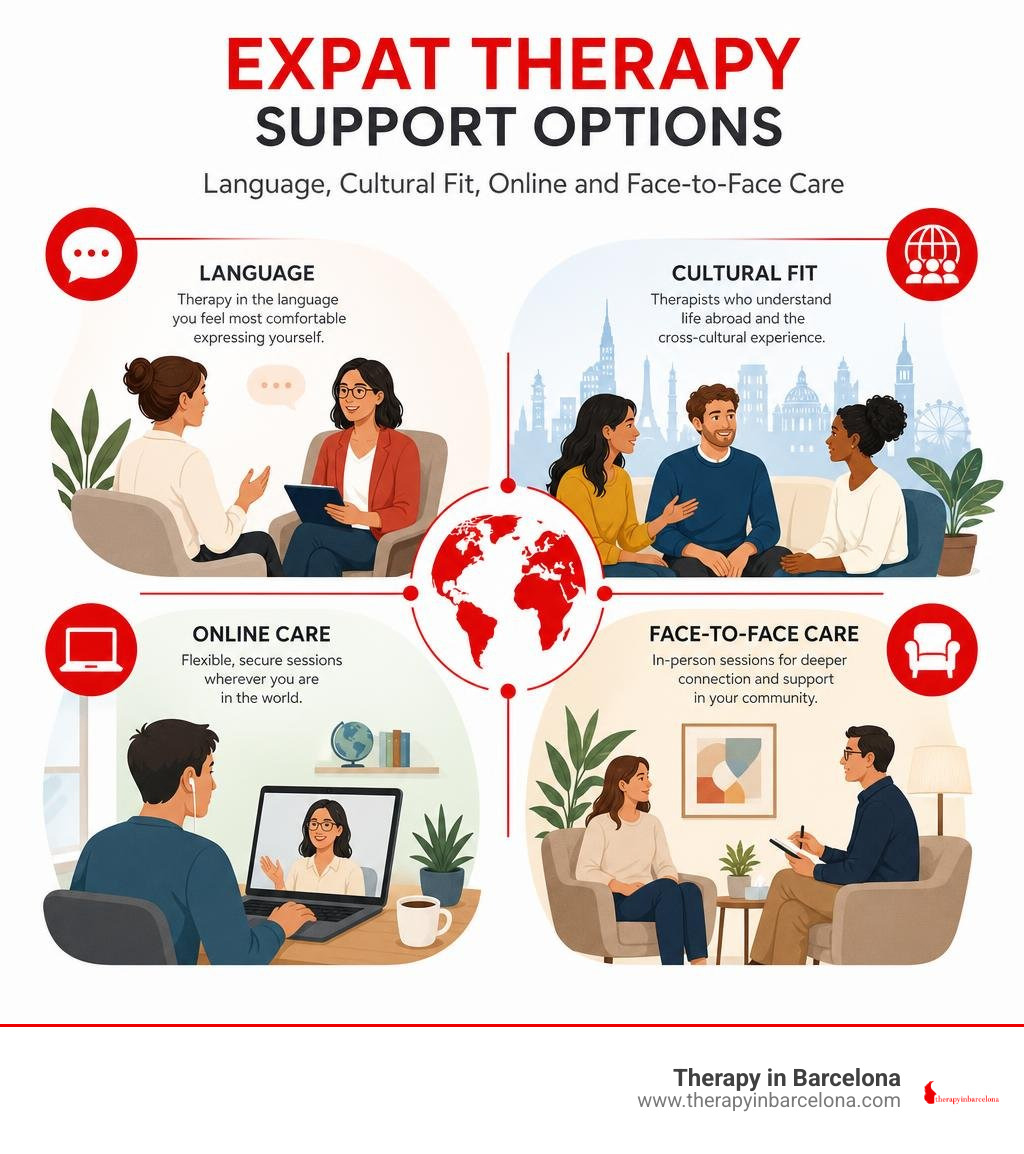
- Sessions may be available in your preferred language, online or face to face, depending on the service and your location.
- Therapy is not only for a crisis. Many expats use it as a private space to make sense of a major transition before stress becomes harder to carry alone.
Moving country can look positive from the outside while feeling unsettling from within. You may have chosen Barcelona, gained a career opportunity, or moved for someone you love, yet still miss familiar language, friendships, family, and the version of yourself that felt more certain.
This is especially common when one partner’s work shapes the move, when a family is adapting at different speeds, or when a teenager is trying to belong at a new school. International life can also bring a revolving door of friendships, practical pressures such as paperwork and language barriers, and difficult questions about whether to stay or return home.
Unique Psychological Challenges of Life Abroad
Living in a foreign country brings unexpected emotional complexity. While international relocations are often celebrated as exciting adventures, the reality involves significant psychological shifts. Expatriates frequently encounter disorientation as familiar social networks, career structures, and daily routines dissolve. Exploring expat mental health shows that moving abroad forces individuals to reconstruct their daily lives from the ground up.
One of the most profound struggles involves identity disruption. Professional credentials or social roles held in a home country may not translate seamlessly to a new environment. This dynamic is particularly evident in accompanying partners. Trailing spouses frequently experience loss of professional identity, career interruption, and unspoken resentment when relocating for a partner’s employment.
To illustrate these common strains, consider a fictional composite example representing common expat challenges, not a real client. After moving to Spain to support a partner’s corporate relocation, this individual experienced a sudden loss of independence. Despite having a successful background in marketing, language barriers and visa restrictions temporarily paused their career. Over time, isolation turned into persistent self-doubt. Experiences like this demonstrate how environmental changes can directly influence self-worth.
Rootlessness is another distinct stressor among international residents. When individuals stay abroad for extended periods, home can start to feel like a distant memory, yet the host culture may never fully feel like home either. For deeper context on these adjustment hurdles, reading about The Hidden Challenges Of Being An Expat In Spain Why Many Dont Last sheds light on why initial enthusiasm can fade into chronic exhaustion.
When emotional distress feels severe or overwhelming, seeking immediate local crisis support is essential. International residents in Spain can access public emergency services by dialling 112, or reach Spanish mental health crisis helplines such as 024 for immediate confidential care.
The High-Achiever Trap and Overcoming Therapy Stigma
Expatriates are typically highly capable, bright, adventurous, and adept at problem-solving. However, these positive traits can sometimes create a barrier to receiving support. Many high-achieving internationals fall into a perfectionism trap, believing they ought to handle every transition hurdle independently without complaining.
This mindset often leads to silent anxiety and chronic self-pressure. Internationals may experience subtle forms of relocation guilt, telling themselves that because living abroad was a voluntary choice, they have no right to feel miserable or exhausted. This internal pressure makes seeking help feel like a personal failure rather than a healthy step toward well-being.
Overcoming the stigma surrounding mental healthcare begins with recognising that consulting a professional is simply an extension of strategic problem-solving. Seeking psychological guidance provides a non-judgmental space to process overwhelming feelings without fear of appearing ungrateful to family or friends back home.
Navigating Culture Shock and Expat Homesickness
Culture shock is more than temporary confusion over local customs. It represents a continuous cognitive burden as the brain works overtime to process unfamiliar social cues, administrative rules, and communication styles. Daily friction with local bureaucracy can turn simple tasks into exhausting ordeals.
Homesickness among internationals often functions as a subtle form of grief. It involves mourning lost support systems, missed family milestones, and the effortless comfort of a native environment. When friends in global hubs relocate frequently, internationally mobile residents also contend with “revolving-door” grief as local support networks constantly shift.
Therapeutic support offers structured strategies for rebuilding a sense of belonging. Reading From Homesick To Hopeful A Guide To Expat Depression Therapy illustrates how processing relocation grief allows individuals to transition from feeling disempowered to feeling grounded in their host country.
Why Specialised Therapy for Expats Matters
Standard psychological care often focuses on traditional life transitions without accounting for cross-cultural dynamics. In contrast, specialised therapy for expats explicitly addresses how geographic displacement, cultural adaptation, and international lifestyle pressures impact mental health.
The therapeutic alliance—the trust and connection between client and clinician—serves as the single strongest predictor of successful therapy outcomes. When working with a clinician who understands international mobility, clients do not need to spend valuable session time explaining basic concepts like visa stress, cultural dislocation, or the dynamics of living far from family.

A specialised clinician understands the unique pressure points of life abroad. Insights from Thriving Abroad A Guide To Expat Mental Health emphasise that targeted therapeutic support helps internationals build long-term psychological resilience.
Language and Cultural Fit in Mental Health Care
Expressing deep emotional pain, subtle childhood memories, or complex relationship dynamics is often easiest in one’s native language. Speaking in a mother tongue can help emotions feel more immediate, natural, and connected, making it easier to express experiences that may be difficult to put into words in a second language.
Having access to native-language nuances allows clients to feel truly understood without needing to translate their feelings. Cross-cultural competence ensures that clinicians respect the client’s cultural background while understanding the cultural norms of their host country. Internationals searching for localized care in Spain can explore dedicated English-speaking therapy options tailored to expatriate needs.
Key Evidence-Based Modalities Used in Expat Therapy
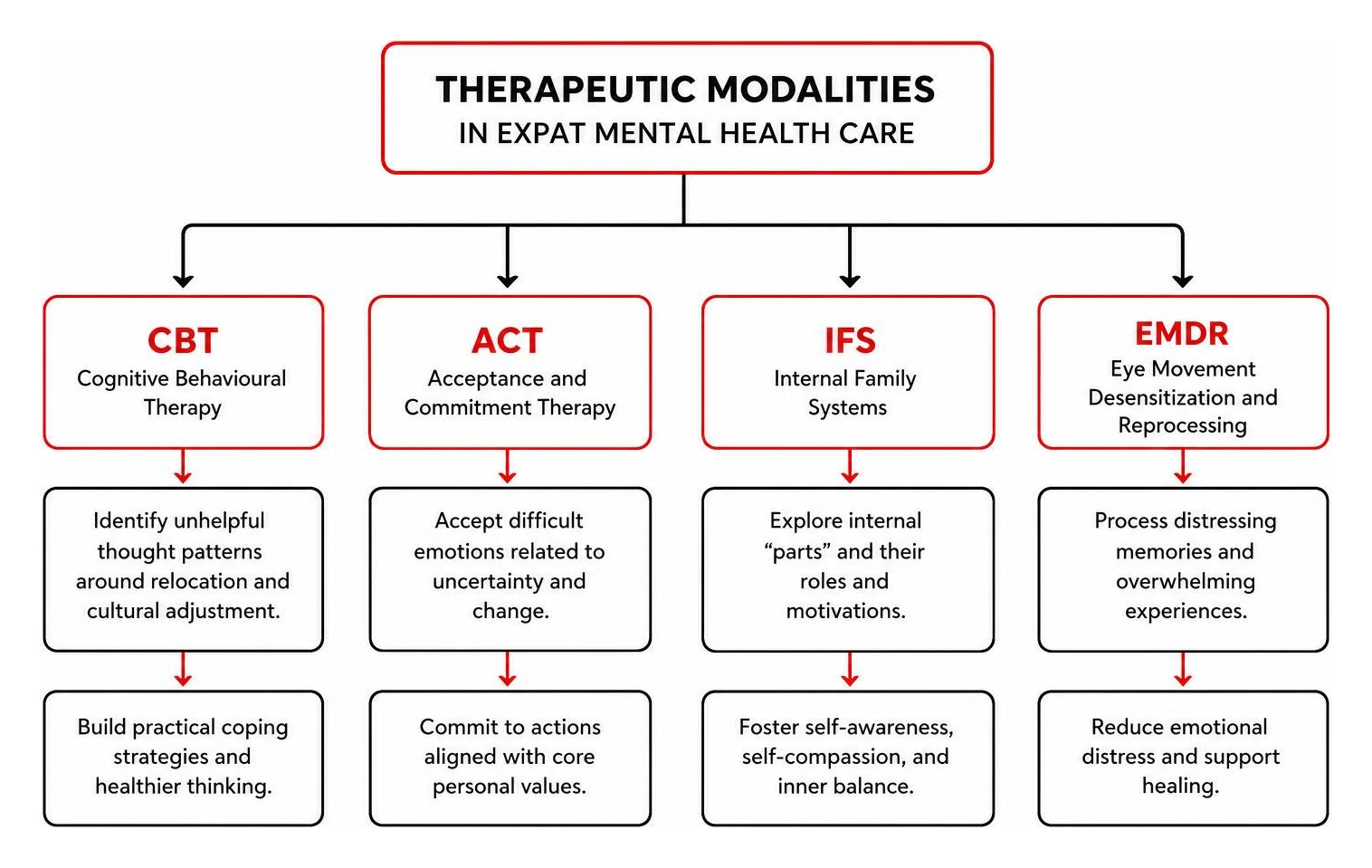
Specialised expat mental health care integrates established, evidence-based therapeutic frameworks tailored to international challenges:
- Cognitive Behavioural Therapy (CBT): Focuses on identifying unhelpful thought patterns surrounding relocation, cultural adjustment, and self-imposed pressure, replacing them with practical coping strategies.
- Acceptance and Commitment Therapy (ACT): Helps clients accept difficult emotions associated with uncertainty while committing to actions aligned with their core personal values.
- Internal Family Systems (IFS): Assists individuals in exploring different internal “parts”—such as the high-achieving perfectionist or the lonely self—fostering self-compassion.
- Eye Movement Desensitisation and Reprocessing (EMDR): Helps process painful past experiences or distressing relocation events.
Benefits of Virtual and Global Mental Health Support
Virtual mental health services have made psychological care more accessible for globally mobile populations. Online counselling and therapy offer a flexible and convenient way to access support for anxiety, stress, life transitions, and other emotional challenges, regardless of location.
Location independence guarantees that internationally mobile professionals, digital nomads, and frequent travellers maintain continuity of care regardless of their physical coordinates. Online therapy also provides discreet care for individuals living in small international communities where privacy might feel compromised at local clinics.
Resources like Mental Health On The Move A Guide To Expat Counseling highlight how teletherapy bridges geographical gaps. Internationals seeking virtual care can easily access online therapy tailored specifically to expats.
How Online Therapy for Expats Creates Continuous Support
One of the primary benefits of virtual care is scheduling flexibility across time zones. When internationals relocate to a new city or travel for work, online therapy eliminates the need to restart the therapeutic process with a new practitioner.
Digital nomads and international workers benefit significantly from predictable, secure teletherapy video sessions. Maintaining a stable therapeutic relationship across borders creates a comforting anchor during times of physical change.
How to Select the Right Mental Health Professional Abroad
Choosing the right therapist while living in a foreign country requires evaluating professional credentials, cultural sensitivity, and practical logistics.

Selecting an appropriate practitioner involves reviewing key resources. Reading The Complete Guide To Expat Mental Health Support Resources offers a structured foundation for evaluating options. Internationals across Spain can also check directory listings across major hubs including Madrid, Valencia, Málaga, Alicante, or Las Palmas de Gran Canaria.
How to Choose the Right Specialist in Therapy for Expats
When selecting a practitioner, it is helpful to verify their qualifications and ensure they hold valid psychology credentials. Preferring clinicians with lived expatriate experience ensures that the therapist possesses personal insight into cross-cultural adjustment.
Bespoke matching services prioritise client-therapist alignment over random scheduling. A thoughtful intake process evaluates specific needs, goals, and communication styles to foster strong therapeutic rapport from the first session.
Practical Considerations: Fees, Insurance, and Accessibility
Navigating mental healthcare options involves evaluating different provider models. Each option can be useful, depending on your needs, budget, language preferences, and level of urgency.
Public System Clinicians
Host countries often provide public mental health care. While accessible, services may involve long waitlists, strict session caps, and limited native-language availability for non-citizens.
Large Online Platforms
Directory apps and automated matching platforms offer global convenience. However, some operate on corporate subscription models or utilise automated matching algorithms rather than personal intake assessments.
Local Practices
Local private practices can be a good fit for people who want face-to-face care close to home and prefer a clinician embedded in the local community. Availability, languages offered, expat-specific experience, and approaches to privacy can vary, so it is worth asking clear questions before booking.
Bespoke Private Practices
Specialised private practices focus on tailored matching, complete data privacy without selling user information, and clinicians trained specifically in cross-cultural psychology. This can be especially helpful for expats who want culturally sensitive care and do not want to explain the basics of relocation stress, language barriers, or international family life in every session.
Therapy in Barcelona operates as a private-pay service, ensuring high standards of confidentiality and individual care. While services are private-pay, some clinicians offer sliding scale fees for clients experiencing financial constraints, and prospective clients are encouraged to inquire about available options. Some private international health insurance policies may also provide partial or full reimbursement for outpatient psychological care; clients can request itemised receipts to submit to their insurer but always check beforehand.
Frequently Asked Questions About Expat Therapy
How is expat therapy different from standard therapy?
Specialised therapy for expats explicitly focuses on challenges unique to living abroad, such as cultural adjustment, rootlessness, trailing spouse dynamics, language barriers, and global lifestyle friction. Rather than treating distress purely as an internal issue, expat therapy accounts for environmental and cultural contexts.
Can therapy help me decide whether to stay abroad or return home?
Yes. Deciding whether to remain in a host country or repatriate is one of the most stressful decisions an expat can face. Therapy provides a neutral, objective space to explore underlying core values, process relocation guilt, and gain clarity without external pressure from family or employers.
Is online therapy as effective as face-to-face sessions?
Yes. Online psychotherapy can provide consistent, high-quality support while offering greater flexibility and accessibility. This makes teletherapy a practical option for internationally mobile individuals who may need continuity of care across locations..
Conclusion: Building Your Support Network Abroad
Building a fulfilling life in a foreign country takes time, patience, and the right support network. Navigating emotional transitions abroad does not have to be done alone.
Founded in 2011 by Australian psychologist Leigh Matthews, Therapy in Barcelona provides multilingual online and in-person therapy for international adults, couples, teens, and families, with personalised therapist matching.
To explore tailored support for your journey, learn more about Expat Therapy. If you’d like support, book a Free Discovery Call.
What step will you take today to make your international experience feel more grounded and connected?
