


Therapy for Internationals: Finding Your Path to Well-being

Therapy for internationals offers a vital lifeline for those living abroad, navigating the complexities of cultural adjustment and mental health challenges. Whether it’s the thrill of a new city like Barcelona or the daily problems that accompany life in a foreign land, many internationals face unique emotional trials. Key challenges include:
- Cultural Displacement: Feeling out of place and struggling to integrate.
- Homesickness: Missing familiar comforts and support networks.
- Isolation: Difficulty in forming meaningful connections.
- Identity Confusion: Balancing between multiple cultural identities.
Moving to a new country can be exhilarating. Yet, it’s not unusual for these experiences to be peppered with feelings of loneliness or frustration. People like Emily or Amber, fictional yet relatable examples, often find themselves asking: Why do I feel lost even when everything seems perfect on the outside?
Understanding and addressing these emotional difficulties is crucial. Therapy can play a central role in this journey, providing a safe space for internationals to explore their feelings. Through therapy, individuals can uncover strategies to improve their mental wellness and steer their expat experience more smoothly. As Leigh Matthews—an Australian psychologist and founder of Therapy in Barcelona—affirms, culturally sensitive therapy can help untangle the myriad threads of living abroad and empower expats to redefine their path to well-being.

Understanding the Expat Experience
Living abroad offers a world of new opportunities and experiences. However, it also presents unique challenges that can impact mental well-being. These challenges often include cultural displacement, homesickness, and isolation.
Cultural Displacement
Imagine moving to a new country, excited to explore and immerse yourself in a different culture. Yet, amidst the excitement, you might feel like a fish out of water. This sensation is called cultural displacement. It’s the feeling of being out of place in a new environment. You might find yourself struggling to understand local customs or feeling disconnected from the culture around you. This can lead to stress and anxiety, making it hard to fully enjoy your new surroundings.
Homesickness
Homesickness is a common experience for many expats. Missing the familiar comforts of home, such as family, friends, and even your favourite local coffee shop, can be tough. It’s normal to feel a longing for the people and places you left behind. This longing can sometimes overshadow the excitement of living in a new place, leading to feelings of sadness and nostalgia. Regular communication with loved ones back home can help soothe these feelings, providing a sense of continuity and comfort.
Isolation
Forming new friendships in a foreign country can be challenging. Language barriers, cultural differences, and the absence of familiar support systems can make it difficult to connect with others. This can lead to feelings of isolation and loneliness. Building a support network in your new country is crucial. Joining local expatriate groups or clubs can provide opportunities to meet people with similar experiences and create meaningful connections.
Therapy can be a valuable resource for those experiencing these challenges. Culturally sensitive therapy, like that offered by Therapy in Barcelona, provides a safe and understanding environment to explore these feelings. It empowers internationals to steer their emotions and find effective strategies to improve their mental well-being. As Leigh Matthews, founder of Therapy in Barcelona, highlights, therapy can help untangle the complex emotions of expat life, enabling individuals to redefine their path to well-being.
Therapy for Internationals
Living in a new country can be both exciting and daunting. As an expat, you might face unique challenges that impact your mental health. Therapy for internationals can offer support custom to these needs, especially through online platforms.
Benefits of Online Therapy
Online therapy brings many benefits, making mental health support more accessible and convenient for internationals. Here’s how:
Accessibility and Convenience
Moving to a new country often means leaving behind familiar support systems. Finding an English-speaking therapist who understands your cultural background can be tough. Online therapy bridges this gap. It allows you to connect with therapists who speak your language and understand the expat experience, no matter where you are. You can have sessions from the comfort of your home, eliminating the need to travel and making it easier to fit therapy into your schedule.
Secure Platforms
Worried about privacy? Online therapy platforms are designed with security in mind. They use secure, HIPAA-compliant video chat systems to ensure your sessions are private and confidential. This means you can focus on your mental health without concerns about data breaches or privacy violations.
Expat Support
Therapists who specialise in working with internationals offer more than just language compatibility. They understand the unique challenges of expat life, such as cultural displacement, homesickness, and isolation. This cultural sensitivity is crucial for effective therapy. It helps create a safe space where you can freely explore your feelings and work on strategies to improve your well-being.
Therapy in Barcelona offers this kind of support, understanding the complexities of expat life and providing a personalised approach to therapy. As Leigh Matthews, founder of Therapy in Barcelona, notes, therapy can be a guiding light for internationals, helping them steer their emotions and find their path to well-being.
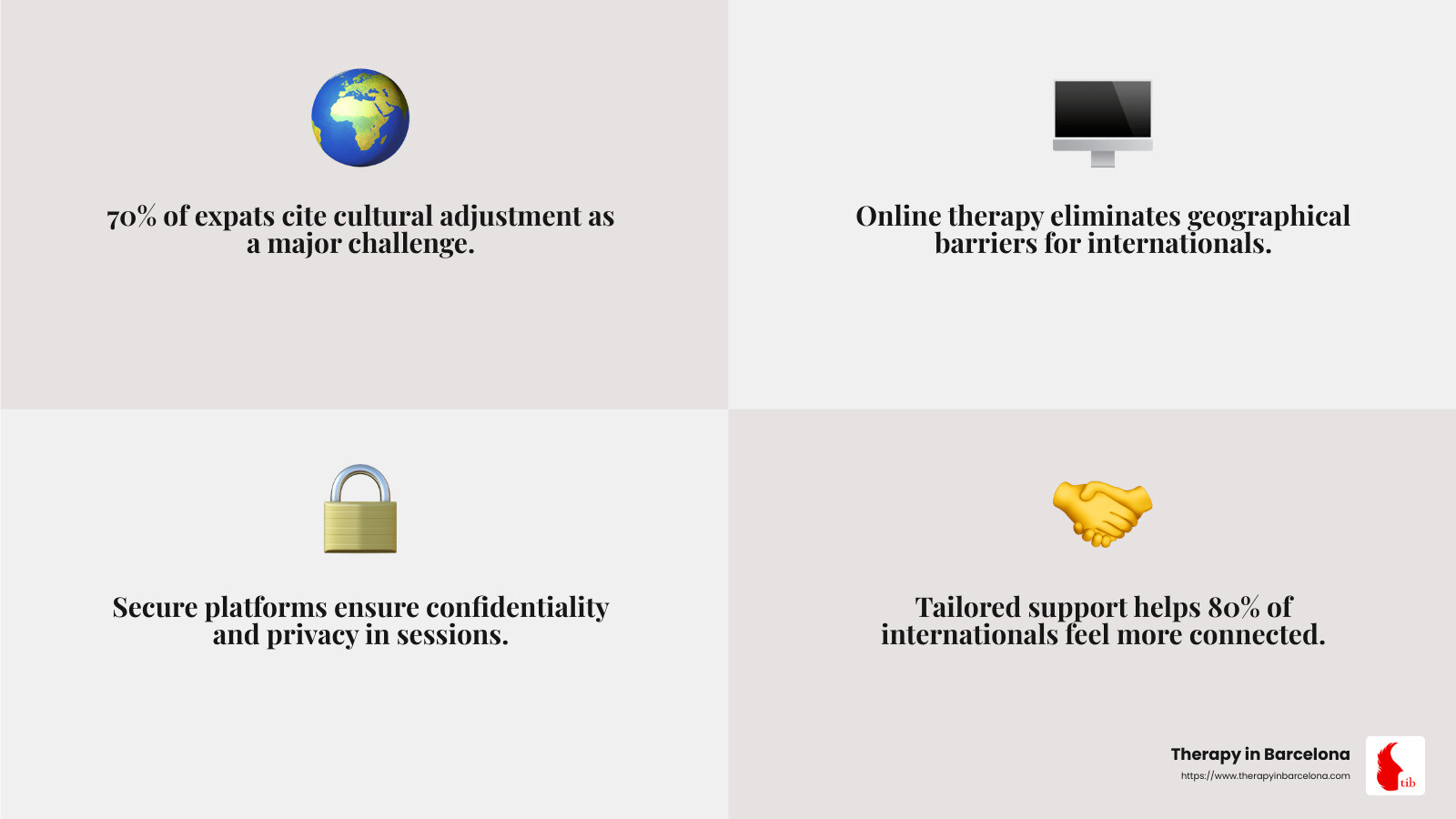
In summary, online therapy provides a lifeline for internationals seeking mental health support. It combines accessibility, convenience, and cultural understanding to help expats thrive in their new environments.
Common Challenges Faced by Internationals
Addressing Cultural Adjustment
Moving to a new country can be thrilling, but it often comes with challenges that can impact your mental health. Many internationals experience anxiety, depression, and identity issues as they adjust to a new culture.
Anxiety and Depression
Adapting to a new environment can be overwhelming. You might feel anxious about fitting in or making new friends. The stress of navigating unfamiliar systems and cultural norms can also lead to feelings of depression. Studies show that expats are at a higher risk of experiencing these mental health issues due to the pressures of adjusting to a new life abroad.
Identity Issues
Living in a different culture can make you question your identity. You may feel torn between your home culture and the new one, leading to confusion and stress. This is a common experience for many internationals, especially those who are long-term expatriates or have moved frequently. The sense of being “in-between” cultures can be unsettling.
Cultural Sensitivity
Therapy that acknowledges and respects cultural differences is crucial for internationals. Culturally sensitive therapists understand the nuances of living abroad and can offer support that resonates with your unique situation. This sensitivity helps create a safe space where you can explore your feelings without judgment.
Custom Support
Every expat’s experience is different, so custom support is essential. Therapy in Barcelona provides personalised support that takes your individual circumstances into account. By tailoring therapy to your specific needs, therapists can help you develop coping strategies and build resilience in your new environment.
Take Emily, for example. She’s a 34-year-old professional from the UK who moved to Barcelona seeking trip. While Emily is a fictionalised example, her story mirrors the struggles many expats face when adapting to a new country. She found herself battling unexpected loneliness and identity confusion. With the help of culturally sensitive therapy, Emily was able to find her footing and accept her new life abroad.
Addressing these challenges is key to thriving as an international. With the right support, you can steer the complexities of cultural adjustment and find your path to well-being.
Frequently Asked Questions about Therapy for Internationals
When you’re living abroad, finding the right support can be confusing. Here are some common questions about therapy for internationals to help guide you.
Can I provide therapy internationally?
Yes, therapists can provide therapy internationally, but they must comply with the laws and regulations of both their home country and the country where their clients reside. Online therapy platforms have made it easier for therapists to reach clients across borders, but it’s crucial to be aware of licensing requirements and legal considerations in each region.
Can you get free therapy in Spain?
Free therapy options are available in Spain, though they are limited to public health services. Some community health centers, non-profits, and universities may offer free or low-cost therapy services. Additionally, many therapists offer sliding scale fees based on income. It’s important to research local resources or online directories to find available options. That availability may vary depending on location and demand.
Navigating therapy options as an international can be challenging, but understanding these aspects can help you make informed decisions about your mental health support.
Conclusion
Therapy in Barcelona is more than just a therapy practice; it’s a supportive community for internationals navigating life in a foreign land. Founded by Leigh Matthews, an Australian psychologist with experience of the expat journey, this practice offers a unique blend of personalised therapist matching and culturally sensitive support.
Personalised Therapist Matching
Finding the right therapist can significantly impact your therapeutic journey. At Therapy in Barcelona, we understand this importance. Our team takes the time to match you with a therapist who aligns with your specific needs and goals. This personalised approach ensures that you feel comfortable and understood, setting the stage for a successful therapy experience.
Culturally Sensitive Support
Living in a new country brings unique challenges. From cultural adjustment to feelings of isolation, expats face an array of mental health concerns. Therapy in Barcelona is dedicated to providing support that is not only professional but also culturally informed. Our therapists, many of whom are expats themselves, bring a deep understanding of the expatriate experience. This empathy and insight allow us to offer care that truly resonates with the international community.
A Sanctuary for Internationals
Whether you’re dealing with anxiety, depression, or simply the stress of adapting to a new culture, Therapy in Barcelona is here to help. We offer a range of therapy options, including in-person and online sessions, ensuring that support is accessible wherever you are. Our commitment to excellence and client-centred care makes us a trusted ally for internationals seeking mental health support in Barcelona and beyond.
Therapy in Barcelona stands as a guide of hope and healing, providing a safe space for expats to find their path to well-being. With our personalised matching and culturally sensitive approach, we empower you to face challenges, accept growth, and build a fulfilling life abroad.
