


Child and teen therapy is a crucial resource for young people navigating the complexities of their mental health. It offers a safe space where they can talk through their problems, learn coping skills, and build confidence.
- Why it matters: Therapy helps with issues like anxiety, depression, and family stress.
- Who can benefit: Anyone experiencing challenges that affect their well-being and daily life.
- What to expect: Engaging activities, supportive conversations, and skill-building.
- Parental role: Encouragement, communication, and involvement are key.
Does your child struggle with anxiety or stress? Have they been facing difficulties at school or with friends? Therapy can help. Many children and teens encounter troubling situations they can’t handle alone—whether it’s family changes, academic pressures, or emotional challenges like sadness or anger. These issues can profoundly impact their mental health, making therapy an essential component of their overall well-being.
Therapy provides a guided path toward resilience for both children and teens. As young people talk and play through their feelings with a professional, they’re taught how to steer their emotions and develop healthy habits. This supportive environment not only facilitates communication but also offers custom strategies to help them thrive both emotionally and socially.
Understanding Child and Teen Therapy
Why Children and Teens Need Therapy
Growing up can be a challenging journey, especially for children and teens who are navigating a world full of changes and pressures. From family dynamics to school stress, young people often encounter situations that can feel overwhelming. Therapy offers a supportive environment where they can express their feelings and learn to manage these challenges effectively.
Therapy provides a safe space for children and teens to explore their emotions and develop healthier coping mechanisms. It is a guiding hand that helps them understand their feelings and find constructive ways to respond. Mental health issues, such as anxiety and depression, can significantly impact a child’s daily life and well-being. Therapy offers a pathway to talk through these feelings and discover ways to improve their emotional health.
Sometimes, the entire family may benefit from therapy. Family sessions can enhance communication and foster a supportive home environment, which is crucial for a child’s progress in therapy.
Common Issues Addressed in Therapy
- Anxiety and Depression: Many young people experience feelings of worry or sadness. Therapy helps them understand these emotions and develop coping strategies.
- ADHD: Attention-deficit/hyperactivity disorder can affect a child’s ability to focus and succeed in school. Therapists teach skills to improve concentration and behaviour.
- Bullying: This can be a significant source of stress for children and teens. Therapy offers a space to talk about their experiences and learn how to handle bullying effectively.
- Family Changes: Events like divorce or moving can be disruptive. Therapy helps children adjust and express their feelings in a healthy way.
Therapy is not just about addressing problems; it’s about building strengths. By developing skills like emotion regulation and assertiveness, young people can become more resilient and confident in facing life’s challenges.

How Therapy Works for Young People
Therapy for young people is a supportive journey that helps them navigate life’s ups and downs, especially when living abroad. It’s a space where they can talk, play, and learn new skills. Let’s explore how therapy works and the different types available for children and teens.
Types of Therapy for Children and Teens
Talking, Activities, and Skill-Building
In therapy, talking is a powerful tool. Children and teens can share their thoughts and feelings in a safe space. This helps them understand their emotions better and find ways to cope. But therapy isn’t just about talking. Activities like drawing, playing, and role-playing are also used. These activities make therapy fun and engaging while teaching important skills.
Cognitive Behavioral Therapy (CBT)
CBT is a popular approach for young people. It helps them understand how their thoughts affect their feelings and actions. For instance, a child who feels anxious about school might learn to challenge negative thoughts and replace them with positive ones. CBT is effective for issues like anxiety, depression, and even ADHD. 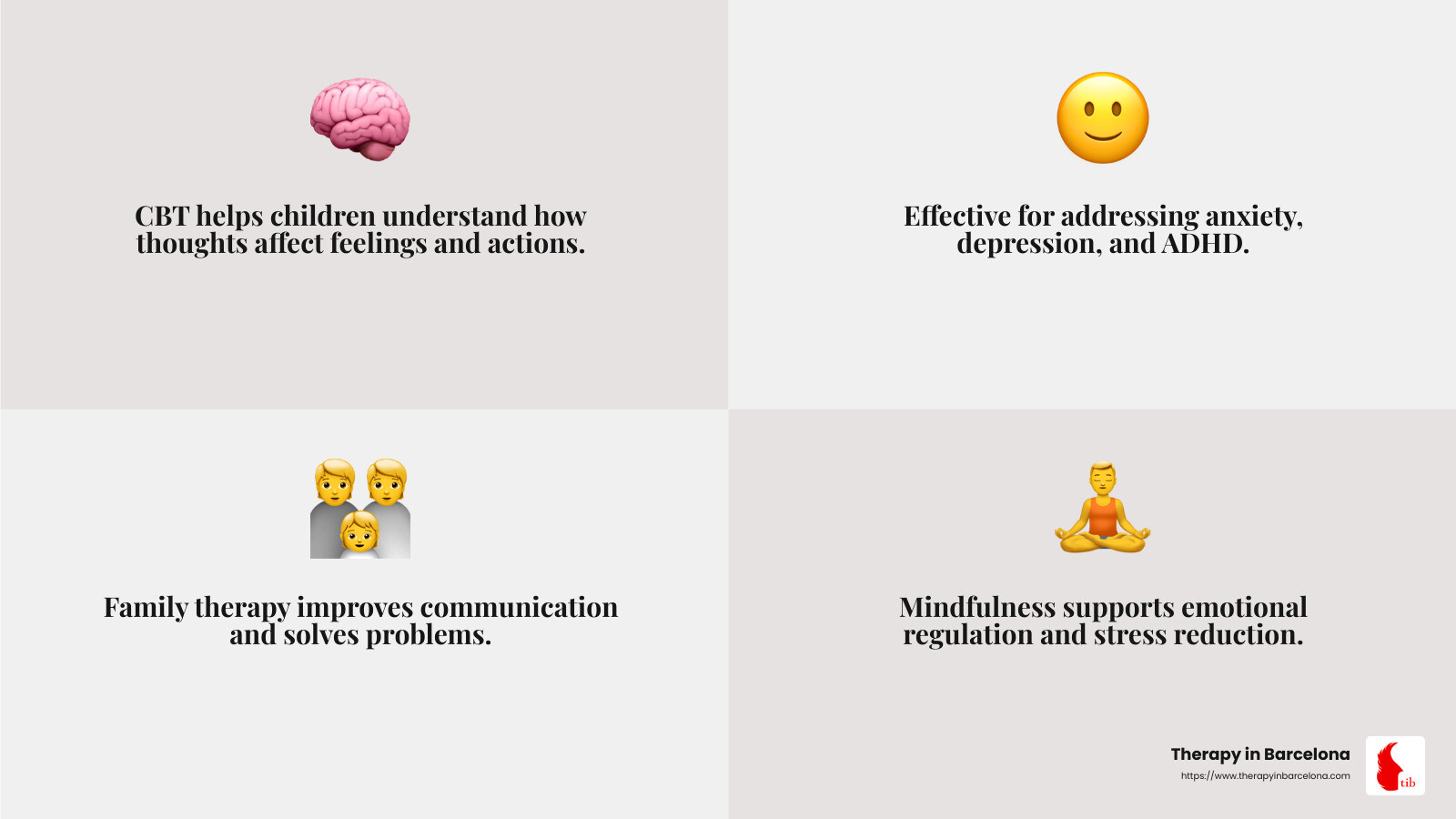
Family Therapy
Sometimes, the whole family needs to be involved. Family therapy focuses on improving communication and solving problems together. It’s especially helpful when family dynamics contribute to a child’s stress. This type of therapy can bring families closer and create a supportive home environment.
Mindfulness
Mindfulness teaches young people to stay present and calm. It’s about focusing on the here and now, which can reduce stress and improve emotional regulation. Mindfulness exercises, like deep breathing or guided imagery, are often used in therapy to help children manage their emotions.
Role of Parents in Therapy
Parents play a crucial role in their child’s therapy journey. Their support, communication, and involvement can make a big difference.
Support
Being supportive means showing empathy and understanding. It’s important for parents to listen to their child’s concerns without judgment. This creates a trusting relationship where the child feels comfortable sharing.
Communication
Open communication is key. Parents should talk with their child about therapy and encourage them to express their feelings. It’s also important for parents to communicate with the therapist to stay informed about their child’s progress.
Involvement
Parents can be involved in therapy sessions or have separate meetings with the therapist. This helps them learn strategies to support their child at home. For example, they might learn how to set boundaries or create routines that promote positive behaviour.
By working together, therapists, children, and parents can create a strong support system. This teamwork helps young people develop the skills they need to thrive, especially in a new cultural environment.
Benefits of Child and Teen Therapy
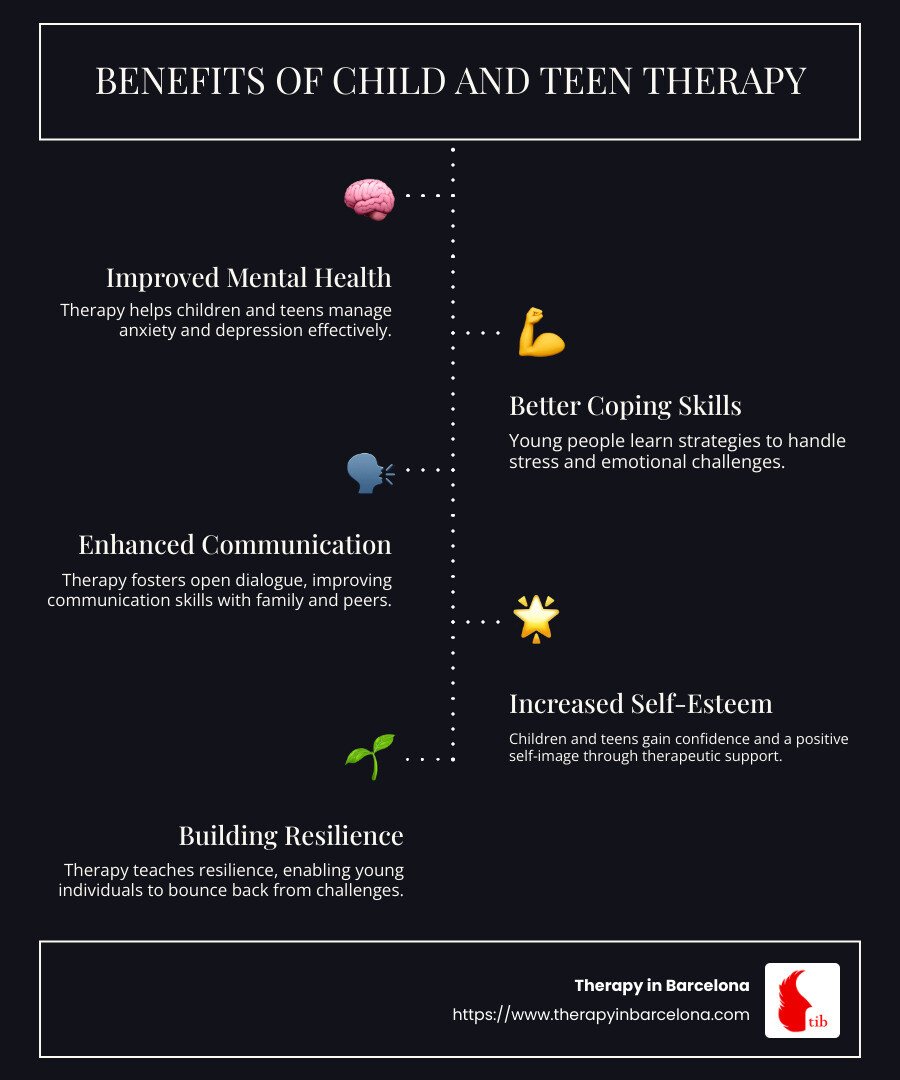
Child and teen therapy offers many benefits that extend beyond immediate emotional relief. It helps young people build essential skills that support their mental well-being and personal growth.
Building Skills and Strengths
Confidence
Therapy can boost a child or teen’s confidence by helping them understand and manage their emotions. When they learn to tackle challenges, their belief in themselves grows. Imagine a teenager who once felt too shy to speak up in class, now participating confidently after therapy sessions focused on self-expression.
Resilience
Resilience is the ability to bounce back from setbacks. Through therapy, young people learn coping strategies that help them deal with life’s ups and downs. This makes them more adaptable and better equipped to handle future challenges. For example, a child who learns to manage their anxiety can face new situations with a more positive outlook.
Self-esteem
Building self-esteem is a key focus in therapy. When children and teens recognise their strengths and achievements, they start to see their own worth. This positive self-view encourages them to pursue their goals without fear of failure. It’s like giving them a toolkit to face the world with assurance.
Emotional Regulation
Understanding and managing emotions is crucial for young people. Therapy teaches techniques like identifying feelings, expressing them appropriately, and calming down when upset. These skills help prevent emotional outbursts and promote healthier interactions with others.
Relaxation
Relaxation techniques are often part of therapy. Deep breathing, guided imagery, and progressive muscle relaxation can help young people reduce stress and anxiety. These exercises teach them how to calm their minds and bodies, which is especially useful in stressful situations like exams or social gatherings.
Assertiveness
Being assertive means expressing thoughts and feelings honestly while respecting others. Therapy helps children and teens develop this skill, enabling them to set boundaries and communicate effectively. This is particularly important when dealing with peer pressure or bullying.
By focusing on these areas, therapy empowers young people to thrive. They gain tools to steer their world with confidence and resilience, paving the way for a brighter future.
Frequently Asked Questions about Child and Teen Therapy
How to Find the Right Therapist?
Finding the right therapist for your child or teen is crucial for effective treatment. A good therapist should practice evidence-based methods, which means they use techniques proven to work through research. This ensures your child receives the best possible care.
Comfort and support are also key. Your child should feel at ease with the therapist. This comfort allows them to open up and engage fully in the sessions. Look for someone who connects well with young people and encourages them to express themselves.
To find a therapist, consider asking for recommendations from your child’s school or your family doctor. You can also check online directories that list therapists by specialization and location. It’s okay to try a few therapists to find the best fit for your child.
What Happens in a Therapy Session?
Therapy sessions for children and teens are designed to be engaging and supportive. They often involve a mix of talking, activities, and problem-solving.
Talking is a big part of therapy. It helps children express their feelings and thoughts. When they talk about their emotions, they learn to understand and manage them better. This can lead to healthier behaviour and improved relationships.
Therapists also use activities to make sessions interactive. These might include drawing, playing games, or role-playing. Activities help children learn new skills in a fun way. For example, a game might teach patience or teamwork.
Problem-solving is another focus. Therapists guide children in finding solutions to their challenges, whether it’s dealing with school stress or resolving conflicts with friends. This empowers them to handle issues independently in the future.
How Long Does Therapy Last?
The duration of therapy depends on the goals set by you, your child, and the therapist. Some children may see progress in a few months, while others typically need longer. Generally, sessions are held weekly at first to build a strong therapeutic relationship and address immediate concerns.
As progress is made, sessions might become less frequent, such as biweekly or monthly. This gradual reduction helps your child apply what they’ve learned in real life, while still having support.
The length of therapy is flexible. It should fit your child’s needs and continue until they feel confident in their ability to manage their emotions and challenges independently.
Conclusion
Therapy in Barcelona offers a unique sanctuary for the international community, providing vital mental health support tailored to the needs of expats. Living in a foreign country can be both exciting and challenging, and Therapy in Barcelona understands the complexities of this experience. They are dedicated to helping expatriates, including children and teens, navigate these challenges with empathy and expertise.
The practice stands out for its personalised approach to child and teen therapy. By matching clients with therapists who truly understand the expat experience, they ensure a culturally sensitive and supportive environment. This approach not only helps young individuals manage their emotions but also empowers them to build resilience and self-esteem. Moreover, if they are not the appropriate service, they will always guide clients to the best service for their needs. Client care comes first at Therapy in Barcelona.
Therapy in Barcelona is more than just a service provider; it’s a community hub for internationals seeking guidance and support. Whether you’re dealing with cultural adjustment, isolation, or other mental health concerns, their team of experienced therapists is ready to help. They offer both in-person and online sessions, making mental health care accessible to expats around the world.
If you’re part of the expat community in Barcelona and need support, consider reaching out to Therapy in Barcelona. Their commitment to excellence and empathy makes them a guide of hope for those seeking a better quality of life abroad.
