


Therapy for Third Culture Kids: An Expert Roundup

Therapy for Third Culture Kids offers a lifeline for individuals who grew up straddling different cultures and often feel adrift. These individuals, commonly known as Third Culture Kids (TCKs), face unique identity challenges that can affect their mental health. They often steer complex cultural adjustments, which can lead to feelings of confusion and uncertainty about where they truly belong.
Key Points about Therapy for Third Culture Kids:
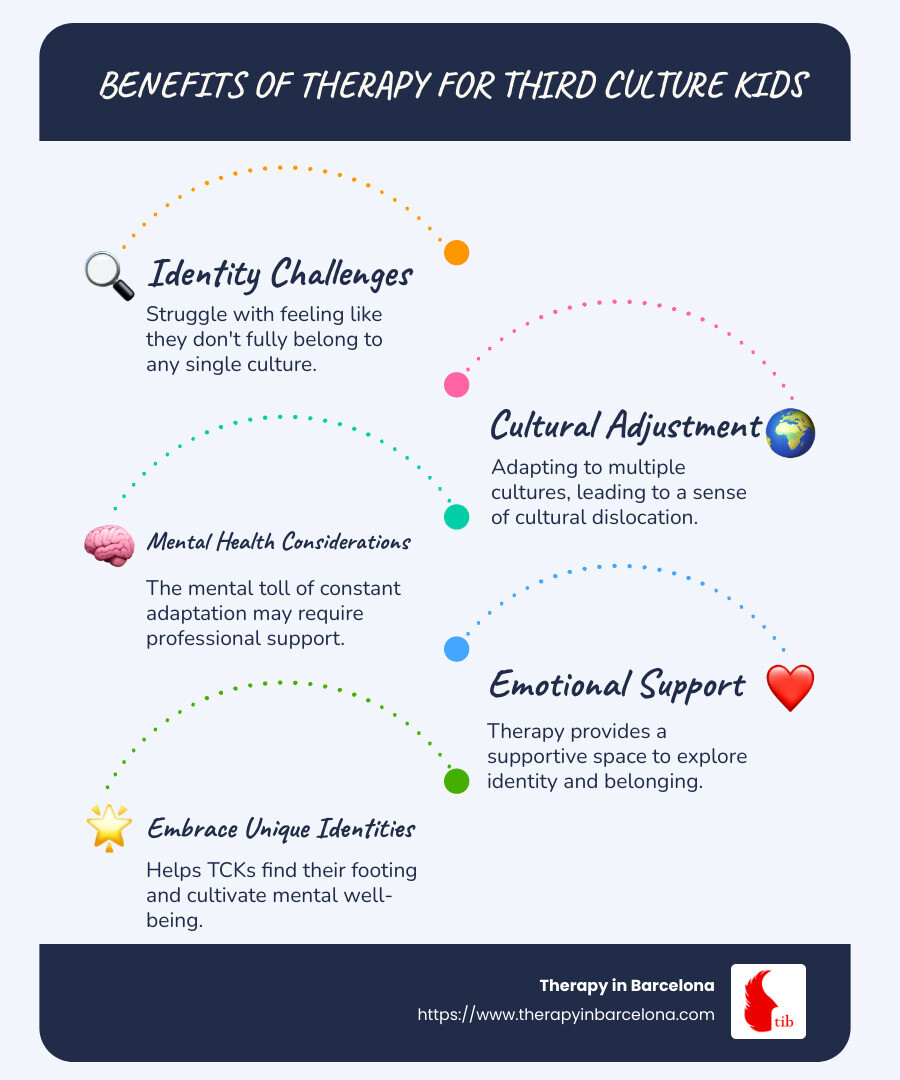
- Identity Challenges: TCKs may struggle with feeling like they don’t fully belong to any single culture. This can lead to a fragmented sense of self.
- Cultural Adjustment: Adapting to multiple cultures can be both enriching and challenging, sometimes leaving TCKs with a sense of cultural dislocation.
- Mental Health Considerations: The experience of constantly adapting to new environments can be mentally taxing, often requiring emotional support and professional help to steer these complexities.
At Therapy in Barcelona, we understand the importance of providing a supportive space for TCKs to explore these challenges. Our approach is empathetic and rooted in a deep understanding of the expatriate and Third Culture Kid experiences. We aim to help TCKs find their footing, accept their unique identities, and cultivate mental well-being.
Understanding Third Culture Kids
Global Mobility and Cultural Bridging
Third Culture Kids (TCKs) are often on the move. Their families might relocate for work, education, or other reasons, leading to frequent changes in environment. This global mobility means that TCKs grow up in diverse cultural settings, often moving between countries and continents. Unlike their peers who stay in one place, TCKs learn to steer different cultures from a young age, making them adept at cultural bridging.
Imagine living in Spain, then moving to Japan, and later to Brazil. For a TCK, this is not unusual. They learn to adapt quickly to different languages, customs, and societal norms. This adaptability can be a strength, but it can also leave TCKs feeling like they don’t fully belong anywhere. They often ask themselves: “Where is home?”
Identity Development
Identity development is a complex journey for TCKs. Growing up in multiple cultures can lead to a rich mix of experiences, but it can also cause confusion. Many TCKs struggle to answer the question, “Where are you from?” because their life story spans several countries.

This multicultural experience can lead to a unique identity. TCKs often combine elements from each culture they’ve lived in, creating a “third culture” that is all their own. However, this can also result in a fragmented sense of self, as they might not feel entirely at home in any one culture.
Navigating Identity and Belonging
The challenge for TCKs is not just about understanding their identity but also about finding where they fit in. They often feel like outsiders, even in their passport country. This can lead to feelings of cultural rejection and identity confusion.
Take Emily, for example. A fictionalised character, Emily was born in the UK, spent her childhood in Singapore, and her teenage years in Argentina. Now in Barcelona, she often wonders where she truly belongs. While Emily’s story is fictional, it mirrors the real struggles many TCKs face.
At Therapy in Barcelona, we help TCKs like Emily steer these challenges. We provide a supportive environment where they can explore their unique identities and find a sense of belonging in their multicultural world. By understanding and embracing their third culture, TCKs can develop resilience and a strong sense of self.
Therapy for Third Culture Kids
Cultural Identity
For Third Culture Kids (TCKs), cultural identity is a patchwork of experiences from different parts of the world. They often pick up pieces from each culture they live in, creating a unique identity that might not fit neatly into any single category. This can be both empowering and confusing. Imagine trying to answer the question, “Where do you belong?” when your life has been a mix of various cultural norms and values.
At Therapy in Barcelona, we understand that TCKs need a space to explore these complex identities. Our therapists provide support by helping them piece together their cultural experiences into a cohesive and empowering identity. This process often involves storytelling and reflection, allowing TCKs to see the strengths in their diverse backgrounds.
Emotional Support
The emotional landscape for TCKs can be challenging. Frequent moves and cultural shifts can lead to feelings of isolation and loss. Hidden grief from leaving friends, familiar places, and even pets behind can accumulate over time. It’s essential to acknowledge these emotions and provide a space for TCKs to express them.
Therapy offers a safe haven for TCKs to unpack these feelings. Our therapists use creative approaches to help TCKs articulate their emotions, whether through art, writing, or discussion. This emotional support is crucial in helping them process their experiences and build resilience.
Therapeutic Treatment
Therapy for TCKs requires a nuanced approach. Traditional therapy models might not always apply, as TCKs often carry a unique set of challenges. For example, what might be considered a psychological issue in one culture could be a normal reaction in another.
Our team at Therapy in Barcelona is trained to seek to understand these cultural nuances. We tailor our therapeutic treatments to fit the specific needs of TCKs, focusing on identity development, coping strategies, and emotional regulation. By doing so, we help TCKs steer their complex worlds with confidence and clarity.
In summary, Therapy for Third Culture Kids is about more than just addressing immediate emotional or psychological concerns. It’s about helping them build a strong, cohesive identity that draws from their rich, multicultural backgrounds. Through custom support, TCKs can find a sense of belonging and thrive in their unique cultural landscapes.
Navigating Identity and Belonging
Identity Confusion
Imagine being asked, “Where are you from?” and not having a simple answer. For Third Culture Kids (TCKs), this question can bring up feelings of confusion. Growing up in multiple cultures, they often struggle to define their identity. They might feel like they belong everywhere and nowhere at the same time.
This confusion is a common experience for TCKs. It stems from trying to reconcile the different cultural norms and values they’ve been exposed to. Therapy can help TCKs make sense of these mixed cultural influences. At Therapy in Barcelona, we guide TCKs through exploring their unique experiences. Through therapy, they learn to accept their multifaceted identities.
Cultural Rejection
Cultural rejection is another hurdle TCKs face. This occurs when TCKs feel excluded or different because they don’t fully fit into any one culture. They might be seen as outsiders in their passport country or in the places they’ve lived.
This sense of rejection can be tough and lead to feelings of loneliness. However, it also offers a chance for growth. Therapy provides a supportive space for TCKs to process these feelings. Our therapists at Therapy in Barcelona help TCKs understand and overcome cultural rejection. We empower them to find strength in their diverse backgrounds and to connect with others who share similar experiences.
Coping Strategies
Developing effective coping strategies is crucial for TCKs to steer identity confusion and cultural rejection. Therapy can equip TCKs with tools to handle these challenges. Here are a few strategies we focus on:
Mindfulness and Reflection: Encouraging TCKs to reflect on their experiences helps them gain clarity about their identity. Mindfulness practices can also reduce stress and improve emotional well-being.
Community Building: Finding or creating a supportive community can lessen feelings of isolation. TCKs can connect with others who understand their unique experiences through clubs, groups, or online forums.
Creative Expression: Art, writing, and other creative outlets allow TCKs to express their feelings and experiences in a safe and constructive way.
At Therapy in Barcelona, we tailor these strategies to each TCK’s needs. Our goal is to help them build resilience and thrive in their multicultural worlds. TCKs can learn to steer their identities with confidence and find a sense of belonging wherever they are.
Benefits of Therapy for TCKs
Therapy offers a wealth of benefits for Third Culture Kids (TCKs), helping them build resilience, develop coping skills, and foster personal growth. These elements are crucial for thriving in a multicultural world.
Building Resilience
Resilience is the ability to bounce back from challenges and adapt to change. For TCKs, who often face frequent relocations and cultural transitions, resilience is key. Therapy can strengthen this trait by providing TCKs with a safe space to explore their feelings and experiences.
Imagine Emily, a fictional TCK who moved from Madrid to Barcelona. She felt overwhelmed by the changes and struggled to adjust. Through therapy, Emily learned to view challenges as opportunities for growth. This mindset helped her become more resilient and better equipped to handle future transitions.
Developing Coping Skills
Coping skills are vital tools for managing stress and navigating life’s ups and downs. Therapy helps TCKs develop these skills by offering strategies custom to their unique experiences. Here are a few techniques often explored in therapy:
- Mindfulness Practices: Techniques like deep breathing and meditation can help TCKs stay grounded and calm, even in uncertain situations.
- Problem-Solving Skills: Therapy encourages TCKs to tackle problems head-on, breaking them into manageable steps.
- Emotional Regulation: Understanding and managing emotions is crucial for TCKs. Therapy provides guidance on how to process and express feelings in healthy ways.
These coping skills empower TCKs to handle stress and uncertainty with confidence.
Fostering Personal Growth
Therapy is not just about addressing challenges; it’s also about fostering personal growth. For TCKs, this means finding their strengths, passions, and values. Therapy can guide TCKs in exploring their identities and embracing their multicultural backgrounds.
Consider the story of Alex, another fictional TCK who struggled with feeling different from his peers. Through therapy, Alex learned to appreciate his unique cultural perspective. He finded a passion for storytelling, using his diverse experiences to connect with others.
At Therapy in Barcelona, we believe in empowering TCKs to grow and thrive. Our therapists provide support and guidance custom to each individual’s journey. By building resilience, developing coping skills, and fostering personal growth, TCKs can steer their multicultural worlds with confidence and find a sense of belonging.
Frequently Asked Questions about Therapy for Third Culture Kids
How to help third culture kids?
Helping Third Culture Kids (TCKs) thrive involves creating a supportive environment that acknowledges their unique experiences. One effective way is through extracurricular activities. These activities offer TCKs a chance to explore interests, make friends, and feel part of a community. Whether it’s joining a sports team or an art class, these activities provide a sense of stability and belonging.
Cultural events are another excellent way to support TCKs. Participating in local festivals or international days can help them connect with their host culture while celebrating their diverse backgrounds. These events offer a platform for TCKs to share their stories and learn from others, fostering a sense of pride in their multicultural identity.
Maintaining a connection to their home culture is also crucial. Home language classes can help TCKs preserve their linguistic heritage and strengthen their cultural identity. This continuity provides comfort and a deeper understanding of their roots.
What is the third culture kid syndrome?
The term “Third Culture Kid Syndrome” was coined by sociologist Ruth Hill Useem. It describes the unique set of challenges faced by children who spend a significant part of their formative years living outside their parents’ culture. These kids develop a “third culture” that blends elements from their home and host cultures.
Globalisation has increased the number of TCKs, making their experiences more common. However, this lifestyle can lead to identity confusion and a sense of not fully belonging to any one culture. TCKs often grapple with questions like “Where is home?” and “Who am I?”
Understanding these challenges is essential for providing the right support. Therapy can help TCKs steer their complex identities and find peace with their multicultural experiences.
What are the drawbacks of being a third culture kid?
While being a TCK offers many benefits, it also comes with its share of drawbacks. One common issue is educational difficulties. Frequent moves can disrupt schooling, leading to gaps in learning and challenges in adapting to new educational systems.
TCKs may also face emotional challenges. Constant transitions can be stressful and lead to feelings of loneliness or anxiety. They might struggle with forming lasting relationships due to the transient nature of their lifestyle.
Psychosocial issues can arise as TCKs steer different cultural norms and expectations. They may feel pressure to conform to various cultural identities, leading to confusion and stress.
Therapy can be a valuable resource for addressing these challenges. It offers TCKs a safe space to explore their feelings, develop coping strategies, and build a strong sense of self.
By understanding and addressing the unique needs of TCKs, we can help them accept their multicultural identities and thrive in a globalized world.
Conclusion
Therapy in Barcelona stands out as a beacon of support for internationals, especially Third Culture Kids (TCKs), navigating the complexities of life abroad. The practice’s commitment to personalised therapist matching ensures that clients are paired with professionals who truly understand their unique cultural and emotional landscapes. This approach not only fosters trust but also enhances the effectiveness of therapy by aligning therapeutic methods with individual needs.
Culturally sensitive support is at the heart of Therapy in Barcelona’s services. With a team of English-speaking, psychology-trained therapists who are also expats, the practice offers a deep understanding of the expatriate experience. This insight is crucial for TCKs, who often face identity confusion and cultural rejection. By providing a safe and empathetic space, Therapy in Barcelona helps TCKs explore their multicultural identities, develop resilience, and grow personally.
For those seeking therapy that acknowledges the intricate layers of a multicultural upbringing, Therapy in Barcelona offers a sanctuary where internationals can find validation and guidance. The practice’s dedication to the international community is evident in its custom services, which include a variety of therapeutic approaches to meet diverse needs.
If you’re navigating the challenges of living abroad, consider reaching out to Therapy in Barcelona. Whether you’re an adult TCK or a parent of one, their culturally informed care can support your journey towards a fulfilling and balanced life. For more information, visit Therapy in Barcelona.
