


What can teenagers talk about in therapy?

Therapy topics for teens include school pressure, friendships, family conflict, self-esteem, identity, social media and adjusting to change. A teen can start with whatever feels most relevant, even if they are not sure how to describe it yet. Together, they and their therapist can explore what is happening and practise ways to cope, communicate or set boundaries.
For a teenager who has moved to Barcelona, a question about friends might also be about language, culture or missing home. They do not have to explain everything in the first session. Starting with one concern gives them room to build trust and decide what they want to discuss next.
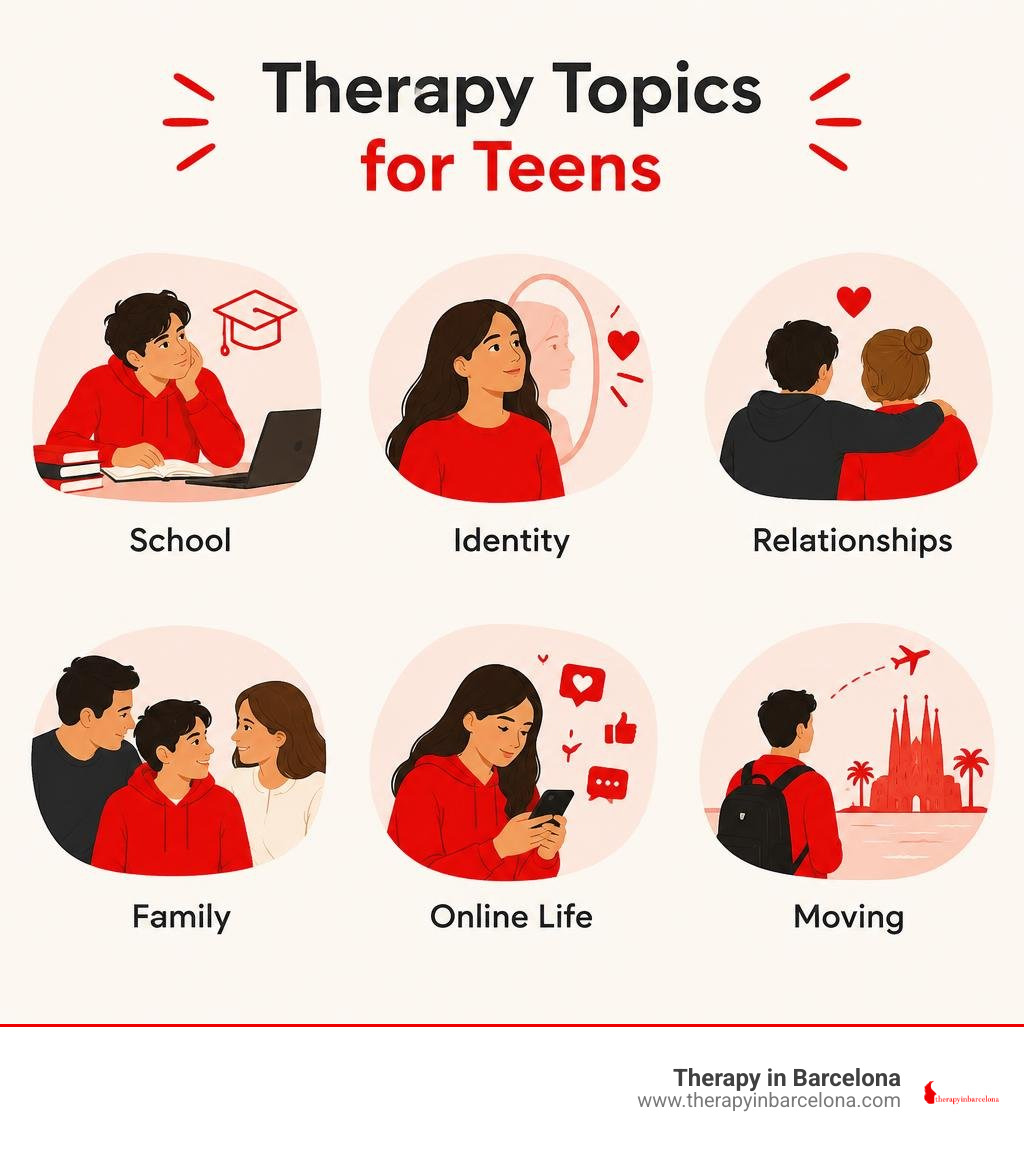
Essential Therapy Topics for Teens Facing Modern Pressures

Adolescence is a time of rapid neurological, social, and emotional change. Many young people experience emotional challenges that cause significant distress or overwhelm during their teenage years. Because so many patterns of emotional difficulty first take shape during adolescence and early adulthood, having dedicated spaces to explore personal challenges can make a vital difference.
Rather than treating a young person as a checklist of problems, counselling provides a supportive framework to unpack interconnected pressures. Below are core areas of exploration adapted for modern adolescent life.
Academic Pressure and Burnout Adolescents often experience overwhelming expectations surrounding exam performance, university applications, and daily coursework. Therapy focuses on separating self-worth from grades, building realistic time management routines, and developing sustainable sleep hygiene.
Social Media Dynamics and Digital Fatigue Constant connectivity creates continuous exposure to curated peer lifestyles, fear of missing out, and online hostility. Sessions explore healthy digital boundaries, social media literacy, and establishing offline spaces for rest.
Personal Identity and Emotional Growth Physical changes, shifting values, and questions about gender identity or sexual orientation can leave teenagers feeling uncertain. Counselling offers a non-judgemental environment to explore self-concept, clarify internal values, and foster authentic self-worth.
Family Conflict and Independence As young people naturally seek greater autonomy, tension often arises within the home. Therapeutic conversations help teens express their developing needs constructively while helping families navigate evolving boundaries.
Managing Stress, Overwhelm, and Academic Expectations
School stress remains one of the primary drivers of adolescent anxiety. When perfectionism takes hold, young people can slip into cycles of procrastination followed by intense panic. The fear of failure often leads to chronic exhaustion and a sense of defeat before an assignment even begins.
In session, therapists help clients break overwhelming projects into manageable steps. By investigating core beliefs around achievement, teens discover how to celebrate effort rather than demanding flawless outcomes. Developing balanced routines that protect rest, movement, and social connection ensures that academic ambition does not come at the expense of mental wellbeing.
Navigating Identity, Self-Esteem, and Social Comparison
Forming a coherent sense of identity is the central developmental milestone of the teenage years. Yet, constant comparison with peers and media figures can erode self-esteem. Many adolescents struggle with body image issues or find themselves suppressing their genuine interests to avoid standing out.
Therapists frequently draw upon evidence-based therapeutic toolboxes to help adolescents separate external noise from their internal values. For LGBTQ+ young people, this includes having an open, affirming space to discuss sexuality and gender. Many LGBTQ+ youth report having felt hesitant or uncomfortable disclosing their sexual identity in past counselling settings. Ensuring unreserved acceptance allows young people to explore who they are with confidence and security.
Peer Relationships, Boundaries, and Digital Dynamics
Friendships provide emotional support during adolescence, but they can also be a significant source of distress. Cliques, shifting alliances, and toxic dynamics create intense worry. Cyberbullying and pressure to maintain online visibility further complicate communication.
Counselling sessions offer a practical laboratory for interpersonal skills. Young people learn to identify relationship red flags, practise saying no without guilt, and resolve disagreements through clear communication. These skills help them build reciprocal, supportive friendships that respect their individuality.
Evidence-Based Modalities and Creative Techniques for Adolescents

Effective adolescent counselling rarely consists of fifty minutes of unbroken interrogation. Sitting across from an adult and being expected to verbalise painful emotions can feel intimidating. Integrating expressive, somatic, and cognitive tools allows teenagers to participate actively in ways that feel natural to them.
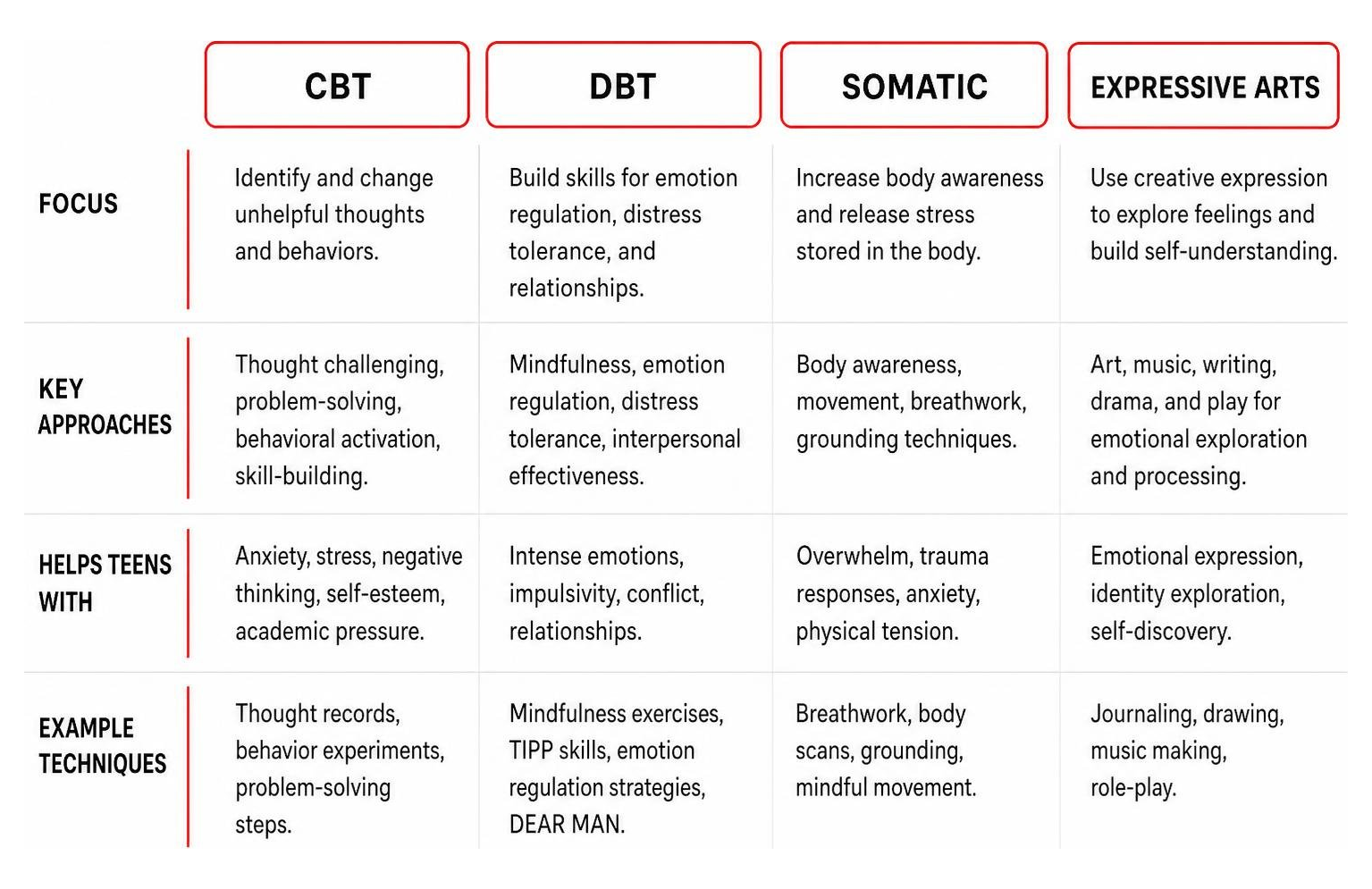
Practical CBT and DBT Therapy Topics for Teens
Cognitive Behavioural Therapy (CBT) and Dialectical Behaviour Therapy (DBT) offer concrete frameworks that resonate well with adolescents. Rather than using dry worksheets, therapists adapt these modalities into engaging exercises.
- Thought Court: Teens act as both defence and prosecution to examine the evidence behind catastrophic assumptions (e.g., “Everyone noticed me mess up and thinks I’m weird”).
- Text-Thread Thought Records: Reframing automatic negative thoughts using familiar chat interfaces to identify cognitive distortions.
- Distress Tolerance Toolkits: Building personalised DBT crisis plans using sensory tools, temperature changes, and paced breathing during moments of intense overwhelm.
- Behavioural Activation: Designing “one-degree shifts”—small, achievable actions to break cycles of low motivation and emotional withdrawal.
For families seeking tailored support, adolescent therapy in Barcelona integrates these evidence-based methods with compassionate, individualised care.
Somatic, Mindfulness, and Creative Expressive Interventions
Emotions often show up physically long before a teenager has the words to name them. Stomach aches, chest tightness, and muscle tension are common indicators of unprocessed stress. Somatic check-ins help young people tune into bodily sensations without fear.
Mindfulness exercises can be tailored to adolescent interests, such as mindful music listening or guided body scans. Creative interventions, including identity crests, playlist analysis, and expressive writing, offer alternative channels for emotional release. These activities allow young people to process complex experiences at a safe, self-directed pace.
Engaging Resistant Adolescents and Fostering Relational Safety
It is very common for a teenager to arrive at counselling feeling sceptical or guarded. Most young people do not initiate the therapy process themselves; they are brought along by concerned parents or teachers. Building a genuine therapeutic alliance requires meeting this hesitation with warmth, curiosity, and complete respect for their autonomy.
Tailoring Collaborative Therapy Topics for Teens Who Feel Reluctant
Reluctance is a normal, self-protective response rather than deliberate defiance. When therapists honour a client’s agency, defence mechanisms soften.
- Visual Readiness Scales: Using informal “talk meters” so teens can indicate how ready they feel to discuss particular subjects.
- Co-Designed Agendas: Allowing the adolescent to choose which topics to prioritise and which to put aside for later.
- Shared Interests as Bridges: Discussing music, gaming, creative arts, or sports to establish connection and trust before addressing deeper issues.
- Clear Privacy Boundaries: Clarifying upfront that sessions belong to them, which immediately differentiates therapy from a school or parental disciplinary setting.
Adapting Interactive Interventions for In-Person and Online Sessions
Session formats can be tailored to match the client’s preferences and location. While face-to-face sessions in our Barcelona office offer a grounded, welcoming sanctuary, online therapy provides engaging care for teens across Spain—including international communities in Madrid, Valencia, and Málaga—as well as worldwide.
Digital sessions leverage interactive tools such as collaborative whiteboards, emoji mood scales, and screen-shared coping menus. For digital-native youth, engaging through secure video often feels comfortable and approachable, fitting smoothly alongside their school and extracurricular schedules.
Supporting the Whole System: Family Dynamics and Expat Transitions
An adolescent does not exist in isolation. Their emotional wellbeing is deeply tied to their broader family system and social environment. When families navigate significant life changes, maintaining open communication becomes essential.
Bridging Communication Gaps Between Parents and Adolescents
As teenagers seek autonomy, everyday conversations can easily slide into power struggles. Parents often worry when their child becomes more private, while teens may interpret well-intentioned check-ins as surveillance.
Therapists work to bridge these gaps by modelling active listening and validating different perspectives. Consulting guidelines for opening difficult adolescent conversations can help caregivers choose calm, low-pressure environments—such as casual car rides—to connect. When tensions persist, collaborative family therapy sessions help establish mutual respect, healthy detachment, and clearer boundaries.
Addressing Relocation, Cultural Adjustment, and Third-Culture Identity
Moving countries presents distinct psychological hurdles for young people. International relocation often involves grieving severed friendships, adapting to unfamiliar school systems, and navigating local language differences.
Consider Maya, a fictional composite profile of an expat teenager living in Spain. After moving from London to an international school near Alicante, Maya struggled with acute loneliness and academic anxiety. She felt caught between cultures, neither fully belonging to her previous home nor settled in her new surroundings.
Through personalised counselling, Maya explored her Third Culture Kid (TCK) identity, processed her grief over leaving close friends, and developed practical strategies to form new connections. Therapy helped her integrate her international background as a unique personal strength rather than a source of isolation.
When exploring mental health care, expat families often consider alternative options such as public system clinicians, large online platforms, and local practices. While these pathways offer different routes to support, Therapy in Barcelona provides distinct advantages through bespoke therapist matching, expat-specific cultural sensitivity, strict privacy with no data selling, and dedicated private-pay care tailored to the international community.
Frequently Asked Questions About Therapy for Adolescents
What happens during a teenager’s first counselling session?
The initial meeting focuses on building rapport and establishing a relaxed, conversational tone. The therapist introduces themselves, explains how therapy works, and clarifies privacy guidelines. Rather than an interrogation, the session explores the teen’s hobbies, daily routines, and personal goals, allowing them to gauge how comfortable they feel working together.
How do therapists balance adolescent privacy with parent updates?
Confidentiality is fundamental to effective adolescent therapy. What a young person shares remains private between them and their counsellor, which builds the trust necessary for honest exploration. The clear exception is safety: if there is an imminent risk of self-harm, harm to others, or abuse, therapists follow strict safety protocols to ensure parents and support networks are appropriately involved. Outside of safety concerns, general progress is shared with parental collaboration only with the teen’s knowledge and consent.
Can online counselling be as engaging for teenagers as in-person sessions?
Yes. Many young people find virtual sessions accessible and comfortable within their familiar home environments. Online sessions utilise interactive digital tools, visual check-ins, and shared resources that keep collaboration dynamic. This flexibility makes consistent psychological support possible for families residing in regions like Marbella, Sevilla, or Gran Canaria, as well as those relocating abroad.
Guiding Adolescents Toward Confidence and Resilience
Supporting an adolescent through emotional turbulence, identity questions, and life transitions requires patience, understanding, and skilled guidance. When given an authentic, non-judgemental space, young people develop the self-awareness and emotional resilience needed to thrive.
Key takeaways for supporting teen mental health include:
- Prioritising connection and active listening over unsolicited advice.
- Respecting their developing need for personal autonomy and privacy.
- Normalising emotional ups and downs without judgment or shame.
- Addressing underlying stress early before it leads to chronic burnout.
- Seeking culturally sensitive professional guidance when challenges feel overwhelming.
Therapy in Barcelona is a trusted psychology practice in Spain established since 2011. Founded by Leigh Matthews, an Australian Psychologist who has lived in Barcelona since 2011 and is highly experienced in supporting internationals, the practice provides specialised care for adults, couples, teens, and families. Our psychology-trained therapists offer personalised matching to ensure the right fit for your family. Primary sessions are conducted in English, with additional support available in German, French, Spanish, Afrikaans, Portuguese, Austrian-German, and Swiss-German.
If a young person is experiencing an acute mental health crisis or requires urgent support, please reach out immediately to dedicated crisis services:
- Spain Crisis Helpline: A free, confidential, 24/7 mental health and suicide prevention helpline across Spain.
- Teléfono de la Esperanza: Confidential 24/7 emotional crisis support throughout Spain.
- International Resources: If outside Spain, contact your local emergency services or visit your nearest emergency medical facility.
Therapy in Barcelona operates as a private-pay service.
If you’d like support, book a Free Discovery Call. Face-to-face sessions are available at our central Barcelona office, and online therapy is available worldwide, as well as for families in Madrid, Valencia, Málaga and other hubs across Spain.
