


What is Third Culture Kid Therapy?
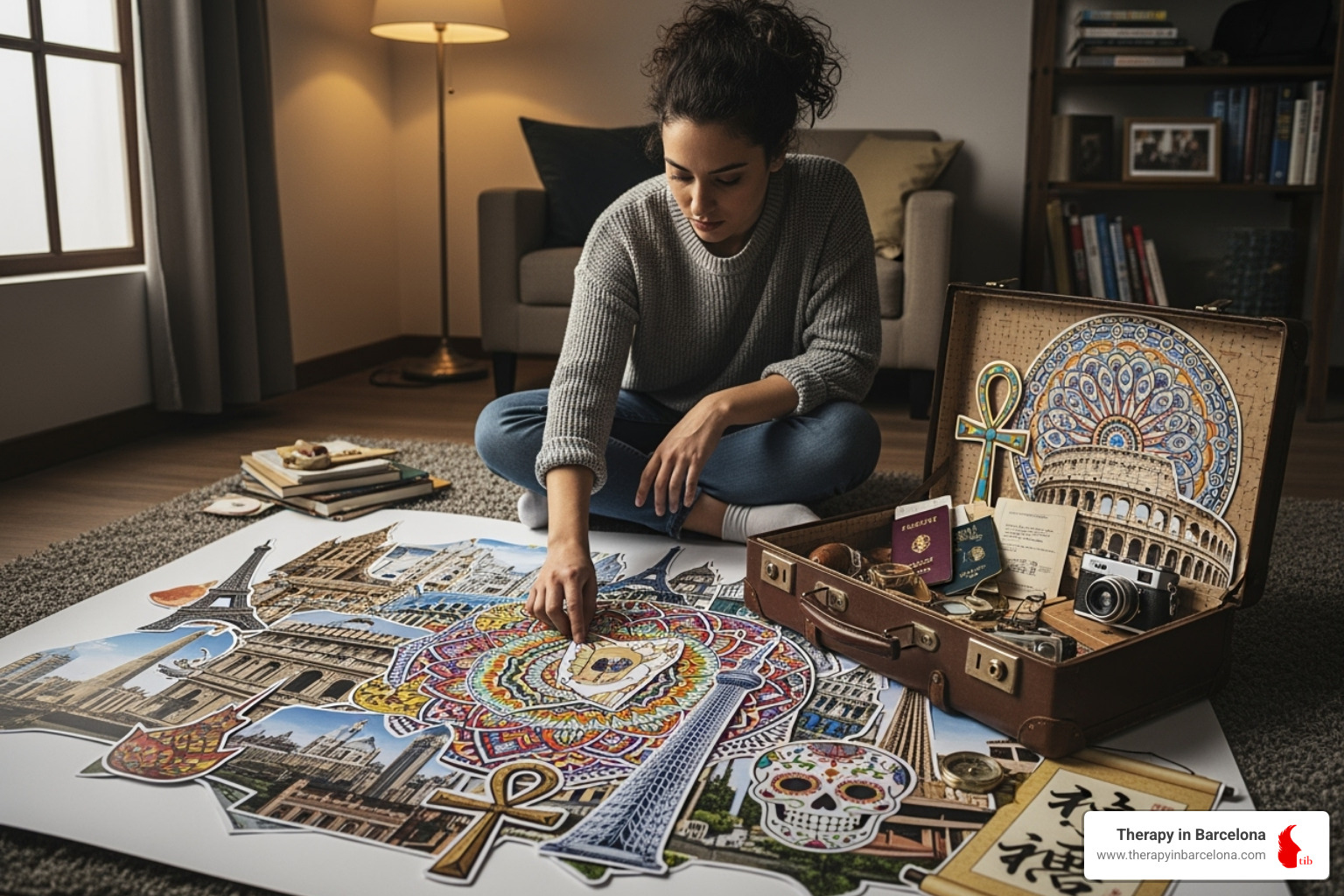
For many global citizens, the concept of ‘home’ is a complex one. This is especially true for those seeking third culture kid therapy, a specialised support system for individuals who grew up between cultures.
Third Culture Kid therapy is:
- Specialised support for individuals with a multicultural upbringing.
- Focused on unique challenges like identity, belonging, and unresolved grief.
- Aims to help TCKs integrate their experiences and find a sense of self.
- Provides tools to steer complex relationships and transient lifestyles.
Do you feel at home everywhere and nowhere all at once? Perhaps you easily adapt to new places but always carry a hint of ‘otherness’. This is a common experience for Third Culture Kids (TCKs) and Adult Third Culture Kids (ATCKs).
A TCK is someone who spent a big part of their childhood outside their parents’ home culture. They grew up adopting parts of their parents’ culture and the culture they lived in. This mix creates a unique “third culture.”
The result is a rich, global perspective. But it also comes with a unique set of emotional challenges. These can include struggles with identity, feeling rootless, and dealing with many goodbyes. It’s like carrying a suitcase full of emotions from all the places you’ve lived.
This guide will explain what it means to be a Third Culture Kid. We’ll explore the unique strengths and challenges that come with this upbringing. Most importantly, we’ll show how third culture kid therapy can help you unpack that emotional suitcase. It can help you find a deeper sense of belonging and well-being.
What Defines a Third Culture Kid (and Why It Matters)
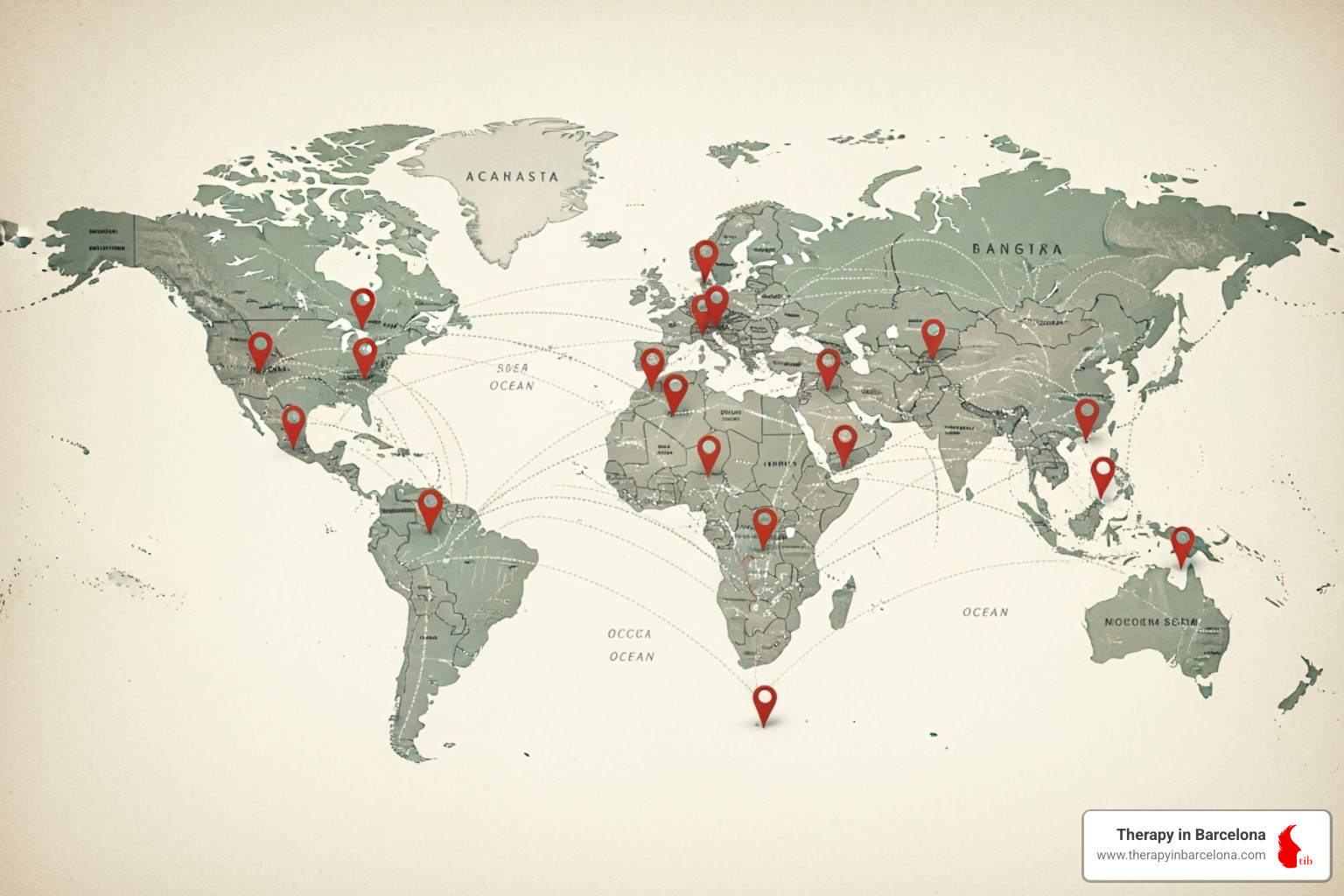
If you ever meet someone who replies to “Where are you from?” with a long pause or a story rather than a place, you may have spotted a Third Culture Kid. Coined in the 1950s by sociologist Ruth Hill Useem, the term refers to children who spend a significant part of their developmental years outside their parents’ passport culture. The result is an identity that blends their parents’ heritage (the first culture) with the host culture (the second) to create a personal “third” culture uniquely their own. You can find a concise summary on Wikipedia.
Because global mobility keeps rising, so does the TCK population. The UN estimates that roughly 31 million children worldwide live outside their country of origin. Many come from military, missionary, diplomatic, or corporate families, which is why you might also hear labels such as “military brat” or “missionary kid.” When those children grow up, they become Adult TCKs (ATCKs)—the experiences never vanish; they simply mature.
A helpful 2011 study by Choi & Luke explored how TCKs form friendships. It found that the deepest bonds often develop with people who share similar mobile backgrounds—place matters less than shared experience. You can read the article, A phenomenological approach to understanding early adult friendships of third culture kids, in the Journal of Asia Pacific Counseling here.
The Gifts of a Global Upbringing: TCK Strengths
- Global perspective
- High adaptability
- Cross-cultural skills
- Empathy and sensitivity
- Multilingualism
- Open-mindedness
- Resilience
The Burdens of a Life in Motion: TCK Challenges
A global upbringing shapes Third Culture Kids with a unique blend of advantages and difficulties. Understanding both sides is key to navigating their experiences effectively.
TCK Strengths
- Global Perspective: An innate understanding of diverse cultures and worldviews.
- High Adaptability: The ability to quickly adjust to new environments and situations.
- Cross-Cultural Skills: Excellent communication and navigation across different cultural norms.
- Empathy & Sensitivity: A deep capacity to understand and share the feelings of others from varied backgrounds.
- Multilingualism: Often fluent in multiple languages, opening doors to broader communication.
- Open-mindedness: A natural curiosity and acceptance of different ways of life.
- Resilience: The strength to bounce back from adversity and change.
- Global Network: Connections with people from all over the world.
- Strong Problem-Solving: Developed skills in finding creative solutions in complex, unfamiliar situations.
TCK Challenges
- Identity Confusion: Struggling to define where “home” is or who they truly are.
- Unresolved Grief & Loss: Frequent goodbyes leading to unacknowledged feelings of loss.
- Rootlessness & Restlessness: A feeling of not belonging anywhere, coupled with a constant desire for change.
- Relational Difficulties: Challenges in forming and maintaining deep, lasting connections due to frequent moves.
- Difficulty with Deep Connections: A tendency to keep emotional distance to avoid future pain of separation.
- Fear of Commitment: Hesitation to commit to places, people, or careers due to past transience.
- Perpetual Foreigner Syndrome: Feeling like an outsider, even in their passport country.
- Chronic Anxiety or Low Mood: Underlying emotional struggles stemming from instability and loss.
- Re-entry Shock (Passport Country): Difficulty adjusting to their “home” culture after living abroad.
Identity confusion is often the heaviest weight. “Where are you really from?” can feel like a test you never pass. Each move also means goodbyes—to friends, pets, teachers, even climates—which can pile up as hidden grief. A lack of one consistent “home base” may foster restlessness in adulthood and hesitation to invest deeply in new relationships.
None of these difficulties negate the remarkable advantages listed above, but they do explain why many TCKs feel both blessed and burdened by their upbringing.
Why Specialised Third Culture Kid Therapy is a Game-Changer

Traditional therapy can be immensely helpful, but if a practitioner views frequent moves as “instability” rather than a normal part of life, the TCK client may feel misunderstood. A therapist trained in third culture kid therapy speaks the same language of mobility, identity layering, and serial goodbyes. Sessions become a place where your multicultural story is not just accepted but celebrated.
At Therapy in Barcelona many of our team members are expats themselves, including founder Leigh Matthews, an Australian Psychologist who created the practice in 2011 after looking—unsuccessfully—for an English-speaking therapist who truly grasped life between cultures. Thanks to personalised therapist matching, you’re paired with someone familiar with cultural transitions, language quirks, and repatriation shock.
How Therapy Helps Weave Together a Cohesive Identity
Approaches such as narrative therapy or life-story work allow you to stitch the different “selves” you’ve shown in various countries into one coherent mix. Over time, the chameleon becomes an integrated whole, able to answer “Where are you from?” in a way that feels authentic rather than anxiety-provoking.
Processing a Lifetime of Goodbyes
Hidden losses—schools, friends, family homes—rarely get the airtime they deserve. Gestalt techniques, goodbye letters, or creative rituals let you grieve those chapters fully so that future farewells sting less.
Building Roots and Lasting Relationships
Therapy also examines attachment styles shaped by transience. You’ll practise setting boundaries, leaning into intimacy without fear, and creating an internal sense of home that travels with you, whether you settle in Barcelona, Madrid, or your next posting.
Finding Your TCK-Informed Therapist

A good match matters in every form of therapy; for TCKs it is essential. Look for professionals who:
- Understand the TCK framework (ask them directly).
- Show cultural humility—curiosity over assumptions.
- Have experience with identity, loss, and repatriation.
- Are comfortable working online so support can continue across moves.
Feel free to ask: “Have you worked with highly mobile clients before?” or “How do you tackle unresolved grief from multiple relocations?” Their answers will tell you whether they genuinely get it.
Large international platforms can be convenient, yet many TCKs prefer the human touch of a smaller practice. Therapy in Barcelona offers personal matching and a team of psychology-trained expat therapists, both in office and online across the world.
Beyond the Therapy Room: Creating Your Own Sense of Belonging

While third culture kid therapy offers invaluable support, fostering a deep sense of belonging and well-being also extends beyond the therapy room. Many Third Culture Kids (TCKs) find their primary anchors in close relationships, often with others who share similar multicultural backgrounds, rather than in a specific geographic location. Actively seeking and nurturing these connections can significantly improve feelings of rootlessness and loneliness.
You’ve heard the saying, ‘find your tribe, love them hard,’ and for TCKs, this rings especially true. Actively searching for and engaging with Adult Third Culture Kid (ATCK) communities, whether they’re online or in your local area, can be incredibly validating. There’s a unique comfort in sharing experiences with others who truly ‘get’ what it’s like to have a passport full of stamps but no single place that feels like ‘home’. Consistent engagement with these groups can truly increase connection and lessen those nagging feelings of rootlessness.
Sometimes, understanding your own story begins with hearing others’. Diving into books, podcasts, and articles written by TCK authors can provide a powerful language for your experiences, reminding you that you are absolutely not alone in your journey. Beyond consumption, consider creation! Engaging in creative outlets like journaling, art, music, or even simply telling your story can be a profound way to process complex emotions and weave together the colourful threads of your diverse identity.
For TCKs, the idea of a ‘village’ isn’t confined to one street or even one country. It’s a beautiful, sprawling network that crosses continents. Accept the reality that your closest connections might be spread far and wide, and actively maintain those long-distance friendships through video calls, messages, or even old-fashioned letters. Your “global village” might be dispersed, but it remains a valid and incredibly vital source of support and belonging.
Connecting with older ATCKs who have successfully steerd similar challenges can offer invaluable mentorship and inspiration. They’ve walked a similar path and can provide unique perspectives. Conversely, using your voice to advocate for TCK awareness in educational or professional settings can be incredibly empowering, helping others understand this unique experience and fostering a more inclusive world for future generations of global nomads.
While your roots might be global, planting some new ones wherever you are now can be deeply fulfilling. Engaging in local activities, volunteering for causes you care about, or joining groups related to your hobbies can help you connect with like-minded individuals in your current location. This isn’t just about making friends; it’s about fostering new local connections and building a sense of contribution and purpose right where you are.
And don’t forget the incredible power of your closest circle. Creating a strong bond within your family unit can be a powerful and grounding experience, offering a consistent anchor in a world of change. For more practical tips on building community abroad, you can explore resources like Creating a Sense of Belonging as an International. And for support that extends to the entire family, consider delving into Family Matters Overseas: How Expat Family Therapy Can Help.
Frequently Asked Questions about Third Culture Kid Therapy
How do I know if I’m a Third Culture Kid?
If you spent a significant part of childhood outside your parents’ passport country and now feel you belong everywhere and nowhere, the TCK label probably fits. Most TCKs relate more to people who have similar global backgrounds than to single-culture peers, and they’re quick studies in new environments.
What makes third culture kid therapy different from regular therapy?
A TCK-informed therapist brings cultural sensitivity, helps you integrate layered identities, addresses the grief of nonstop goodbyes, and supports you during repatriation. In short, the work focuses on issues typical talk therapy can overlook.
Can online therapy be effective for TCKs?
Yes. Online sessions mean you can keep the same therapist through future moves, avoid starting over, and choose a specialist rather than whoever happens to be in your postcode. That continuity is gold for mobile lives.
Your Journey Home to Yourself Starts Here
Being a TCK means carrying a vibrant collage of cultures. Those colours are beautiful but the suitcase can feel heavy. You deserve a space where someone understands why the word “home” is complicated, why airports make you oddly nostalgic, and why friendships sometimes feel both intense and fragile.
Third culture kid therapy offers that space. With a therapist who speaks the language of mobility, you can unpack hidden grief, weave a solid identity, and plant roots that travel with you.
Therapy in Barcelona has supported internationals since 2011 through personalised therapist matching and culturally sensitive care—in person on Carrer de París or online wherever you roam.
Ready to feel at home in your own skin? Book a free discovery call and take the first step toward carrying your multicultural story with confidence rather than heaviness.
