


Thriving Abroad: A Guide to Expat Mental Health

Expat mental health is a significant concern for those living abroad, like “Emily”, a 34-year-old expat from the UK who faces cultural adaptation problems and language barriers in Barcelona. The emotional roller coaster of expat life involves exciting new experiences but also the challenges of isolation, homesickness, and the stress of adapting to a new culture.
- Key Challenges:
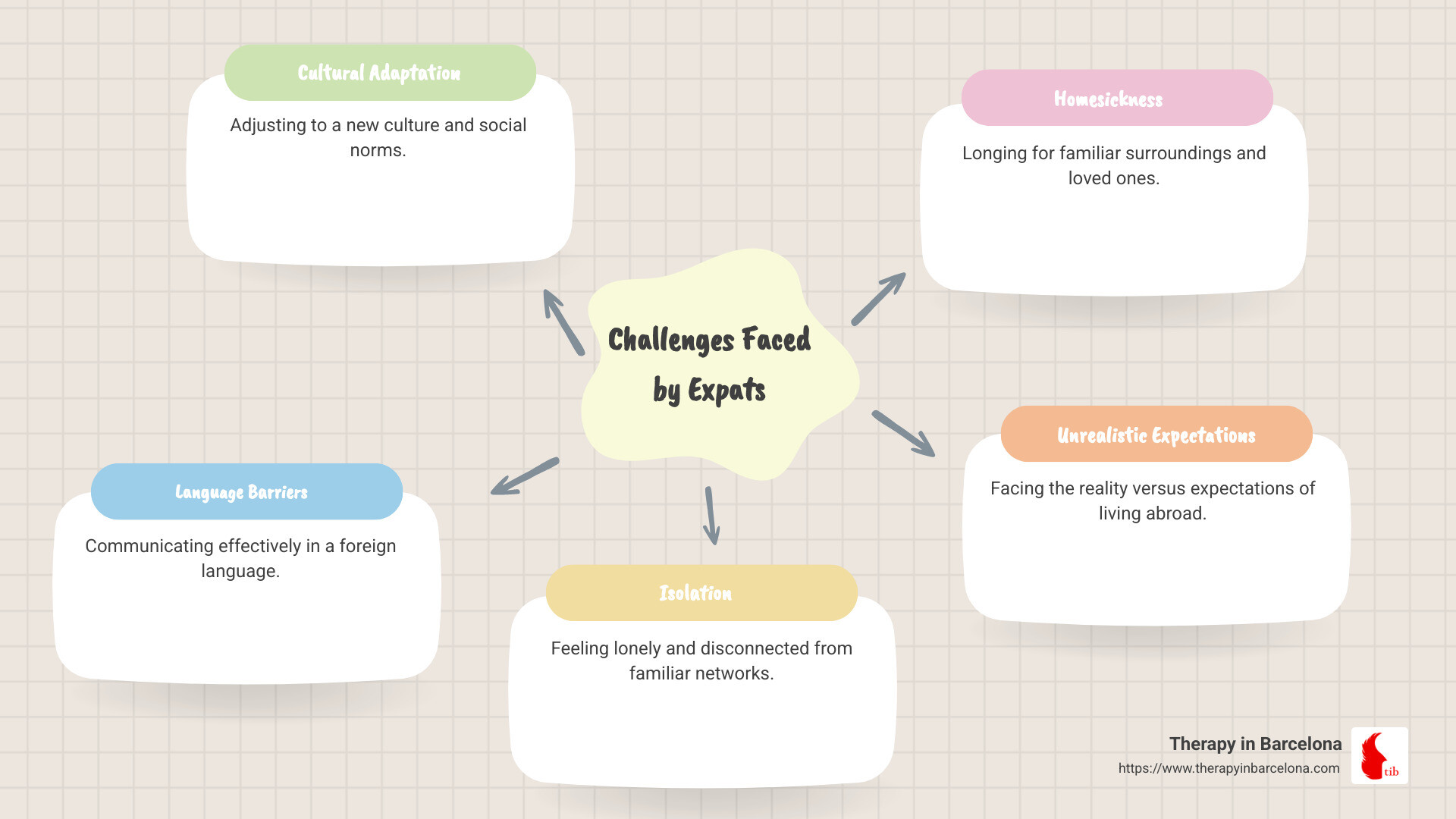
- Cultural adaptation
- Language barriers
- Isolation and homesickness
- Unrealistic expectations
Moving to a new country is as thrilling as it is daunting. Adjusting to a different culture, tackling a foreign language, and feeling disconnected from your usual support network can significantly impact mental health. Such obstacles often lead to anxiety and homesickness, affecting not only your mood but also your daily functioning and sense of self.
As Leigh Matthews, Australian Psychologist and Founder of Therapy in Barcelona, I’ve dedicated the last 14 years to supporting expats like “Emily’ steer these complex challenges. With my personal experience and professional expertise, I’ve built a team to provide culturally sensitive mental health support custom to expats’ unique needs. So let’s dive in to a deeper exploration of the expat mental health landscape.
Understanding Expat Mental Health
Living abroad can be an exhilarating trip, but it also presents unique mental health challenges. One of the most common issues expats face is known as Expat Syndrome. This term describes the emotional stress and difficulties that arise when adjusting to a new culture and environment. The initial excitement of moving abroad can quickly give way to feelings of isolation, homesickness, and anxiety.
Expat Syndrome: What It Is
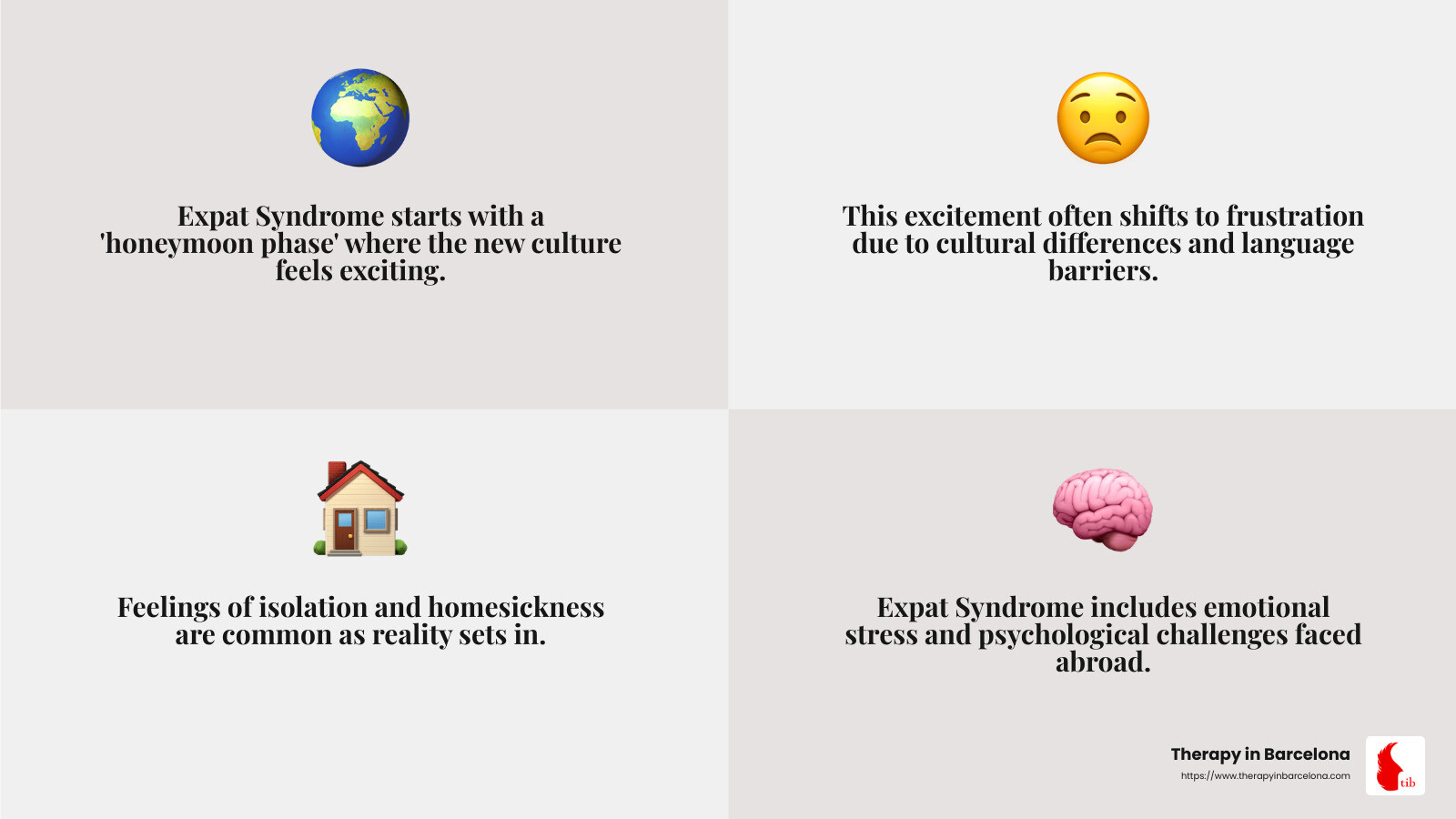
Expat Syndrome encompasses the range of emotional and psychological challenges that expats experience. The syndrome often starts with a “honeymoon phase” where everything about the new culture seems fascinating and exciting. However, this can quickly shift to frustration and disillusionment as the realities of cultural differences and language barriers set in.
Vulnerabilities in Mental Health
Expats are particularly vulnerable to mental health issues due to several factors:
- Cultural Shock: Adapting to a new culture can be overwhelming. The norms, values, and social cues might be entirely different from what expats are used to, leading to confusion and stress.
- Language Barriers: Not being able to communicate effectively can lead to feelings of anxiety, inadequacy and isolation. Even if an expat speaks the local language, they may still struggle with nuances and accents, which can be frustrating.
- Social Isolation: Leaving behind a familiar support network can lead to loneliness. Making new friends and connections in a foreign land can be daunting, especially when cultural norms differ.
Cultural Adaptability
Cultural adaptability is a crucial skill for expats. It involves being open-minded and willing to learn about and integrate into a new culture. Here are some strategies to improve cultural adaptability:
- Engage with the Local Community: Attend local events, join clubs, or take language classes. This not only helps in learning the language but also in understanding cultural nuances.
- Practice Empathy: Try to understand things from the local perspective. This can reduce frustration and help build better relationships.
- Seek Support: Join expat groups or online forums to connect with others who are going through the same experiences. Sharing stories and advice can be incredibly comforting.
Understanding and addressing these mental health vulnerabilities is essential for thriving abroad. With the right support and strategies, expats can overcome these challenges and enjoy a fulfilling life in their new home.
Next, we’ll explore the common challenges expats face and how to tackle them effectively.
Common Challenges Faced by Expats
Living in a new country is exciting, but it can also be tough. Expats often face several challenges that can affect their mental health. Let’s look at some of the most common ones.
Language Barriers
One of the first problems expats encounter is the language barrier. Not speaking the local language can make everyday tasks difficult. Whether it’s ordering food or asking for directions, communication becomes a challenge. Even those who speak the language may struggle with accents or local slang, leading to frustration and feelings of inadequacy.
Isolation and Homesickness
Moving to a new country often means leaving behind family and friends. This can lead to feelings of isolation. Building a new social network takes time, and until then, loneliness can creep in. Expats may find themselves missing the comfort and familiarity of home, experiencing homesickness. This longing for home can make it hard to settle into the new environment.
Unrealistic Expectations
Before moving abroad, many expats have high hopes for their new life. They imagine exciting trips and new opportunities. However, the reality can be quite different. Unrealistic expectations can lead to disappointment when the initial excitement fades and everyday challenges arise. This can result in anxiety and discontent.
Coping with These Challenges
Understanding these challenges is the first step in overcoming them. Here are some tips to help expats manage:
- Learn the Language: Take language classes or practice with locals. Even basic skills can make a big difference.
- Build a Support Network: Join expat groups or local clubs. Having people to talk to can ease feelings of loneliness.
- Set Realistic Goals: Adjust expectations and focus on small achievements. Celebrate little wins to stay motivated.
By recognising and addressing these common challenges, expats can better steer their new life abroad. In the next section, we’ll discuss strategies for maintaining mental health while living overseas.
Strategies for Maintaining Mental Health Abroad
Living abroad can be thrilling, but it also comes with its own set of challenges. Maintaining expat mental health requires a proactive approach. Here are some effective strategies to help you thrive in your new environment.
Self-Care
Self-care is essential for keeping your mental health in check. Prioritize activities that make you feel good and help you unwind. This could be as simple as taking a walk, reading a book, or practicing meditation.
- Exercise regularly: Physical activity boosts your mood and energy levels. Even a short daily walk can make a big difference.
- Get enough sleep: Quality sleep is crucial for mental well-being. Try to maintain a regular sleep schedule, even when adjusting to a new time zone.
- Eat well: A balanced diet supports both physical and mental health. Explore local foods while ensuring you get the nutrients you need.
Coping Strategies
Developing effective coping strategies can help you manage stress and anxiety. Here are some tips:
- Practice mindfulness: Techniques like deep breathing and meditation can help you stay grounded and focused and reduce anxiety.
- Set achievable goals: Break tasks into smaller, manageable steps. Celebrate each success to keep motivated.
- Journal your experiences: Writing about your feelings can provide clarity and help you process your emotions.
Community Support
Building a support network is vital for expats. Connecting with others can alleviate feelings of isolation and homesickness.
- Join expat groups: Find local clubs or online communities where you can share experiences and advice. Volunteer and help yourself while helping others.
- Participate in local activities: Attend events or classes to meet new people and immerse yourself in the culture.
- Stay connected with loved ones: Regular calls or messages with family and friends back home can provide comfort and support.
Online Therapy
Teletherapy offers a flexible way to access mental health support, no matter where you are. It can be a valuable resource for expats.
- Seek professional help: If you’re feeling overwhelmed, a therapist can provide guidance and support custom to your needs.
- Explore online resources: Many platforms offer mental health tools and support groups specifically for expats.
- Culturally sensitive counselling: Look for a therapist near you who understand the unique challenges of living abroad.
By incorporating these strategies into your routine, you can better manage the ups and downs of expat life. In the next section, we’ll address some frequently asked questions about expat mental health.
Frequently Asked Questions about Expat Mental Health
What is Expat Syndrome?
Expat Syndrome refers to the emotional stress and challenges that individuals face when moving abroad. It’s not a medical diagnosis, but a term used to describe the feelings of anxiety, depression, and identity loss that can occur. When you relocate to a new country, everything changes—your surroundings, your routine, and even your sense of self. This can be overwhelming, especially for children who may struggle with adapting to a new environment and leaving behind familiar comforts.
How Does Living Abroad Affect Mental Health?
Living abroad can significantly impact mental health in several ways:
- Identity Loss: Moving to a new country can lead to a sense of losing one’s identity. You might feel torn between your home culture and the new one, which can cause stress and confusion.
- Homesickness and Isolation: Being far from family and friends can lead to feelings of loneliness. Even in a busy city, expats can feel isolated, especially if they struggle to make connections in their new community.
- Language Barrier: Communication difficulties can exacerbate feelings of isolation. Even if you speak the local language, cultural nuances can still be challenging to grasp, making it hard to form deep connections.
What Do Expats Struggle With?
Expats face a variety of struggles that can affect their mental health:
- Daily Life Struggles: Simple tasks like grocery shopping or using public transport can become daunting in an unfamiliar place. These challenges can add up, leading to frustration and stress.
- Language Barrier: As mentioned, not being able to communicate effectively can be a significant hurdle. It can make everyday interactions stressful and hinder the ability to build a social network.
- Mental Health: All these factors—identity loss, homesickness, isolation, and language barriers—can contribute to mental health issues like anxiety and depression. It’s important for expats to recognize these challenges and seek support when needed.
By understanding these common issues, expats can better prepare themselves for the mental health challenges they might face. In the next section, we’ll explore how Therapy in Barcelona can provide personalised support to help expats thrive in their new environment.
Conclusion
At Therapy in Barcelona, we understand the unique challenges that come with living abroad. Expat mental health is a crucial aspect of thriving in a new environment, and we are here to support you every step of the way.
Our approach is centered around personalized therapist matching. We believe that finding the right therapist is key to effective mental health support. Our team works diligently to connect you with a therapist who understands your specific needs and cultural background. This personalized approach ensures that you receive the most relevant and empathetic care possible.
We also offer culturally sensitive support. Living in a new country can be overwhelming, and cultural differences can add to the stress. Our therapists are trained to steer these complexities, providing support that respects and understands your cultural identity. Whether you’re dealing with homesickness, identity loss, or the language barrier, our team is equipped to help you manage these challenges.
Therapy in Barcelona is committed to making your transition as smooth as possible. With our multilingual therapy services, both in-person and online, we are accessible no matter where you are. Since 2011, we’ve been helping expats in Barcelona find balance and well-being in their new home.
If you’re feeling overwhelmed or just need someone to talk to, reach out to us. We are here to help you steer the ups and downs of expat life with confidence and care. You don’t have to face these challenges alone.

