


Why Couples Therapy Discussion Topics Matter for Relationship Growth

Starting therapy can feel daunting, yet it’s one of the most powerful ways to nurture a relationship, especially when you’re also juggling the challenges of expat life. According to the Gottman Institute, many couples wait nearly six years before reaching out for support. By coming prepared with clear couples therapy discussion topics, you make every session count.
Top 10 Couples Therapy Discussion Topics
- Communication patterns
- Conflict resolution
- Trust and intimacy
- Shared values and future goals
- Financial dynamics
- Roles and responsibilities
- Past hurts and forgiveness
- Cultural differences
- Family dynamics
- Maintaining connection
For internationals in Barcelona, these themes often show up against a backdrop of language barriers, homesickness and cultural misunderstandings. The good news? Research indicates that over 75% of couples report improvement in their relationship after counselling. Let’s explore each topic—and how Therapy in Barcelona can help you turn insight into action, no matter where you call home.
1. Understanding Your Relationship’s Foundation and Expectations

Therapy often opens with a gentle “relationship archaeology.” You’ll revisit how you met, what drew you together and what keeps you connected today. These memories help your therapist grasp your unique blueprint while reminding you why you chose each other.
Setting Realistic Goals
Clear goals turn therapy into a focused journey. Do you want smoother daily communication, fairer conflict, or renewed intimacy? Your therapist will guide you to craft specific, measurable aims that suit both partners—and, for expats, may include adjusting to life in Spain or juggling international careers.
Easy Ice-Breakers
Simple prompts—“What childhood smell brings you comfort?” or “Which song captures us best?”—lower anxiety and spark curiosity. They also give your therapist a first glimpse of how you listen, interrupt or empathise. From there, deeper work can begin quickly.
2. Mastering Communication: The Heart of Connection

Communication breakdown tops the list of reasons couples seek help. When you grew up with different debate styles—or different languages—misunderstandings multiply. Therapy teaches you to translate rather than retaliate.
Active Listening in Action
• Maintain eye-contact and open posture.
• Paraphrase: “So you felt… when I…”.
• Use “I” statements: “I feel lonely when we scroll on our phones at dinner.”
Small tweaks like these quickly soften arguments.
Spotting Unhelpful Patterns
Many pairs slip into the “pursue–withdraw” dance or the famous Gottman “Four Horsemen” pattern of criticism, contempt, defensiveness and stonewalling. Recognising the pattern is half the cure; practising new steps completes it.
3. Navigating Conflict: From Arguments to Understanding
Conflict is inevitable; damage isn’t. Therapy reframes disagreements as data about unmet needs rather than proof you’re incompatible.
Tackling Recurring Fights
Identify triggers, agree on time-outs and schedule short “relationship check-ins” before resentment boils over—an especially handy habit when you’re far from your normal support network.
A Four-Part Apology
- Acknowledge the behaviour.
- Explain impact (“I see this hurt you because…”).
- Express genuine remorse.
- Offer amends—then follow through.
Done well, apologies rebuild safety faster than any grand gesture.
4. Deepening Intimacy and Connection

Intimacy is emotional as much as physical—and stress, visas or homesickness can push it to the sidelines.
Quick Connection Exercises
- Direct Eye Contact: Spend two minutes looking into your partner’s eyes without speaking.
- Nightly Cuddle: Enjoy a ten-minute cuddle each night with phones off.
- Active Listening Turns: Take turns sharing for five minutes while the other only listens.
Consistency, not complexity, keeps closeness alive.
5. Exploring Shared Values and Future Dreams
When you agree on where you’re heading, day-to-day compromises feel purposeful.
Try the ‘Miracle Question’
“Imagine you wake tomorrow and a miracle has improved our relationship. What’s the first thing you notice?” Your answers create a map of desired changes—whether that’s morning coffee together, repatriating in five years, or supporting each other’s Spanish lessons.
6. Addressing Financial Dynamics
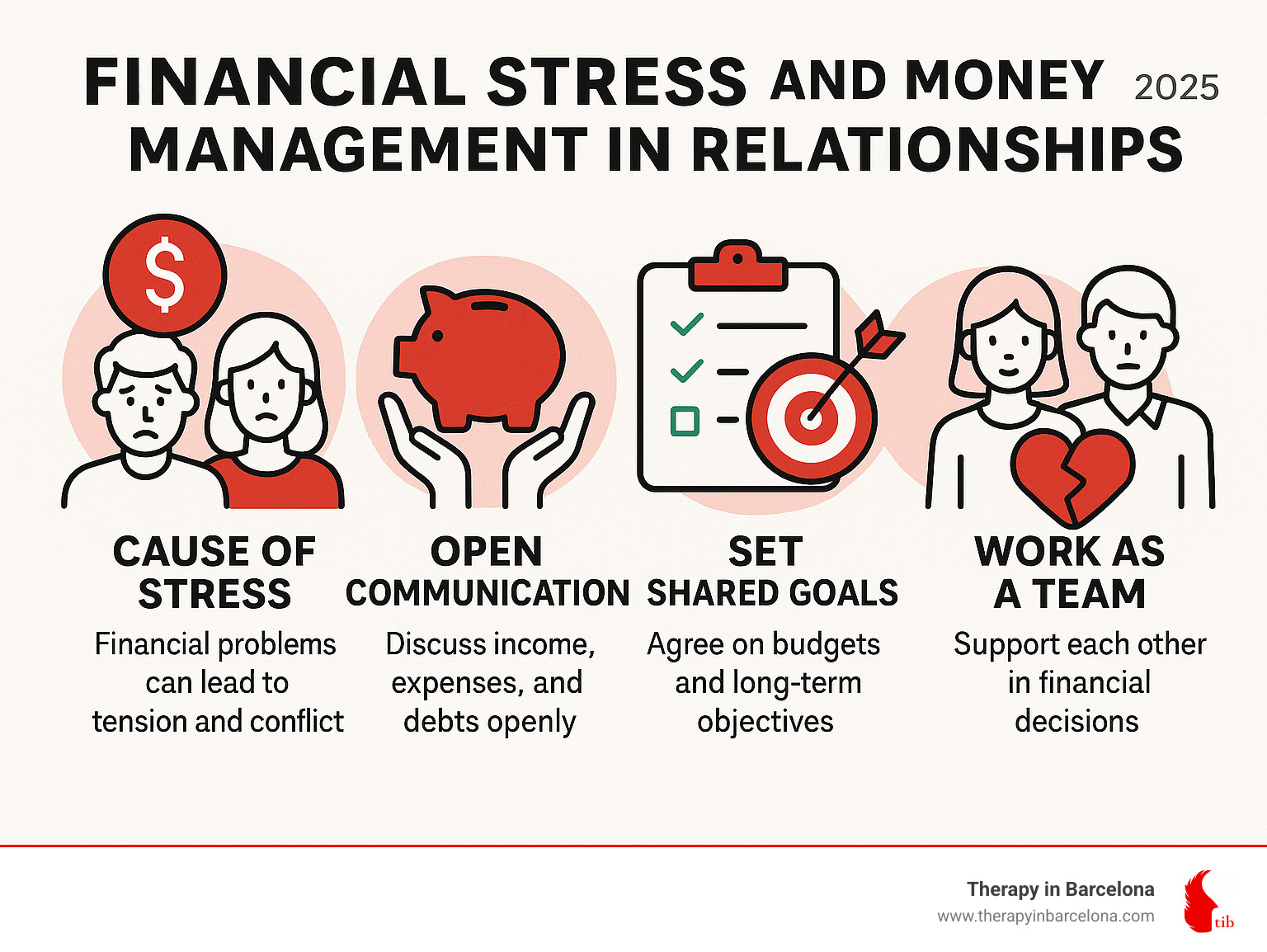
Money fights aren’t really about euros; they’re about security, freedom or fairness.
Build Transparency
Share full pictures—income, debts, obligations back home—then set shared priorities: perhaps an emergency fund, yearly flights to see family, or a Barcelona date-night budget you both value.
7. Discussing Roles, Responsibilities and Fairness
Invisible expectations breed resentment. Use therapy to surface them and divide tasks in a way that feels fair—even if it isn’t 50/50.
Household chores, admin, childcare, social planning and the mental load all count. Rebalancing them can be changeal, especially when expats lack extended-family help.
8. Building and Rebuilding Trust
Broken trust—through secrecy, lies or infidelity—doesn’t always mean the end. Therapy offers a structured path from crisis to stability.
Re-Establishing Safety
• Immediate transparency (whereabouts, passwords, boundaries).
• Space for the hurt partner to ask questions—often more than once.
• Exploration of root causes without blaming the betrayed partner.
With patience and consistency, many couples emerge stronger.
9. Cultivating Gratitude and Appreciation
Daily appreciation rewires your brain to notice what works. Specificity matters: “Thanks for doing the dishes last night; it was such a relief to wake up to a clean kitchen.” A two-minute evening gratitude ritual can shift the tone of an entire week.
10. Sustaining Growth Beyond Therapy
Progress in your relationship isn’t just about breakthroughs made during therapy sessions; it’s about making those insights and tools stick in your daily life. This happens when new, healthier ways of communicating, connecting, and resolving conflict become ingrained habits.
Think of it like building muscle: consistent, small efforts over time lead to lasting strength. By turning the strategies learned in therapy into regular rituals and practices, you ensure that positive changes become automatic. This reduces the conscious effort needed, making it easier to maintain a strong, resilient partnership long after therapy concludes.
Rituals of Connection
• Weekly 20-minute “CEO meeting” to celebrate wins and flag issues.
• Five-minute daily check-in (phones away).
• Annual mini-retreat to review dreams.
Resources such as books (“The High-Conflict Couple”), apps like Lasting, or occasional booster sessions with Therapy in Barcelona keep momentum alive.
Frequently Asked Questions
Couples therapy vs. couples counselling—any difference?
The terms are used interchangeably. What matters is choosing a qualified professional who understands expat life.
How long do couples usually wait before seeking help?
Roughly 3-6 years. The earlier you start, the easier it is to repair patterns.
What if only one partner is willing to attend?
Individual sessions can still spark change and sometimes encourage the reluctant partner to join later.
Conclusion
Healthy relationships aren’t conflict-free; they’re conflict-resilient. By exploring these discussion topics—guided by Therapy in Barcelona’s culturally sensitive team—you’ll gain tools to communicate, connect and thrive abroad. Ready to start? Book your free discovery call today and let’s match you with the right therapist for your journey.
