


Why Expats Need Specialised Trauma Support

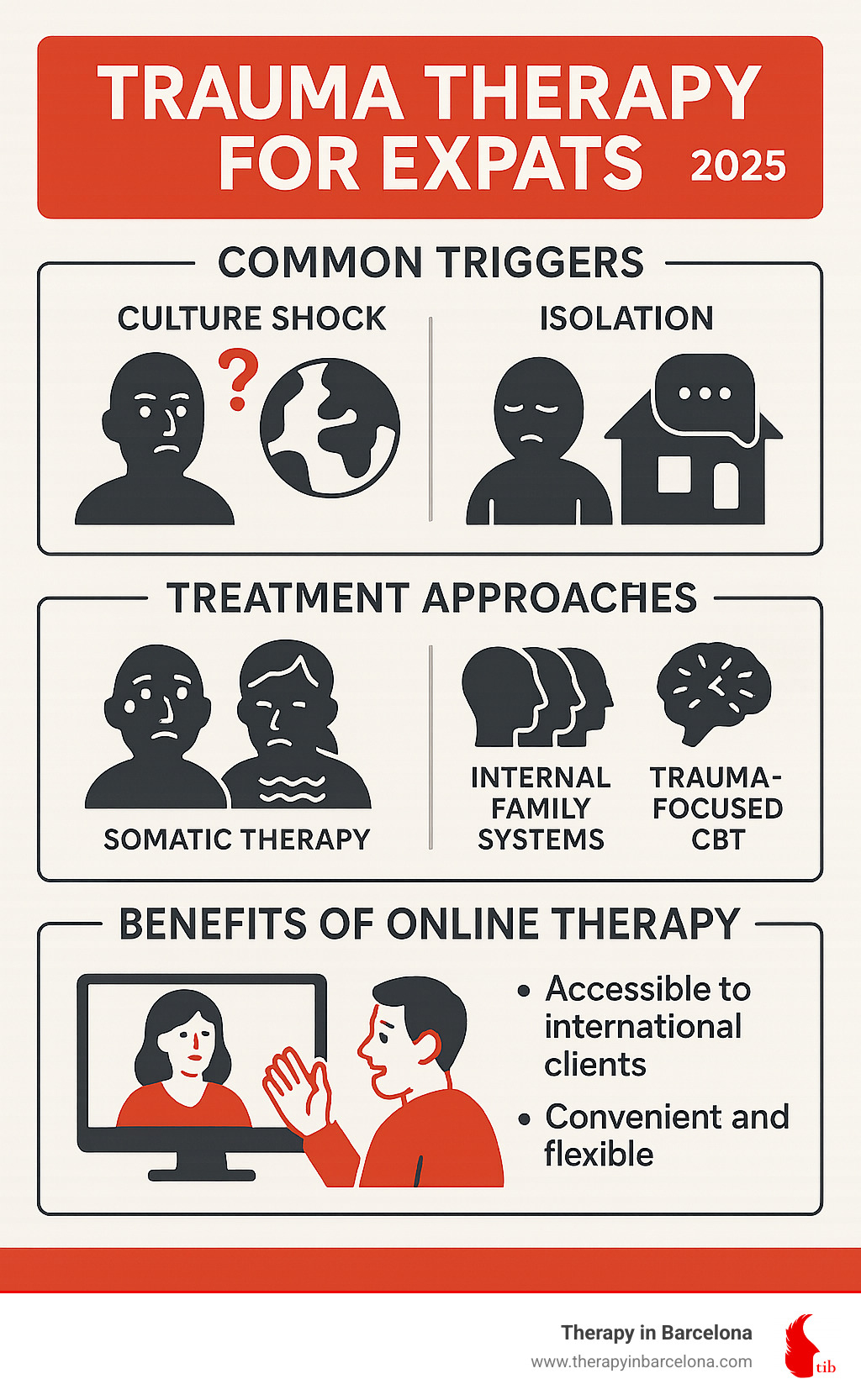
Trauma therapy for expats addresses the unique mental health challenges faced by people living abroad, combining evidence-based trauma treatment with cultural sensitivity and understanding of the expat experience.
Key Information About Trauma Therapy for Expats:
- What it treats: Past trauma, culture shock, adjustment difficulties, anxiety, depression, and emotional overwhelm
- Common approaches: EMDR, Somatic Therapy, Internal Family Systems (IFS), and Trauma-Focused CBT
- Delivery: Available online and in-person, with English-speaking therapists
- Duration: Typically 8-20 sessions, depending on individual needs
- Cost: Fees range from 80-95 euros per session at Therapy in Barcelona
Moving to a new country is exciting, but it can also stir up unexpected emotional challenges. You might find yourself feeling more anxious than usual, struggling with memories you thought you’d left behind, or feeling overwhelmed by everyday situations that never bothered you before.
This isn’t unusual. Living abroad can reawaken old wounds or create new ones. The stress of adapting to a different culture, losing familiar support networks, and rebuilding your identity in a foreign place can leave your nervous system on high alert.
As one expat shared: “I thought I was fine until I moved to Barcelona. Suddenly, all these feelings from my childhood came flooding back, and I couldn’t understand why ordering coffee made me feel so anxious.”
The good news? Trauma therapy specifically designed for expats can help you process these experiences and build resilience. Unlike generic therapy approaches, expat-focused trauma therapy understands the unique stressors of international life – from culture shock to homesickness to the grief of leaving your old life behind.
Whether you’re dealing with fresh trauma from your move or finding that past experiences feel more intense since relocating, specialised support can make all the difference in your healing journey.
Understanding Trauma and Its Unique Impact on Expat Life
When we hear the word trauma, many of us picture big, dramatic events. In reality, trauma is whatever overwhelms your nervous system, leaving it unable to process an experience. As Bessel van der Kolk reminds us in The Body Keeps the Score, unresolved experiences live on in the body, not just the mind.
For expats, the nervous system faces an almost constant drip-feed of new stresses: unfamiliar bureaucracy, language gaps, distance from loved ones, and the unsettling sense that your old identity doesn’t quite fit. Your body can start reacting as if you’re in danger even when you’re simply queueing at immigration.
Leigh Matthews, the Australian psychologist who founded Therapy in Barcelona after moving to Spain in 2011, puts it bluntly:
“Even everyday tasks, like getting Internet installed, could leave me exhausted. That’s when I realised expat life continually taxes the nervous system.”

Common Signs of Trauma for Expats
Because relocation stress and trauma symptoms overlap, many internationals shrug off important warning signs. Look out for:
- Intrusive memories, nightmares or sudden panic
- Mood swings, irritability, emotional numbness, or persistent sadness beyond ordinary homesickness
- Physical red flags like headaches, gut trouble, disturbed sleep, or feeling jumpy
- Foggy thinking, poor concentration, or constant worry about the future
- Avoidance of social situations or increased reliance on alcohol/other escapes
Why the Expat Experience Can Reawaken Old Wounds
Major transitions lower our psychological defences. Relocation can:
- Compound stress, stretching normal coping strategies too thin
- Stir attachment fears once buffered by familiar people and places
- Surface grief for routines, communities, and an old sense of self
- Intensify identity questions when career, language, and social roles all shift at once
One client told us, “I’d worked through my childhood history years ago—until I moved to Madrid and job-hunting reopened every old insecurity.”
If this resonates, take a look at our blog post about Family of origin and attachment issues.
Remember: these reactions are not personal failings—they’re your nervous system asking for support.
Evidence-Based Trauma Therapy for Expats: Finding Your Path to Healing
The good news? Modern trauma work no longer relies on endlessly retelling painful stories. At Therapy in Barcelona we blend body-based and cognitive methods shown to help the nervous system settle and make sense of experience.
What matters most is cultural fit and safety. Our therapists work online and in person, speak multiple languages, and understand first-hand how disorienting international life can be.

Somatic Therapy
Somatic approaches start with the fact that stress shows up in the body first. Gentle breath work, grounding, and guided movement release chronic tension (think tight shoulders after another paperwork marathon) and teach you to notice early signals of overwhelm. Read more: Somatic Therapy.
Internal Family Systems (IFS)
IFS sees us as an inner community of “parts”. The enthusiastic explorer, the homesick teenager, the anxious newcomer; can coexist. By meeting each part with curiosity, expats often find fresh self-compassion and a more integrated identity across cultures. Details here: IFS Therapy.
TF-CBT & Integrated Approaches
Trauma-focused CBT pairs gentle exposure with skills for calming racing thoughts such as “I\u0019ll never belong here.” Many of our therapists weave CBT tools together with somatic and attachment-informed work so you gain both insight and practical day-to-day strategies.
A Closer Look at EMDR: A Powerful Tool for Expat Trauma Recovery
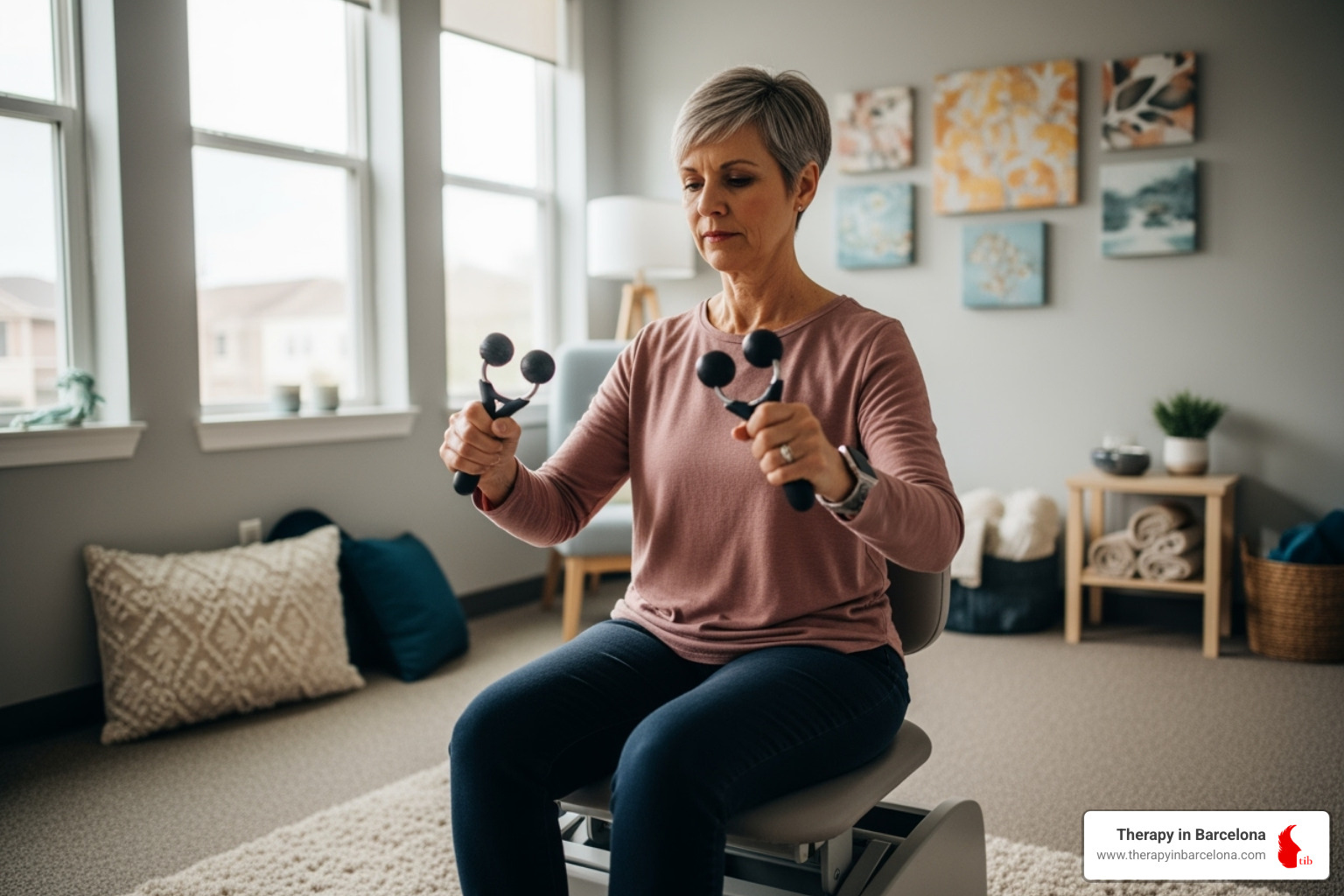
Sarah (a composite example) doubted eye movements could ease trauma, yet after months of Barcelona-related panic she gave EMDR a try. Within weeks she could recall her frightening arrival without reliving it.
Why EMDR Helps Expats
- Pre-move memories: childhood or relationship wounds often resurface when resilience is stretched thin abroad.
- Relocation shocks: medical scares, discrimination, or intense loneliness can imprint as trauma.
- Lower verbal load: sessions rely on bilateral stimulation more than detailed storytelling already exhausted from communicating in a second language.
Is EMDR Right for You?
It can be useful if specific memories still trigger flashbacks, you feel “stuck” despite insight, or you prefer a method that goes beyond talk alone. Preparation always includes grounding skills and clear goals.
Navigating Your Healing Journey: How to Find and Start Online Therapy
Taking the first step can feel daunting especially when you are already juggling visas, housing, and time zones. Therapy in Barcelona keeps it simple: book a free discovery call or fill in our intake form, and we’ll match you with a therapist who fits your culture, language, schedule, and personality.

Why Online Trauma Therapy Works for Expats
- Any location: stay with the same therapist whether you’re in Barcelona, Valencia, or relocating again.
- Flexible timing: evening sessions if you’re working Spanish hours, lunchtime, or other timezone.
- Comfort & privacy: talk from your own sofa, no awkward metro ride afterwards.
- Wider choice: access English-speaking, culturally aware clinicians not available locally.
Research shows online sessions can be as effective as in-office work, especially when therapists are specially trained for video delivery.
Finding a Culturally Sensitive Therapist
Look for:
- Proper registration and trauma-specific training (EMDR, somatic, TF-CBT).
- Direct expat experience or demonstrable cultural competence.
- A communication style that feels safe in your first conversation.
Beware quick-match apps that overlook cultural fit. Our custom process may take a little longer, but clients tell us it makes all the difference.
Your First Sessions
Expect three broad phases:
- Safety & rapport
- Mapping your story and setting goals
- Skill-building and, when ready, trauma processing
Each session ends with grounding so you return to daily life feeling steady rather than stirred-up.
Practical Considerations: Costs, Insurance, and Payment
Weekly sessions are an investment, yet untreated trauma often costs more in lost sleep, strained relationships, and missed opportunities.
Typical Fees
- Individual: €80–€95 per 55-minute session
- Couples: €95–€120 Sliding-scale slots are sometimes available for clients in financial hardship.
Most people attend 8-20 sessions. You might start weekly, then space appointments out as skills solidify.
Using International Health Insurance
Many expat policies reimburse a portion of therapy. Check:
- Mental-health allowance per year or per session.
- Whether you can choose any licensed provider (“out-of-network”).
- Required paperwork—your therapist can supply receipts and brief summaries if needed.
If your plan doesn’t cover therapy, ask about payment plans or reduced-fee options. Nobody should be forced to postpone healing for financial reasons.
Conclusion: Your Path to a More Grounded Life Abroad
Relocating already proves your courage. Seeking support proves your wisdom. Trauma therapy won’t erase the challenges of expat life, but it can free up the energy you need to relish its rewards.
Whether you’re in Barcelona, Madrid, or logging in from elsewhere in Spain, Therapy in Barcelona‘s team of fellow internationals is ready to help you feel safe in your own skin again.
Ready to begin? Book your free discovery call today and take the next compassionate step on your journey.
