


Why Online Therapy for Students Is More Accessible Than Ever

Online therapy for students is changing how young people access mental health support. Here’s what you need to know:
- Book appointments quickly – often within minutes or days, not weeks
- Choose your therapist based on language, specialisation, and cultural background
- Connect flexibly – via video, phone, or chat, on your schedule
- Access support after hours – nearly half of student therapy sessions happen evenings or weekends (source)
- Find culturally sensitive care – especially important for international students in Barcelona, Valencia, or Málaga
Student life can feel overwhelming. Between exams, assignments, social pressures, and finding your way in a new city or country, mental health struggles are common. Research shows that 71% of students who receive counselling say it helped them stay in school (source). Yet many students face barriers: long wait times at university counselling centres (averaging 8-10 business days, source), limited sessions, or simply not finding a therapist who understands their unique challenges.
Online therapy removes many of these obstacles. It’s flexible, private, and offers a wider choice of therapists. For international students adjusting to life abroad—managing homesickness, language barriers, or cultural differences—finding a therapist who truly gets your experience can make all the difference.
This guide explains how online therapy works, what to look for in a therapist, how to manage costs, and how to take that first step. Whether you’re in Barcelona, studying remotely, or anywhere else, support is more accessible than you might think.
Why Student Life Can Feel Overwhelming (And How Therapy Can Help)
Student life brings excitement and discovery, but beneath the surface, many students face unique challenges that impact their mental well-being. Academic pressure, exam stress, and the demand for good grades can lead to intense worry about performance. Feelings of social anxiety might make crowded lecture halls or new social circles feel daunting, leading to loneliness even in busy university environments.
For those away from home, homesickness can be a persistent ache. Cultural adjustment adds complexity, especially for international students. Financial stress is common, as students balance tuition fees, living costs, and social life. Relationship issues with new friends, romantic partners, or family back home can take a toll. University is also a period of intense identity exploration, which can be confusing and stressful.
These pressures profoundly affect a student’s ability to thrive. The good news: seeking support makes a significant difference. Statistics highlight the positive impact: 71% of students who received counselling from their college or university said it helped them stay in school (source). Therapy isn’t just about managing distress; it’s about empowering students to manage challenges and continue their educational journey.
The Extra Pressures for International Students
For international students, typical stresses are amplified by living abroad. Cultural shock can be disorienting as familiar social cues are replaced by new ones. Language barriers, even when studying in English, can make everyday interactions exhausting, adding to isolation. Imagine finding your way through the vibrant streets of Barcelona, Valencia, or Málaga, trying to make connections while feeling a subtle disconnect due to cultural or linguistic differences.
Building a new social circle from scratch is tough. The absence of familiar support networks intensifies loneliness. Missing family and friends, particularly during holidays or challenging times, weighs heavily. Leigh Matthews, the founder of Therapy in Barcelona, understands these pressures intimately. As an Australian psychologist and expat herself, she recognised the significant need for mental health services tailored for English-speaking expatriates in Barcelona, including international students. Her own experience of moving to Barcelona and adapting to a new culture highlighted gaps in available support, driving her to create a sanctuary for internationals.
Therapy in Barcelona specialises in supporting this demographic, offering deep understanding of the expat experience and culturally sensitive care. To learn more about how we support individuals through living abroad, you can find more info about our services for expats.
How Therapy Offers a Safe Space for Growth
Therapy provides a confidential, supportive environment where students can openly explore feelings and experiences without judgment. It’s a place to develop crucial coping strategies for academic and personal stress, building resilience against future challenges. Through guided conversations and evidence-based techniques like Cognitive Behavioural Therapy (CBT) or Acceptance and Commitment Therapy (ACT), students improve self-esteem, learn effective stress management, and gain clarity on life direction.
Many students come to therapy feeling overwhelmed or unsure of their path. Therapy helps them foster personal growth, understand themselves better, and make choices aligned with their values. The impact is often profound: studies show that around 75% of people who enter therapy experience noticeable benefits . This improvement isn’t just about reducing negative symptoms; it’s about equipping students with tools and insights to thrive academically and personally.
Therapy in Barcelona’s team of psychology-trained therapists employs various approaches tailored to individual needs, creating an environment where clients and therapists work collaboratively towards healing and growth. This personalised approach ensures students receive the most effective support for their unique journey, whether dealing with feelings of worry, low mood, or the general challenges of university life.
The Advantages of Online Therapy for Students
For students, particularly those with demanding academic schedules and often tight budgets, online therapy for students offers unparalleled benefits.
- Convenience and Flexibility: Online therapy fits around your timetable. You can schedule sessions during study breaks, late evenings, or weekends, without having to commute. This is a huge advantage when campus counselling centres might have limited hours. Statistics show that nearly half of all visits on TimelyCare, an online mental health service for students, occur after hours or on weekends, highlighting the need for this flexibility (source).
- Accessibility: Whether you’re in a busy city like Madrid, a coastal town like Alicante, or even back home for the holidays, online therapy is accessible from almost anywhere with a secure internet connection. This is particularly beneficial for international students who might move between countries or struggle to find English-speaking therapists locally.
- Privacy and Comfort: Attending therapy from your own room or a private, quiet space can feel less intimidating than going to a physical office. This increased privacy can reduce the stigma sometimes associated with seeking mental health support, making it easier to take that crucial first step.
- Wider Choice of Therapists: Online platforms connect you with a broader network of professionals. This means you’re more likely to find a therapist who specialises in your specific concerns, shares your cultural background, or speaks your native language, ensuring a better fit.
- No Travel Time or Costs: Eliminating travel to and from appointments saves valuable time and money, a practical benefit for any student.
These advantages combine to create a more approachable and sustainable pathway to mental well-being for students.
Comparing Your Options: What Support is Out There?
When considering mental health support, students have several avenues to explore. Understanding the pros and cons of each can help you make an informed decision about what’s best for you.
University Counselling Centres Most universities offer on-campus counselling services. These are often free or available at a very low cost, which is a major benefit for students. However, they frequently come with limitations. The average wait time for a first appointment at college and university counselling centres across the country is 8-10 business days (source), which can feel like an eternity when you’re struggling. Many centres also have session limits, meaning you might only be able to have a certain number of appointments, regardless of your needs. Furthermore, while many university counsellors are excellent, they may not always offer services in your preferred language or have specific expertise in areas like cultural adjustment for international students.
Other Options Beyond campus services, some students turn to large online platforms or public system clinicians. Large online platforms can offer convenience and a wide array of therapists. However, they often rely on algorithmic matching, which might not always capture the nuances of a good therapeutic fit, especially for complex expat experiences. There can also be concerns about data privacy, as some larger platforms may have less stringent policies regarding client information. Public system clinicians, while typically free or low-cost, can also suffer from long waiting lists and may not offer the specialised, culturally sensitive care that international students often require.
Therapy in Barcelona Therapy in Barcelona offers a distinctive alternative, designed with the unique needs of international students and expats in mind. Our approach is built on several key differentiators:
- Specialised Care: We focus exclusively on the international community, understanding the specific challenges of cultural adjustment, homesickness, and life in Spain.
- Personalised Therapist Matching: We don’t use algorithms. Instead, we take the time to understand your needs and match you with a therapist who is the best fit for you, considering their specialisations, language proficiency, and approach. This is a key element of our philosophy.
- Expat-Focused Expertise: Our team of psychology-trained therapists are expats themselves. They have experience with cultural adaptation, language barriers, and the stresses of living away from home. This lived experience translates into a deeper empathy and understanding for our clients.
- Culturally and Linguistically Sensitive Support: We offer therapy in English, and many of our therapists speak other languages like German, French, Spanish, Portuguese, Afrikaans, Austrian-German, and Swiss-German. This ensures you can express yourself fully and feel truly understood.
- Strict Privacy (No Data Selling): We are committed to maintaining the highest standards of confidentiality and privacy, adhering to GDPR compliance. Your personal information is never sold or shared.
- Psychology-Trained Therapists: All our team members are highly qualified professionals with psychology training or equivalent qualifications from their native countries, ensuring expertise and competence. You can find more info about our team of therapists.
By understanding these various options, you can choose the path that best aligns with your needs and values, ensuring you receive the most effective support for your mental well-being.
Is Online Therapy as Effective as In-Person?
One of the most common questions students have about online therapy is whether it’s truly as effective as traditional face-to-face sessions. The good news is that extensive research overwhelmingly supports the efficacy of online therapy.

Studies consistently show that online therapy for students is not only as effective as in-person therapy but can also offer practical and accessible healthcare solutions. For many mental health concerns prevalent among students, such as persistent worry, low mood, and the after-effects of distressing events, therapy delivered via videoconferencing has been found to be no less effective than in-person sessions. For instance, Online Cognitive Behavioural Therapy was as effective as in-person treatment for challenges like panic attacks, intense social fears, and persistent, widespread worry.
Client satisfaction ratings further underscore this effectiveness. Platforms specialising in student mental health often report high levels of client satisfaction. For example, one leading student mental health platform reports that students rate their overall visit experience an average of 4.9 out of 5.0 stars (source). These high ratings reflect that students feel heard, understood, and supported, leading to positive therapeutic outcomes. Many clients share testimonials about feeling lighter, gaining new insights, and developing effective coping mechanisms through online sessions. The convenience and comfort of accessing therapy from one’s own space often contribute to a more relaxed and open therapeutic experience, proving that a strong therapeutic alliance can be built just as effectively online.
Your Guide to Finding the Right Online Therapy for Students
Taking the first step towards mental health support is a powerful act of self-care. When it comes to online therapy for students, feeling empowered and making an informed choice is key to finding the right fit. The process begins with understanding your needs and exploring available options.
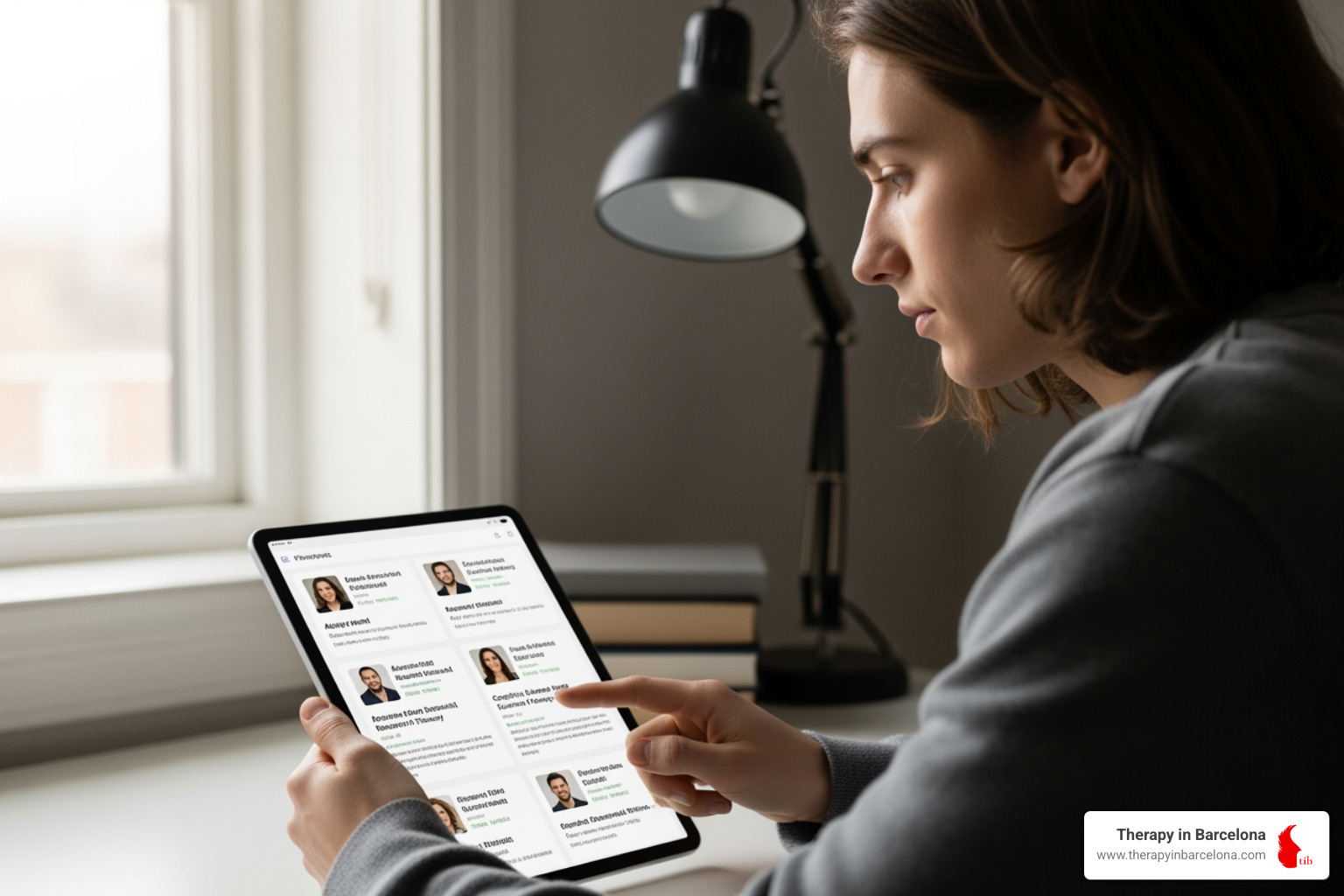
Types of Online Therapy Services Available
Online therapy platforms offer diverse services to cater to various needs:
- Individual Therapy: The most common form, providing one-to-one support tailored to specific concerns. It’s a space for personal care where you can work through stress, low mood, worry, or identity questions at your own pace. Evidence-based approaches such as CBT, ACT, Schema Therapy, Ego-State Therapy, Systemic, Psychodynamic, DBT, and Third Wave approaches like Mindfulness-Based Stress Reduction (MBSR) may be used. For more detailed information, find more info about individual therapy.
- Couples Counselling: If working through relationship challenges, online couples counselling helps improve communication, resolve conflicts, and strengthen connection, even if one partner is in Barcelona and the other in Valencia or Madrid. Therapists may use the Gottman Method or Imago Relationship Therapy.
- Family Therapy: For students dealing with family dynamics, online family therapy provides a structured environment for open dialogue and healing. This helps international students whose families are in different countries.
- Group Therapy: Some platforms offer online group sessions, providing supportive community where students share experiences and learn from peers facing similar challenges.
- Crisis Support: While not substituting emergency services, some platforms offer immediate support for non-life-threatening mental health crises.
Therapy in Barcelona is a group practice of psychology-trained therapists working with adults, couples, teens and families. We offer both online therapy worldwide and in-person sessions in our Barcelona office, adapting services to suit diverse needs of international students and expats in Barcelona, Madrid, Valencia, Málaga, Alicante, and beyond.
How to Choose the Right Online Therapist
Finding the right therapist is crucial for a helpful therapeutic journey. It’s about connection and understanding, not just qualifications. Here’s what to consider:
- Therapist Specialisations: Look for therapists experienced with student-specific challenges like academic stress, intense worry about performance, or cultural adjustment.
- Cultural Sensitivity: Especially important for international students. A therapist who understands different cultures offers more empathetic and effective support. At Therapy in Barcelona, our expat therapists deeply understand living abroad challenges because they’ve lived them too.
- Language Proficiency: Ensure your therapist speaks a language you’re comfortable expressing yourself in. We offer therapy in English, and some therapists speak German, French, Spanish, Portuguese, Afrikaans, Austrian-German, and Swiss-German.
- Therapeutic Approach: Different therapists use various approaches. Reading about these helps you notice what resonates.
- Importance of Good Fit: The relationship with your therapist matters. Reading bios, watching introductory videos, and brief initial conversations help you sense whether you feel at ease.
- Booking a Free Discovery Call: Many practices, including Therapy in Barcelona, offer a Free Discovery Call. This short, no-obligation conversation lets you discuss what you’re looking for and see if the therapist and practice feel right before committing. We use this call to carefully match you with a therapist whose training, approach, language, and lived experience best suit your situation.
The goal is finding someone you trust and connect with, especially when handling student life challenges in places like Málaga, Sevilla, Zaragoza, or Gran Canaria.
Understanding Costs and Affordability
Navigating therapy costs can concern many students. While Therapy in Barcelona provides private-pay service, we aim for transparency and fairness.
- Session Fees: Our fees are straightforward, with no hidden subscriptions or lock-ins. You pay for sessions you attend. Find more info about our fees.
- Sliding Scale Fees: Understanding financial constraints can be barriers, some therapists offer sliding scale fees for those with financial need. Ask about this during your Free Discovery Call.
- Insurance Coverage: While private therapy isn’t typically covered by public health plans in Spain, many private insurance plans might offer partial or full coverage. Check directly with your provider about psychological services benefits.
- Comparing Options: Students also consider public system clinicians, large online platforms, and local practices. Public services are often low-cost but may involve long waiting lists and limited language choice. Large platforms can be convenient but often rely on algorithmic matching and may have less transparent data practices. Local practices provide good care, though may not always have expat experience or offer therapy in English.
At Therapy in Barcelona, all therapists are psychology-trained and offer services as therapists in Spain. We focus on expat and international student experiences, offer multilingual support, and match you thoughtfully with a therapist instead of by algorithm. We’re a trusted practice established in 2011, committed to strict privacy, never selling your data. We offer online therapy worldwide plus in-person sessions in Barcelona. If you’d like support, book a Free Discovery Call to explore whether we’re the right fit.
Getting Started and Addressing Common Concerns
Starting therapy, especially online, can bring up a mix of emotions – hope, nervousness, and perhaps a touch of hesitation. It’s perfectly normal to feel this way. The first step is often the hardest, but it’s also the most empowering. When you reach out, you’re taking charge of your mental health journey.
What can you expect in your first session? Typically, it’s a chance for you and your therapist to get to know each other. You’ll discuss what brings you to therapy, your goals, and your background. It’s also an opportunity for you to ask questions about the therapist’s approach and ensure you feel comfortable. The therapeutic journey is a collaborative one, and a strong connection with your therapist is fundamental.
Technology and accessibility play a crucial role in online therapy for students. Ensuring you have a stable internet connection and a private space for your sessions will help create a seamless and confidential experience. Our platforms are designed for ease of use, making connecting with your therapist as straightforward as possible, whether you are in Zaragoza or Gran Canaria.
What If I’m in Crisis? Accessing Immediate Support
Important Note: While online therapy for students offers invaluable support for a wide range of mental health concerns, it is not designed for emergencies or acute psychological crises. If you or someone you know is in immediate danger, experiencing suicidal thoughts, or a severe mental health crisis, it is crucial to seek immediate help from local emergency services.
In Spain, you should call 112 for all emergencies, including mental health crises. You can also go to the nearest hospital or emergency department.
For students who are not in immediate danger but need urgent support, there are resources available:
- Hope for Wellness Helpline: Provides immediate mental health counselling and crisis intervention for all Indigenous peoples across Canada (available in some Indigenous languages). You can reach them toll-free at 1-855-242-3310.
- Kids Help Phone: A free, 24/7, confidential e-mental health service offering support in English and French to children and youth ages 5 to 20 through phone, text, and online resources. Their toll-free number is 1-800-668-6868.
- Distress and crisis services: You can find distress and crisis support in your region through services like those listed on dcontario.org.
- Good2Talk: For post-secondary students in Ontario, Canada (ages 17-25), this service offers free, confidential support. Call 1-866-925-5454.
Knowing these resources can provide a safety net when urgent support is needed.
Common Concerns About Online Therapy for Students
It’s natural to have questions and even some skepticism about trying online therapy for students. Let’s address some common concerns:
- Misconception: It’s not as effective. As discussed earlier, numerous studies confirm that online therapy is just as effective as in-person sessions for many conditions, particularly for feelings of worry and low mood.
- Misconception: It feels awkward or impersonal. While it might feel a little different at first, most clients quickly adapt to the online format. Therapists are skilled at creating a warm, engaging, and personal connection through video. Many find the comfort of their own environment actually helps them open up more easily.
- Misconception: My problems aren’t “serious enough”. This is a very common thought, but therapy isn’t just for crises. It’s for anyone who wants to improve their mental well-being, gain coping skills, manage life transitions, or simply have a confidential space to process their thoughts and feelings. No concern is too small if it’s impacting your quality of life.
- Addressing Privacy and Confidentiality: This is a paramount concern, especially for students. Reputable online therapy providers, including Therapy in Barcelona, adhere to strict privacy standards. We are GDPR compliant, ensuring your data is handled with the utmost care and security. Our secure video platforms are encrypted to protect your sessions. Confidentiality is the cornerstone of therapy, and your therapist will discuss its limits (e.g., duty to report if there’s a risk of harm to yourself or others) openly with you from the start.
By addressing these concerns, students can feel more confident and comfortable exploring online therapy as a valuable option for their mental health needs.
Studying away from home can bring excitement and pressure at the same time. Exams, deadlines, friendships, homesickness, and life in a new country can all build up, whether you are in Barcelona, Valencia, Madrid, Málaga, Alicante, Sevilla, or somewhere else in Spain.
Online therapy for students can make it easier to get support that fits around your life. You can speak with a therapist from your room, between classes, or while you are back home for the holidays. For many international students, being able to talk in English or another familiar language, with someone who understands the expat experience, is a relief.
At Therapy in Barcelona, we are a group practice of psychology-trained expat therapists who have been supporting internationals since 2011. We offer online therapy worldwide and in-person sessions in our Barcelona office. Our team works with adults, couples, teens and families, and we take care to match you with a therapist who fits your needs, language, and story.
If you’d like support on your student journey, you are welcome to book a Free Discovery Call. In that short call, we can learn a bit about you, explain how we work, and help you decide on a next step that feels right for you.
