


Sensorimotor psychotherapy techniques blend the wisdom of your body with the insights of your mind. Think of it as tuning into how your body holds onto stress and trauma and using this awareness to heal.
Here’s what you need to know about sensorimotor psychotherapy techniques in a nutshell:
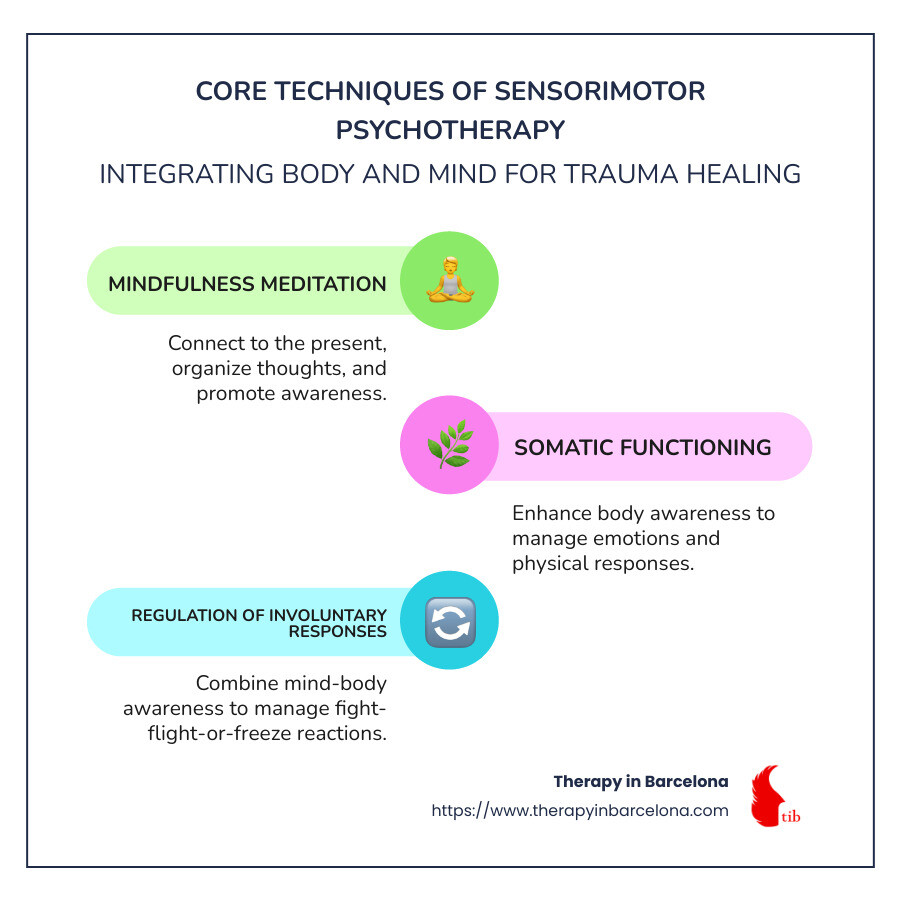
- Mindfulness Meditation: Helps you connect to the present and organize your thoughts.
- Somatic Functioning: Uses body awareness to manage emotions and physical responses.
- Regulation of Involuntary Responses: Combines mind-body awareness to manage fight-flight-or-freeze reactions.
Imagine standing in a busy Barcelona plaza, overwhelmed yet trying to cope. Many expats find that life in a new country can bring unexpected challenges, including higher anxiety and feelings of loneliness. Sensorimotor psychotherapy offers a way to work with these experiences. By focusing on the mind-body connection, it can support healing without relying only on words.
Sensorimotor psychotherapy is not just about talking. It looks at how trauma physically manifests in your body, guiding you to release tension and stress. With roots in both body movement and mental awareness, it’s gaining traction as a powerful approach to trauma treatment.
Dr. Pat Ogden, a leading figure in somatic therapy and the founder of Sensorimotor Psychotherapy, helped bring the body into trauma treatment in a practical way. Her work shows that healing is not only about talking through experience, but also about noticing posture, movement, tension, and physical responses that can guide recovery.
Curious about how this works? Read on to explore techniques that could transform your mental health journey in Barcelona.
Understanding Sensorimotor Psychotherapy
Pat Ogden, a trailblazer in somatic therapy, introduced a fresh perspective on healing trauma by focusing on the body’s wisdom. Her approach, known as sensorimotor psychotherapy, emphasises that trauma and attachment issues aren’t just mental phenomena; they live in our bodies too.
A Body-Centered Approach
Traditional therapy often focuses on talking through problems. But what if words aren’t enough? That’s where a body-centered approach steps in. Ogden found that the body holds onto stress and trauma, even when the mind tries to forget. By paying attention to physical sensations and movements, we can uncover hidden layers of trauma.
Trauma and Attachment
Trauma isn’t just about big, dramatic events. It can also stem from attachment issues, like feeling neglected or unsupported in childhood. These experiences can leave lasting imprints on both the mind and body. Sensorimotor psychotherapy helps clients tune into these imprints, offering a pathway to healing that words alone can’t reach.
The Role of Somatic Therapy
In somatic therapy, the body is seen as a resource for healing. By focusing on bodily sensations, clients learn to regulate their emotions and responses. This can be especially helpful for expats facing cultural adjustments in Barcelona, where the new environment might trigger old fears or anxieties.
Bringing It All Together
Dr. Ogden‘s work has shown that by integrating the body’s signals into therapy, we can achieve a deeper level of healing. This approach is not just about understanding trauma but changing how we experience it, leading to profound changes in our mental health.
Key Sensorimotor Psychotherapy Techniques
In sensorimotor psychotherapy, the body is more than just a vessel; it’s a source of wisdom and healing. Here, we explore the core techniques that help bridge the mind-body connection and transform trauma into resilience.
Mindfulness
Mindfulness means paying attention to what is happening right now, in your body and your mind. In sensorimotor psychotherapy, it helps reduce stress by noticing breath, tension, posture, and physical sensations without judgment. This simple practice can help you feel more grounded, calmer, and better able to respond when life feels overwhelming.
Somatic Resources
Somatic resources are body-based actions or postures that help regulate emotions and physical stress responses. These can include sitting with better support, feeling the feet on the ground, or slowing the breath. For example, when someone notices their heart racing before a big presentation, these techniques can help settle the nervous system and build confidence over time.
Body Reading
Body reading is a technique therapists use to notice physical cues that reflect emotional and mental states. They may observe posture, muscle tension, movement, and breathing patterns. This can help reveal where stress or trauma may be held in the body, creating a starting point for awareness and healing.
Defensive Responses
Trauma often leaves people with automatic defensive responses like fight, flight, or freeze. These reactions come from the body’s survival system. Sensorimotor psychotherapy helps clients notice these patterns and build new ways to respond. Instead of shutting down in stressful social situations, a person can learn to recognize the sensation early and use mindfulness to stay present, grounded, and connected.
By incorporating these techniques, sensorimotor psychotherapy offers a holistic way to heal from trauma. It’s not just about talking; it’s about listening to your body and finding harmony within yourself.
Ready to see how these techniques fit into the broader journey of healing? Let’s explore the three phases of sensorimotor psychotherapy and how they guide you through stabilization, processing traumatic memories, and reintegration into everyday life.
The Three Phases of Sensorimotor Psychotherapy
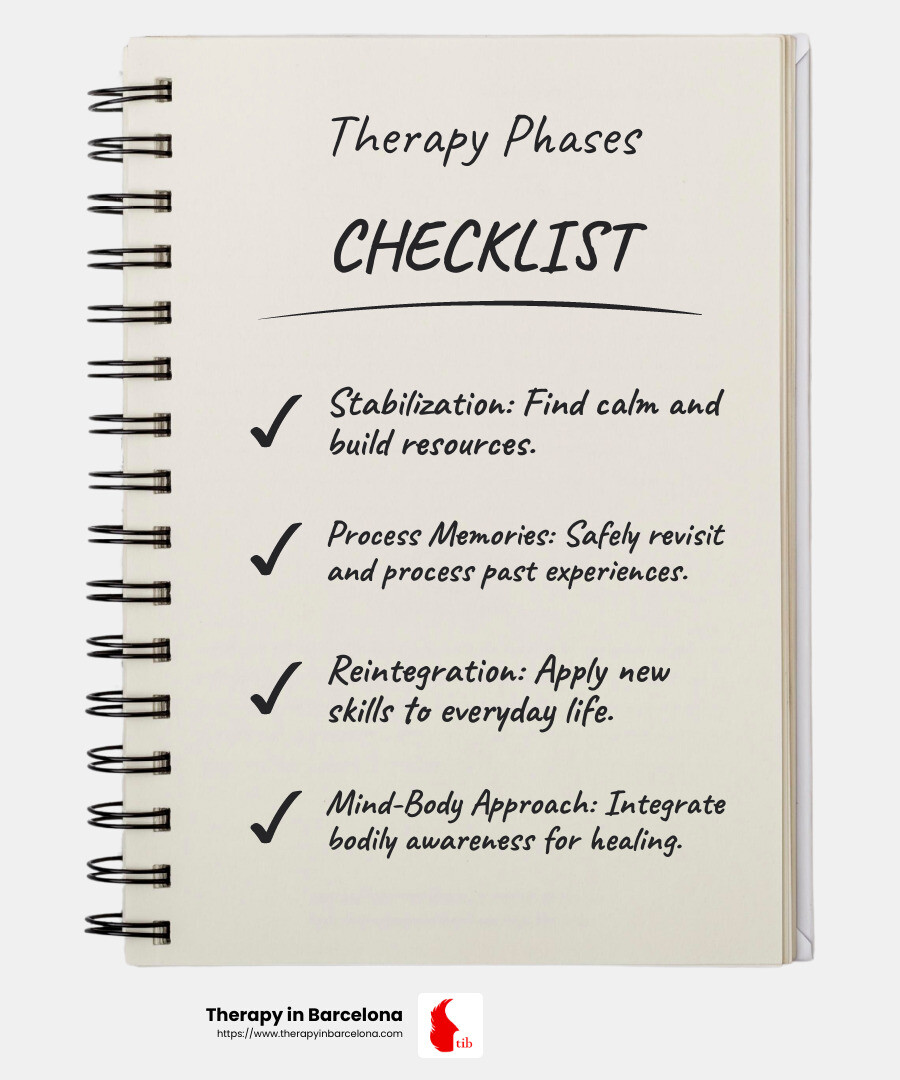
Sensorimotor Psychotherapy is like a journey with three main stops: stabilization, processing traumatic memory, and reintegration. Each phase builds on the last, guiding individuals through healing by using both mind and body.
Stabilization
The first phase, stabilization, is about building a sense of safety, calm, and balance. In this phase, the therapist helps the client regulate arousal levels, which may feel unpredictable or overwhelming because of stress, anxiety, or trauma-related reactions.
Stabilization focuses on building safety through techniques like mindfulness and somatic resources. This can include grounding, breath awareness, and noticing supportive body sensations to help a person feel more present and steady. The goal is to develop practical tools for managing stress, regulating arousal, and reducing the sense of overwhelm.
Processing Traumatic Memory
Once a person feels more stable, they can move into the second phase: processing traumatic memory. This stage is a bit like reopening old chapters, but in a careful, supported way. The therapist helps them revisit difficult experiences without becoming overwhelmed by emotion.
Through sensorimotor psychotherapy techniques, a person may revisit past experiences not only through words, but by noticing how the body reacts. This might include a tight chest, a clenched jaw, or a knot in the stomach. As these sensations are observed with care and awareness, it becomes easier to process the experience and loosen the grip those memories still have.
Reintegration
Finally, there’s reintegration. This phase is about weaving the lessons learned in therapy back into everyday life. It’s like taking a puzzle piece that’s been missing and fitting it back into place.
In this phase, the skills and insights gained in therapy begin to show up in daily life, including relationships, work, and social settings. Many people feel more grounded in social situations and better able to communicate their needs. Reintegration is about moving toward a stronger sense of wholeness, identity, and connection with the world around you.
Sensorimotor psychotherapy is a journey through these phases, offering a pathway to healing that accepts both mind and body. In the next section, we’ll dig into how these techniques specifically address trauma and help individuals regulate their responses to stress and triggers.
Sensorimotor Psychotherapy Techniques for Trauma
Sensorimotor psychotherapy is a unique approach that focuses on the body to heal from trauma. Let’s explore how this method helps regulate stress and trauma responses by using bottom-up processing, addressing involuntary movements, and promoting arousal regulation.
Bottom-Up Processing
In traditional therapy, we often start with thoughts and feelings to understand and solve problems. This is called “top-down” processing. But with sensorimotor psychotherapy, it’s different. Here, we begin with the body—this is “bottom-up” processing.
Imagine your brain as a three-part team: the reptilian brain, the mammalian brain, and the neocortex. The reptilian brain is like the team’s survival expert, handling instincts like fight or flight. Sensorimotor psychotherapy taps into this part, using physical sensations and movements as a doorway to healing.
This approach is crucial because trauma often lives in the body. By focusing on physical sensations and movements, we can reach the root of traumatic memories without needing to talk about them.
Involuntary Movements
Trauma can cause our bodies to react in ways we don’t control. These are called involuntary movements. They might include shaking, flinching, or feeling tense without knowing why.
For example, a person in therapy may notice their shoulders tighten when talking about the past. The therapist helps them track that tension with mindful awareness and gently soften it. By working with these automatic body responses, they can begin to loosen trauma’s hold on the nervous system.
Arousal Regulation
When trauma hits, it can throw our body’s alarm system out of whack. We might feel on edge all the time (hyperarousal) or numb and disconnected (hypoarousal). Arousal regulation is about finding a balance.
In sensorimotor psychotherapy, therapists help clients use somatic resources to regulate arousal. These can include breathing practices, grounding exercises, or simple posture shifts like standing tall. Over time, clients learn to settle the body’s alarm system, which can support a greater sense of safety, steadiness, and control.
By focusing on the body, sensorimotor psychotherapy techniques can offer a powerful path for healing trauma. They help people reconnect with physical sensations, regulate stress, and build a greater sense of safety and calm. In the next section, we’ll answer common questions about these techniques and how they differ from traditional talk therapy.
Frequently Asked Questions about Sensorimotor Psychotherapy Techniques
What are the six principles of sensorimotor psychotherapy?
Sensorimotor psychotherapy is built on six core principles that guide its practice:
Organicity: This principle focuses on the natural self-healing abilities of the body and mind. It suggests that with the right support, individuals can access their innate capacity to heal from trauma.
Non-Violence: A gentle approach is key. Therapy should never force or rush the process. Instead, it respects the individual’s pace and comfort, ensuring a safe environment for healing.
Unity: This principle highlights the interconnectedness of the body and mind. It emphasizes treating the whole person, not just isolated symptoms.
Mind-Body-Spirit Holism: Recognizing that healing involves more than just the physical or mental aspects, this principle integrates the spiritual dimension, acknowledging the full spectrum of human experience.
Mindfulness/Presence: Mindfulness is a cornerstone of sensorimotor psychotherapy. It helps individuals stay present and aware of their bodily sensations, which is crucial for processing trauma.
Relational Alchemy: The therapeutic relationship is seen as a transformative space. Trust and empathy between therapist and client are essential for effective healing.
How does sensorimotor psychotherapy differ from traditional talk therapy?
Sensorimotor psychotherapy stands apart from traditional talk therapy in several ways:
Body-Centered Approach: Unlike talk therapy, which focuses on verbal communication, sensorimotor psychotherapy emphasizes the body’s role in healing. It uses physical sensations as a gateway to address trauma.
Somatic Symptoms: This therapy specifically targets somatic symptoms, which are physical manifestations of trauma. By focusing on these, it can unearth and resolve deep-seated issues that might not emerge through conversation alone.
Trauma Resolution: Sensorimotor psychotherapy is particularly effective for trauma resolution. It helps individuals process and integrate traumatic memories without needing to verbalize them, which can be especially beneficial for those who struggle to talk about their experiences.
Who can benefit from sensorimotor psychotherapy?
Sensorimotor psychotherapy can be a powerful tool for many individuals, especially those dealing with:
PTSD: By addressing the body’s responses to trauma, this therapy can help regulate the nervous system and reduce PTSD symptoms.
Anxiety and Depression: By fostering a connection between body and mind, sensorimotor psychotherapy can alleviate anxiety and depressive symptoms, helping individuals feel more grounded and present.
Relationship Issues: The therapy’s focus on body awareness and mindfulness can improve emotional regulation and communication, leading to healthier relationships.
Other Emotional Challenges: Those dealing with anger, stress, or emotional dysregulation may find relief through the techniques offered by sensorimotor psychotherapy.
By understanding these principles and differences, individuals can make informed decisions about whether sensorimotor psychotherapy might be right for them. In the next section, we’ll explore the three phases of this therapy and how they facilitate healing.
Conclusion
At Therapy in Barcelona, we understand the unique challenges faced by expats living in a foreign country. Whether it’s adjusting to a new culture, feeling isolated, or dealing with the stress of relocation, our goal is to provide support that is both effective and culturally sensitive.
Personalized Therapist Matching
A core part of our approach is personalized therapist matching. The connection between you and your therapist matters, especially in trauma-focused work like sensorimotor psychotherapy. We take time to understand your needs, preferences, and goals so we can connect you with a therapist who feels like the right fit. That strong match can help you feel safe, understood, and ready to make real progress.
Culturally Sensitive Support
Living abroad can be hard. Our therapists offer culturally sensitive support that takes international life into account, so care feels relevant, respectful, and aligned with your lived experience.
A Sanctuary for Expatriates
Since 2011, Therapy in Barcelona has been a sanctuary for internationals seeking mental health support. We offer a wide range of therapeutic approaches, including sensorimotor psychotherapy, to cater to diverse needs. Whether you’re dealing with trauma, anxiety, relationship issues, or simply seeking personal growth, our team is here to help you steer the complexities of life abroad.
If you’re ready to take the next step towards healing, we invite you to explore our services and book a discovery call. Let Therapy in Barcelona be your partner in achieving a harmonious balance between body and mind.
