


Cognitive behavioral therapy for adjustment disorder offers a powerful pathway from chaos to calm. At its core, CBT equips individuals with the tools to cultivate emotional resilience amid life’s unpredictable challenges.
Key Points:
- Adjustment disorders arise from responses to significant life changes.
- CBT focuses on changing negative thought patterns and improving coping skills.
- Emotional resilience is the cornerstone of navigating stressors effectively.
- Successful therapy aligns with culturally sensitive support, significant for expats like those in Barcelona.
When life changes become overwhelming, it’s crucial to develop strategies for navigating these emotional storms. Adjustment disorders often appear when the demands of life’s transitions, like relocating to a new city or managing a career change, feel too heavy to bear.
Resilience—that inner strength to bounce back—is what helps us steer these challenges. Cognitive behavioral therapy specializes in building this resilience, helping you reframe negative thoughts and develop coping mechanisms.
Consider the journey of Emily, a 34-year-old expat from the UK, adjusting to life in busy Barcelona. She finds herself in a swirl of emotions—loneliness, anxiety, and a sense of displacement. For someone like Emily, CBT is not just a tool; it’s a lifeline, enabling her to grow stronger and more adaptable in her new home.
At Therapy in Barcelona, led by Leigh Matthews—an Australian psychologist deeply experienced with international transitions—our approach focuses on supporting your mental health through these adjustments. We emphasize culturally sensitive therapy to nurture emotional resilience, turning stressful situations into opportunities for personal growth.

Understanding Adjustment Disorder
Adjustment disorder is a psychological response to significant life changes or stressors. It’s more than just feeling stressed; it’s when stress impacts your emotions and daily life.
How Stressors Impact Us
Stressors can be anything from a new job to a breakup. They’re events that disrupt our normal routine and can lead to emotional distress. Imagine moving to a new city, like Barcelona, where everything is unfamiliar. This can be exciting but also overwhelming. You might feel out of place, anxious, or even a bit lost.
Emily, our fictional expat, experienced this firsthand. She moved from the UK to Barcelona seeking trip but found herself battling unexpected loneliness and anxiety. Her story is a relatable example of how adjustment disorders can affect anyone facing big life changes.
Emotional Symptoms of Adjustment Disorder
Adjustment disorder can manifest through a variety of emotional symptoms. These might include:
- Anxiety: Feeling constantly worried or nervous.
- Depression: Experiencing a persistent sense of hopelessness.
- Emotional Outbursts: Having sudden episodes of anger or crying.
- Withdrawal: Avoiding social interactions and activities you once enjoyed.
These symptoms can make daily life challenging. For expats like Emily, they can also interfere with the process of settling into a new culture and building a support network.
Navigating Emotional Challenges
Recognizing these symptoms is the first step toward managing adjustment disorder. It’s important to understand that these reactions are common and treatable. With the right support, such as cognitive behavioral therapy for adjustment disorder, individuals can learn to manage their emotions and develop resilience.
CBT helps by providing tools to identify and change negative thought patterns. This therapy is particularly effective for those dealing with adjustment disorders, as it focuses on building coping mechanisms that empower individuals to handle stressors more effectively.
At Therapy in Barcelona, we understand the unique challenges faced by internationals. Our culturally sensitive approach, led by Leigh Matthews, aims to support expats like Emily in navigating their emotional landscapes, turning stress into an opportunity for growth.
Cognitive Behavioral Therapy for Adjustment Disorder
Key Components of CBT
Cognitive Behavioral Therapy, or CBT, is a proven method for helping individuals manage adjustment disorders. It focuses on changing negative thought patterns and developing effective coping mechanisms. Let’s break down the key components that make CBT so effective.
Cognitive Restructuring
One of the core techniques of CBT is cognitive restructuring. This involves identifying negative thoughts that contribute to stress and anxiety. For instance, you might think, “I’ll never fit in here,” when adjusting to life in a new city like Barcelona. CBT helps you challenge these thoughts and replace them with more balanced perspectives, such as, “It might take time, but I can find my place here.”
Behavioral Activation
Another essential component is behavioral activation. This encourages you to engage in activities that bring joy and a sense of accomplishment. Imagine Emily, our fictional expat, who feels isolated after moving. By scheduling regular social activities or hobbies she enjoys, Emily can counteract feelings of withdrawal and inactivity.
Stress Management
Stress management techniques are also vital in CBT. These include relaxation exercises like deep breathing or mindfulness practices. Such techniques help reduce the physical symptoms of stress, making it easier to handle emotional challenges.
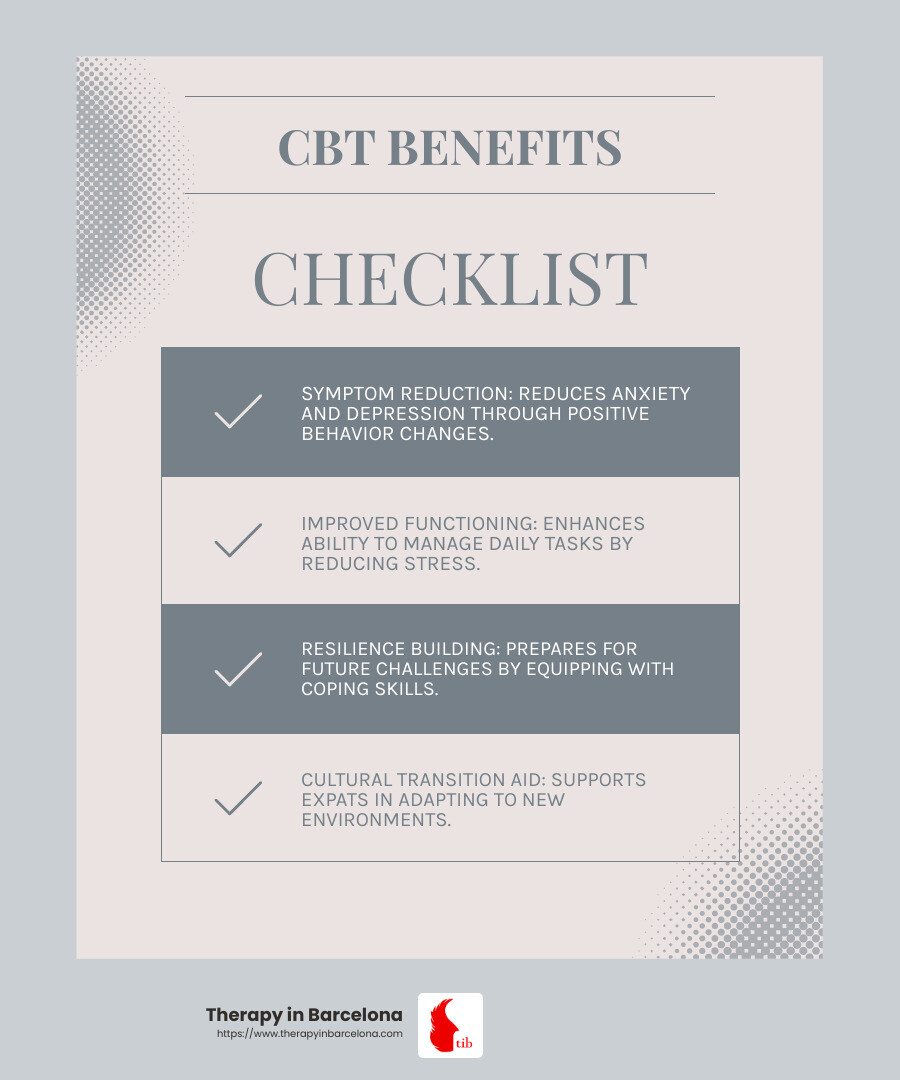
Benefits of CBT
CBT offers numerous benefits for individuals with adjustment disorders, particularly for expats facing cultural transitions.
Symptom Reduction: By addressing negative thoughts and promoting positive behaviors, CBT significantly reduces symptoms of anxiety and depression.
Improved Functioning: As you learn to manage stress more effectively, your ability to function in daily life improves. This is crucial for expats trying to adapt to a new environment.
Resilience Building: CBT doesn’t just address current issues; it equips you with skills to handle future stressors. This resilience is invaluable for anyone navigating significant life changes.
At Therapy in Barcelona, our culturally sensitive CBT approach helps internationals like Emily transform stress into success. By focusing on these key components, we empower expats to thrive in their new surroundings.
Treatment and Management Strategies
When it comes to managing adjustment disorders, a multifaceted approach is essential. This involves combining various strategies to address both the psychological and physiological aspects of the disorder. Let’s explore some effective treatment and management strategies.
Nonpharmacologic Approaches
Nonpharmacologic interventions are often the first line of defense. These include therapeutic interventions like Cognitive Behavioral Therapy (CBT), which has shown significant success in reducing anxiety and improving functioning. For example, a study highlighted the effectiveness of CBT in helping a young man cope with anxiety following the September 11 attacks. Such interventions empower individuals to build resilience and develop effective coping mechanisms.
Combination Therapies
In some cases, a combination of therapies might be the best approach. This can involve integrating nonpharmacologic methods with medication. While medications can be helpful, they should be prescribed with caution to avoid dependency. The idea is to tailor a treatment plan that addresses both emotional and physical symptoms, providing a holistic strategy for recovery.
Dietary Supplements
An emerging alternative to traditional medication is the use of dietary supplements. These can be particularly beneficial for managing anxiety associated with adjustment disorders. A blend of bioactive peptides and magnesium, for instance, has shown promise as a safer option compared to benzodiazepines. Supplements can be a great addition to a treatment plan, especially for those looking to avoid the side effects of conventional medications.
By combining these strategies, Therapy in Barcelona offers expats a comprehensive approach to managing adjustment disorders, helping them transform stress into success. This integrated method not only addresses immediate symptoms but also builds resilience for future challenges.
Frequently Asked Questions about Cognitive Behavioral Therapy for Adjustment Disorder
Can CBT help with adjustment disorder?
Absolutely! Cognitive Behavioral Therapy (CBT) is a highly effective treatment for adjustment disorder. It focuses on identifying and changing negative thought patterns that contribute to emotional distress. Research shows that CBT significantly reduces anxiety and depression symptoms in individuals with adjustment disorder. One study even found that blended CBT (a combination of online and face-to-face sessions) can be more effective than traditional face-to-face therapy alone, offering greater flexibility and access for those in need.
What is the best therapy for adjustment disorder?
While CBT is often the go-to therapy for adjustment disorder due to its structured approach and proven results, it’s not the only option. Individual psychotherapy is another effective method, providing a safe space for individuals to explore their feelings and develop coping strategies. Family therapy can also be beneficial, especially when the adjustment disorder affects family dynamics. This type of therapy helps improve communication and resolve conflicts, creating a supportive environment for recovery.
What exercises are good for adjustment disorder?
Physical activity plays a crucial role in managing adjustment disorder. Engaging in regular exercise not only improves physical health but also provides significant stress relief. Activities like walking, yoga, or swimming can help reduce anxiety and improve mood. Incorporating simple relaxation techniques, such as deep breathing or mindfulness exercises, can further improve these benefits. These practices help individuals manage stress and build resilience, making them an essential part of any treatment plan for adjustment disorder.
By understanding and utilizing these strategies, individuals can effectively steer the challenges of adjustment disorder, changing stress into success.
Conclusion
At Therapy in Barcelona, we understand the unique challenges faced by expats living in a foreign country. Navigating a new culture, dealing with language barriers, and being away from familiar support systems can lead to feelings of stress and isolation. That’s why our mission is to provide personalised support custom to the needs of the international community in Barcelona.
Our team of multilingual therapists is dedicated to offering culturally sensitive care that resonates with the diverse experiences of expatriates. We specialise in cognitive behavioral therapy for adjustment disorder, along with a variety of other therapeutic approaches. This ensures that every client receives the right support to address their specific concerns.
Personalised Support for Expats
Living abroad can be both exciting and overwhelming. Whether you’re struggling with cultural adjustment, homesickness, or the pressures of a new job, Therapy in Barcelona is here to help. We offer a safe, non-judgmental space where you can explore your feelings and develop effective coping strategies.
Our personalised therapist matching process ensures that you are paired with a therapist who truly understands your situation. This approach improves the therapeutic experience, allowing for more meaningful and effective sessions.
Navigating Expat Challenges
Expats often face a unique set of challenges, from managing work-life balance to maintaining relationships across distances. At Therapy in Barcelona, we are committed to helping you overcome these problems. Our therapists, many of whom are expats themselves, bring a deep understanding of the expatriate experience. This insight allows us to provide support that is both empathetic and practical.
By choosing Therapy in Barcelona, you’re not just accessing therapy; you’re joining a community that values your strengths and is dedicated to helping you thrive in your new environment. Our services are available both in-person and online, making them accessible to internationals in Barcelona and beyond.
For more information on how we can support you, visit our Therapy in Barcelona services page. Whether you’re dealing with adjustment disorder or other mental health challenges, our team is here to guide you towards a more fulfilling life abroad.
