


Why EMDR for Complex PTSD Offers a Path to Healing

EMDR for complex PTSD is a specialised therapy that helps people heal from prolonged, repeated trauma. Unlike single-incident trauma, complex PTSD (C-PTSD) develops from ongoing experiences like childhood abuse or domestic violence, shaping how you see yourself and relate to others.
Here’s what you need to know about EMDR for C-PTSD:
- It’s adaptable: The therapy is paced slowly, with extra preparation to ensure safety.
- Safety is the priority: It begins by building coping skills before addressing traumatic memories.
- It’s comprehensive: It works on emotional regulation, self-worth, and relationship patterns.
- It takes time: Healing from complex trauma is a journey, often requiring 8-12+ sessions.
- The right therapist is essential: Look for a trauma-informed therapist with specific experience in C-PTSD.
If you’ve lived through years of trauma, you might recognise yourself in Emily’s story. She’s a composite, not a real client, but her experience is common.
Emily, 34, moved to Barcelona for a fresh start but couldn’t escape the weight of her childhood. Growing up with an unpredictable parent left her always on edge, struggling to trust, and feeling deeply ashamed. Conflicts sent her into emotional spirals, leaving her feeling fragmented and exhausted.
Emily’s story is about a thousand small wounds. That’s what C-PTSD does—it shapes your nervous system and sense of self. But healing is possible. EMDR therapy, adapted for complex trauma, can help you reprocess painful memories and reclaim a sense of safety. It’s not a quick fix and requires a skilled therapist, but for many, it’s a turning point.
This guide explains what EMDR for complex PTSD involves, how it’s adapted, and what to expect. Whether you’re in Barcelona, Valencia, Madrid, or anywhere else, understanding your options is the first step.
Understanding Complex PTSD and Its Unique Wounds
When trauma is a repeating pattern over months or years, especially without escape, it creates Complex PTSD (C-PTSD). It develops from prolonged trauma where escape feels impossible, such as childhood abuse, domestic violence, or living in a war zone. Unlike a single event, complex trauma weaves itself into the fabric of who you are.
The mental health charity Mind offers more information about complex PTSD, highlighting its deep impact. People with C-PTSD often carry profound shame and worthlessness. Emotions can feel overwhelming and unpredictable, and a sense of disconnection from others and even your own body is common. Because the trauma often happened within relationships, trust feels dangerous, leading to a negative self-image and feeling stuck.
If you’re experiencing these struggles, exploring therapy for emotional trauma can be an important step.
How C-PTSD Differs from Single-Event PTSD
The differences are about the nature of the trauma and how it shapes your life.
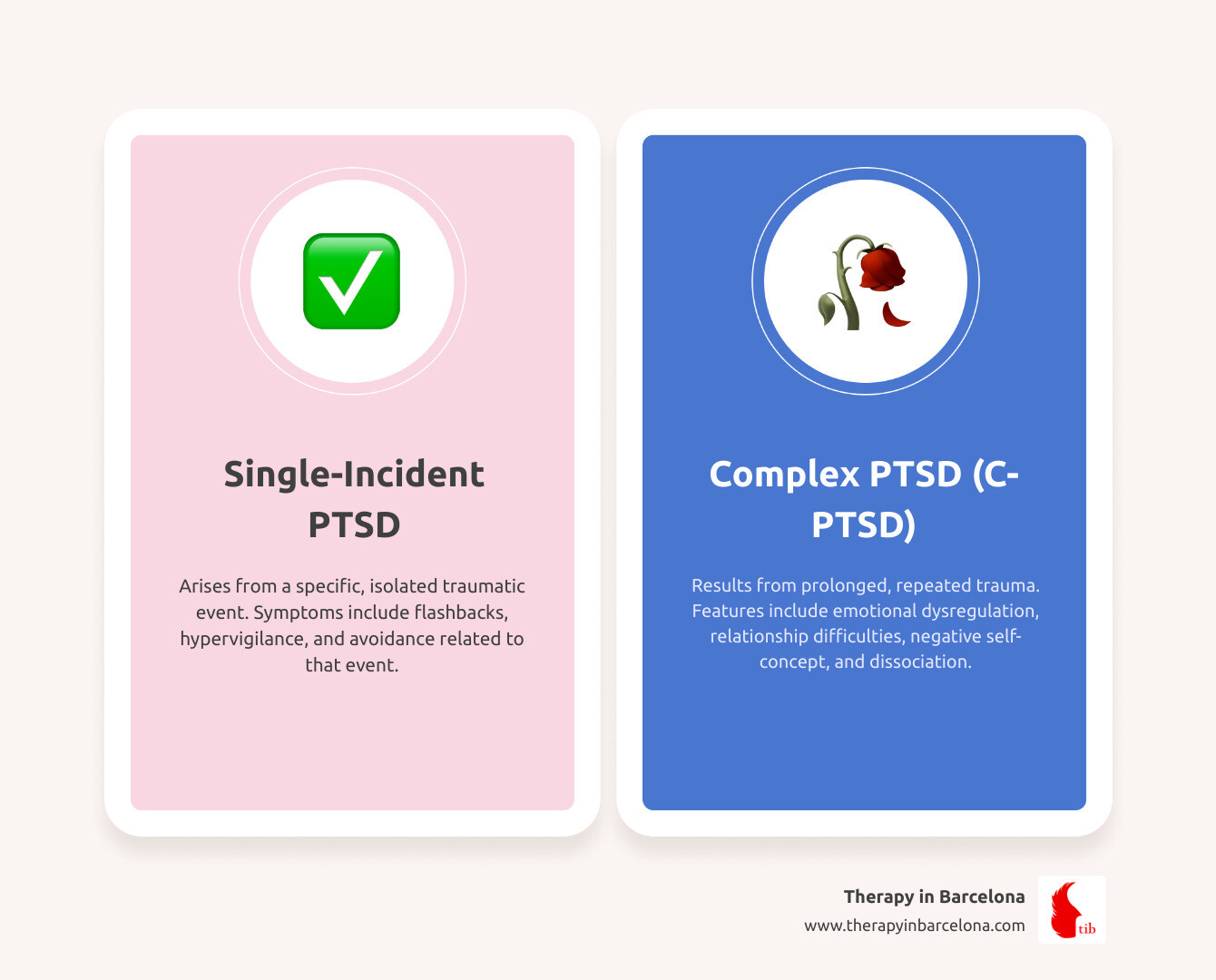
- Type of Trauma: Single-event PTSD stems from a specific incident (e.g., an accident). C-PTSD develops from ongoing, often interpersonal trauma where escape was difficult or impossible.
- Symptoms: Both share core PTSD symptoms like flashbacks and hypervigilance. But C-PTSD adds layers, which the ICD-11 calls “Disorders of Self Organisation.” These include severe difficulties with emotional regulation, a disturbed sense of self (deep shame, worthlessness), and problems in relationships.
- Sense of Self: With C-PTSD, the trauma shapes your identity, making you feel fragmented. With single-event PTSD, the trauma is often seen as separate from your identity.
- Relationships and Trust: Complex trauma often involves betrayal by caregivers or partners, leaving deep scars around attachment and making it hard to trust anyone.
The Core Challenges of C-PTSD
Living with Complex PTSD involves navigating isolating and overwhelming challenges.

- Emotional flashbacks: You’re suddenly flooded with intense feelings from the past—terror, shame, helplessness—often without a specific memory attached.
- Difficulty with trust: When the people who should have protected you were the source of harm, trusting others feels almost impossible.
- Deep shame and guilt: Survivors often internalise the trauma, believing they were somehow responsible, leading to a pervasive sense of worthlessness.
- A body that remembers: Trauma lives in the nervous system, causing chronic tension, unexplained pain, and a body braced for danger even when you’re safe.
- Constant hypervigilance: Your brain stays on high alert, always scanning for threats, which is exhausting and makes it hard to relax.
These challenges are heavy, but with the right support—like EMDR for complex PTSD—healing is possible. You don’t have to carry this alone.
How EMDR Therapy Works: The 8-Phase Journey
Eye Movement Desensitisation and Reprocessing (EMDR) is an evidence-based therapy for trauma. It’s based on the Adaptive Information Processing (AIP) model, which suggests that traumatic memories can get “stuck” in the brain, preventing natural healing.
EMDR uses bilateral stimulation—like guided eye movements or alternating sounds—to help your brain reprocess these memories. The goal isn’t to erase what happened, but to reduce its emotional charge, allowing new, more positive beliefs to emerge. It’s a complete, eight-phase treatment that addresses past trauma, present triggers, and future concerns. You can learn more in our article, Beyond the blinks: Explaining EMDR therapy for adults.
Phase 1 & 2: Building a Foundation of Safety and Trust
These initial phases are crucial for C-PTSD and often take more time. The focus is on safety and stabilisation.
- Phase 1 (History and Treatment Planning): Your therapist gets to know your story, identifies traumatic events, and collaborates with you on a treatment plan.
- Phase 2 (Preparation): You build the emotional resources and coping skills needed for trauma processing. This includes building a strong, trusting relationship with your therapist, which is a powerful corrective experience in itself. You’ll learn grounding techniques and develop a “safe place” you can mentally access when feeling overwhelmed. This preparation is essential for safe and effective therapy.
Phases 3-8: Processing and Integrating Traumatic Memories
Once a solid foundation is built, the processing phases begin.

- Assessment (Phase 3): You and your therapist identify a specific target memory to work on, along with the associated negative belief, emotions, and body sensations.
- Desensitisation (Phase 4): While holding the memory in mind, you’ll engage in bilateral stimulation. This helps reduce the memory’s emotional intensity while you maintain “dual awareness”—aware of the past memory but grounded in the present safety.
- Installation (Phase 5): Once the distress is reduced, you’ll work on strengthening a positive belief about yourself, such as “I am capable now.”
- Body Scan (Phase 6): You’ll scan your body for any remaining tension related to the memory, which can then be processed.
- Closure (Phase 7): Each session ends with you feeling grounded and calm, with strategies for self-care between sessions.
- Re-evaluation (Phase 8): At the start of each new session, your therapist checks your progress and adjusts the plan as needed.
Adapting EMDR for Complex PTSD: A Personalised, Trauma-Informed Approach
EMDR for complex PTSD requires careful modifications to address the challenges of prolonged trauma. A study in the Journal of EMDR Practice and Research confirms that therapy for chronic traumatisation should be phase-oriented and introduced gradually. If you’ve experienced trauma, PTSD, sexual abuse, neglect, or traumatic grief, the standard approach is adjusted because of how complex trauma affects your nervous system, sense of self, and ability to feel safe.
Why is EMDR Adjusted for Complex PTSD?
Adjustments are made to account for the effects of long-term trauma:
- Dissociation: A common survival mechanism where the mind disconnects. A therapist will prioritise grounding techniques to prevent processing from moving too quickly and triggering more dissociation.
- Early or Preverbal Trauma: Memories stored in the body as sensations rather than clear narratives. The therapy integrates body-based approaches to gently process these nonverbal memories.
- Attachment Wounds: When caregivers were the source of pain, the therapeutic relationship itself becomes a crucial part of healing, offering a corrective experience of safety and trust.
- Trouble with Self-Regulation: A chronically activated nervous system makes it hard to calm down. The initial phases of EMDR are extended to build robust skills for managing emotions.
- Avoiding Overwhelm: The goal is to work with the nervous system, not push through. Material is introduced in small, manageable doses (titration) to prevent re-traumatisation.
The ISTSS expert consensus treatment guidelines for complex PTSD recommend key adjustments like longer stabilisation, a focus on attachment, integrating parts work (like Internal Family Systems), using body-based techniques, and careful pacing.
The Importance of a Trauma-Informed Therapist
The success of EMDR for complex PTSD depends on your therapist’s expertise. A trauma-informed therapist understands the profound impact of trauma on your brain, body, and relationships.
Key qualities include:
- Specialised Training: Look for a therapist with advanced EMDR training and significant experience with complex trauma.
- Attunement: The ability to notice subtle shifts in your emotional state and adjust the session to prevent you from becoming overwhelmed.
- Creating Safety: Actively creating a respectful, consistent, and transparent environment where you feel in control.
- Co-regulation: Using their own calm presence to help regulate your nervous system when you feel dysregulated.
- Understanding Dissociation: Knowing how to work safely with dissociation, rather than triggering it.
- Expat Experience: For internationals in Barcelona, Valencia, or Madrid, a therapist who understands the challenges of expat life is invaluable. At Therapy in Barcelona, our therapists are often expats themselves, bringing a deep understanding of cultural adjustment and isolation to their work in cities like Málaga, Alicante, and Sevilla, or online worldwide.
What to Expect: Your Healing Journey with EMDR
Starting EMDR for complex PTSD is a significant step. Here’s what you can realistically expect from the journey.
Duration and Frequency
Healing from complex trauma is not a quick fix. While EMDR for a single event might take 3-6 sessions, C-PTSD often requires eight to 12 sessions, or significantly more. This reflects the layers of trauma that need to be processed safely. Sessions typically last 60-90 minutes and are often held weekly to maintain momentum, but this can be adjusted to your needs.
What EMDR Can and Can’t Do
EMDR is highly effective for changing the emotions, thoughts, and behaviours resulting from trauma. It helps your brain “stand down” from high alert. However, it’s not a magic bullet for every condition, especially those not directly related to trauma. It works best as part of a comprehensive, trauma-informed approach and is not a replacement for medical or crisis care.
Self-Care Between Sessions
Processing trauma can be intense. Your therapist will provide strategies for self-care and containment, such as using your “safe place” resource or grounding techniques. Practising these skills is important for managing any lingering sensations as your brain continues to process.

What Changes Can EMDR Bring for Complex PTSD?
The changes can be profound, leading to a significant improvement in quality of life.
- Fewer flashbacks: The intensity and frequency of emotional flashbacks can decrease, giving you more control.
- Better emotional balance: You may find yourself better able to regulate your emotions, with less reactivity and a calmer nervous system.
- Healthier relationships: As attachment wounds heal, it becomes possible to build more secure and trusting relationships.
- Stronger self-worth: Internalised shame can transform into a more compassionate sense of self. A review of EMDR for Complex PTSD highlights its effectiveness in rebuilding a sense of self.
- Integration: For those who experience dissociation, EMDR can help integrate fragmented parts of the self, leading to a more cohesive identity.
Comparing Your Therapy Options: What’s Out There?
When seeking support for EMDR for complex PTSD, it’s important to understand your options, especially as an international living in Spain.
Private, Specialised Practices like Therapy in Barcelona
A practice like Therapy in Barcelona offers a highly personalised approach for expats in cities like Barcelona, Valencia, and Madrid. Our team of psychology-trained therapists, many of whom are expats themselves, understand the expatriate experience.
Key benefits include:
- Personalised therapist matching: We take time to understand your needs and carefully match you with the right therapist.
- Expat-focused care: Our services are designed for the English-speaking international community, addressing issues like cultural adjustment and isolation.
- Strict privacy and quality: As a private-pay service, we ensure high-quality, confidential care. We offer in-person sessions in Barcelona and online therapy worldwide.
Large Online Platforms and Public Health Systems
Other alternatives exist:
- Large online platforms offer convenience but may lack personalised matching, expat-specific cultural sensitivity, and consistent data privacy.
- Public health systems in Spain are lower cost or free but can involve long waiting times, limited choice of therapist, and may not offer services in English or with a focus on expat challenges.
Therapy in Barcelona provides a sanctuary where internationals receive effective mental health care from a collaborative team of qualified expat professionals.
Frequently Asked Questions about EMDR for Complex PTSD
Can EMDR re-traumatise someone with C-PTSD?
When delivered by a skilled, trauma-informed therapist, EMDR should not be re-traumatising. The risk is real, but a properly trained therapist actively prevents it. The extensive preparation phases (1 and 2) are designed to build your coping skills and resources before processing traumatic memories. A therapist will carefully monitor your reactions to keep you within your “window of tolerance,” pausing or slowing down as needed. You are always in control and can stop at any time. The therapist’s skill in pacing and attunement is key to ensuring a safe process.
How long does EMDR therapy take for C-PTSD?
EMDR for complex PTSD is a longer journey than for single-incident trauma. While a single event might take 3-6 sessions, C-PTSD often requires 8-12 sessions or more. The duration is highly individualised and depends on your history and needs. The initial phase of building safety and resources is essential groundwork and takes time, but this investment is what makes deeper healing possible.
How does EMDR help with emotional regulation and dissociation?
EMDR addresses these core C-PTSD challenges in several ways.
- Building Resources: The preparation phase equips you with practical tools like grounding techniques and the “safe place” exercise to manage intense emotions.
- Dual Awareness: During processing, you maintain awareness of the present moment while accessing a past memory. This helps your brain process the memory without being overwhelmed or fully dissociating.
- Integrating Parts: EMDR can be used with “parts work” (like Internal Family Systems) to help fragmented aspects of the self communicate and heal, fostering a more cohesive identity.
- Expanding Tolerance: Through careful, gradual processing, you build your capacity to experience difficult emotions without shutting down, expanding your “window of tolerance.”
Beginning Your Path to Healing
Living with complex PTSD is a heavy weight, but healing is profoundly transformative. EMDR for complex PTSD, when delivered with a personalised, trauma-informed approach, offers a genuine path forward. It’s about gently untangling trauma, building resilience, and reclaiming your sense of safety and self-worth.
The right therapist is crucial, especially one who understands both the complexities of trauma and the unique context of being an international in Spain. At Therapy in Barcelona, our team of psychology-trained expat therapists brings this dual understanding. We know what it’s like to steer life in a foreign country while carrying unresolved trauma, and we offer culturally sensitive care that truly sees you.
Healing is possible, and taking the first step is the bravest part. We offer in-person sessions in Barcelona and online therapy worldwide, so you can get support whether you’re in Valencia, Madrid, or anywhere else.
If you’d like support in navigating your path to recovery, book a Free Discovery Call. This conversation helps us understand your needs and match you with the right therapist for your journey. You don’t have to carry this weight alone.
