


Why Online Therapy for Teens Is Becoming Essential
Why Choose Online Therapy for Teens?
Picture this: Your teenager is juggling school deadlines, friendship drama, and that constant pressure to figure out their future—all while living in a foreign country where they’re still finding their place. Traditional therapy might feel like just another overwhelming appointment to squeeze into an already packed schedule. But online therapy for teens offers something different: support that meets them exactly where they are.
For expat families especially, the advantages are game-changing. When you’re navigating life in Barcelona or anywhere abroad, finding a therapist who speaks your language—both literally and culturally—can feel nearly impossible. Online therapy demolishes these geographical barriers, connecting your teen with specialists who genuinely understand their unique experiences as international young people.
The convenience factor alone can transform everything. No more rushing across town after school, no more missing sessions because of transport strikes or football practice. As one parent shared with us, “My daughter used to dread the trek to therapy appointments, but now she actually looks forward to her sessions from the comfort of her own room.”
But it’s about more than just convenience. There’s something powerful about allowing teens to engage in therapy from their own space—whether that’s their bedroom, a quiet corner of the living room, or even while staying with friends during school holidays. This familiar environment often helps them open up more naturally.
More info about Online Therapy

Key Benefits of Virtual Counselling
The therapeutic relationship remains the heart of effective therapy, regardless of whether it happens through a screen or face-to-face. Research consistently shows that the connection between therapist and client matters more than the delivery method—and online platforms can nurture this connection just as effectively as in-person meetings.
Flexible scheduling becomes a reality when geography isn’t a limiting factor. Evening sessions after Spanish dinner time? Weekend appointments that don’t clash with family trips to the beach? It’s all possible with online therapy. This flexibility is particularly valuable for expat families who often have complex schedules involving travel, cultural events, and maintaining connections with family back home.
Familiar environment creates a sense of safety that can actually improve therapeutic work. Many teens find it easier to discuss difficult topics when they’re surrounded by their own belongings, in their own space. There’s something reassuring about having that favourite pillow nearby or knowing their pet might wander into view during a session.
Wider choice of therapists opens up possibilities that simply don’t exist when you’re limited to your local area. Your teen can work with someone who specialises in LGBTQ+ issues, understands Third Culture Kid experiences, or has expertise in the specific challenges they’re facing. This matching process is crucial for building trust and achieving positive outcomes.
Reduced social pressure can be significant for teens who worry about stigma or being seen entering a therapist’s office. Online therapy offers a level of discretion that many adolescents deeply value, especially in tight-knit expat communities where everyone seems to know everyone else’s business.
More info about the benefits of online therapy
Common Challenges Online Therapy Can Help With
The teenage years are complex enough without adding the layers of expat life into the mix. Online therapy for teens proves particularly effective for addressing anxiety, which affects countless adolescents navigating academic pressure, social dynamics, and uncertainty about their future—especially when that future might involve yet another international move.
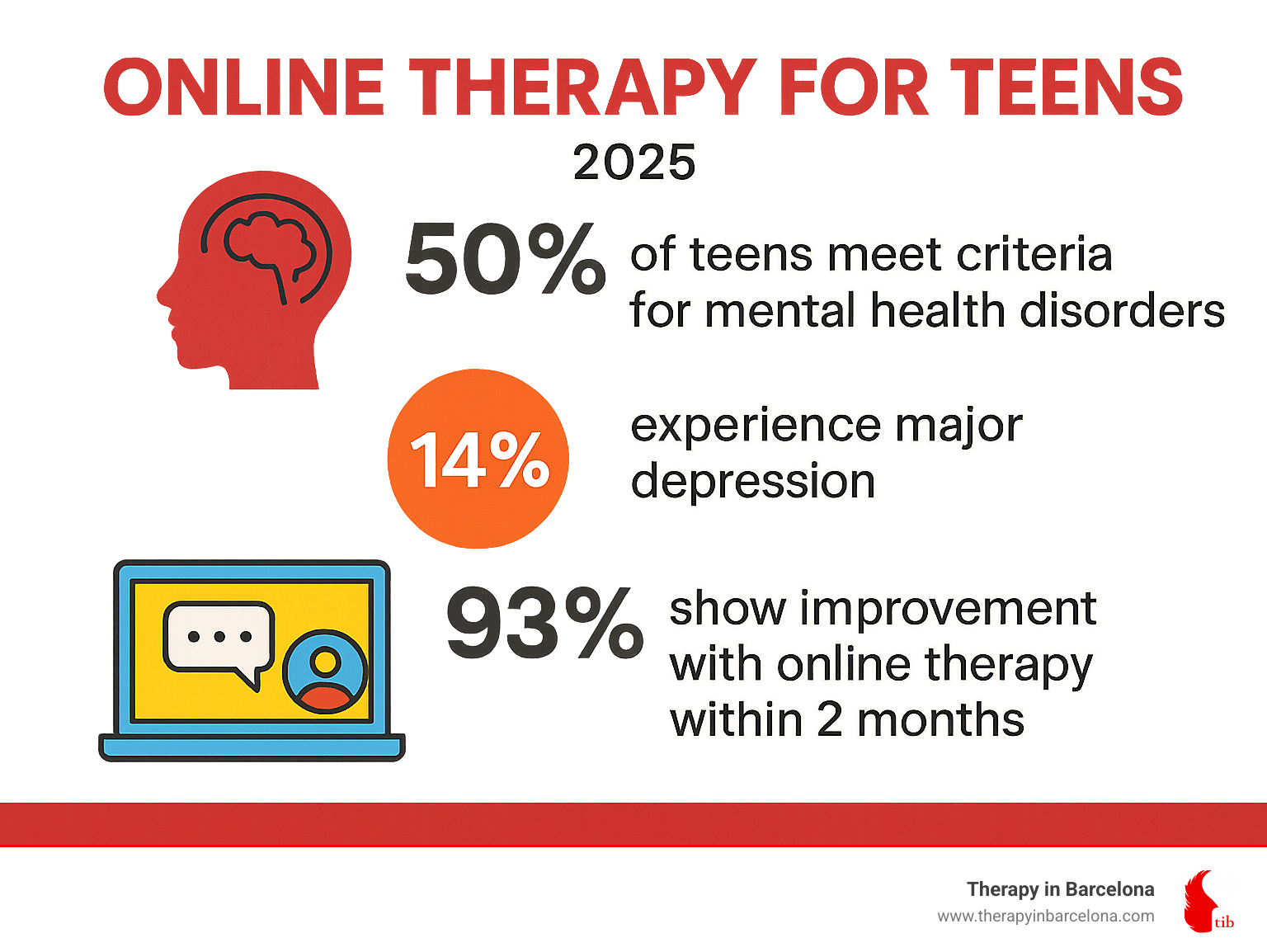
Depression among teens has reached concerning levels; some studies suggest nearly 14% of young people feel persistently low for extended periods each year. For expat teens, these feelings can be intensified by cultural displacement, language barriers, and the constant question of “where is home?” Online therapy provides accessible support for teens struggling with persistent sadness, loss of interest in activities, or feelings of hopelessness.
School anxiety refusal has become increasingly common, particularly following recent global disruptions. For expat teens, this might involve anxiety about attending international schools, fitting in with new peer groups, or managing academic expectations in a different educational system. Online therapy can help teens develop coping strategies and gradually work through these anxieties.
Family conflict often intensifies during adolescence, but expat families face additional pressures. There’s the stress of parents adjusting to new work cultures, financial pressures of international living, and sometimes disagreements about how much to accept local customs versus maintaining home traditions. Online therapy provides a neutral space for teens to process these complex family dynamics.
Social anxiety can be particularly challenging for expat teens who might feel like perpetual outsiders. The irony is that teens with social anxiety often find online therapy less intimidating than face-to-face sessions, making it an ideal entry point for getting support.
Body image issues affect many teens, but expat teens might struggle with additional pressures—different beauty standards in their new country, changes in lifestyle and diet, or feeling self-conscious about their accent or cultural differences. Online therapy can provide a safe space to explore these concerns without the additional anxiety of in-person appearance worries.
For teens dealing with identity questions—common for all adolescents but particularly complex for Third Culture Kids—online therapy offers specialised support. Therapy for Third Culture Kids addresses the unique challenges of growing up between cultures, helping teens steer questions about belonging, identity, and their place in the world.
Sometimes teens engage in self-harm as a way of coping with overwhelming emotions. Online therapy can provide crucial support and healthier coping strategies, often feeling less threatening than traditional therapy approaches.
The beauty of online therapy for teens is that it meets young people where they already are—comfortable with technology, valuing privacy, and needing flexibility in their increasingly complex lives. Whether your teen is dealing with the universal challenges of adolescence or the specific pressures of expat life, online therapy offers a pathway to support that feels natural and accessible.
Is Online Therapy as Effective as In-Person Sessions?
One of the most common questions parents and teens ask is whether online therapy for teens can truly match the effectiveness of traditional face-to-face sessions. The answer, backed by extensive research, is reassuringly positive.
Studies consistently demonstrate that online therapy delivers comparable outcomes to in-person sessions for many concerns that commonly affect teenagers, including anxiety, depression, and difficulties adjusting to major life changes. One significant study examining telehealth family counselling found that online therapy programmes for parents and teenagers achieved results virtually identical to traditional in-person family counselling.
The secret lies in what therapists call the therapeutic alliance—that crucial connection and trust between therapist and client. This bond can develop just as effectively through digital means as it can in person. In fact, many teens find it easier to open up through video calls or messaging, particularly when discussing sensitive topics like relationships, identity struggles, or family conflicts.
The physical distance that some worry about can actually create psychological safety that improves vulnerability and honesty. When teens feel comfortable in their own space, they’re often more willing to share difficult emotions and experiences.

Comparing Virtual vs. Traditional Therapy for Teens
When examining the effectiveness of online versus in-person therapy for teens, the research tells an encouraging story. Recovery rates from online therapy often exceed those of traditional therapy, with some studies showing that clients using online therapy achieve recovery from emotional struggles at twice the rate of in-person sessions.
This improved success rate likely stems from several factors: increased accessibility means teens are more likely to attend sessions consistently, reduced barriers eliminate excuses about transport or scheduling conflicts, and the comfort of familiar environments allows for deeper therapeutic work.
Perhaps most importantly, 90% of respondents in recent studies report preferring online therapy to traditional therapy, citing convenience, comfort, and accessibility as primary reasons. For expat teens especially, online therapy often provides access to therapists who share similar cultural backgrounds or understand international experiences.
The importance of therapist fit cannot be overstated, regardless of the delivery method. A skilled therapist who understands teen development, cultural nuances, and the specific challenges of expat life will be effective whether working online or in person. The key is finding that right match—something that becomes much easier when geography isn’t a limiting factor.
For more insight into whether online therapy works, research consistently shows that the therapeutic relationship matters more than the medium through which it’s delivered.
Signs Your Teen Might Benefit from Online Therapy for Teens
Recognising when your teen might benefit from professional support requires careful observation and open communication. Significant mood swings that go beyond typical teenage emotional fluctuations may indicate underlying struggles that could benefit from therapeutic intervention.
Changes in sleeping or eating habits often signal emotional distress. If your teen is sleeping excessively or struggling with insomnia, or if their appetite has changed dramatically, these behaviours can indicate persistent anxiety or low mood that deserves attention.
Loss of interest in previously enjoyed activities is particularly concerning. When teens withdraw from friends, hobbies, or activities they once loved, it may point to challenges that therapy can help address effectively.
Excessive worry that interferes with daily functioning goes beyond normal teenage concerns. If your teen is constantly anxious about school, friendships, or future plans to the point where it affects their ability to function, professional support through online therapy for teens may be helpful.
Social withdrawal and isolation, particularly when combined with other symptoms, can indicate various mental health concerns. While teens naturally seek some independence, complete withdrawal from family and friends warrants attention.
Academic decline that cannot be explained by other factors may reflect underlying emotional struggles. If grades drop significantly without clear cause, it’s worth exploring whether mental health support might help your teen regain their footing.
The warning signs from youth.gov provide additional guidance for parents wondering whether their teen might benefit from professional support. Seeking help early often leads to better outcomes and can prevent more serious challenges from developing.
For more information about therapy for adolescents, the key is recognising that asking for help is a sign of strength, not weakness—both for teens and their families.
Finding the Right Fit: A Look at Different Online Therapy Options
When searching for online therapy for teens, families face a landscape filled with different approaches and philosophies. The choice isn’t just about finding any therapist—it’s about finding the right match for your teenager’s unique needs and circumstances.
Think of it like choosing a school for your child. You wouldn’t simply pick the largest institution available; you’d consider factors like teaching style, class sizes, cultural fit, and whether the environment truly supports your teen’s growth. The same thoughtful approach applies to selecting mental health support.
The online therapy for teens market essentially divides into two main categories: large platforms that prioritise quick access and convenience, and specialised practices that focus on personalised matching and cultural understanding. Each approach has its place, but understanding the differences can help you make the best choice for your family.
For expat families, this decision becomes even more nuanced. You’re not just looking for a qualified therapist—you need someone who understands the complexities of international life, cultural adjustment, and the unique challenges facing Third Culture Kids.

Large Platforms (e.g., BetterHelp, Talkspace)
Large online therapy platforms have revolutionised mental health access, making support available to millions of people who might otherwise struggle to find help. These services excel at convenience and accessibility, typically matching users with therapists within 48 hours through algorithm-based systems.
BetterHelp, one of the largest platforms, boasts over 27,000 licensed therapists and has facilitated more than 437 million sessions. Their therapists average 9 years of experience, and the platform costs about 80% less than traditional face-to-face therapy. For teens specifically, they offer TeenCounseling, which serves ages 13-19 with separate messaging channels for teens and parents.
Talkspace follows a similar model, with messaging starting at $69 per week and video sessions from $99 weekly. Their research indicates that 93% of participants report improvement within two months, which speaks to the effectiveness of accessible mental health support.
The appeal is obvious: quick matching, extensive therapist networks, and subscription models that can make therapy more affordable. For busy families, the convenience of scheduling sessions around school and activities is invaluable.
However, these platforms have faced scrutiny that’s worth considering. The FTC banned BetterHelp from sharing clients’ private information for advertising purposes, requiring them to pay $7.8 million in settlement charges. This FTC action against BetterHelp for data sharing raises important questions about data privacy and the commercialisation of mental health services.
For some families, particularly those seeking immediate support or dealing with straightforward concerns, large platforms can be an excellent starting point. The key is understanding that you’re trading personalised matching for speed and convenience.
Specialised Practices for a Personalised Approach
Whilst large platforms offer convenience, specialised practices provide the depth and personalisation that can be particularly valuable for complex cases or specific populations like expat teens.
This approach recognises that effective therapy isn’t just about credentials—it’s about cultural competence, shared understanding, and genuine connection. For expat families, this distinction can be transformative.
Therapy in Barcelona exemplifies this philosophy. Founded by Leigh Matthews, an Australian psychologist who moved to Barcelona in 2011, the practice emerged from her personal experience of being unable to find English-speaking therapy that understood her cultural challenges as an expat. As both a professional and an immigrant herself, Leigh recognised the gap between generic mental health services and the nuanced support that international families actually need.
In 2025, Therapy in Barcelona was named Virtual Counselling Service of the Year at the Corporate LiveWire Innovation & Excellence Awards, recognising our tailored, high-quality support for internationals in Barcelona and worldwide.
This specialised approach offers several key advantages. The therapists are often expats themselves, bringing understanding of cultural adjustment, identity questions, and the unique stressors of international life. Rather than relying on algorithms, the personalised matching process involves human consultants who understand the nuances of therapeutic relationships and cultural sensitivity.
For teens, this means working with therapists who understand not just adolescent development, but also the specific challenges of being a Third Culture Kid or expat teenager. The practice offers both online and in-person options, providing flexibility as needs change, and serves the international community with multilingual services.
The philosophy prioritises the therapeutic relationship over convenience, recognising that the connection between therapist and client is the most important factor for successful outcomes. This extends to their privacy practices—they don’t sell client data or engage in aggressive marketing tactics, focusing instead on providing culturally sensitive, personalised care.
For expat families dealing with complex adjustment issues, identity questions, or cultural challenges, this personalised approach often proves more effective than quick algorithmic matching. The investment in finding the right therapeutic fit pays dividends in terms of engagement, progress, and long-term outcomes.
Comparing Large Platforms vs. Specialised Practices
When you’re looking for online therapy, you’ll generally find two main types of providers: large platforms and specialised practices. Here’s a straightforward look at how they stack up on key features:
Matching Process Large platforms often use algorithms to quickly match you with a therapist. It’s fast, but might not always hit the mark perfectly. Specialised practices, however, typically use human consultants for a more thorough and personalised matching process, aiming for a better fit from the start.
Target Audience Large platforms usually aim for a broad audience, serving the general population. Specialised practices, like Therapy in Barcelona, often focus on specific communities. This could be expats, Third Culture Kids, or other groups with unique needs and experiences.
Privacy Policy This is a big one. Some large platforms have been known to share user data for marketing purposes. Specialised practices, on the other hand, usually have strict confidentiality policies and commit to never selling your data, prioritizing your privacy above all else.
Therapist Vetting Both types of platforms vet their therapists. Large platforms ensure therapists have standardised credentials. Specialised practices often go a step further, vetting therapists not just for their qualifications but also for their cultural competence and specific experience relevant to their niche audience.
Cultural Sensitivity Because they cater to a wide audience, large platforms can sometimes have limited cultural sensitivity. Specialised practices, especially those focused on expat or TCK communities, often have high cultural sensitivity. Their therapists frequently share similar backgrounds or have deep experience with the cultural contexts of their clients.
The choice between these approaches ultimately depends on your family’s specific needs, timeline, and the complexity of challenges your teen is facing. For straightforward support needs, large platforms can be excellent. For expat families navigating cultural adjustment alongside typical teenage challenges, specialised practices often provide the nuanced understanding that makes all the difference.
Practicalities of Online Therapy: Costs, Privacy, and Getting Started
Understanding the practical side of online therapy for teens helps families steer this journey with confidence. While the emotional aspects of therapy are paramount, the logistics matter too—especially when you’re already managing the complexities of expat life.
Parental consent is typically required for teens under 18, though the specific requirements vary by location. Most therapists will ask parents to complete consent forms and participate in an initial consultation to understand the family dynamics and concerns. This doesn’t mean parents sit in on every session—quite the opposite. Once consent is established, teens maintain their privacy in therapeutic conversations.
The confidentiality framework for minors follows the same principles as adult therapy, with important safety exceptions. Therapists must share information if a teen is at risk of harming themselves or others, or if abuse is suspected. These boundaries are explained clearly from the start, helping teens understand what remains private and what might need to be shared for their protection.
Secure platforms are non-negotiable when it comes to teen therapy. Reputable services use encrypted communication and comply with healthcare privacy regulations like HIPAA. They employ the same security standards as hospitals and medical practices, ensuring that sensitive conversations remain protected.
The initial consultation process typically involves both teen and parent, allowing the therapist to understand the family context whilst beginning to build rapport with the young person. This collaborative approach sets the foundation for effective therapy.
Understanding the Costs of Online Therapy for Teens
The financial landscape of online therapy for teens varies significantly depending on your chosen approach. Large platforms typically offer subscription models ranging from £50-80 per week for messaging-based therapy, with video sessions costing £75-100 weekly. These services often appeal to families seeking immediate access and predictable monthly costs.
Individual practitioners often charge per session, with rates varying by location and specialisation. At Therapy in Barcelona, for example, fees range from 80 to 95 Euros for individual sessions, with therapists setting their own prices based on their experience and specialisation.
Insurance coverage for online therapy has expanded dramatically in recent years. Many providers now cover telehealth services at the same rate as in-person therapy, recognising the effectiveness and accessibility of virtual sessions. It’s worth checking with your insurance provider about coverage for online mental health services—you might be pleasantly surprised.
For families facing financial constraints, several options exist. Many schools provide counselling services, though these may be limited in scope or availability. Community mental health centres often offer sliding scale fees based on income, making therapy more accessible for families with tight budgets.
Health Savings Accounts (HSA) or Flexible Spending Accounts (FSA) can often be used for therapy expenses, providing tax advantages for mental health care. Some platforms also offer financial assistance programmes, recognising that mental health support shouldn’t be limited by financial circumstances.
Free and low-cost mental health resources are available through various organisations, though these may have waiting lists or limited availability. For families in crisis, these resources can provide immediate support whilst working towards longer-term therapeutic relationships.
How is Privacy Maintained for a Teenager?
Privacy in teen therapy requires a delicate balance between confidentiality and safety. Therapists explain these boundaries clearly at the beginning of treatment, helping teens understand what information remains private and what might need to be shared. This transparency actually builds trust rather than undermining it.
Exceptions to confidentiality typically include situations where the teen might harm themselves or others, or if abuse is suspected. These limitations aren’t meant to discourage honesty—they’re safety nets that protect young people when they’re most vulnerable. Most teens appreciate knowing these boundaries exist.
Secure communication channels form the backbone of online therapy privacy. Reputable platforms use end-to-end encryption and comply with healthcare privacy regulations. They employ the same security standards as hospitals and medical practices, ensuring that sensitive conversations remain protected from unauthorised access.
Creating a private space at home becomes crucial for online therapy success. Teens need somewhere they can speak freely without being overheard by family members. This might mean using headphones, finding a quiet room, or scheduling sessions when others are out. Some families establish “therapy time” as sacred space, with everyone respecting the teen’s need for privacy.
Building trust with the therapist takes time, regardless of the delivery method. Interestingly, online therapy can actually facilitate this process for some teens. The familiar environment and reduced social pressure can make it easier to open up about sensitive topics. Many teens report feeling more comfortable discussing difficult subjects when they’re in their own space rather than an unfamiliar office.
The therapeutic relationship remains the cornerstone of effective therapy, and privacy protection improves rather than hinders this connection. When teens feel safe and protected, they’re more likely to engage authentically in the therapeutic process.
Conclusion: Taking the First Step Towards a Healthier Future
The journey through adolescence has always been challenging, but today’s teens face unprecedented pressures. Between academic demands, social media comparisons, and the unique stressors of expat life, many young people find themselves struggling without the support they need. Online therapy for teens offers a guide of hope in this complex landscape.
The evidence is compelling: online therapy can be just as effective as traditional face-to-face sessions, with many teens actually preferring the convenience and comfort of digital support. When 93% of participants report improvement in their toughest problems within just two months, it’s clear that virtual therapy isn’t just a temporary solution—it’s a genuine pathway to healing and growth.
For expat families, the benefits extend far beyond convenience. Finding an English-speaking therapist who understands the cultural nuances of international life can feel impossible when you’re limited by geography. Online therapy breaks down these barriers, connecting teens with specialists who truly comprehend their experiences of living between cultures, adjusting to new environments, and navigating identity questions that come with expat life.
The personalised approach makes all the difference. Whether you choose a large platform for immediate access or a specialised practice like Therapy in Barcelona for culturally sensitive matching, the most crucial factor remains the therapeutic relationship itself. A skilled therapist who understands both adolescent development and the complexities of international life can provide transformative support, regardless of whether they’re connecting through a screen or sitting across the room.
Your teenager’s mental health matters deeply. If you’re noticing signs of anxiety, low mood, social withdrawal, or academic struggles, professional support can provide invaluable tools for navigation and growth. The teenage years don’t have to be endured—they can be a time of findy, resilience-building, and positive development with the right support.
Seeking therapy isn’t a sign of weakness—it’s a demonstration of strength and self-awareness. In our increasingly complex world, having professional guidance to steer life’s challenges isn’t just helpful; it’s often essential. When you take that first step towards finding support for your teen, you’re showing them that their wellbeing matters and that help is available.
The future of teen mental health support continues to evolve, with online therapy leading the way in accessibility, effectiveness, and teen-friendly approaches. Your teenager’s journey to better mental health can begin with a single conversation, opening doors to support, understanding, and growth that will serve them well into adulthood.
For more information about adolescent therapy services or to explore how online therapy might benefit your family, consider reaching out for a consultation. Sometimes the bravest thing you can do is ask for help—and that courage can change everything.
Please note: all feedback quotes included above are from real client reviews, shared with permission. Where necessary, identifying details have been altered to preserve confidentiality while maintaining authenticity.
