


Why Digital Nomad Mental Health Matters More Than You Think

Digital nomad mental health is a growing concern for thousands of location-independent workers. While the lifestyle promises freedom, the reality can be challenging. Expatriates can face significant mental health hurdles; for instance, one study found they are more than twice as likely to report feeling depressed or anxious compared to people in their home countries.
Quick Mental Health Challenges for Digital Nomads:
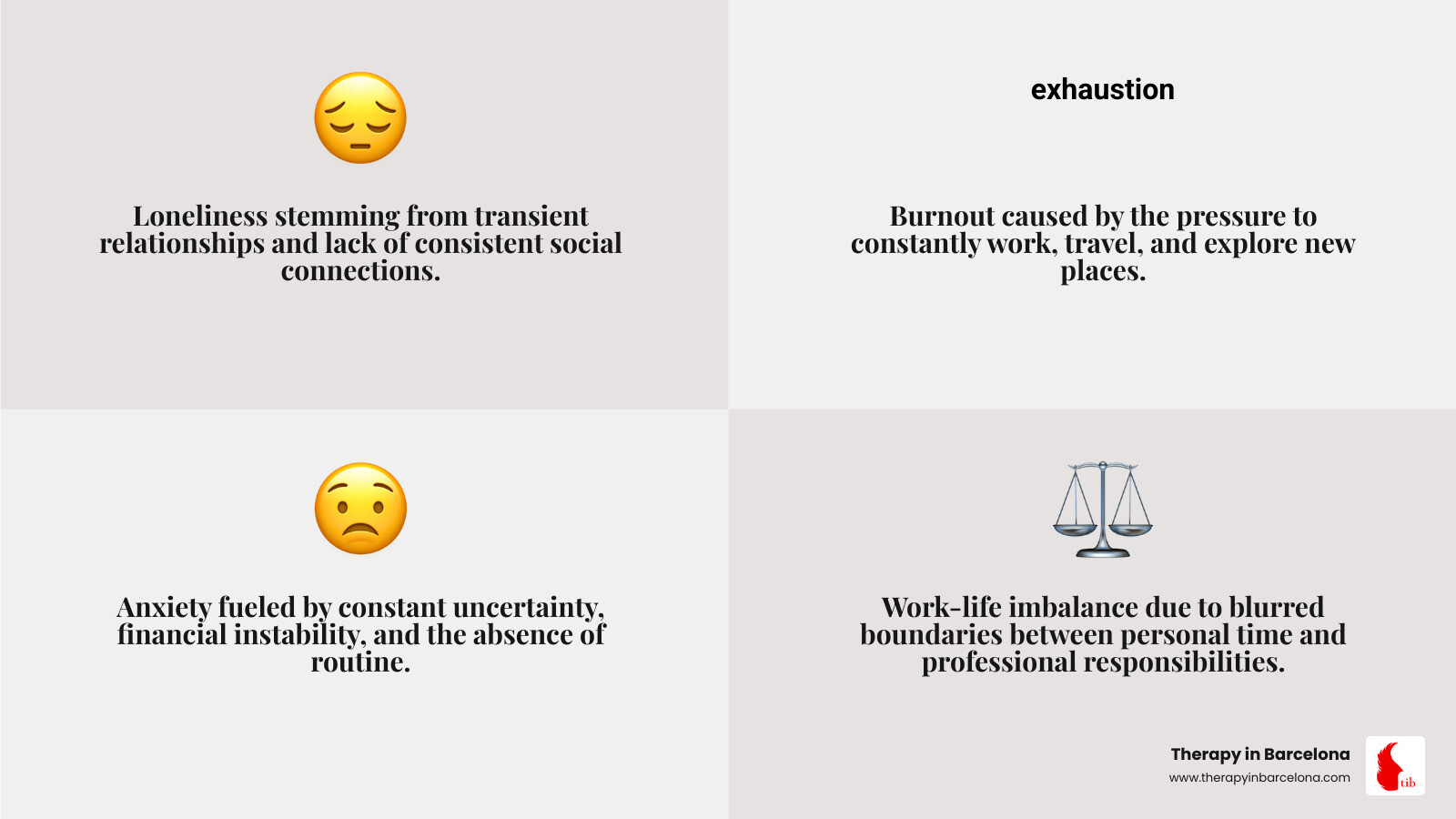
- Loneliness and isolation – Constant movement makes deep friendships difficult
- Lack of routine – Freedom without structure can feel more like floating than flying
- Financial stress – Variable income and visa worries create persistent anxiety
- Travel burnout – Trying to see too much while working full-time
- Cultural adjustment fatigue – Repeatedly adapting to new environments
- Work-life boundary blur – When your laptop is both livelihood and connection to loved ones
The vision of working from a beach in Valencia or a café in Barcelona often masks these struggles. As one digital nomad put it: “Depression wasn’t sad for me, it was boring.” Many nomads feel they have no right to struggle when living a perceived ‘dream lifestyle’, creating a stigma around seeking help.
Humans are social creatures who need routine, stability, and meaningful connections. The demand for support is clear, with online communities for location-independent therapists growing rapidly. This reflects a growing recognition that the nomadic lifestyle presents unique psychological challenges.
Understanding these dynamics is crucial for anyone on the nomadic path. However, with the right tools and support, it is possible to build a thriving, location-independent life.
The Unseen Challenges of the ‘Dream’ Lifestyle
Behind the curated Instagram posts of laptops overlooking Barcelona’s beaches lies a more complex reality. The digital nomad mental health challenges that rarely make it into social media feeds are real, persistent, and often isolating.
The High Price of Freedom: Instability, Loneliness, and Anxiety
Imagine waking up in a beautiful Airbnb in Málaga and realising you have no idea what you’re doing today beyond work. These daily micro-decisions lead to what psychologists call decision fatigue—and it’s exhausting.
The freedom of nomadic life comes with the absence of routine. While escaping the 9-to-5 sounds liberating, humans thrive on structure. Routines are mental shortcuts that free up cognitive energy. Without them, simple tasks drain your mental resources.
Then there’s the social reality. The transient relationships common in nomadic life rarely develop into the deep friendships needed for mental well-being. Research on loneliness shows that we need consistent, meaningful social connections to thrive. Many nomads feel surrounded by people, yet profoundly lonely.
Cultural adjustment stress adds another layer. You’re constantly adapting to new languages, customs, and social norms. This perpetual state of cultural vigilance is mentally exhausting and can trigger significant feelings of anxiety.
For those prone to anxiety, travel itself can be a trigger. The unpredictable nature of flights, accommodation mix-ups, and finding your way in unfamiliar places can heighten vulnerability. However, as travel anxiety experts suggest in guides like How Not to Let Anxiety Stop You From Travelling, these challenges can also become opportunities for growth when met with the right strategies.
Recognising the Red Flags: Digital Nomad Burnout and Stress
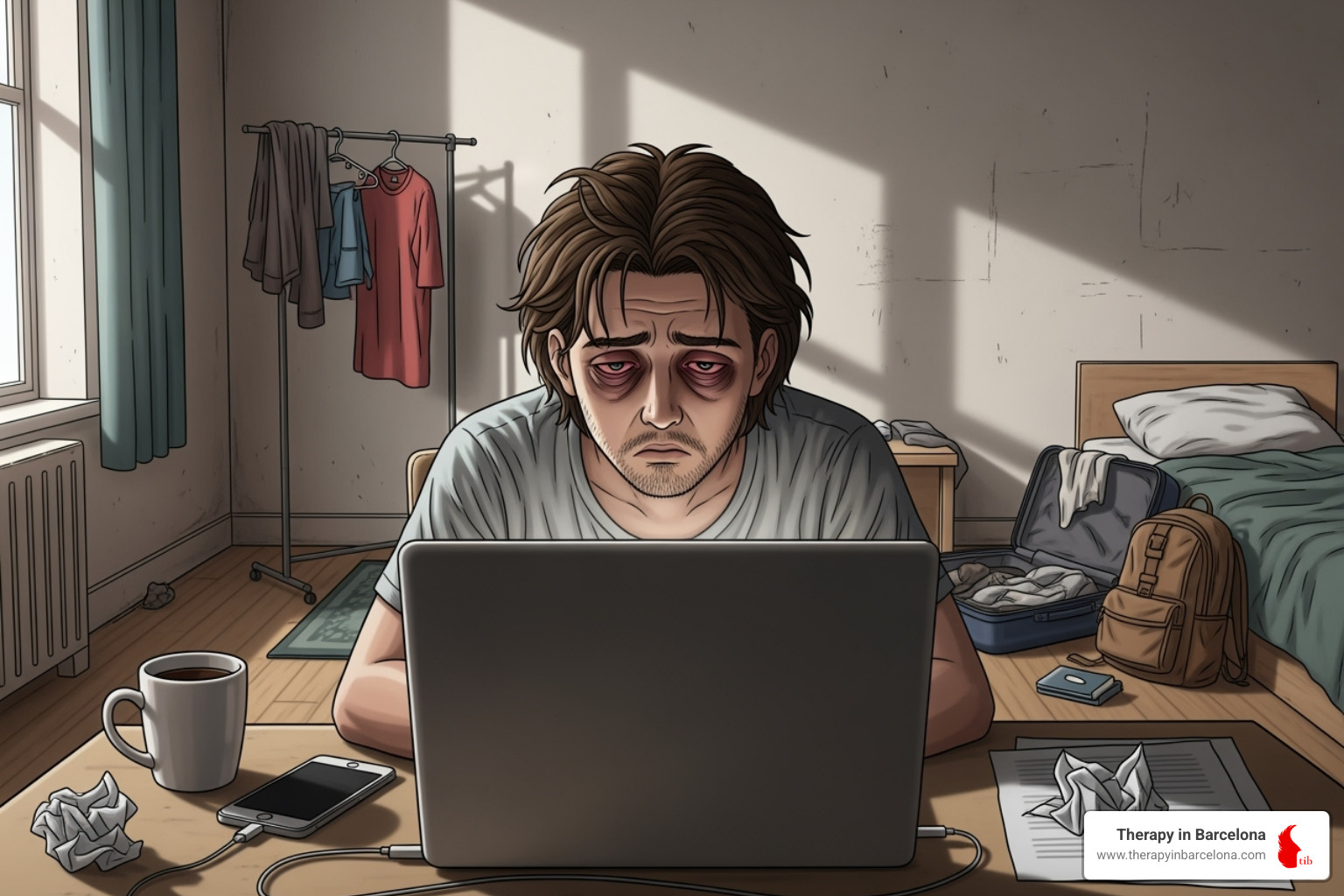
Digital nomad burnout is a blend of professional pressure, constant logistics, and social isolation. The warning signs are often subtle: feeling cynical about travel, or that beautiful sunset in Alicante feeling like just another photo op.
Persistent exhaustion that doesn’t improve with rest is a major red flag. Constantly adapting means your nervous system rarely relaxes. You might find yourself irritable over small things, like slow WiFi or a language barrier.
Financial insecurity amplifies these stresses. The feast-or-famine nature of freelance work creates a conflict between the pressure to work and the desire to explore. Variable income stress can lead to working unsustainable hours or staying in less comfortable places, affecting your well-being.
Perhaps most insidious is the social media pressure to maintain the “perfect life” facade. The disconnect between your Instagram feed and your reality can be crushing. This performative aspect makes it hard to acknowledge struggles. How do you complain about your “dream lifestyle” without sounding ungrateful?
The complete guide to expat mental health support resources explores these challenges in greater depth, recognising that the nomadic experience shares many similarities with other forms of international living.
How is this different from life with a stable home base?
The mental health challenges of nomadic life differ from those with a stable home base. Nomads lack a consistent social safety net. At home, you might call a friend or visit family. These support systems provide a vital buffer against stress.
Nomads must constantly rebuild these connections. While you can make friends on the road, developing deep trust takes consistency and time—luxuries the nomadic lifestyle doesn’t easily provide.
The constant adaptation versus stability dynamic creates unique strain. People with a stable home base adapt once to their environment. Nomads exist in a perpetual state of adjustment—always learning new transport systems and cultural norms. This is stimulating but also draining.
There’s also identity confusion—feeling like you’re neither a local nor a tourist. This can create a sense of not belonging anywhere. Your identity becomes fluid in ways that can be both liberating and unsettling.
Nomadic life demands heightened self-awareness because you lack external structures. You become solely responsible for creating your own boundaries and routines, which can be overwhelming without the right tools.
As explored in Digital Nomad Diaries: The Mental Health Journey, this lifestyle isn’t just about external travel—it’s an internal journey that requires specific strategies to manage successfully.
Building Your Mental Health Toolkit: Practical Strategies for Nomads
Protecting your mental well-being on the road requires concrete, practical strategies.
Creating Stability Amidst Chaos: Routines, Sleep, and Physical Health

Your digital nomad mental health depends on creating structure within freedom. Think of it as building a portable home inside yourself.
Morning rituals become your anchor. A simple routine—making your bed, a five-minute stretch—gives your day shape, whether you’re in Valencia or Madrid. This helps you feel grounded no matter the city.
Habit stacking makes this easier. Link new healthy habits to things you already do. Meditate after your morning coffee. Do pushups after brushing your teeth. These connections help routines stick.
Sleep is your mental health foundation, but jet lag and new environments can disrupt it. Quality sleep is non-negotiable for a stable mood and sharp focus. Simple tools like earplugs, an eye mask, and avoiding screens before bed can transform your sleep. Dr. Andrew Huberman’s Toolkit for Sleep offers science-backed strategies that work anywhere.
Your body is your most reliable home. Regular movement doesn’t require a gym. Bodyweight workouts, walking tours, or local yoga classes in Barcelona all count. As one nomad said: “The best way to prioritise fitness is to make it the first thing you do each day.”
Healthy eating on the road requires intention. Trying local cuisine is part of the adventure, but your brain needs consistent nutrition. The mind-body connection is profound; what you eat affects your mental state. Cooking some meals and seeking out fresh produce at local markets helps stabilise your physical and mental state.
How to Build Meaningful Connections on the Move
Loneliness can hit hard when you lack deep connections. The key is to be intentional about building relationships.
Co-working spaces offer more than just WiFi. They are community hubs where casual conversations can evolve into close friendships. Co-living arrangements take this further, providing a built-in community.
Move beyond nomad-specific circles. Local meetups, volunteering, and classes connect you with people through shared interests. Join a cooking class in Sevilla or a hiking group in Alicante to meet people. This creates deeper connections.
Don’t forget your roots. Maintaining connections back home provides continuity. Schedule regular video calls with loved ones. If you find yourself consistently downplaying difficulties, it might signal you’re not fully acknowledging your struggles.
Focus on quality over quantity in relationships. A genuine conversation with one person can be more nourishing than a crowded meetup. Find authentic connections that truly feed your soul.
Slow Travel vs. Fast Travel: Finding a Pace That Protects Your Well-being
When you’re a digital nomad, how you travel can significantly impact your mental health. There’s a big difference between “slow travel” and “fast travel,” and understanding these differences can help you find a pace that works for you.
Community
- Slow Travel: You get enough time to build deeper, more meaningful connections. You can find local friends, join groups, and truly become part of a community, even if just for a few months.
- Fast Travel: Relationships tend to be transient and superficial. You’re constantly moving, which makes it hard to form lasting bonds beyond quick hellos.
Routine
- Slow Travel: This pace allows you to establish consistent daily habits. You can set up a stable work schedule, find your favorite coffee shop, and maintain healthy routines, which brings a greater sense of stability.
- Fast Travel: Your routine is constantly disrupted. It’s tough to maintain healthy patterns when you’re always packing, unpacking, and adjusting to new environments.
Burnout Risk
- Slow Travel: The risk of burnout is significantly lower. You have time for rest, integration, and simply being, rather than constantly doing.
- Fast Travel: The risk is high. Constant logistics, planning, and adapting to new places can lead to exhaustion and mental fatigue.
Cultural Immersion
- Slow Travel: You gain a deeper understanding of the local culture. You move beyond tourist sites and experience authentic daily life.
- Fast Travel: You often remain in a “tourist bubble,” seeing the highlights but rarely getting a true feel for the place or its people.
Stress Levels
- Slow Travel: Generally lower. You reduce decision fatigue and travel anxiety because you’re not constantly making big plans or rushing.
- Fast Travel: Higher. There’s constant pressure to plan the next move, adapt to new situations, and manage logistics, which can be very stressful.
Slow travel—staying in one place for a month or more—greatly benefits mental well-being. You have time to establish routines, like finding a favourite café or local market. These small consistencies create a sense of belonging.
Slow travel also allows for deeper connections. You can build genuine friendships with locals and other long-term residents, understanding the rhythm of daily life beyond the highlights.
Reduced stress comes naturally when you’re not constantly planning your next move. Your energy can go towards work and relationships, not just logistics.
As one experienced nomad reflects: “The longer you’ve been ‘in the game,’ the slower you’ll travel.” Finding a travel rhythm that prioritises well-being over checking destinations off a list is key to a sustainable journey.
Your Guide to Professional Digital Nomad Mental Health Support
Recognising when you need help is a strength. This section guides you on how to access professional, culturally-aware support, no matter where you are.
How to Access Therapy While Travelling Internationally

Online therapy has transformed digital nomad mental health support. It allows you to maintain a consistent relationship with a therapist, whether you’re in Valencia or Bangkok. This continuity is crucial, as building trust with a therapist takes time.
However, accessing therapy while moving comes with unique considerations. Time zones can be tricky, and internet reliability varies. Experienced nomads have backup internet options or reschedule if the connection is poor.
Privacy and confidentiality are also more complex. Finding a private space for sessions can be a challenge. Many nomads use noise-cancelling headphones or book private rooms for their sessions.
Therapy in Barcelona understands these challenges. We offer online therapy worldwide, providing a secure space for the mobile lifestyle. Our expat therapists understand the logistics and emotional impact of the nomadic life. If you’re in Barcelona, we also offer face-to-face sessions at our office in Eixample.
We are a trusted group practice in Spain, established in 2011. We work in English, and some of our therapists also speak German, French, Spanish, Afrikaans, Portuguese, Swedish, Austrian-German and Swiss-German. Our psychology-trained team supports adults, couples, teens and families. We draw on evidence-based approaches such as CBT, ACT, Schema Therapy, DBT-informed tools, Mindfulness-based approaches, and for couples, the Gottman Method.
If you need urgent help, please contact local emergency services or a crisis line. In Spain, dial 112.
Finding the Right Support: What to Look For
Not all therapy is created equal for the nomadic lifestyle. Finding the right support goes beyond just language.
Culturally sensitive therapy is essential. You’re dealing with cultural adjustment, identity shifts, and the challenge of never feeling like a local. A culturally sensitive therapist understands that homesickness is more than missing home—it’s grieving the loss of cultural familiarity.
Therapists with expat experience bring invaluable insight. They understand the unique loneliness, exhaustion, and complex relationship with “home” that expats experience. Our founder, Australian Psychologist Leigh Matthews, is an expat herself and built our practice around the needs of the international community in Barcelona.
When exploring options, you’ll find different providers:
- Large online platforms offer convenience, but it’s important to be cautious. Some have faced scrutiny over privacy concerns, such as sharing client data for advertising purposes. This highlights the need to research a platform’s privacy policies and ethical standards.
- Public system clinicians often have long waiting lists, language barriers, and may not understand expat-specific issues.
- Local private practices are an option for long-term stays, but finding a therapist who understands the expat experience can be difficult outside major cities.
Bespoke therapist matching matters. At Therapy in Barcelona, we take the time to understand your needs and match you with a suitable, psychology-trained therapist. We maintain strict privacy and do not sell data. Combined with our expat-specific cultural sensitivity, this creates a strong foundation for meaningful therapeutic work, as outlined in “12 Compelling Reasons Internationals and Digital Nomads Should Consider Therapy.”
A Note on Digital Nomad Life in Spain
Spain has become a top nomad destination. Its weather, affordability, and culture make cities like Barcelona, Valencia, and Madrid incredibly appealing.
Spain’s Digital Nomad Visa has eased the stress of legal uncertainty and allowed nomads to focus on well-being. You can find more details in “Spain’s Digital Nomad Visa: Live and Work Remotely in the Sun.”
What makes Spain special for digital nomad mental health are the thriving expat communities in major cities. These networks in Barcelona, Valencia, Alicante, and Madrid mean you don’t have to start from scratch socially. This social infrastructure is crucial for maintaining good mental health.
The welcoming Spanish culture, with its emphasis on social connection and work-life balance, also helps. Whether you’re in Sevilla or Gran Canaria, Spain offers a lifestyle that can support both productivity and well-being.
Frequently Asked Questions about Digital Nomad Mental Health
How do I know if the nomad lifestyle is hurting my mental health?
It’s normal to have ups and downs, but certain patterns can be a signal. Many nomads feel they can’t complain about living the “dream lifestyle,” which makes it hard to notice the signs.
Persistent exhaustion that rest doesn’t fix is a common red flag. You might also feel irritable or cynical about things that once excited you, like a beautiful sunset in Valencia.
Many nomads start withdrawing from social opportunities. Simple logistics, like finding accommodation or ordering food in Barcelona, feel overwhelming rather than adventurous.
Perhaps most telling is indifference toward exploring. When you’re in a beautiful place but can’t muster enthusiasm, it’s worth paying attention. Other signs include difficulty concentrating and changes in sleep or appetite.
If you find yourself consistently downplaying difficulties to loved ones, it might be a sign you’re not acknowledging your struggles, even to yourself.
What are some quick ways to beat loneliness while travelling solo?
Loneliness is a common challenge, but small actions can make a big difference.
Joining a co-working space for a day can provide instant community. Similarly, taking a local class—like cooking paella in Valencia or Spanish lessons—creates natural opportunities to meet people.
Use apps or local groups like Meetup.com or Facebook expat communities to find events. Don’t underestimate the power of scheduling video calls with friends and family from home.
Sometimes the simplest approaches work best. Go for a walk in a public park or strike up conversations with baristas or shop owners. These brief exchanges can reduce feelings of isolation.
If loneliness persists, consider staying in a social hostel or co-living space for a few nights. One deep conversation can be more fulfilling than a crowded event.
Can I really get quality therapy online from anywhere?
Yes. Online therapy has made quality mental health care accessible globally. However, it’s important to choose the right provider.
Choose a provider who understands the unique challenges of a mobile lifestyle, like cultural adjustment and chronic loneliness. You need a therapist who understands your struggles are real, even if your life looks enviable from the outside.
Culturally-sensitive care is key if you’re an expat. When considering options, you’ll encounter large online platforms, public systems, and local practices. While large online platforms offer convenience, some have faced ethical concerns over issues like client data privacy. Public systems often have language barriers, and local practices may lack therapists who understand the expat experience.
Therapy in Barcelona offers the specialised support nomads need. Our team of psychology-trained therapists, many of whom are expats, provide online therapy worldwide, as well as face-to-face sessions in Barcelona. Our practice was founded by Australian Psychologist Leigh Matthews, an expat who moved to Barcelona in 2011 and built the service to support the international community. We work in English, and some of our therapists also speak German, French, Spanish, Afrikaans, Portuguese, Swedish, Austrian-German and Swiss-German. We keep your information private and do not sell data.
We offer bespoke therapist matching to ensure culturally-sensitive, confidential, and consistent mental health care, no matter where your journey takes you.
Conclusion: Your Well-being is Your Most Important Destination
The reality of the digital nomad lifestyle often differs from the picture-perfect images online. It can involve loneliness, decision fatigue, and the unique pressure of living a supposed ‘dream’ life.
Building a sustainable and fulfilling nomadic life means acknowledging these challenges. It requires creating routines, seeking meaningful connections, and finding a travel pace that supports your well-being, not detracts from it.
Being kind to yourself is crucial. The nomadic lifestyle demands constant adaptation, and it’s okay to have days where you feel energised and others where you simply crave comfort and familiarity.
Prioritising your psychological health is as vital as any travel logistic. Small, consistent acts of self-care—a morning ritual in Valencia, a language class in Madrid—are what build resilience for the journey.
If you feel you could use professional guidance, support is accessible. With the right strategies and culturally-aware support, you can build a nomadic life that is not only adventurous but also mentally healthy.
If you’d like support, Book a Free Discovery Call to find the right match for you. We see clients online worldwide and in-person at our Barcelona office.
