


What Does Being Alone Do to You? The Answer Is More Complicated Than You Think

What being alone does to you depends almost entirely on one thing: whether you chose it.
Here is a quick overview of what the research shows:
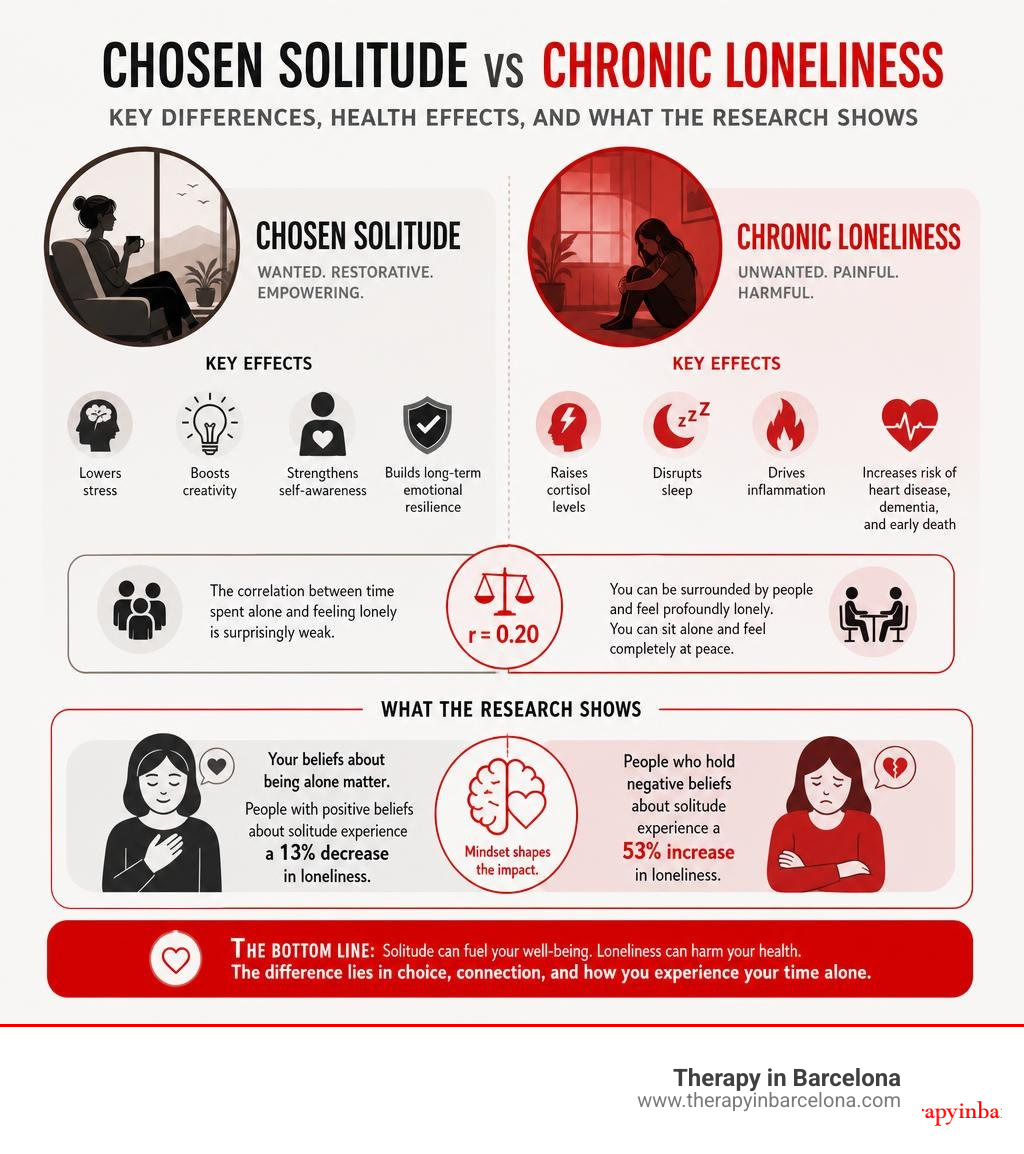
- Chosen solitude can lower stress, boost creativity, strengthen self-awareness, and build long-term emotional resilience.
- Chronic loneliness — unwanted, prolonged isolation — raises cortisol levels, disrupts sleep, drives inflammation, and significantly increases the risk of heart disease, cognitive decline, and early death.
- The two are not the same thing. You can be surrounded by people and feel profoundly lonely. You can sit alone in a café and feel completely at peace.
- Your beliefs about being alone matter. People who hold negative beliefs about solitude experience a 53% increase in loneliness after time alone, whereas those with positive beliefs experience a 13% decrease, according to a study in Nature Communications.
So when people search for answers about being alone, they are often asking two very different questions at once — and getting a muddled answer that makes things worse.
Spending a lot of time alone after moving abroad can mean very different things. For some, it reflects independence and the excitement of building a new life. For others, it can be a sign of growing isolation. The difference lies not in how much time someone spends alone, but in how they experience that time.
This distinction matters enormously, and it is one that public discourse tends to flatten. Media coverage of being alone is overwhelmingly negative — US news articles are ten times more likely to describe solitude as harmful than beneficial. That framing shapes how people feel when they are alone, sometimes turning neutral or even restorative time into something that feels like a warning sign.
The science tells a more nuanced story. About half of American adults report feeling lonely, according to the U.S. Surgeon General’s Advisory, and the health consequences of chronic loneliness are serious — comparable, researchers say, to smoking 15 cigarettes a day.
Many adults spend a significant portion of their waking hours alone, and much of that time is by choice. The problem is rarely solitude itself. The challenge arises when being alone becomes imposed, unwanted, and difficult to escape.
This guide breaks down what the research actually says — about the biology of isolation, the psychology of solitude, who is most at risk, and what genuinely helps.
Solitude vs. Loneliness: What Does Being Alone Do to You?
Understanding what being alone does to you requires separating physical reality from emotional perception.
Physical aloneness is simply an objective state: the absence of other people. Loneliness, on the other hand, is entirely subjective. It is the painful emotional distress that occurs when there is a mismatch between the social connections you have and the connections you actually want.
This is why you can feel completely isolated in a crowded bar in the middle of Madrid, yet feel deeply content walking by yourself through a quiet park in Valencia. The relationship between the actual time you spend alone and your level of loneliness is surprisingly small.
Recent studies, such as those discussed in The complexity of loneliness – PMC – NIH, indicate a weak correlation, with an r-value ranging between a modest 0.13 and 0.25 across various research groups.
As explored in the same PMC paper, loneliness is not a singular, flat experience. It is a complex, multidimensional state that can be split into transitional, chronic, existential, emotional, or social dimensions.
When you experience transitional loneliness — such as the temporary ache of moving to a new country — the feeling acts as a useful biological alarm. It prompts you to seek out others, protect your social bonds, and build communities. However, when loneliness becomes chronic, that alarm system gets stuck in the “on” position, distorting how you perceive the world.
If you are trying to understand your own feelings, reviewing these 10 things you’re feeling lonely can help you identify whether your current state is a temporary transition or a deeper pattern of chronic isolation.
The Biology of Isolation: How Chronic Loneliness Affects the Brain and Body
When you are lonely for a long time, the brain begins to treat the world as a fundamentally hostile place. It triggers a biological cascade that rewires how you handle stress, sleep, and fight off disease.
The Threat Filter and the Amygdala
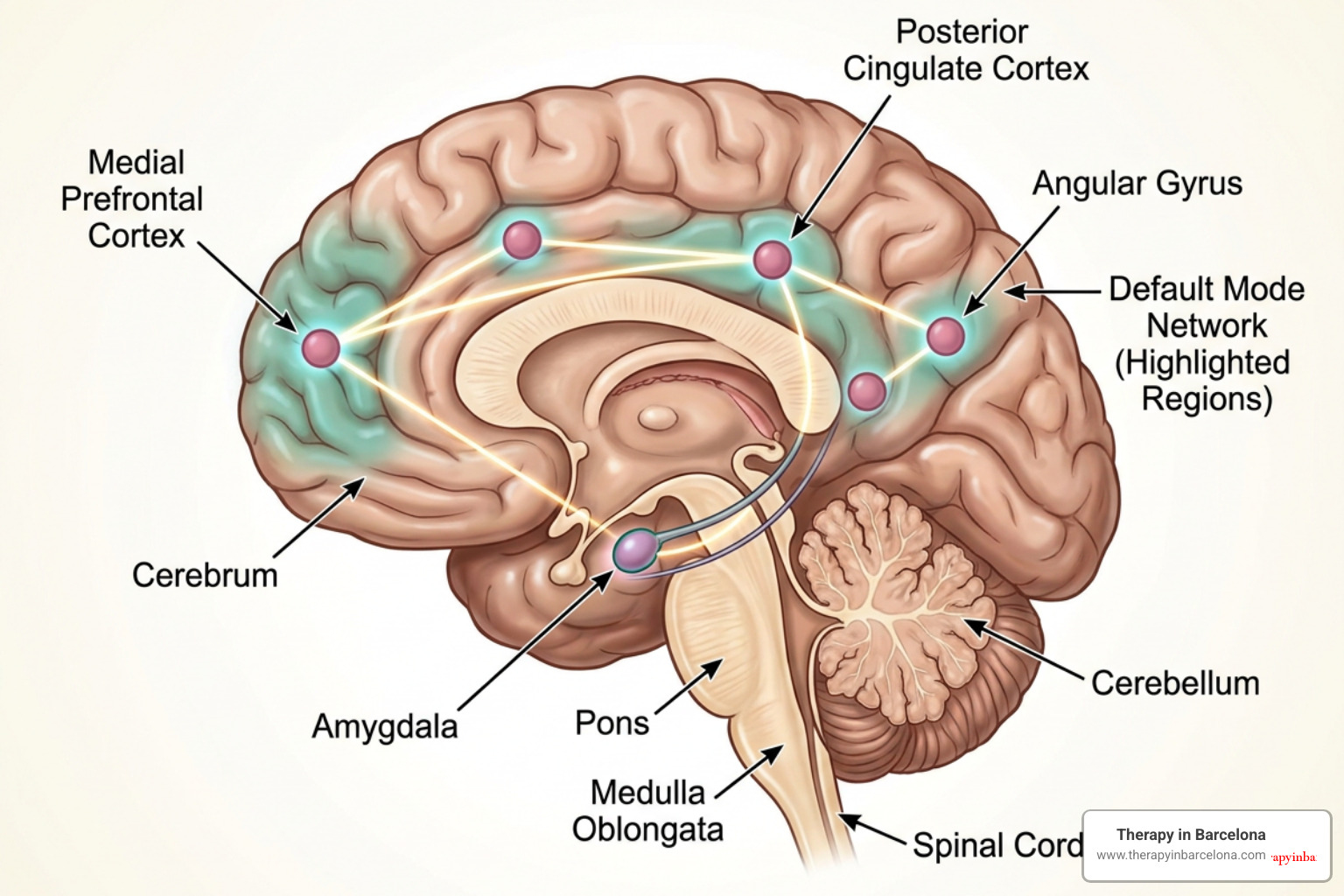
Under the influence of chronic loneliness, the amygdala — the brain’s threat-detection centre — becomes hyperactive. It begins to flag neutral social cues as dangerous. A brief email from a colleague or a quiet partner is suddenly interpreted as a sign of rejection.
While your prefrontal cortex takes around 300 to 500 milliseconds to rationalise a situation, the amygdala can trigger alarm signals in as little as 100 to 200 milliseconds. As a result, you may enter a state of social hypervigilance before you even have a chance to think things through.
Cortisol, Inflammation, and Gene Expression
This constant state of alert floods your body with cortisol and norepinephrine. Over time, your cells develop a resistance to cortisol’s natural anti-inflammatory effects.
According to pioneering research on the Conserved Transcriptional Response to Adversity (CTRA) published in PMC, chronic loneliness actually alters gene expression in your white blood cells. It upregulates genes that promote chronic, systemic inflammation and downregulates genes responsible for fighting off viral infections. You become physically more vulnerable to illness.
Sleep Fragmentation and Cognitive Decline
Norepinephrine spikes keep your nervous system locked in fight-or-flight mode, making it incredibly difficult to get deep, restorative sleep. This sleep fragmentation impairs your brain’s ability to clear out metabolic waste at night.
As a result, chronic loneliness is associated with a 31% to 50% increase in the risk of experiencing severe cognitive decline and memory difficulties, as documented in PMC. It also impairs executive functions like concentration, decision-making, and emotional regulation, making it harder to pull yourself out of feeling persistently down and unmotivated.
If you suspect this cycle is happening to you, it is worth exploring how is isolation fueling your depression what you need to know to understand the close relationship between neurological fatigue and persistent low mood.
Mindset Matters: How Beliefs Shape What Being Alone Does to You
Your cognitive framing — what you believe about solitude — acts as a powerful filter for your physical and emotional health. How you think about being alone literally changes what being alone does to your body.
A groundbreaking study published in How people think about being alone shapes their experience of loneliness | Nature Communications highlights that people with negative beliefs about being alone experience a 53% increase in loneliness after spending time by themselves. Conversely, those who view solitude as a positive, restorative opportunity experience a 13% decrease in loneliness after the exact same amount of time alone.
This means that your internal narrative can act as a buffer. Even if you are objectively isolated, holding a positive view of solitude can protect you from the toxic health outcomes typically associated with being alone. If you want to start shifting this internal narrative, you can find practical guidance on how to reframe your thoughts in this guide on how to don’t go it alone practical tips to manage loneliness and isolation.
Why media narratives make us fear what being alone does to you
Public health campaigns and media outlets frequently warn about the “loneliness epidemic.” While well-intentioned, these warnings often have an unintended side effect. They create a deep-seated fear of being alone.
As documented in How people think about being alone shapes their experience of …, US newspapers are ten times more likely to paint being alone as a dangerous, tragic state rather than a beneficial one. This constant negative framing teaches us to view any period of solitude as a personal failure or a medical emergency, turning a healthy opportunity for reflection into a source of anxiety and social threat.
Cultural perspectives on what being alone does to you
Our beliefs about solitude are heavily shaped by where we grew up. In many Western, individualistic societies, there is an intense pressure to be constantly outgoing, productive, and socially active. Being alone is often viewed with pity.
In contrast, collective or contemplative traditions — such as those found in Japan — often hold more positive views of solitude, viewing it as a necessary space for self-reflection and personal maturity.
For expats moving to Spain, this cultural clash can be particularly striking. You might arrive in a highly social, community-centric city like Barcelona, Valencia, or Málaga and find yourself struggling to integrate. If you are finding this transition difficult, you are not alone; read more about why it can feel so challenging in I feel so lonely why is it so hard to make new friends abroad?.
Who is Most Vulnerable? Risk Factors and the Expat Experience
While anyone can experience loneliness, certain life transitions and environmental conditions make people highly vulnerable to chronic isolation.

According to public health data, some of the most vulnerable groups include:
- Young Adults: Despite being digitally connected, 61% of young adults report feeling serious loneliness, with 63% experiencing significant feelings of persistent worry, overwhelm, or low mood, according to a report by Harvard Graduate School of Education.
- Mothers with Young Children: Approximately 51% of mothers with young children experience deep, systemic isolation.
- Older Adults: More than a quarter of adults aged 65 or older are socially isolated, often due to retirement, bereavement, or physical limitations, according to the National Academies of Sciences, Engineering, and Medicine.
- Marginalised Communities: Immigrants, the LGBTQ+ community, and those facing language barriers are at a significantly higher risk of persistent loneliness.
For expats, the risk is compounded by the loss of their primary support networks. When you move to a new Spanish hub — whether it is the bustling streets of Madrid, the coastal neighbourhoods of Alicante, or a quiet town in Marbella — you are often stripped of the daily, effortless interactions that kept you grounded.
As explored in Unwanted loneliness: evidence, and concepts to inform about it, loneliness is deeply shaped by the environments where we live and work. Language barriers can make you feel like an observer in your own life, unable to express your true personality or humour.
To help manage this transition, you can find structured advice on rebuilding your life abroad in Coping with isolation strategies for a connected life.
The Power of Chosen Solitude: Building Emotional Self-Sufficiency
When you actively choose to spend time alone, the brain does something remarkable. Rather than shutting down or going into a state of panic, it activates the default mode network (DMN).
As detailed in The positive psychology of solitude – PMC, the DMN is a network of interacting brain regions that lights up when you are not focused on the outside world. It is the engine behind:
- Autobiographical Memory: Consolidating your past experiences into a coherent personal narrative.
- Creative Synthesis: Connecting seemingly unrelated ideas to solve complex problems.
- Self-Reflection: Understanding your own emotions, values, and motivations without the distorting lens of social pressure.
This is why creative minds throughout history — from Georgia O’Keeffe in the New Mexico desert to Charles Darwin walking his quiet thinking path — have passionately sought out solitude. It is not an act of anti-social withdrawal; it is a necessary practice for mental clarity.
According to The benefits of solitude – American Psychological Association, developing the capacity to be alone comfortably is a psychological skill that builds profound long-term resilience. It teaches you how to regulate your own emotions, sit with uncomfortable thoughts, and enjoy activities without needing constant external validation.
What happens when we lack emotional self-sufficiency?
If you never learn to tolerate being alone, you become highly dependent on external validation. When a relationship ends, a child leaves home, or a major move isolates you from your friends, you are left without an internal floor to stand on.
Without emotional self-sufficiency, people often rush into unhealthy, codependent relationships or stay in unfulfilling dynamics simply to avoid the terrifying prospect of an empty room.
This dynamic is common in relationships where partners feel physically close but emotionally miles apart. You can read more about how to spot and navigate these patterns in Signs that you are alone in a relationship from invisible to invincible.
Evidence-Based Strategies to Reclaim Solitude and Reduce Loneliness
If you want to change what being alone does to you, you must address both the way you spend your time alone and how you seek out connection.
- Practice Solitude Crafting: This involves intentionally planning your alone time. Instead of default-scrolling on your phone, choose structured, meaningful activities. Read a book, practice a creative hobby, or take yourself out to a restaurant in Barcelona or Málaga without using your phone as a shield.
- Address Maladaptive Social Cognition: Use Cognitive Behavioural Therapy (CBT) to challenge the negative thoughts your brain generates when you feel lonely. If you assume a friend didn’t reply to your text because they dislike you, gently challenge that assumption with more realistic explanations.
- Engage in Mindfulness: Mindfulness practices can help calm a hyperactive amygdala, reducing social anxiety and threat-vigilance so you can approach new interactions with a sense of safety.
- Build Quality Connections: Focus on the depth, not the quantity, of your relationships. Seek out shared activities that foster genuine, vulnerable conversations.
As doctors point out in What doctors want patients to know about loneliness and health, addressing loneliness is a vital component of preventative healthcare. If you want a quick, actionable starting point to break the cycle of isolation today, check out these 7 easy ways to stop feeling lonely before it’s too late.
Choosing the Right Mental Health Support: Your Options
When navigating loneliness or adjusting to life in Spain, finding the right therapeutic support is crucial. Here is how different options compare:
Public Health Systems
The public health system in Spain is highly professional, but it is often stretched thin.
- The Reality: You may face exceptionally long waiting lists, and you have very little control over which clinician you are assigned.
- The Expat Challenge: It is incredibly difficult to find a therapist who speaks fluent English or understands the unique cultural, linguistic, and emotional hurdles of moving to Spain.
Large Online Platforms
Large, global online therapy platforms offer convenience and quick access.
- The Reality: These platforms function as massive directories. The quality of care can be highly variable, and the therapists are rarely specialised in expat-specific issues.
- The Privacy Concern: Many large corporate platforms operate on models that do not guarantee the strict data privacy of a dedicated medical practice.
Personalised Private Therapy (Therapy in Barcelona)
Therapy in Barcelona offers a highly tailored, private-pay service designed specifically for the international community.
- Bespoke Matching: We do not simply assign you to the next available slot. We take the time to understand your unique story, matching you with a therapist whose training, personality, and background fit your exact needs.
- Expat-Specific Cultural Sensitivity: Our entire international team of psychology-trained professionals are expats themselves. We live the realities of cultural adjustment, language barriers, and homesickness every single day.
- Strict Privacy: Your therapeutic journey is fully confidential, protected by strict ethical standards, with absolutely no corporate data selling.
- Multilingual, Flexible Care: We offer sessions in our warm, welcoming offices in the heart of Barcelona’s Eixample district, as well as online therapy worldwide. Our team speaks English, with some therapists also offering care in German, French, Spanish, Afrikaans, Portuguese, Austrian-German, and Swiss-German.
- Financial Accessibility: While we operate as a private-pay service, some of our therapists offer sliding scale fees for those with financial need. You are always welcome to inquire about these options.
Frequently Asked Questions about Being Alone
Is being alone bad for your mental health?
No, being alone is not inherently bad for you. The mental health risks are driven by chronic, unwanted loneliness, not physical solitude. Intentional, chosen solitude can actually improve your mental health by lowering stress, boosting creative thinking, and helping you regulate your emotions.
How can I enjoy being alone without feeling lonely?
You can build your comfort with being alone through “Solitude Crafting.” Start by planning structured, enjoyable activities for your solo time, such as reading, exercising, or exploring a new hobby. Limit passive social media scrolling, as this often triggers feelings of exclusion, and practice mindfulness to help you sit comfortably with your own thoughts.
Why do I feel lonely even when I am around people?
This occurs because loneliness is driven by the quality and depth of your relationships, not the quantity of people around you. If you feel misunderstood, unable to show your true self, or disconnected from those in your immediate social circle, you can experience profound loneliness even in a crowded room.
Conclusion
What being alone does to you is not set in stone. Solitude can either be a painful source of chronic stress or a powerful tool for self-discovery and emotional resilience. The difference lies in how you approach it, your beliefs about it, and the support you have along the way.
If you are an international resident navigating the unique, often messy challenges of life abroad, you do not have to figure this out in isolation.
Therapy in Barcelona was founded in 2011 by Leigh Matthews, an Australian psychologist and expat. Drawing on her own experience of adapting to life in Spain, she created an English-speaking practice dedicated to supporting the international community. Today, she leads a team of experienced expat therapists providing culturally sensitive, evidence-based care.
Whether you are based in Barcelona, Valencia, Madrid, Málaga, or anywhere else in Spain, we are here to offer a compassionate, safe space to help you heal and grow.
If you’d like support, book a Free Discovery Call today.
