


What Happens When You Are Lonely for Too Long?

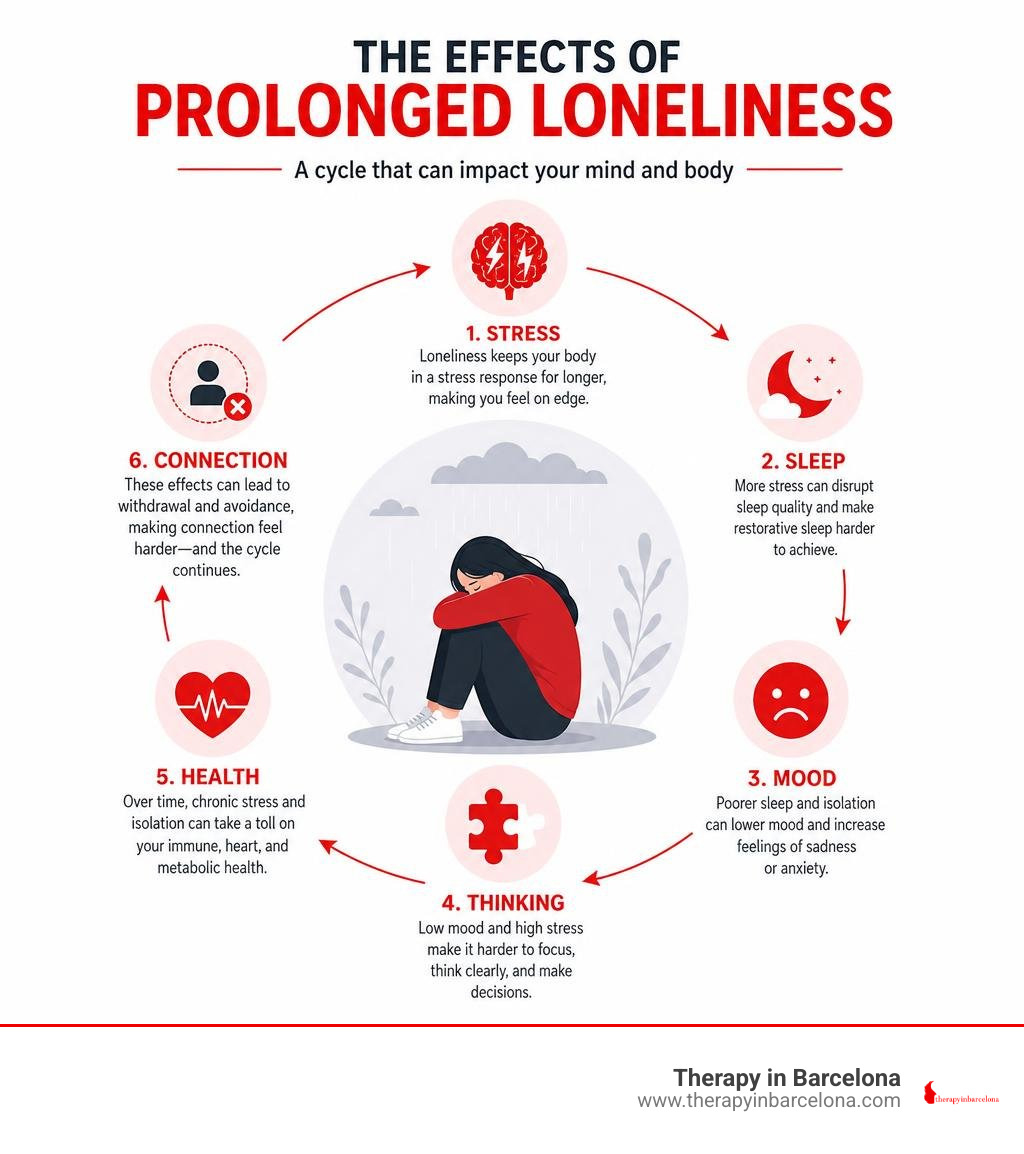
When loneliness lasts, it can affect far more than your mood. What happens when you are lonely for too long is that ongoing stress, poorer sleep, low mood, anxiety, difficulty concentrating, and withdrawal can begin to reinforce one another. Over time, chronic loneliness and social isolation are also linked with higher risks of heart disease, stroke, type 2 diabetes, dementia, and earlier death.
Loneliness is not the same as choosing to spend time alone. It is the painful gap between the connection you want and the connection you feel you have. You can feel it after a move to Barcelona, a separation, becoming a parent, working remotely, or even while surrounded by colleagues and acquaintances.
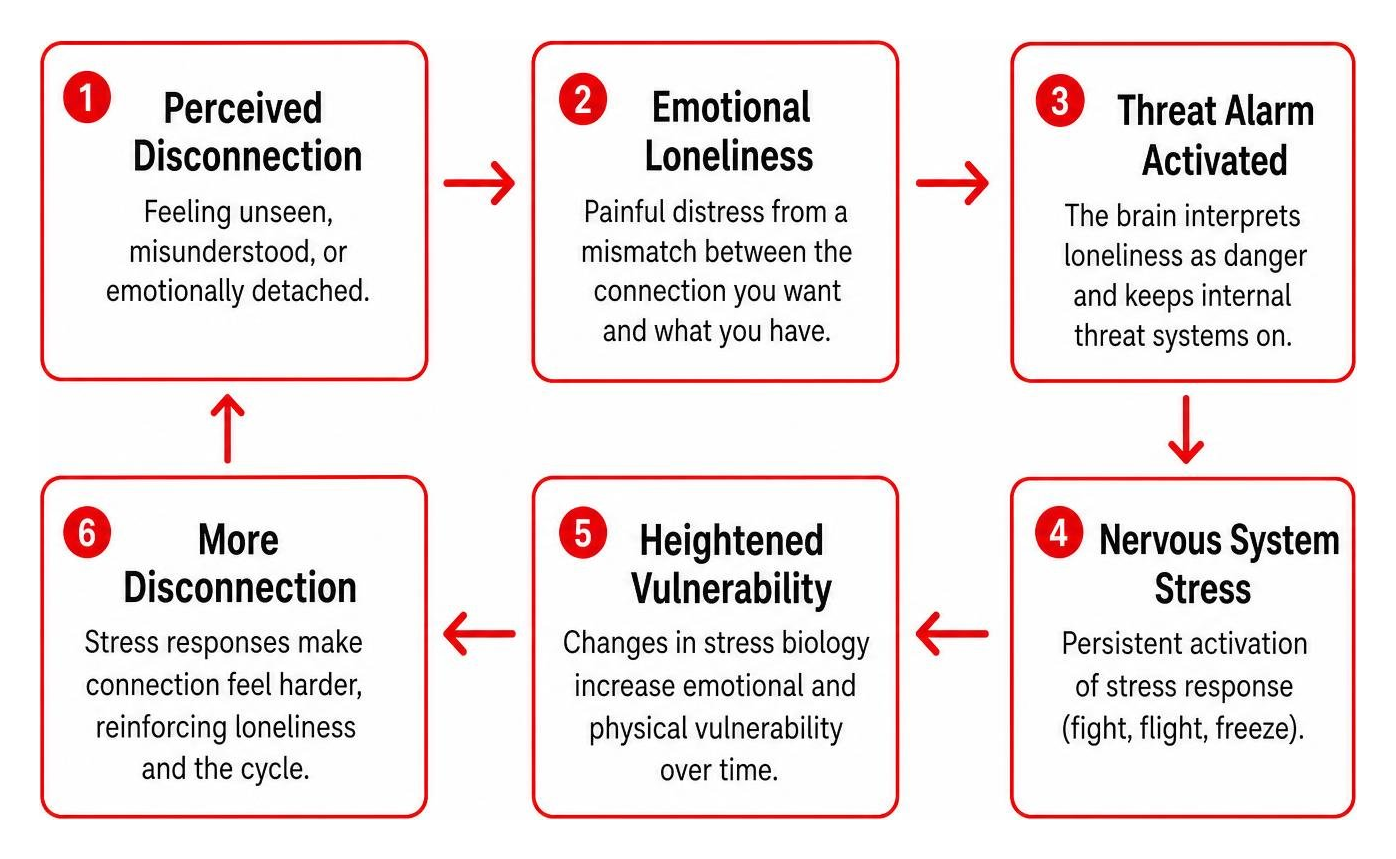
This matters because loneliness can become a loop: feeling disconnected may make social situations feel tiring or unsafe, which can lead to more avoidance and less meaningful contact. The good news is that the loop can be interrupted with small, consistent connection habits and the right support. If loneliness is paired with thoughts of harming yourself or feeling unable to stay safe, contact local emergency services or a crisis helpline straight away.
In the sections ahead, we explain what prolonged loneliness can do to the body and brain, who may be more vulnerable, and practical ways to rebuild connection without forcing yourself to become someone else.
Loneliness vs. Social Isolation: Understanding the Difference
People often use the terms loneliness and social isolation interchangeably, but scientifically they represent two distinct experiences. Social isolation describes an objective physical state where a person has few social contacts, lives alone, or rarely interacts with others. In contrast, loneliness is a deeply subjective emotional feeling. It occurs when there is a mismatch between the social relationships you desire and the relationships you actually experience.
A landmark Nature Communications study on loneliness and health showed that loneliness and social isolation share only a modest phenotypic correlation of 0.13 and a genetic correlation of 0.31. This confirms that these two conditions operate along separate psychological and biological tracks. You can live an active life surrounded by people and still feel profoundly lonely, or you can live in quiet solitude while feeling completely fulfilled.
Objective Social Isolation
- Definition: An observable, measurable lack of social contact, family ties, and community participation.
- Core Characteristic: Having a low frequency of interactions and living in a single-person household.
- Key Risk: Missing out on practical, day-to-day assistance and emergency care when facing illness or life transitions.
Subjective Emotional Loneliness
- Definition: The painful emotional distress that comes from feeling unseen, misunderstood, or emotionally detached.
- Core Characteristic: Feeling disconnected regardless of whether you are alone or surrounded by an active crowd.
- Key Risk: Higher activation of biological stress alarms, neuroinflammation, and prolonged mental health struggles.
What Does Being Lonely Mean Emotionally?
To unpack what does being lonely mean on an emotional level, we have to look past the number of people in your contact list. Emotional loneliness stems from a lack of mutual vulnerability and depth in your bonds. When you feel that nobody truly knows your authentic self, your inner world begins to feel isolated.
Experiencing this emotional deficit can leave you feeling drained, unsafe, and emotionally raw. The distress is not a character flaw or a personal failure; it is an innate psychological drive. Much like physical hunger tells you that your body needs calories, emotional loneliness is an internal signal telling you that your mind needs belonging.
Gaining a deeper understanding what loneliness feels like helps you recognise that these painful feelings are valid distress signals rather than fixed personality traits.
Objective Isolation vs. Perceived Disconnection
The difference between objective isolation and perceived disconnection becomes very clear when looking at everyday life. You might spend a quiet weekend reading alone in your flat and feel refreshed. Yet, you could easily attend a busy networking event or a family dinner and feel utterly detached from everyone in the room.
Recent Phys.org research on loneliness vs isolation highlights that subjective loneliness often damages mental wellbeing more directly than physical isolation alone. While objective isolation deprives you of external practical support, perceived disconnection keeps your internal threat alarms switched on. Learning actionable methods for coping with isolation allows you to bridge both physical solitude and emotional detachment without feeling overwhelmed.
What Happens When You Are Lonely for Too Long: 6 Key Biological and Physical Impacts

When loneliness shifts from a passing mood into a chronic state, it alters your basic physiology. Human biology evolved to view social connection as essential for survival on the ancient savanna. When you remain isolated for extended periods, your brain assumes you are vulnerable to predators and environmental threats.
Public health research now treats prolonged social disconnection with the same clinical seriousness as traditional medical risk factors. A comprehensive ScienceBlog analysis on chronic loneliness mortality risks reveals that long-term social disconnection heightens health risks as much as smoking 15 cigarettes a day or struggling with alcohol use disorder.
In fact, research demonstrates that chronic loneliness and social isolation are twice as harmful to physical and mental health as obesity.
1. Chronic Inflammation and Weakened Immune Defenses
One of the most profound biological shifts involves gene expression inside your immune system. Under prolonged social distress, the body activates what researchers call the Conserved Transcriptional Response to Adversity (CTRA). This ancient biological programme shifts white blood cell production into overdrive.
As detailed in a Headspace guide on loneliness and body physiology, this response prompts white blood cells to upregulate genes responsible for short-term inflammation while downregulating genes needed for antiviral defense. Because your body expects physical injury rather than viral exposure, your immune system leaves you more vulnerable to everyday viral infections while trapping your tissues in a state of low-grade, chronic inflammation.
2. Cardiovascular Strain and Stroke Risk
Prolonged loneliness places severe, persistent demands on your cardiovascular system. When your nervous system remains in a heightened state of alert, baseline vascular resistance rises, leading to sustained high blood pressure and arterial stiffness.
Data shows that loneliness is linked to a 30% increase in the risk of stroke or the development of coronary heart disease. Over decades, this constant cardiovascular strain accelerates plaque buildup in the arteries. A major Nature Communications life expectancy study tracking over 277,000 participants revealed that prolonged loneliness significantly reduces disease-free life expectancy, leading to the earlier onset of cardiovascular issues, type 2 diabetes, and general multimorbidity.
3. Elevated Cortisol and Disrupted Sleep Architecture
Under normal circumstances, the stress hormone cortisol follows a healthy daily rhythm, peaking in the morning to give you energy and dropping at night so you can rest. Chronic loneliness disrupts this rhythm, causing elevated cortisol output throughout the afternoon and evening.
According to Cigna health insights on chronic loneliness, sustained cortisol elevation causes muscle weakness, metabolic dysregulation, and persistent sleep fragmentation. The brain views the night as a dangerous time to be alone, triggering micro-awakenings that rob you of restorative deep sleep. In addition, social exclusion can trigger autonomic shifts that cause measurable drops in skin temperature, leaving you feeling physically chilly when emotionally isolated.
Psychological and Cognitive Effects of Prolonged Disconnection
The psychological toll of long-term isolation is profound. Prolonged loneliness erodes your sense of self-worth and diminishes your overall life satisfaction. When you spend months or years feeling disconnected, your brain adapts to this lack of feedback by turning inward, frequently generating cycles of rumination and low mood.
This dynamic often creates a bidirectional trap. Experiencing chronic loneliness raises the risk of feeling persistently down, unmotivated, and overwhelmed, while these heavy feelings cause people to pull away from their communities. Understanding whether isolation is fueling your depression helps you take meaningful steps toward breaking this exhausting psychological spiral.
What Happens When You Are Lonely for Too Long in the Brain
Prolonged disconnection alters both the physical structure and functional connectivity of the brain. Neuroimaging reveals that chronic loneliness places the amygdala—the brain’s threat-detection hub—into a state of hypervigilance.
The amygdala processes social signals in just 100 to 200 milliseconds, whereas the rational prefrontal cortex requires 300 to 500 milliseconds to assess and regulate those impulses. This timing gap means a lonely brain reacts with threat and fear before conscious logic can step in.
Groundbreaking Penn Medicine research on loneliness and the brain and insights from a Neurosity neuroscience guide reveal several distinct neurological changes:
- Amygdala Hyper-Reactivity: Neutral social cues, such as a colleague’s busy expression, are quickly interpreted as direct personal rejection.
- Ventral Striatum Numbing: The brain’s reward centre registers less dopamine during positive social exchanges, making interactions feel draining rather than rewarding.
- Prefrontal Degradation: Sustained cortisol levels wear down synaptic connections in the prefrontal cortex, impairing working memory, focus, and emotional regulation.
- Elevated Dementia Risk: Chronic loneliness is associated with a 31% to 40% increase in a person’s risk of developing dementia.
For a deeper look into the neural impact of solitude, exploring what does being alone do to you sheds light on how your brain adapts to prolonged quiet.
Mental Health Vulnerabilities and Emotional Eating Loops
When your brain is deprived of the natural dopamine hits that come from social safety and validation, it looks for quick chemical substitutes. This biological deficit frequently manifests as intense cravings for comfort foods that are high in refined sugars and saturated fats.
People experiencing chronic loneliness may be more likely to rely on ultra-processed foods. Social isolation can also heighten reward responses linked to food cravings while weakening the processes involved in impulse control. If you constantly wonder why do I feel sad all of the time, examining the overlap between emotional exhaustion, comfort eating, and loneliness is a vital first step.
Who Is Most at Risk and Why the Cycle Deepens
Loneliness can affect anyone regardless of age, personality, or professional success. However, certain demographic and situational factors significantly heighten vulnerability:
- Young Adults (Aged 18–29): Navigating career establishment, transient living situations, and superficial digital connections.
- Older Adults: Facing retirement, mobility limitations, bereavement, and the loss of long-standing social networks.
- People Experiencing Major Life Transitions: Undergoing divorce, job changes, new parenthood, or health diagnoses.
- Individuals in Single-Person Households: Living without built-in daily micro-interactions.
- Marginalised Communities: Including LGBTQ+ individuals and neurodivergent adults who may struggle to find safe, affirming spaces.
High-Risk Transitions: Expats, Digital Nomads, and Major Life Shifts
Relocating across borders creates unique vulnerabilities to social isolation. Consider a fictional composite example representing common expat challenges rather than a real client. Someone may move to Spain for an exciting new role, enjoying an initial honeymoon phase filled with sunny walks and tapas. But six months in, the language barrier, unfamiliar administrative systems, and lack of deep friendships can leave them feeling completely unanchored.
Many internationals experience greater emotional stress than they expected after moving abroad. Leaving behind established support networks can contribute to homesickness, loneliness, and a sense of isolation.
Consulting an expat depression therapy guide or learning about the 7 hidden struggles of life abroad in Spain can provide clarity during these transitions. Similarly, those leading nomadic lifestyles can benefit from resources on digital nomad mental health to stay grounded while traveling.
The Hypervigilance Trap: When the Brain Misinterprets Social Cues
The most challenging aspect of long-term loneliness is that it actively warps how you perceive other people. When your nervous system is stuck in threat-detection mode, you begin to view social situations as emotionally dangerous.
A chronically lonely person might walk into a gathering and instantly interpret a neutral glance as hostility, or assume that a delayed text message means they are disliked. In response, they put up emotional walls, act defensively, or cancel plans at the last minute. This defensive behaviour unintentionally pushes others away, confirming the person’s worst fears and deepening their isolation. Recognising these patterns among the 10 things you feel when lonely is key to dismantling the trap.
Actionable Strategies to Break the Cycle and Rebuild Connection
Overcoming chronic loneliness does not mean transforming into a bubbly extrovert or filling every evening on your calendar. Because loneliness is about connection quality rather than contact quantity, recovery focuses on retraining your nervous system to feel safe and seen.
Practical guides offering 7 easy ways to stop feeling lonely and practical tips to manage loneliness and isolation emphasise steady, manageable steps over sudden, overwhelming lifestyle overhauls.
What Happens When You Are Lonely for Too Long and How Therapy Helps
When self-help exercises feel out of reach, professional therapy provides a structured, supportive environment to untangle long-standing isolation patterns. Evidence-based therapeutic modalities target the cognitive and emotional roots of chronic disconnection:
- Cognitive Behavioural Therapy (CBT): Identifies and restructures automatic negative thoughts and social biases, helping you test whether people are genuinely rejecting you or if your threat alarm is misfiring.
- Acceptance and Commitment Therapy (ACT): Encourages you to accept uncomfortable social anxieties while committing to values-based actions that foster genuine connection.
- Internal Family Systems (IFS) & Schema Therapy: Explores early life attachment wounds and internal protective parts that retreat into isolation to avoid getting hurt.
- Mindfulness-Based Stress Reduction (MBSR): Calms baseline sympathetic nervous system arousal, allowing your body to step out of constant fight-or-flight mode.
While public health systems and large automated digital platforms offer generalised support, international clients frequently face rigid language barriers, impersonal algorithmic therapist matching, or privacy concerns regarding personal health data.
Specialised private practices contrast with these alternatives by ensuring strict client privacy with no data selling, bespoke therapist matching, and culturally sensitive support delivered directly in your native language. Accessing specialised psychotherapy for expats ensures your care is tailored to the nuances of living abroad. Exploring how international therapist matching works will help you find a practitioner who truly understands your background.
Everyday Micro-Habits to Build Meaningful Connection

Small, consistent daily practices can gradually retrain your brain to register social safety:
- Cultivate ‘Weak Ties’: Have brief, friendly exchanges with your local barista, baker, or neighbour. These low-stakes interactions stimulate social bonding circuits without performance pressure.
- Join Interest-Based Communities: Shared activities like group fitness, language exchanges, amateur choirs, or volunteering provide organic connection around a common focus. Read more on building community abroad and making friends abroad.
- Choose Warmth in Solitude: Holding a warm mug of tea or taking a warm shower can activate neural pathways linked to physical and emotional comfort.
- Practice Active Communication: When catching up with long-distance friends, share real, mundane daily moments rather than curated highlights to maintain emotional intimacy.
Frequently Asked Questions About Chronic Loneliness
Is chronic loneliness classified as a mental health disorder?
No, chronic loneliness is not classified as an independent condition in diagnostic manuals. Instead, it is an evolutionary alarm signal indicating an unmet biological and psychological need. However, when left unresolved, prolonged loneliness acts as a major risk factor for persistent low mood, chronic worry, disrupted sleep, and cognitive decline.
Can the brain and body recover from long periods of isolation?
Yes. The brain is remarkably adaptable. Supportive relationships, emotional safety, and healthy sleep can help reduce stress responses and support recovery from the effects of prolonged isolation.
Why do I feel lonely even when surrounded by people?
Feeling lonely in a crowd happens when your interactions lack emotional depth, reciprocity, and safety. If you feel unable to share your authentic feelings or worry about being judged, your nervous system remains on high alert. True connection depends on feeling seen and valued for who you are, not simply sharing physical space with others.
Conclusion
Prolonged loneliness is a challenging, painful human experience, but it is not a permanent life sentence. By recognizing the biological signals of isolation and understanding how your brain attempts to protect you, you can take gentle, practical steps toward building authentic belonging.
If you are currently experiencing acute distress, thoughts of self-harm, or feel unable to stay safe, please reach out immediately to dedicated support lines such as crisis helplines for immediate support or contact local emergency services.
For ongoing, compassionate guidance, Therapy in Barcelona is here to support you. Founded by Leigh Matthews—an Australian Psychologist who has lived in Barcelona since 2011 and brings experience in supporting international clients—Therapy in Barcelona is a trusted private group practice in Spain established in 2011. The practice offers psychology-trained multilingual care in English, German, French, Spanish, Afrikaans, Portuguese, Austrian-German, and Swiss-German.
Therapy in Barcelona provides face-to-face sessions at their central Barcelona office as well as online therapy for clients across Spain and worldwide, including the USA and Canada. As a private-pay service, they offer careful, personalised therapist matching for adults, couples, teens, and families, with sliding scale options available for those experiencing financial need.
What is one small, low-pressure micro-connection you can make today to remind your nervous system that you are not alone? If you’d like support, book a Free Discovery Call.
