


Understanding Trauma and Its Impact on Mind and Body

Trauma therapy support is a structured, evidence-based approach that helps individuals process overwhelming experiences, regulate their nervous system, and rebuild a sense of safety. Support is tailored to each person’s experiences, needs, and goals. For internationals in Barcelona, Valencia, or Málaga, finding culturally sensitive support in English can be an important step towards recovery.
Trauma is not simply a memory of a past event; it is a profound physiological and psychological imprint left on the nervous system. Many individuals encounter overwhelming events during their lives. When an experience overwhelms our capacity to cope, the brain’s survival circuitry activates automatically. The amygdala sounds an internal alarm, releasing stress hormones like cortisol and adrenaline to prepare the body for fight, flight, or freeze.
In everyday circumstances, the nervous system returns to a state of equilibrium once danger passes. For many, however, this survival mechanism remains switched on long after the actual threat has ended. Trauma can alter communication between the prefrontal cortex—the centre for logic and reflection—and the limbic system, which processes fear and emotion. As a result, the body continues to react as if the past danger is happening in the present moment.
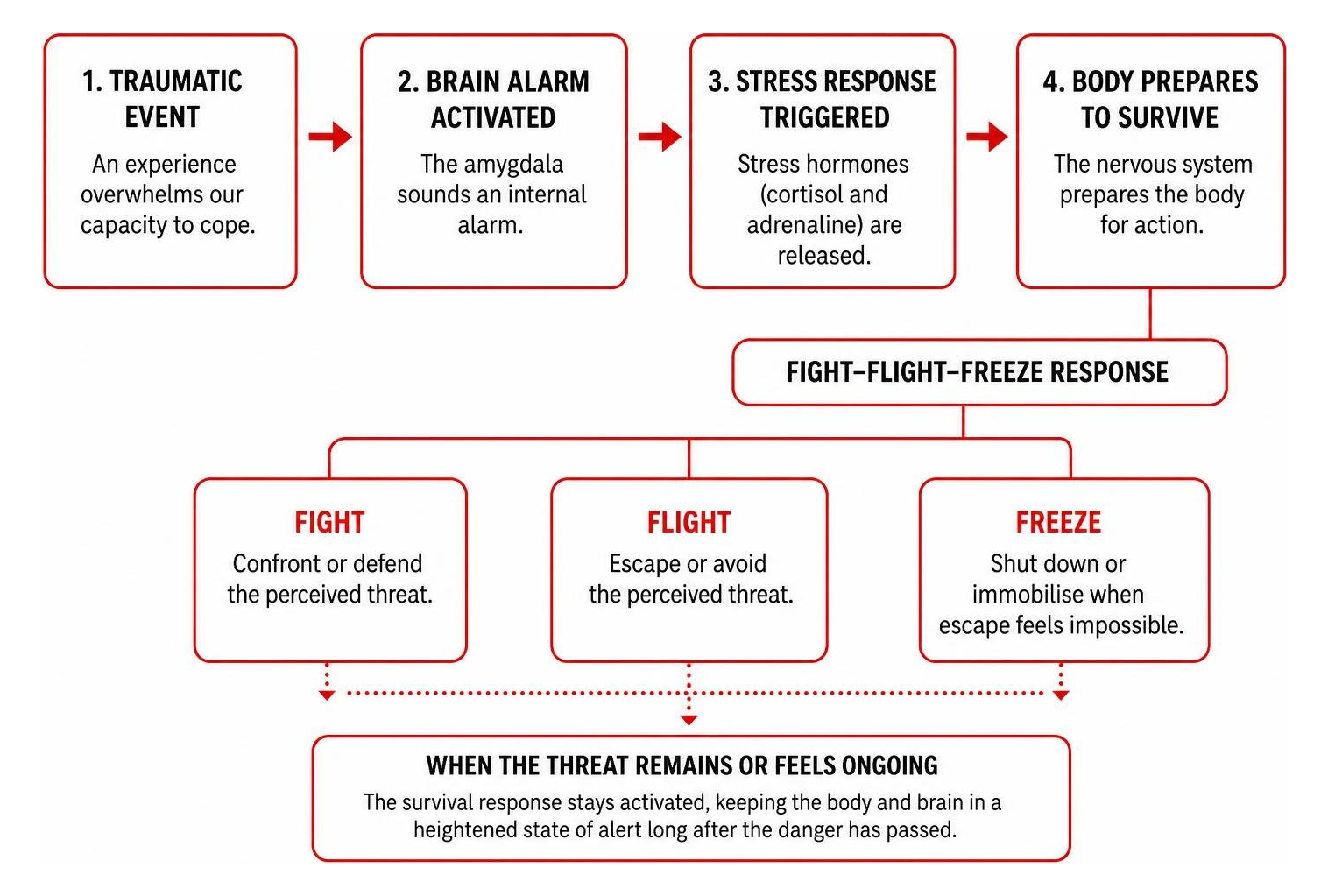
This lingering nervous system arousal produces a range of distressing physical, emotional, and mental symptoms:
- Hypervigilance and anxiety: Feeling constantly on edge, easily startled, scanning environments for threats, and experiencing persistent muscle tension or racing heartbeats.
- Intrusive symptoms: Flashbacks, sudden emotional surges, and distressing nightmares that make the past feel immediate and inescapable.
- Emotional numbing and disconnection: Feeling detached from loved ones, losing interest in previously enjoyed activities, or experiencing a sense of brain fog and unreality (depersonalisation or derealisation).
- Somatic distress: Chronic fatigue, unexplained headaches, digestive issues, and sleep disturbances, illustrating how trauma lives directly in the body.
- Negative cognitive shifts: Persistent beliefs such as “I am fundamentally broken,” “The world is entirely dangerous,” or carrying deep, unearned feelings of guilt and shame.
When living abroad as an international professional, student, or accompanying partner, these symptoms can feel magnified. Navigating a foreign healthcare system, adapting to a new culture, and lacking an immediate local support system can make emotional dysregulation feel particularly isolating.
Types of Trauma: Acute, Chronic, and Complex
Understanding the nature of traumatic experiences helps determine the most supportive pathway toward recovery. Trauma generally falls into three distinct presentations:
- Acute Trauma: This stems from a single, isolated, and highly stressful event—such as a serious car accident, a sudden medical emergency, a natural disaster, or an isolated violent incident. While feelings of acute stress can be intense, targeted interventions often help individuals process the event efficiently.
- Chronic Trauma: This develops from prolonged, repeated exposure to distressing circumstances over months or years. Examples include enduring domestic abuse, living in a conflict zone, experiencing long-term workplace bullying, or dealing with chronic illness. Chronic stress keeps the nervous system in a constant state of hyperarousal, wearing down emotional and physical resilience.
- Complex Trauma: Often originating in early childhood or within fundamental caregiving relationships, complex trauma arises from repeated, inescapable interpersonal violations, neglect, or attachment wounds. It deeply influences self-worth, emotional regulation, and relational trust. Recovering from complex trauma typically requires extended stabilization, nervous system re-patterning, and relational repair.
Many individuals who encounter overwhelming events continue to experience prolonged distress, emotional exhaustion, or heightened fight-or-flight reactions. Recognizing where your experiences fall on this spectrum allows clinicians to tailor evidence-based modalities to your exact pace and needs.
Core Principles of Trauma-Informed Care
Trauma-informed care represents an essential cultural and clinical shift within mental health support. Rather than asking “What is wrong with you?”, trauma-informed practitioners ask “What happened to you?” This perspective acknowledges that symptoms are creative survival adaptations rather than personal defects.
The framework established by the Substance Abuse and Mental Health Services Administration (SAMHSA) outlines six foundational principles that govern ethical trauma-informed therapy:
- Safety: Ensuring physical and emotional safety is paramount. Therapy rooms, communication methods, and session pacing are intentionally structured to avoid overwhelming the client.
- Trustworthiness and Transparency: Building clear boundaries, maintaining absolute clarity around confidentiality, and ensuring treatment plans and decisions are made openly.
- Peer Support and Mutuality: Recognizing that shared lived experiences and connection diminish the profound isolation that trauma fosters.
- Collaboration: Eliminating traditional clinical hierarchies. Therapist and client work as equal partners, sharing power and decision-making throughout the healing journey.
- Empowerment, Voice, and Choice: Restoring personal agency. Clients are encouraged to cultivate self-advocacy, determine their own goals, and retain complete control over what they share and when.
- Cultural, Historical, and Gender Considerations: Actively acknowledging how identity, cultural background, migration, and systemic inequalities intersect with psychological distress. Culturally competent care ensures that therapeutic interventions respect an individual’s unique worldview.
Evidence-Based Modalities in Trauma Therapy Support
Healing from trauma is entirely achievable with the support of clinically validated interventions. Evidence-based trauma therapies do not erase memories, but they change how those memories are stored in the brain and nervous system, allowing the body to recognize that the danger is in the past.
Cognitive and Exposure-Based Approaches
Cognitive and behavioural therapies focus on identifying maladaptive thought patterns, reducing avoidance, and gradually desensitising emotional distress:
- Cognitive Processing Therapy (CPT): A structured approach that helps individuals identify and challenge “stuck points”—unhelpful beliefs about safety, trust, power, esteem, and intimacy that developed after the trauma.
- Prolonged Exposure (PE): Typically delivered over 8 to 15 individual 90-minute sessions, PE helps clients gradually confront trauma-related memories and harmless real-world situations they have been avoiding, reducing fear over time.
- Trauma-Focused Cognitive Behavioural Therapy (TF-CBT): Designed primarily for children, adolescents, and their families over 12 to 20 sessions, TF-CBT blends psychoeducation, emotion regulation skills, trauma narration, and caregiver support.
For adults navigating life adjustments or processing past distress, structured individual therapy support offers a safe container to dismantle painful core beliefs and re-establish daily stability.
Somatic, EMDR, and Parts-Work Modalities
Because trauma often bypasses verbal reasoning and lodges deeply in somatic pathways, body-centred and integrative modalities are vital for lasting recovery:
- Eye Movement Desensitisation and Reprocessing (EMDR): An 8-phase protocol typically conducted over 6 to 12 sessions of 60 to 90 minutes. EMDR uses bilateral stimulation (such as eye movements, alternating audio tones, or tactile taps) to help the brain reprocess traumatic memories without requiring extensive verbal descriptions.
- Accelerated Resolution Therapy (ART): A rapid, visual-focused modality aiming to provide symptom relief in as few as one to three sessions using rapid eye movements and memory reconsolidation.
- Internal Family Systems (IFS): A gentle parts-work modality that explores internal protective parts and wounded “exiles,” helping individuals cultivate self-compassion and resolve inner conflict.
- Somatic and Body-Based Approaches: Techniques like Somatic Experiencing and sensorimotor therapy track bodily sensations, tremors, and breath patterns to safely discharge trapped stress energy.
Integrating somatic techniques with traditional psychotherapy creates balanced, holistic trauma care models that address the mind, body, and nervous system together.
What to Expect When Starting Trauma Treatment
Beginning trauma therapy can feel intimidating, particularly if you fear being pushed to discuss distressing memories before you feel ready. Ethical trauma therapy adheres to a phased model of recovery that prioritises stabilization above all else.
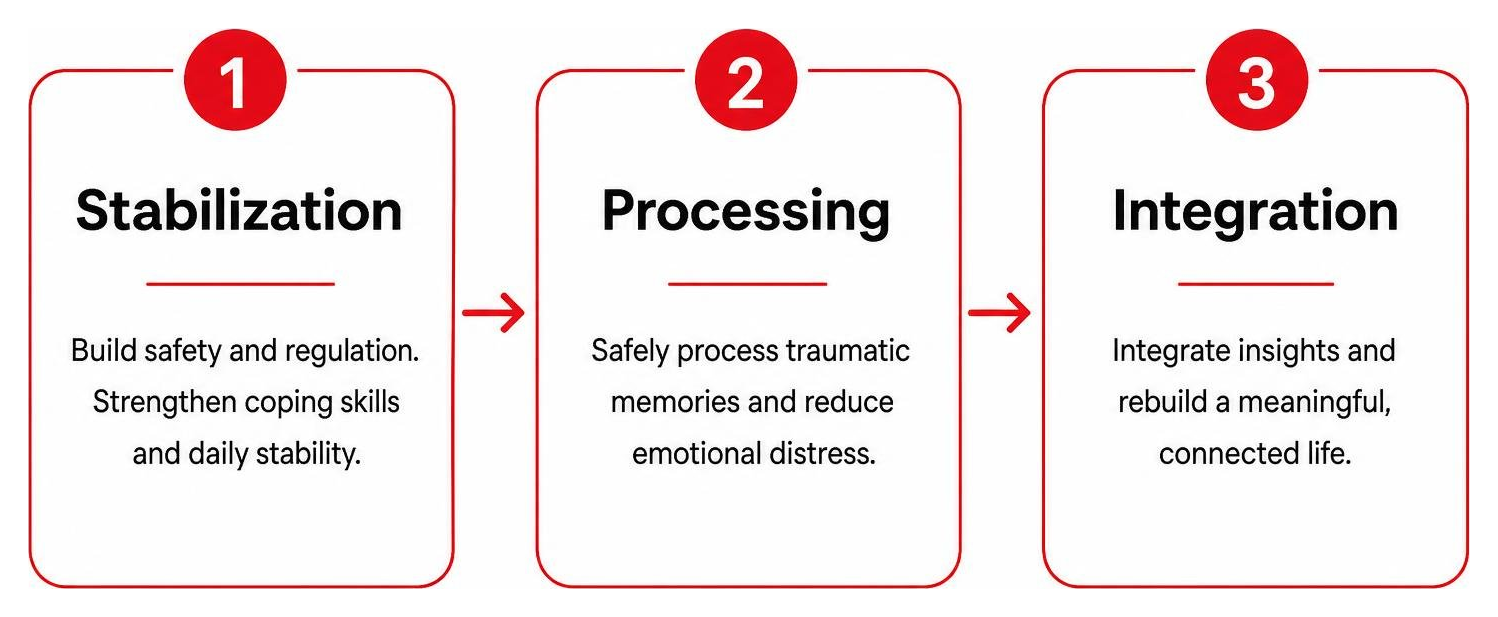
Understanding the distinction between general counselling and specialized trauma treatment helps set realistic expectations:
Comparing Standard Talk Therapy and Trauma-Focused Therapy
Focus of Care
- Standard talk therapy: Explores everyday challenges, general mood management, relationship dynamics, and day-to-day coping strategies.
- Trauma-focused therapy: Systematically addresses the neurobiological and cognitive imprint of past distressing events on present-day functioning.
Session Structure
- Standard talk therapy: Often open-ended, client-led, and conversational depending on what is most pressing that week.
- Trauma-focused therapy: Highly structured and phased, moving carefully from grounding and stabilization to intentional memory processing and integration.
Memory Handling
- Standard talk therapy: Relies heavily on verbal dialogue and reflection to understand past experiences.
- Trauma-focused therapy: Uses targeted neurobiological protocols (such as EMDR, somatic tracking, or CPT) where sharing granular verbal detail is optional and paced to your nervous system’s capacity.
Pacing and Safety
- Standard talk therapy: Pacing flows naturally with conversational reflections.
- Trauma-focused therapy: Therapist actively monitors physiological arousal to keep the client within their “window of tolerance,” preventing re-traumatization.
Preparing for Your First Session
Your initial consultation is an opportunity to establish rapport, discuss clinical boundaries, and conduct a gentle intake. You will not be asked to plunge into painful memories. Instead, your therapist will focus on:
- Clarifying your immediate symptoms: Discussing sleep, anxiety levels, triggers, and daily obstacles.
- Developing emotional stabilization: Teaching practical breathing tools, grounding exercises, and sensory strategies to contain distress between sessions.
- Outlining collaborative goals: Deciding together what healing looks like for you and agreeing on preferred therapeutic modalities.
Note on Case Examples: A fictional composite example representing common expat challenges, not a real client.
A 32-year-old marketing manager who moved from London to Madrid began experiencing panic attacks and emotional numbness after a serious cycling accident. Trauma-informed therapy helped them regulate feelings of hypervigilance, process the experience, and gradually regain a sense of safety and confidence.
Navigating Online and In-Person Trauma Therapy Support
Trauma therapy can be delivered effectively both in-person and through secure video telehealth platforms. Many people find meeting face-to-face in a physical office comforting, while others prefer engaging from the safety and privacy of their own home.
When seeking support across Spain—whether in major centres like Barcelona, Valencia, and Madrid, or regional hubs like Málaga, Alicante, Sevilla, Marbella, Gran Canaria, and Zaragoza—accessing English-speaking specialists locally can sometimes prove challenging. Engaging in specialised online therapy services bridges this gap, providing high-standard, culturally attuned trauma support wherever you are located.
Compared with public services or large online platforms, Therapy in Barcelona offers personalised therapist matching, culturally sensitive support for internationals, strong data privacy, and high-quality private care. Some therapists also offer sliding scale fees based on financial need.
Building a Comprehensive Healing and Support Network
Individual therapy is often the anchor of trauma recovery, but sustainable healing flourishes when supported by a multidimensional care network. Trauma can create deep feelings of isolation; rebuilding connection is a vital therapeutic task.

Crisis Support Resources and Peer Support
If you or someone you know is experiencing acute distress, having immediate crisis resources readily available provides an essential safety net:
- Emergency Services (Spain & Europe): Dial 112 for immediate medical or psychiatric assistance.
- Mental Health Crisis Line (Spain): Dial 024 for 24/7 suicide prevention and crisis support in Spain.
- UK Crisis Support: Call 116 123 to speak freely with the Samaritans.
- US & Canada Crisis Lifeline: Call or text 988 for 24/7 confidential crisis intervention.
Beyond acute crisis services, structured peer support groups and community circles offer safe spaces to share lived experiences. Hearing others articulate similar feelings of grief, displacement, or hypervigilance reduces shame and reinforces that recovery is possible. Complementary practices—such as yoga, expressive arts, mindfulness-based stress reduction, and structured breathwork—further help regulate autonomic nervous system tone.
How Loved Ones Can Provide Trauma Therapy Support
Family members, partners, and close friends play an invaluable role in an individual’s recovery. Supporting a loved one through trauma requires patience, understanding, and clear emotional boundaries:
- Practice co-regulation: Your calm presence can help soothe a dysregulated nervous system. Speak in a gentle, grounded tone and avoid rushing someone out of distress.
- Listen without trying to “fix”: Offer active, non-judgmental listening. Avoid giving unsolicited advice or pressing for details about what happened.
- Respect triggers and boundaries: Learn what environments, sounds, or situations induce stress, and collaborate on ways to navigate them comfortably.
- Avoid minimisation: Phrases like “Look on the bright side” or “It could have been worse” can inadvertently invalidate their lived experience.
- Encourage professional support: Gently support their decision to seek specialized care while respecting their timing and autonomy.
When traumatic events impact relationships or family systems, engaging in structured family therapy options provides a neutral space to rebuild trust, enhance communication, and foster mutual empathy.
Frequently Asked Questions About Trauma Therapy Support
How long does trauma therapy typically take?
The duration of trauma therapy varies based on the nature of the experiences and personal goals. Single-incident acute trauma (such as a recent isolated accident) can often be processed within 8 to 20 structured sessions using protocols like EMDR or CPT.
In contrast, healing from chronic or complex developmental trauma typically involves a longer timeframe—ranging from several months to a couple of years—allowing ample time for nervous system stabilization, trust-building, and integrative parts work.
Will I have to describe traumatic memories in detail immediately?
No. Ethical trauma-informed therapy explicitly avoids pushing you into detailed trauma narratives before you have established reliable stabilization tools. Many modern modalities, including EMDR, ART, and somatic therapy, do not require you to describe memories aloud in granular detail to achieve significant neural reprocessing and symptom relief. You remain in control of what you share at all times.
Can trauma therapy be effectively conducted online?
Yes. Trauma therapy can be provided effectively online, with support adapted to each person’s needs and circumstances. Online sessions allow you to access English-speaking clinicians from a comfortable, private environment without the added stress of commuting.
Moving Forward on Your Path to Recovery
Healing from trauma is not about erasing the past; it is about restoring safety to your body, reclaiming personal agency, and creating a meaningful, grounded life in the present. With compassionate, evidence-based guidance, your nervous system can learn that the overwhelming experiences of yesterday are truly over.
Therapy in Barcelona has supported the international community since 2011. Founded by Australian Psychologist Leigh Matthews, the practice offers warm, culturally sensitive therapy for adults, couples, adolescents, and families, with personalised therapist matching. Sessions are available in central Barcelona and online worldwide, in English and several other languages.
If you’d like support, book a Free Discovery Call. Online therapy is available worldwide, including the USA and Canada.
