


Why loneliness matters more than you think

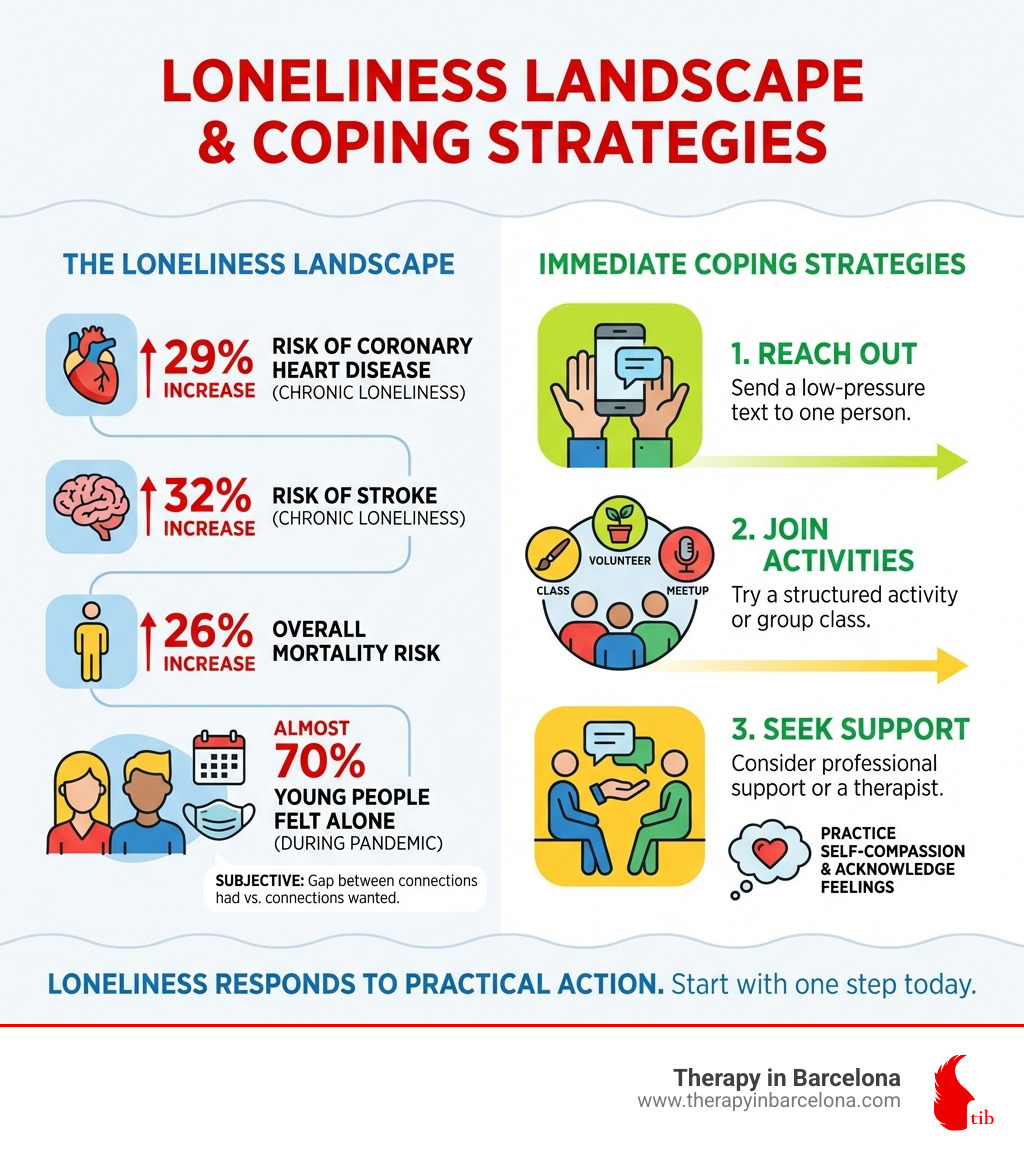
What do I do if I’m lonely? Here are immediate steps you can take right now:
- Acknowledge the feeling – Loneliness is normal and doesn’t mean something is wrong with you
- Reach out to one person – Send a low-pressure text to a friend or family member
- Get out of your space – Visit a café, park, or public place to be around people
- Try a structured activity – Join a class, volunteer, or attend a meetup focused on your interests
- Limit social media – Replace scrolling with real connection or a call
- Consider professional support – Speak with a therapist who understands your situation
- Practice self-compassion – Counter negative thoughts with kindness toward yourself
Loneliness is not only painful, it can also affect your health. In 2023, the U.S. Department of Health and Human Services warned of a growing loneliness epidemic. A large review of the evidence found that long-term loneliness is linked with a 29% higher risk of coronary heart disease, a 32% higher risk of stroke, and a 26% higher risk of earlier death overall, as explained in this scientific research on loneliness as a health risk. In parts of Europe, including Germany and Switzerland, frequent loneliness is also widely reported.
If you’ve relocated to Barcelona, Valencia, Madrid, or another Spanish city as an expat, loneliness can hit especially hard. Research suggests young people have been particularly affected, with many reporting frequent loneliness in recent years. Living abroad can intensify that feeling through language barriers, culture shock, and distance from the people you usually lean on. For a broader look at the issue, see statistics on young people and loneliness.
Here’s what makes loneliness so tricky: it’s entirely subjective. You can feel desperately lonely in a crowded room full of colleagues, or perfectly content spending a quiet evening alone with a book. The feeling comes from a gap between the connections you have and the connections you want. It’s about quality, not quantity.
The good news? Loneliness responds to practical action. This article shares 33 evidence-based strategies to help you move from isolation toward meaningful connection. Some you can try tonight. Others take more time but create lasting change. Whether you’re an expat in Spain struggling with cultural adjustment, someone dealing with a major life transition, or simply feeling disconnected, these approaches can help.
What do I do if I’m lonely: Understanding the feeling
Understanding loneliness is the first step toward managing it. It is not a mental health disorder in itself, but rather a biological signal—much like hunger or thirst—telling us that our social needs are not being met. However, when this signal is ignored for too long, it can lead to a cycle of negative thoughts that make it even harder to connect with others.
Scientific research on loneliness as a health risk highlights that chronic loneliness can lead to physiological changes, including increased stress hormones and inflammation. This is why the U.S. Surgeon General 2023 advisory emphasised that social connection is as essential to our survival as food and water. For internationals living in cities like Málaga or Alicante, the lack of “felt” connection can make even a sunny day feel grey.
The difference between being alone and being lonely
It is vital to distinguish between physical isolation and the emotional state of loneliness.
- Being Alone (Solitude): This is a physical state where you are by yourself. It can be restorative, peaceful, and a choice.
- Being Lonely: This is an emotional distress that occurs when there is a mismatch between the social relationships you have and those you desire.
You can be surrounded by people in a bustling Madrid plaza and feel completely isolated if those around you don’t truly “see” or understand you. Conversely, you can be physically alone in your flat in Sevilla and feel perfectly connected because you know you have a solid support system just a phone call away.
Why we feel this way
Loneliness often stems from significant life transitions. For many, the statistics on young people and loneliness are startling: nearly 10% of young people report feeling lonely “often,” and the pandemic-era isolation has left a lasting “social muscle” atrophy.
Common triggers include:
- Relocation: Moving to a new country is one of the most common causes of expat loneliness.
- Bereavement or Breakups: Losing a key pillar of your social world.
- Life Stages: Retirement, becoming a new parent, or finishing university.
- Cultural Barriers: Feeling like an outsider due to language or local customs.
Immediate steps to cope right now
When the wave of loneliness hits, it can feel overwhelming. The goal in the short term is emotional regulation—bringing your nervous system back to a state of calm.

One helpful first step is to name what is happening: “I feel lonely right now.” That simple label can make the feeling less overwhelming. Journaling can help too, because it gets thoughts out of your head and onto the page. If things feel especially heavy and you need immediate emotional support, reach out to a crisis line or local urgent mental health service.
What do I do if I’m lonely at night?
Loneliness often intensifies after dark. When the distractions of the day fade, rumination can take over.
- Establish a Routine: A predictable evening routine signals to your brain that it is time to rest, not worry.
- Limit Scrolling: Social media at night often leads to “upward comparison”—looking at others’ highlight reels and feeling worse about your own quiet evening.
- Background Noise: Many find comfort in podcasts or “sleep streams” (like Twitch or YouTube) that provide a sense of human presence without the pressure of interaction.
- Physical Activity: Tiring yourself out during the day through exercise can help you fall asleep faster, leaving less time for nighttime anxiety.
Reaching out to your existing circle
Sometimes we feel lonely because we assume others are too busy for us. This is often a cognitive bias.
- The Low-Pressure Text: You don’t need a profound reason to call. A simple “Thinking of you, hope you’re well” can open the door.
- Embrace Vulnerability: Being honest about your struggle can actually strengthen your bonds. Talk to a trusted family member who can offer encouragement without judgement.
- Schedule a “Connection Date”: Even a virtual coffee can provide the hit of dopamine and oxytocin needed to break the loneliness cycle.
33 Smart strategies to reduce isolation
If you are wondering what do i do if I’m lonely, here is a comprehensive list of strategies to help you build bridges back to the world.
- Volunteer: Helping others is one of the fastest ways to feel connected to a community.
- Join a “Third Place”: Find a local café or library where you become a “regular.”
- Take a Language Class: Essential for expats in Spain to bridge the cultural gap.
- Try a Meetup Group: Use apps to find people with specific niche interests.
- Co-working Spaces: If you work remotely, get out of the house.
- Micro-connections: Chat with the person at the bakery or the dog walker in the park.
- Shared Hobbies: Join a choir, a running club, or a board game group.
- Adopt a Pet: Pets offer companionship and are great “social icebreakers.”
- Attend Local Events: Go to the “Fiestas” or local markets even if you go alone.
- Explore Internet-based self-help research: Many online programs offer structured ways to improve social skills.
- Practice Mindfulness: Learn to sit with your feelings without judgement.
- Physical Activity: Join a gym or yoga studio for the “background noise” of others.
- Reach Out to Old Friends: Reconnect with someone from your past.
- Host a Small Gathering: Invite two people over for tea; it’s less intimidating than a party.
- Say “Yes” More Often: Even if you don’t feel like it, try to attend that one event.
- Limit Passive Screen Time: Trade one hour of Netflix for a walk in a public space.
- Learn a New Skill: Focus on growth, which builds self-esteem.
- Seek Peer Support: Connect with others who have similar lived experiences.
- Visit a Museum: Being around art and history can provide a sense of “cosmic” connection.
- Gardening: Join a community garden or tend to balcony plants.
- Listen to Podcasts: Choose conversational shows that feel like being part of a chat.
- Practice Gratitude: Note three things you’re thankful for each day to shift your mindset.
- Set Small Social Goals: Aim for one meaningful conversation a week.
- Identify Triggers: Notice when you feel loneliest and plan activities for those times.
- Be Your Own Best Friend: Treat yourself to a “solo date” at a restaurant you love.
- Avoid “False Intimacy”: Recognise that social media likes are not the same as real support.
- Journal Your Progress: Track the small wins in your social life.
- Improve Your Sleep: Better rest leads to better emotional resilience.
- Spend Time in Nature: Parks and beaches can reduce feelings of isolation.
- Ask for Help: Tell someone you trust that you’re struggling.
- Try “People Watching”: Sit on a bench in a busy square like Plaça de Catalunya.
- Join a Book Club: Provides a structured way to share thoughts and opinions.
- Book a Free Discovery Call: Professional guidance can help you navigate chronic loneliness.
What do I do if I’m lonely as an expat in Spain?
Living in Spain offers a vibrant lifestyle, but for internationals, it can also feel exclusionary. In cities like Barcelona or Valencia, the “messiness” of relocation—language barriers, bureaucracy, and the loss of your “old self”—can lead to deep isolation.
Many expats and digital nomads in Spain run into this. A move that looks exciting on paper can still leave you feeling cut off, especially if you work remotely and go days without meaningful conversation. Part of the struggle is cultural adjustment: you may feel disconnected from home, but not fully rooted in your new environment yet. Building connection usually takes intention. It can help to join expat-friendly communities while also making a real effort to learn the local language, understand local customs, and create routines that bring you into regular contact with other people.
Building new connections without the pressure
You don’t need to find a “best friend” immediately. Start with low-stakes interactions.
- Peer Support: Mind: Finding peer support is a great way to find groups where people use their own experiences to help each other.
- Co-working and Shared Spaces: If you’re in a tech hub like Málaga, co-working spaces provide a built-in community.
- Interest-Based Groups: Whether it’s a hiking group in the mountains near Madrid or a paddle-boarding club in Gran Canaria, focusing on the activity takes the pressure off the socialising.
Evidence-based ways to manage chronic loneliness
When loneliness becomes chronic, it often changes how we process information. We might become hyper-vigilant to social threats, assuming people are judging us or that we are “unlikable.” This is where evidence-based psychological approaches are most effective.
- Cognitive Behavioural Therapy (CBT): Focuses on spotting and changing unhelpful thought patterns, such as “nobody likes me,” that can deepen isolation.
- Acceptance and Commitment Therapy (ACT): Helps you make room for feelings of loneliness while still taking actions that reflect your values and what matters to you.
- Building Self-Esteem: Loneliness and low self-worth often go hand-in-hand. Mind: About self-esteem offers helpful guidance on understanding that connection.
The role of technology and social media
Technology is a double-edged sword. While it can facilitate connection, passive use (like scrolling through Instagram) often increases feelings of inadequacy and FOMO (Fear Of Missing Out).
- Active vs. Passive Use: Use technology to schedule real-world meetups or have deep video calls, rather than just observing others’ lives.
- Self-Help Programmes: Internet-based interventions for loneliness have shown promising results, particularly when they include some level of human guidance.
When to seek professional therapy
If your loneliness comes with ongoing low mood, changes in appetite, or losing interest in things you used to enjoy, it could point to depression. Getting support early can help stop loneliness from becoming a longer-term mental and physical health issue.
- Warning signs: Feeling stuck, struggling with daily tasks, or having thoughts of self-harm.
- Urgent help: If you are in Spain and need urgent mental health support, contact local emergency services right away. If you are elsewhere in Europe, use your local urgent care or crisis line.
Choosing the right support for you
When looking for help, you have several options. It’s important to understand the differences so you can find the “compassionate sanctuary” that fits your needs.
Public vs Private mental health care
Public Health Systems (e.g., CatSalut in Catalonia or the NHS):
- Pros: Free or low-cost; accessible to all residents.
- Cons: Often involves long wait times; you rarely get to choose your therapist; sessions may be limited in number and duration.
Large Online Platforms:
- Pros: Fast matching; often cheaper than traditional private practice.
- Cons: Matching is often done by AI algorithms, which can lack the “human touch”; high therapist turnover can disrupt the therapeutic relationship; privacy concerns regarding data.
Private Practice (e.g., Therapy in Barcelona):
- Pros: Personalised therapist matching by humans, not bots; choice of specialized approaches like CBT, ACT, or IFS; strict privacy and no data selling; culturally sensitive care from therapists who are expats themselves.
- Cons: Private-pay service (though some therapists offer sliding scale fees for those in financial need).
Why expat-specific care matters
For internationals, the “who” matters as much as the “what.” A therapist who has never lived abroad may struggle to understand the specific grief of “homesickness” or the identity crisis that comes with living in a foreign tongue.
Therapy in Barcelona focuses on the English-speaking international community. Our therapists understand that expat life is “messy.” We provide a safe space to navigate cultural adjustment, relocation stress, and the isolation that often accompanies a move to a city like Barcelona, Madrid, or Valencia.
Frequently Asked Questions
Is it normal to feel lonely even when I’m with people?
Yes, absolutely. This is often called “emotional loneliness.” It happens when your relationships lack the depth or understanding you crave. You might have many acquaintances but no one you feel safe being vulnerable with.
How can I tell if my loneliness is actually depression?
Loneliness is a feeling about your social connections, whereas depression is a broader mental health condition that affects your mood, energy, and outlook on life. If your “blues” persist for more than two weeks and are accompanied by hopelessness or physical exhaustion, it’s time to seek professional help.
Can exercise really help with feeling lonely?
While exercise doesn’t “fix” a lack of friends, it does release endorphins that improve your mood and resilience. Furthermore, exercising in public spaces (like a park in Valencia or a gym in Barcelona) provides “passive social contact,” which can make you feel more part of the human fabric.
Conclusion
Loneliness is a universal human experience, but for expats, it can feel like an insurmountable wall. Whether you are navigating the streets of Barcelona or settling into a new life in Málaga, you do not have to go it alone.
Therapy in Barcelona was founded in 2011 by Leigh Matthews, an Australian Psychologist and expat who recognised the desperate need for culturally sensitive, English-speaking support. Today, our team of psychology-trained professionals offers a sanctuary for internationals, providing both in-person sessions in our Eixample office and online therapy for expats worldwide.
We believe that therapy is not “one size fits all.” Our commitment is to provide the personalised therapist matching you need to find a real connection and start your journey toward healing.
If you’d like support, book a Free Discovery Call today. You can also fill out our intake form to be matched with a therapist who truly understands your journey. Whether you are in Spain or elsewhere, we are here to help you turn the page on loneliness.
