


Why Cross Cultural Couples Therapy Is Essential for International Relationships

Cross cultural couples therapy is a specialised form of relationship counselling that helps partners from different cultural backgrounds steer the unique challenges that arise when love crosses cultural boundaries. Unlike traditional couples therapy, this approach specifically addresses how cultural differences impact communication, values, family dynamics, and daily life decisions.
Quick Benefits of Cross Cultural Couples Therapy:
- Improved Communication – Learn to bridge different communication styles and expectations
- Cultural Integration – Develop strategies to blend traditions and create new shared customs
- Conflict Resolution – Address misunderstandings rooted in cultural differences
- Family Harmony – Steer extended family expectations and cultural pressures
- Identity Balance – Maintain individual cultural identities whilst building a shared relationship culture
Love doesn’t recognise borders, but relationships certainly feel their impact. When Carlos from Barcelona fell for Sophie from Manchester, their connection felt effortless. Yet three years later, they’re struggling with everything from holiday traditions to career expectations. Sound familiar?
The reality is stark: intercultural couples face significantly higher divorce rates than same-culture partnerships. Research shows that 17% of newlyweds in diverse societies now marry across cultural lines – up from just 3% fifty years ago. Yet many of these relationships struggle without proper support.
Cultural differences that once seemed charming can become sources of deep frustration. The way you argue, show affection, handle money, or relate to family – these aren’t just personal preferences. They’re deeply ingrained cultural patterns that can create invisible barriers between partners.
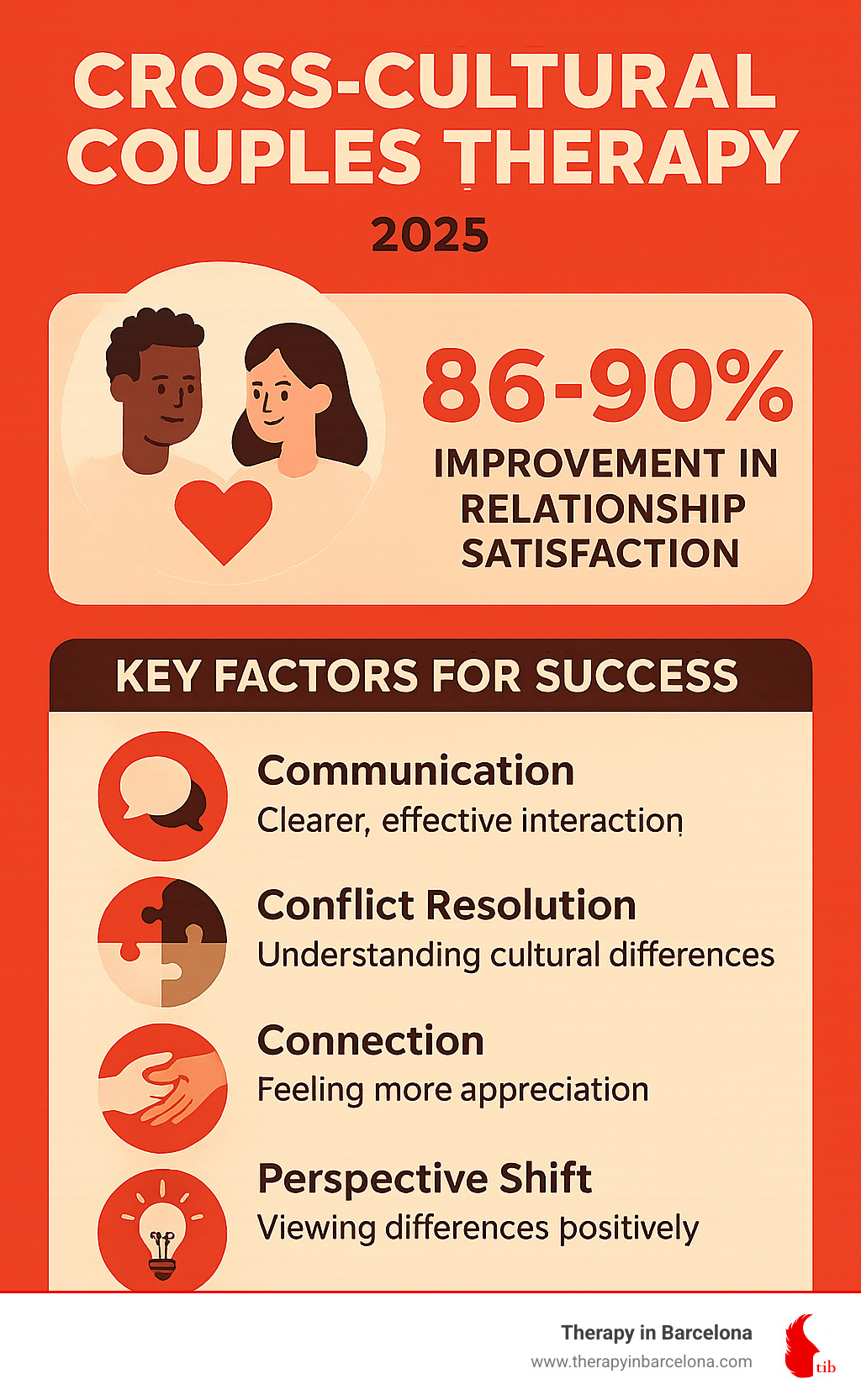
But here’s the encouraging news: cross cultural couples therapy works. Studies reveal that 86-90% of couples who engage in culturally-sensitive therapy report significant improvements in relationship satisfaction. The key is understanding that your cultural backgrounds aren’t obstacles to overcome – they’re strengths to integrate.
Whether you’re an expat couple navigating life in Barcelona, a Spanish-international partnership, or any combination of cultures trying to build a life together, specialised support can transform your relationship challenges into opportunities for deeper connection.
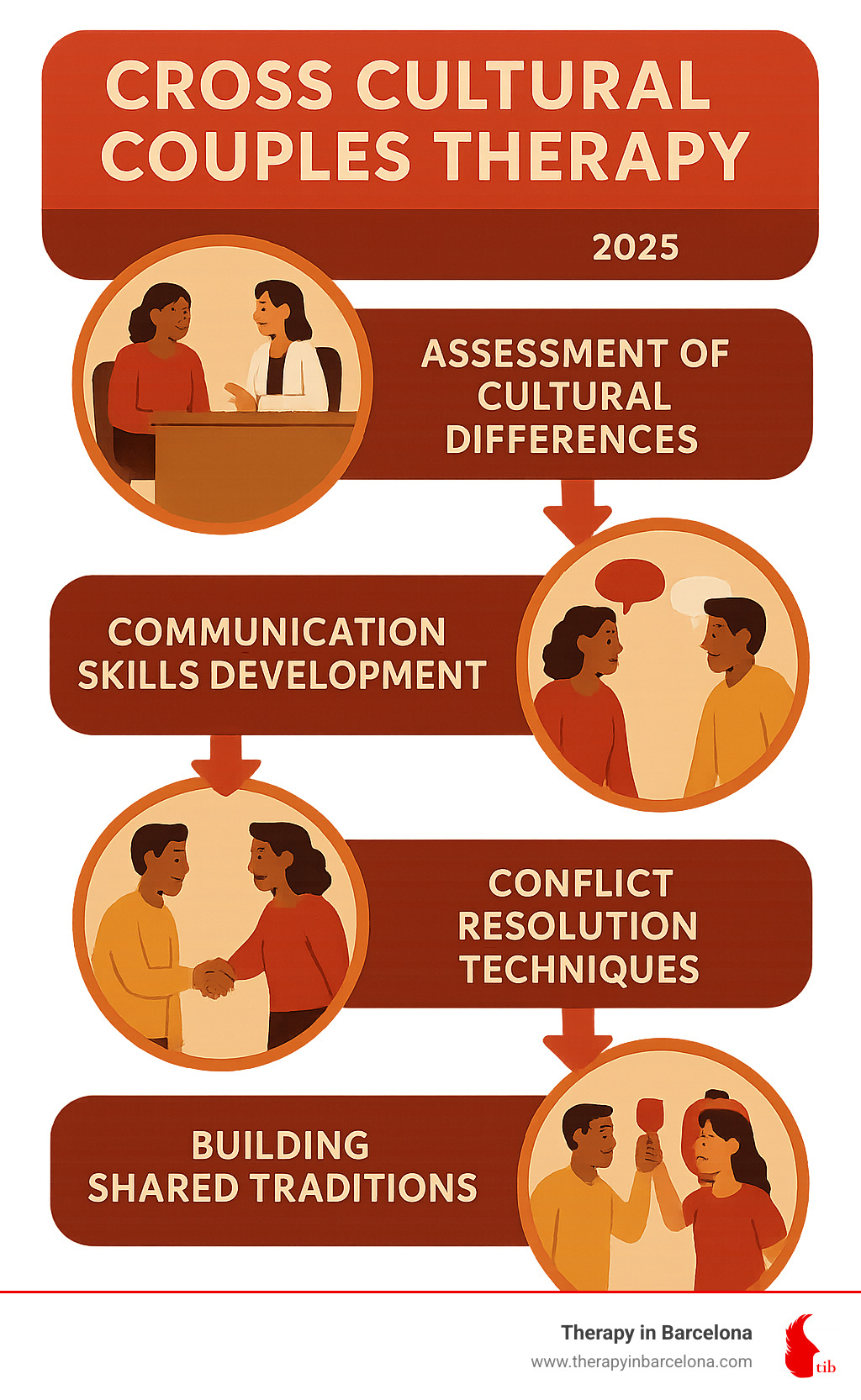
What Makes Cross-Cultural Relationships Unique?
When two people from different cultures fall in love, they’re not just bringing together two hearts—they’re merging worlds of traditions, values, and unspoken rules. Each partner carries what psychologists call cultural programming—invisible blueprints that shape everything from how they show affection to how they handle conflict.
Take Maria, a fictional composite of many international couples we see at Therapy in Barcelona. She moved from Mexico City to Barcelona and fell for Johan, a Swedish engineer. At first their differences felt fresh and exciting: Maria’s expressive warmth complemented Johan’s calm, measured style; her close-knit family drew him in, while his respectful independence gave her space.
Two years on, those same traits started rubbing. Maria felt hurt when Johan’s family didn’t call often, reading their distance as rejection. Johan felt overwhelmed by Maria’s relatives’ enthusiastic involvement, interpreting their concern as intrusion. Neither was wrong— they were simply following different cultural templates of “family”.
The Upside of Diversity
Cross-cultural love offers gifts same-culture couples can miss. Studies show diverse partners often develop stronger problem-solving skills, richer worldviews, and greater emotional intelligence because they have to communicate more explicitly and question their own assumptions.
The Hidden Stressors
Yet unique pressures can erode connection if ignored. Societal pressure still exists, from subtle discrimination to intrusive questions. Acculturation stress can leave the relocating partner homesick and the local partner unsure how to help. Finally, language gaps complicate humour, nuance, and conflict—people often slip into their mother tongue when emotions run high.

The challenge isn’t that these stressors exist—it’s recognising them as normal parts of the journey and getting support before blame takes root.
When to Consider Cross Cultural Couples Therapy
The moment cultural differences begin overshadowing the love that brought you together is precisely when cross cultural couples therapy becomes essential. Many couples make the mistake of waiting until they’re in crisis mode – arguing daily, sleeping in separate rooms, or considering separation. However, research consistently shows that early intervention proves far more effective than waiting until problems become entrenched.
The evidence speaks volumes: intercultural couples who engage in specialised therapy report remarkable success rates of 86-90% improvement in relationship satisfaction. This impressive outcome reflects the targeted nature of culturally-informed interventions that address the root causes of cross-cultural relationship stress, rather than just treating surface-level symptoms.
Think of it like learning to steer a new city. You wouldn’t wait until you’re completely lost and your phone battery has died before asking for directions. The same principle applies to your relationship – seeking guidance early helps you avoid getting lost in cultural misunderstandings that can damage your connection.
Indicators You Might Benefit
Several warning signs suggest that professional support could transform your relationship challenges into opportunities for deeper connection. Communication breakdown often manifests as repeated misunderstandings about the same topics, leaving both partners feeling frustrated and unheard. You might find yourselves having the same argument about family involvement, holiday traditions, or household responsibilities without ever reaching resolution.
Cultural conflict emerges when differences that once seemed charming become sources of tension. Perhaps you’re disagreeing about how much involvement your families should have in major decisions, or struggling with different expectations about gender roles and career priorities. These conflicts often intensify during stressful periods or major life transitions.
Identity struggles frequently surface when one partner feels pressured to abandon their cultural heritage to fit into their partner’s world. You might notice resentment building about cultural compromises you’ve made, or difficulty explaining your cultural background in ways your partner truly understands.
External pressures can slowly erode even the strongest relationships. Family disapproval, social isolation, workplace discrimination, or immigration stress all impact your partnership in ways that same-culture couples rarely experience.
| Traditional Couples Therapy | Cross Cultural Couples Therapy |
|---|---|
| Focuses on communication patterns | Addresses cultural communication styles |
| Explores family dynamics | Examines cultural family expectations |
| Works on conflict resolution | Steers culture-specific conflict approaches |
| Builds intimacy | Integrates cultural expressions of love |
| Plans shared future | Balances bicultural identity and goals |
Timing Is Everything
The most effective time to seek cross cultural couples therapy is during major life transitions, before stress accumulates and patterns become rigid. Pre-marital counselling helps couples proactively address cultural differences, creating a roadmap for navigating future challenges. Many successful intercultural couples credit this early intervention with preventing conflicts that could have damaged their relationship foundation.
Life transitions like relocating countries, starting new careers, or considering children often trigger unexpected cultural stress. These pivotal moments require partners to make decisions that affect both their individual cultural identity and their relationship dynamics. Professional support during these transitions helps couples steer choices consciously rather than reactively, preventing resentment from building over time.
Parenting decisions particularly benefit from therapeutic guidance. Questions about which languages to speak at home, how to celebrate religious holidays, which cultural traditions to maintain, and educational choices can become overwhelming without proper support. Couples who address these topics early create stronger foundations for raising confident, culturally-secure children.
How Cross Cultural Couples Therapy Works: Approaches & Techniques
Traditional couples therapy can feel like fixing a bicycle with a hammer when culture is the sticking point. Cross cultural couples therapy uses many of the same evidence-based models, yet every tool is adjusted through a cultural lens.
Emotionally Focused Therapy (EFT) looks at the emotional dance underneath arguments and how culture shapes those moves. Research shows 86-90% of couples improve when EFT is used in a culturally informed way.
The Gottman Method provides practical skills—especially building a “shared meaning system”. Instead of dropping traditions, partners weave new ones that honour both backgrounds.
Integrative Behavioural Couple Therapy (IBCT) stresses acceptance alongside change: differences stay on the dance floor, but partners learn new steps together.
Building a ‘Third Culture’ Together
Rather than blending everything into beige, successful couples create something new: a “third culture”. Therapists guide values-mapping exercises, helping partners decide which rituals to keep, adapt, or invent. Sunday family calls mixing both sets of parents or alternating Diwali with Christmas are simple examples.
More info about cultural harmony

Navigating Language and Communication Styles
Language barriers go beyond vocabulary. Some cultures value directness, others implication. Therapy sessions slow conversations down, using active listening and simple clarifying questions such as “What does that mean in your culture?” Creative channels—cooking, music, or art—often convey emotion better than words when tempers flare. Technology like shared calendars or translation apps can bridge practical gaps.
More info about conquering challenges
Therapist Cultural Sensitivity Matters
An effective therapist practises cultural humility—asking rather than assuming. At Therapy in Barcelona, our expat clinicians regularly consult each other to stay sharp and self-aware, ensuring every culture in the room feels respected.
Understanding cultural sensitivity
Practical Strategies & Long-Term Benefits
Cross-cultural couples who engage in therapy develop practical skills that strengthen their relationships long-term. These strategies address daily challenges whilst building deeper connection and understanding.
Holiday celebrations become opportunities for cultural integration rather than sources of conflict. Couples learn to alternate between different cultural traditions, create fusion celebrations, or establish entirely new traditions that reflect their combined heritage.
Boundary-setting with extended family requires particular skill in cross-cultural relationships. Couples learn to present a united front whilst respecting both families’ cultural expectations. This balance prevents family conflicts from damaging the partnership.
Financial management often reflects deep cultural values about money, savings, and spending. Couples explore these underlying beliefs and develop shared approaches that honour both perspectives whilst meeting their practical needs.

Strengthening Connection Daily
Small daily practices often prove more powerful than grand gestures in cross-cultural relationships. Couples develop micro-rituals that acknowledge both cultural backgrounds whilst building their unique connection.
Gratitude practices help partners appreciate their cultural differences rather than viewing them as obstacles. Daily appreciation exercises help couples notice the gifts their partner’s culture brings to their relationship.
Bilingual compliments and expressions of affection become powerful connection tools. Partners learn to express love in each other’s native languages, creating intimate moments that honour both cultural backgrounds.
Learning each other’s cultural holidays, foods, and traditions shows respect and interest. These efforts demonstrate commitment to understanding and embracing your partner’s complete identity.
Planning a Shared Future
Long-term planning requires particular attention in cross-cultural relationships. Couples must steer questions about where to live, how to raise children, and how to maintain connections to both cultural backgrounds.
Career decisions often involve cultural considerations. Partners may need to balance professional opportunities with cultural connections, family obligations, or visa requirements. Therapeutic support helps couples make these decisions collaboratively.
Parenting bicultural children requires intentional planning. Couples must decide about languages, religions, cultural traditions, and educational approaches. Early discussions prevent future conflicts and create stronger family foundations.
The Love, Happiness & Success podcast offers additional insights into building successful cross-cultural relationships.
Frequently Asked Questions about Cross Cultural Couples Therapy
When considering cross cultural couples therapy, many couples have practical questions about what to expect. These concerns are completely natural—seeking help for your relationship is a significant step, especially when cultural differences add layers of complexity.
What benefits can we expect?
Most couples notice clearer communication within a few sessions once they see how cultural programming drives their habits. Over time, 86-90% report higher satisfaction because they learn to turn cultural differences into resources rather than roadblocks.
How do we tackle language barriers in sessions?
Therapists encourage you to use the language that lets feelings flow. Partners switch languages when needed, and meaning is checked regularly. Body language, drawings, or music sometimes step in when words fail. Professional interpreters are available but often unnecessary for couples who share at least one common tongue.
How do we find a culturally competent therapist?
Look for clinicians who work with intercultural couples weekly, demonstrate curiosity about your background, and, ideally, have lived abroad themselves. Therapy in Barcelona’s psychologists tick those boxes and use a detailed intake process to match you with the best-fit professional.
Conclusion
Your love story crossed continents, languages, and cultures to bring you together. That’s no small feat. Yet if you’re reading this, you might be finding that whilst love conquers distance, it sometimes needs a helping hand to bridge cultural differences.
The challenges you’re facing aren’t signs that your relationship is doomed – they’re growing pains that come with blending two rich cultural worlds. Cross cultural couples therapy offers you the tools to transform these challenges from sources of conflict into the very foundations of a deeper, more resilient partnership.
Think about it: the couples who thrive across cultural boundaries aren’t the ones who ignore their differences or hope they’ll magically disappear. They’re the ones who lean into the discomfort, seek understanding, and build bridges where others see walls. They recognise that getting help isn’t admitting defeat – it’s investing in their future together.
Leigh Matthews, the Australian psychologist who founded Therapy in Barcelona in 2011, understands this journey intimately. As an immigrant who steers her own intercultural marriage whilst adapting to Spanish family traditions and Catalan culture, she recognises the unique challenges that international couples face. Her experience raising a Third Culture Kid in Barcelona, while building a life across cultures, sparked her passion for offering a service that supports other couples on similar journeys.
If you’re part of the international community in Barcelona, Madrid, or anywhere across Spain, you don’t have to figure this out alone. Therapy in Barcelona’s team of psychology-trained therapists – many of whom are expats themselves – brings both professional expertise and lived experience to your relationship challenges. They understand what it’s like to love across cultures because they’ve walked that path too.
Your cultural differences aren’t obstacles to overcome – they’re gifts to unwrap together. With the right support, you can create something beautiful: a relationship that honours both your backgrounds whilst building something entirely new and uniquely yours.
The journey from cultural collision to cultural harmony is absolutely possible. Your love was strong enough to cross borders to bring you together. With professional guidance, it can bridge any divide.
More info about our services to find how personalised therapist matching can support your cross-cultural relationship journey.
