


Why Career Change Therapy Might Be Your Missing Piece

Therapy for career change can help you steer the emotional and psychological challenges of transitioning to a new professional path. While therapy won’t tell you which job to choose, it can clarify your values, build resilience, and address the anxiety and identity shifts that make career transitions so difficult.
Quick Answer: What Therapy for Career Change Actually Does
- Builds self-awareness – Clarifies what truly matters to you beyond job titles
- Manages anxiety – Reduces stress about uncertainty and financial worries
- Processes identity shifts – Helps you separate self-worth from your career
- Increases resilience – Develops coping strategies for setbacks and rejection
- Addresses emotional blocks – Works through past work experiences holding you back
- Sets realistic goals – Helps you move forward without perfectionism paralysis
It’s Sunday evening in Barcelona. You’re staring at your laptop, that familiar knot tightening in your stomach. Tomorrow is Monday again. Another week in a job that no longer fits. You’ve been thinking about a change for months, maybe years. But every time you get close to making a move, fear stops you cold.
If this sounds familiar, you’re not alone. Nearly 60% of adults report feeling anxious about job changes. The average person changes jobs about 12 times during their working life. Yet each transition can feel uniquely terrifying, especially when you’re navigating it in a foreign country.
Here’s what most people don’t realise: the hardest part of a career change isn’t updating your CV or learning new skills. It’s the internal work. The identity crisis when you’re no longer “the marketing person” or “the teacher.” The grief of letting go. The fear that you’re making a massive mistake. The anxiety that keeps you stuck.
This is where therapy comes in. Not as a career test or job placement service, but as a space to build the inner foundation you need for a successful transition. Therapy helps you understand why you’re stuck, process the emotions that come with change, and develop the resilience to move forward even when you’re scared.
At Therapy in Barcelona, we work with internationals in Spain who are facing this exact challenge. Since 2011, our psychology-trained therapists have supported expats through career transitions, whether you’re in Barcelona, Valencia, Madrid, or connecting with us online from anywhere in the world. We understand the unique pressures of changing careers while living abroad, where cultural adjustment and professional uncertainty can amplify each other.
This guide will help you understand how therapy supports career change, what to expect from the process, and whether it’s the right step for you. We’ll explore the emotional and psychological aspects that traditional career advice often misses, and show you how to integrate therapeutic support into your career planning.
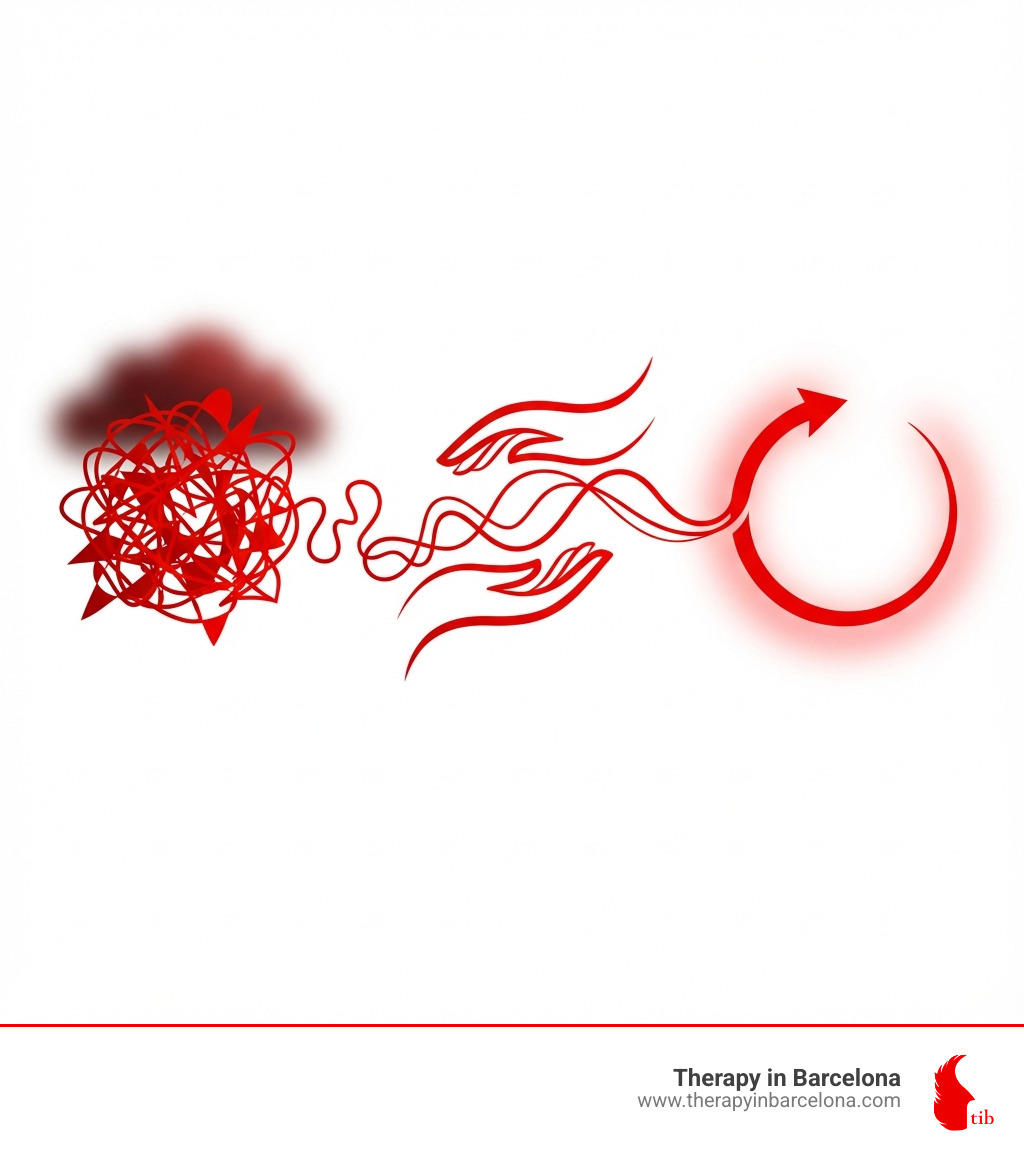
Why Career Change Feels So Overwhelming (And It’s Not Just You)
Changing careers is one of life’s most common stressors, yet it’s often overlooked. Your brain, with its ancient threat-detection system, can’t always tell the difference between a scary job interview and actual physical danger. This means the same alarm bells ring, triggering responses like anxiety and overwhelm. This hardwired mechanism, designed to keep you safe, can make career pivots feel incredibly daunting.
Beyond biology, several factors contribute to this overwhelming feeling. Financial worries are a huge concern; research shows that having a clear financial plan reduces career transition stress by up to 40%. There’s also the social pressure to consider, as fear of social disapproval can keep people stuck. For more insights on managing stress, you can explore our resources on Work Stress Got You Down? Discover Your Therapy Options.

The Identity Crisis Nobody Warns You About
Many of us strongly tie our self-worth to our professional roles. When you’re “the lawyer” or “the marketing manager,” that title becomes a huge part of who you are. So, when you contemplate a career change, it’s not just a new job you’re seeking; it’s a new version of yourself you’re trying on. This can trigger a profound identity crisis, leaving you feeling lost or adrift.
Organizational psychologist Herminia Ibarra’s research on career transitions reveals something counterintuitive: we find our next professional identity through experimenting and trying things, not through endless introspection. This means you don’t need to have it all figured out before you start. But letting go of an old identity can feel like a loss, bringing with it feelings of grief. For expats in cities like Valencia, this identity shift can be even more complex, layered with cultural adjustment and the challenge of redefining yourself in a new social context. Understanding this process is crucial for navigating it successfully. You can learn more about this perspective from Herminia Ibarra’s research on career transitions.
The Fear of the Unknown and Financial Anxiety
The unknown is inherently uncomfortable. When you’re considering a career change, you’re stepping into a future that isn’t fully defined, and that can fuel intense anxiety. Thoughts like “What if I make the wrong move?” or “Will I be good enough?” are common. This is often accompanied by imposter syndrome, especially when moving into a new field where you feel like a novice again.
Financial concerns loom large during these times. The idea of a period without stable income, or taking a pay cut, can be terrifying. Financial planners often recommend saving 6-12 months of expenses before a transition, and creating a clear financial plan can significantly reduce stress. Sometimes, bridge strategies, like part-time work in your current field while building skills for your target area, can help. For more comprehensive support in managing these stressors, consider our resources on work stress management.
The Pressure to Get It ‘Right’
We live in a world of endless choices, which can ironically lead to paralysis. This “paradox of choice” means that having too many options can increase anxiety and decrease satisfaction. When it comes to careers, this often manifests as perfectionism – the need to find the “perfect” next step, which can keep you stuck. High achievers, in particular, can find job transitions incredibly hard, viewing any period of uncertainty as unproductive or a failure.
Adding to this internal pressure are external expectations. Family, friends, and society often have ideas about what a “successful” career looks like, and deviating from that path can feel like letting people down. However, career transitions are a normal part of life. Data from the Bureau of Labor Statistics shows that the average person changes jobs about 12 times during their working life. This normalises the idea that your career path is rarely a straight line.
Therapy and Career Change: What’s the Real Benefit?
Therapy isn’t a magic wand that will hand you your dream job. Instead, it’s about building your inner strength and clarity so you can make informed decisions and steer the bumpy road of change with greater confidence. It’s about addressing the emotional blocks that keep you stuck, helping you move forward not just with a new job title, but with a renewed sense of self and purpose.
The real benefit lies in creating a strong foundation within yourself. This inner work is essential because a career change isn’t just about external factors; it’s deeply personal.

How Therapy Helps: Building Your Inner Foundation
When you start on a therapy for career change journey, you’re investing in your emotional well-being, which is critical for any significant life shift. Therapy helps you:
- Cultivate Self-Awareness: It provides a safe space to explore your core values, beliefs, and passions beyond the expectations of others. This deep self-knowledge is crucial for identifying a career path that truly aligns with who you are.
- Build Emotional Resilience: Career transitions are full of ups and downs. Therapy equips you with coping strategies to handle disappointment, rejection, and unexpected challenges. Practicing mindfulness, for example, can lower stress levels by up to 30%, building your capacity to bounce back.
- Manage Anxiety and Stress: The uncertainty of a career change can be a significant source of anxiety. Therapeutic interventions can reduce burnout symptoms by over 40%, and over 70% of people who undergo CBT experience a significant reduction in anxiety symptoms. This allows you to think more clearly and act more decisively.
- Process Past Work Experiences: Therapy helps you heal from previous toxic workplaces, burnout, or job loss. It allows you to process emotions like grief and anger, preventing past negative experiences from sabotaging your future. In fact, 50% of individuals who seek therapy after job loss report feeling more empowered to pursue new opportunities.
Our internal resources, such as Work Stress Got You Down? Discover Your Therapy Options, dig deeper into how therapy can support your mental health during these challenging times.
Where Therapy Connects with Career Planning
While therapy doesn’t directly tell you what job to take, the insights you gain are invaluable for career planning. When you understand your values, strengths, and emotional triggers, you can make decisions that are truly aligned with your authentic self. This means you’re not just picking a job; you’re crafting a fulfilling life.
Therapy helps you set realistic goals, not just aspirational ones. It builds your confidence to pursue those goals, even when fear creeps in. By addressing underlying psychological issues, therapy creates the mental space needed for strategic thinking. It helps you recognise that while you might desire a specific outcome, the therapeutic process empowers you to wisely choose your path and adapt to challenges.
Therapy or Career Coaching: What’s the Difference?
It’s common to confuse therapy for career change with career coaching, but they serve distinct purposes.
- Therapy (like what we offer at Therapy in Barcelona) dives deep into emotional depth, identity work, and healing underlying psychological issues. It’s about understanding why you feel stuck, processing past traumas, managing anxiety, and exploring how your sense of self is tied to your career. Our psychology-trained therapists are equipped to help you address burnout, steer identity shifts, and overcome emotional blocks that impede your progress.
- Career Coaching, on the other hand, is generally more action-oriented. It focuses on practical strategies like CV writing, networking, interview skills, and creating concrete action plans for job searching. While some career counselling approaches blend therapeutic techniques, a pure career coach typically doesn’t dig into deep emotional processing or mental health issues.
At Therapy in Barcelona, we offer therapy to help you build that crucial inner foundation. Our team of psychology-trained therapists are experts in supporting expats through the emotional complexities of career transitions, addressing concerns related to academic and work life. If you’re looking for guidance on specific job search tactics, you might consider a dedicated career coach to complement your therapeutic journey. For insights into evidence-based techniques used in career practice, you can explore resources like Career coaching tools: Evidence-based techniques for practice.
How Therapy for Career Change Builds Resilience and Clarity
Therapy for career change is a transformative process that strengthens your ability to adapt and thrive amidst professional shifts. It doesn’t just help you cope; it empowers you to grow. By working through emotional challenges, you build confidence, learn to steer uncertainty, and develop the skills to set and achieve realistic goals.
Effective Therapeutic Approaches for a Smoother Transition
Different therapeutic approaches offer unique tools to support you through a career change:
- Cognitive Behavioural Therapy (CBT): This approach helps you identify and challenge negative thought patterns that might be holding you back. For instance, if you constantly think, “I’m not qualified for anything else,” CBT helps you reframe this to a more balanced “I have transferable skills, and I can learn new ones.” Over time, CBT can shift not just your thoughts but your behaviours, helping you take action. Our article on Unlock Your Mind: Cognitive Therapy for Stress Relief at Work offers more details.
- Narrative Therapy: This approach encourages you to see your life, including your career, as a story you can influence. It helps you examine your beliefs and behaviours, allowing you to “re-author” your career story. This can transform a narrative of feeling stuck into one of empowerment and new possibilities.
- Acceptance and Commitment Therapy (ACT): ACT focuses on accepting difficult thoughts and feelings while committing to actions aligned with your values. It promotes psychological flexibility, helping you move forward even when uncertainty is present. Therapy in Barcelona offers ACT, among other modalities, with therapists skilled in helping you cultivate mindfulness and value-driven action.
- Psychodynamic Therapy: This approach digs into past experiences and unconscious patterns that might be influencing your current career choices or anxieties. Understanding these deeper dynamics can lead to profound shifts in how you approach your professional life.
- Solution-Focused Brief Therapy (SFBT): SFBT maintains a spotlight on solutions rather than problems. It helps you identify what’s working well and what small steps can move you forward, setting concrete, near-term goals.
- Rational Emotive Behavioural Therapy (REBT): While often used with adolescents, REBT is effective for adults too in reducing career decision difficulties and distress by challenging irrational beliefs. Research indicates REBT is useful for reducing career decision difficulties, highlighting its broader applicability.
Navigating the Identity Shift with Therapy for Career Change
One of the most profound aspects of therapy for career change is navigating the identity shift. Many clients define themselves by their job title, and losing that role can shake their sense of self. Therapy provides a space to:
- Detatch Self-Worth from Job Titles: You learn that your value isn’t solely tied to what you do for a living. This helps you build a wider, sturdier identity that can withstand professional changes.
- Explore ‘Possible Selves’: Inspired by Herminia Ibarra’s work, therapy helps you experiment with different versions of who you could become. This “identity play” allows you to envision new professional narratives without feeling pressured to commit immediately.
- Create a New Professional Narrative: You can “re-author” your story, viewing unemployment or a career pivot not as a setback but as an opportunity-filled new chapter. This aligns with findings on the effectiveness of career choice interventions, where interventions can empower individuals to define their own path.
- Accept Change as Growth: Therapy helps you reframe fear as excitement, recognising that the same brain regions process both emotions. This allows you to approach changes not as regressions, but as opportunities for personal and professional enlargement. The MAP (Me-As-a-Process) coaching model, while coaching-focused, underlines the importance of exploring identity in career transitions, particularly for women. It maps the crafting of revised identities as individuals engage in “struggles between competing conceptions of what a good career and life should entail.”
Practical Steps to Integrate Therapy into Your Career Plan
To make the most of therapy for career change, active engagement is key. Here are some practical steps:
- Set Clear Therapy Goals: Discuss with your therapist what you hope to achieve. Do you want to manage anxiety, clarify your values, or process past work experiences? Clear goals provide direction.
- Journal Regularly: Keeping a journal helps you track your thoughts, feelings, and experiences during the transition. This self-reflection can uncover patterns and provide valuable insights to discuss in sessions.
- Use Insights to Inform Choices: Apply what you learn in therapy to your career exploration. If you find a core value of autonomy, for example, you can prioritise roles that offer greater independence.
- Practice Self-Compassion: Be kind to yourself during this uncertain period. Changing careers is tough, and self-criticism only makes it harder. Therapy teaches you to replace negative self-talk with supportive self-compassion.
- Build Support Systems: Therapy can help you identify and nurture a strong network of friends, family, mentors, or even career transition support groups. These connections offer both emotional and practical support. Research shows that people in career transition support groups were 60% more likely to successfully change careers than those who did it alone.
The goal is to integrate your inner growth with your outer actions. Our guide on From Burnout to Balance: Strategies for Workplace Mental Health offers additional strategies for maintaining your well-being.
Is It Time for a Change? Signs You Might Benefit from Therapy
Deciding to seek therapy is a personal choice, but there are clear signs that professional support could be beneficial during a career transition. This is especially true for expats in places like Málaga, where the challenges of navigating a new culture, language, and professional landscape can amplify feelings of uncertainty.
Key Signs You Could Benefit from Therapy for Career Change
If you’re experiencing any of these, it might be time to consider therapy for career change:
- Persistent burnout or exhaustion: You feel drained, unmotivated, and your current work is negatively impacting your energy and well-being. Therapeutic interventions can reduce burnout symptoms by over 40%.
- Feeling lost or directionless: You know you want a change, but you have no idea what your next step should be, leading to paralysis.
- High anxiety about the future: The uncertainty of a career change is causing significant stress, fear, or panic attacks. Nearly 60% of adults report feeling anxious about job changes.
- Identity is too tied to your job: You feel like you’ll lose who you are if you leave your current role, or you struggle to define yourself outside of your professional title.
- Past negative work experiences are holding you back: Trauma from a toxic workplace, a difficult layoff, or repeated failures are preventing you from moving forward.
- Indecision paralysis: You’re overwhelmed by choices, constantly second-guessing yourself, and unable to commit to a direction. This “paradox of choice” can be debilitating.
- Significant emotional distress: Persistent sadness, hopelessness, irritability, or sleep disruption that interferes with daily functioning.
- Physical symptoms with no medical cause: Unexplained headaches, digestive issues, or chronic fatigue that might be stress-related.
Acknowledging the Alternatives
When considering support for a career change, it’s helpful to know your options.
- Public health system clinicians: These can be a valuable resource, often offering free or low-cost services. However, waiting lists can be long, and the focus might be on general mental health rather than specific career transition support.
- Large online platforms: Many platforms offer quick access to therapists, often at varying price points. While convenient, the quality and fit can vary, and privacy policies may not always be as strict as independent practices.
- Local solo practitioners: These can offer personalised care, but finding the right fit might require more research on your part.
How Therapy in Barcelona is Different:
At Therapy in Barcelona, we understand the unique needs of expats and differentiate ourselves through:
- Bespoke therapist matching: We don’t just match you with the next available professional. Our intake service is thorough, balancing data and human intelligence to ensure you’re paired with a therapist who truly understands your background, goals, and cultural context.
- Expat-specific cultural sensitivity: Our psychology-trained therapists are expats themselves, offering a deep, understanding of the challenges of living abroad. This culturally informed care is essential for internationals in Barcelona, Madrid, or any other Spanish city.
- Strict privacy (no data selling): Your confidentiality is paramount. We are committed to ethical practices and do not sell your data.
- High quality, psychology-trained therapists: Our team comprises highly qualified professionals with rigorous psychology training, ensuring expertise and competence. We actively monitor each other’s work and engage in continuous learning.
- Online sessions worldwide and face-to-face in Barcelona: We offer flexible options to suit your needs, whether you prefer in-person sessions at our central Eixample office or online therapy from anywhere globally.
- Free Discovery Call: We offer a Free Discovery Call to discuss your needs and ensure we can provide the best possible support, making the first step towards help accessible.
We pride ourselves on our sensitivity to clients at vulnerable times, providing a safe and genuine environment where you can explore your career transition journey without judgment.
Frequently Asked Questions about Therapy for Career Change
Can therapy tell me which career to choose?
No, therapy for career change doesn’t function like a career test or a crystal ball. Its purpose is not to hand you a definitive job title. Instead, therapy helps you clarify your values, understand your motivations, build confidence, and empower you to make informed decisions for yourself. It provides the psychological foundation and self-awareness needed to choose a path that truly aligns with your authentic self, rather than simply telling you what to do. Meta-analyses on career choice interventions show that while they are effective, their greatest impact is on career decision-making self-efficacy.
How long does this type of therapy take?
The duration of therapy for career change varies significantly from person to person. It’s not a quick fix, as deep emotional and identity work takes time. Some individuals might only need a few sessions to gain clarity and develop coping strategies, while others benefit from longer-term support to process complex issues or build sustained resilience. Research on individual career counseling has shown average sessions for career outcomes were around 3.8, and for mental health outcomes, approximately 4.27. The length of therapy depends on your specific needs, goals, and the depth of the challenges you’re facing.
How is this different from general therapy for work stress?
While there’s some overlap, therapy for career change is distinct from general therapy for work stress. General work stress therapy often focuses on coping mechanisms to manage current workplace pressures, improve boundaries, or reduce burnout within your existing role.
Therapy for career change, however, is primarily future-oriented and deeply involves identity work. It helps you process the emotional complexities of transitioning out of a role, exploring who you are beyond your current job title, and planning for a new professional chapter. It combines processing past experiences and their impact with actively preparing for a fulfilling future. For a more detailed look at managing current work-related challenges, you might find our guide on Therapy for Career Stress: Finding Balance in the Workplace helpful.
Your Next Chapter Awaits
Navigating a career change can feel like stepping into the unknown, especially for expats balancing professional ambition with the unique challenges of living abroad. But you don’t have to steer it alone. Therapy for career change offers a powerful foundation, helping you build the inner strength, clarity, and resilience needed for a smoother transition. It’s a process of self-discovery that empowers you to choose a path aligned with your authentic self, leading to higher life satisfaction, increased self-confidence, and a greater sense of authenticity.
At Therapy in Barcelona, our expat-focused expertise means we deeply understand your unique journey. Our psychology-trained therapists, many of whom are expats themselves, provide culturally sensitive care, whether you’re in Barcelona, Zaragoza, or connecting with us online worldwide. We pride ourselves on personalised matching, ensuring you find a therapist who truly understands your needs and helps you move forward, not just bounce back.
If you’re ready to explore your next chapter with support, our team is here for you. Take the first step towards a more fulfilling professional life by booking a Free Discovery Call today. We can discuss how to support you, whether you need online therapy or in-person sessions in Barcelona.
