


Why Social Expats in Barcelona Can Still Feel Deeply Lonely

If you are looking for an expat loneliness therapist in Barcelona, look for someone who understands both loneliness and relocation. The right support should give you space to talk in a familiar language, explore what has changed since moving, and make practical plans for deeper connection – not simply add more events to an already full calendar.
Barcelona can be busy, welcoming, and packed with international social opportunities. Yet friendships may be short-term, language can make everyday connection tiring, and it can be hard to show the less polished parts of yourself when everyone seems to be thriving abroad. That gap between being socially active and feeling genuinely known can turn into chronic loneliness.
Therapy can help you make sense of culture shock, homesickness, relationship strain, identity shifts, or the repeated goodbyes that come with an international life.
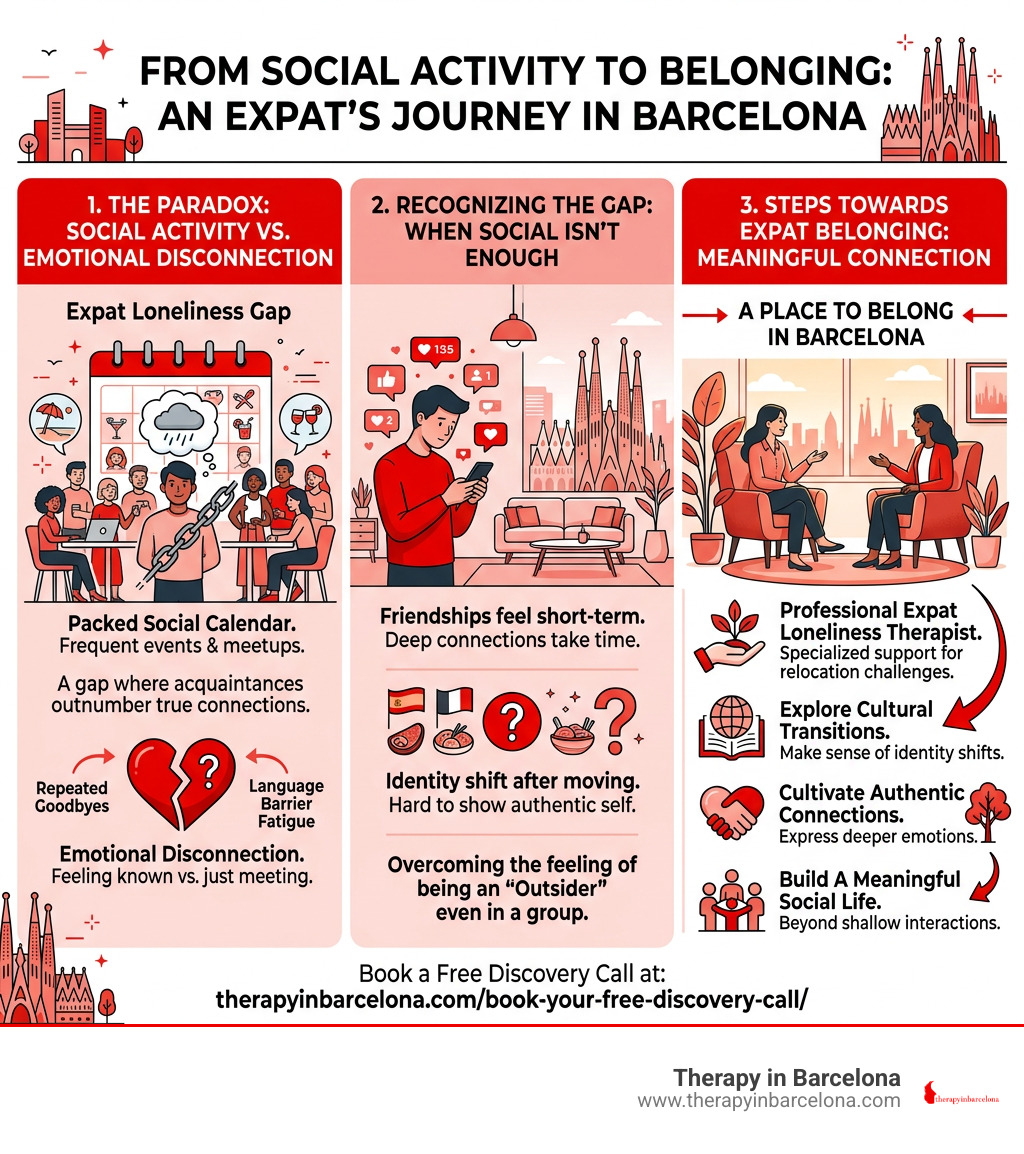
1. The Paradox of Expat Loneliness in a Vibrant City
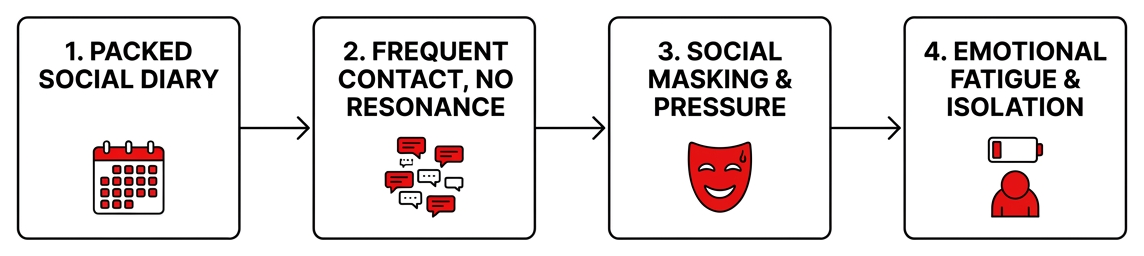
Living in Barcelona often looks like an endless social highlight reel. Between rooftop vermouths in Gràcia, weekend beach volleyball, and coworking meetups, your schedule can easily fill up. Yet many international residents find that a packed diary does not prevent an empty feeling at the end of the day.

This disconnect occurs because frequent contact does not guarantee emotional resonance. You might share tapas with ten different nationalities on a Friday night, yet realise nobody at the table knows your real worries. Understanding what loneliness feels like requires looking past external social metrics to examine internal emotional safety.
How an Expat Loneliness Therapist in Barcelona Decodes the “Social Expat” Paradox
When internationals consult an expat loneliness therapist in Barcelona residents trust, the initial conversation often reveals a pattern of social masking. Living abroad can create unspoken pressure to project success, adventure, and happiness to friends and family back home. Admitting that you feel disconnected while living under Mediterranean sunshine feels almost forbidden.
Therapists work with clients to unpack this hyper-independence and emotional fatigue. When every interaction requires keeping up a cheerful front, socialising drains energy rather than restoring it. Professional support provides a confidential space to lower that guard, identify underlying emotional barriers, and explore what authentic belonging actually means for you.
Superficial Socialising vs. True Emotional Belonging
Much of the expat social scene operates with an “Erasmus mindset,” defined by high turnover, instant friendships, and surface conversations about job titles or neighbourhood apartments. While fun initially, these transient dynamics rarely provide the psychological safety needed to process life transitions, career stress, or vulnerability.
Moving abroad often severs the long-term relational anchors built over decades. Without those deep foundations, small daily stressors can quickly lead to emotional isolation.
2. Hidden Relocation Triggers That Deepen Expat Isolation
Loneliness rarely stems solely from a lack of people to talk to. Relocation destabilises your sense of identity, daily routines, and nervous system regulation. Even simple administrative tasks or grocery shopping can become sources of subtle, cumulative stress.

When adjusting to life in Spain, foreigners often encounter distinct environmental and cultural dynamics that complicate integration. Navigating these layers requires specialised expat mental health support tailored to the realities of living between cultures.
Consider the example of a 33-year-old software designer who relocated to Barcelona for remote work. (Please note: this is a fictional composite character created to illustrate common expat challenges, not a real client.) They attended weekly tech meetups and language exchanges, yet felt completely drained and isolated every Sunday evening. In therapy, they realised that while they had plenty of acquaintances, they lacked a single relationship where they felt emotionally secure enough to talk about their self-doubt and homesickness.
Language Barriers, Catalan Nuances, and Cultural Drift
Even if you achieve working proficiency in Spanish, everyday communication abroad requires extra cognitive effort. In Catalonia, social dynamics often blend Castilian Spanish and Catalan, leaving many newcomers feeling subtly outside local community life.
This linguistic barrier is not merely about ordering food; it affects humour, nuance, and spontaneous emotional expression. Constantly translating your thoughts creates cognitive fatigue, causing many expats to retreat inward over time.
The Transient Friend Cycle and Digital Nomad Burnout
Barcelona’s status as a top destination for digital nomads creates a “revolving door” social circle. You might invest months building a close friendship, only for that person to relocate to another country when their visa or lease expires.
Experiencing repeated goodbyes can cause relational burnout. Over time, expats may subconsciously stop investing deeply in new acquaintances to protect themselves from the grief of another farewell. Relocation psychology highlights how this transient lifestyle quietly wears down emotional resilience.
Third Culture Identity and Emotional Triggers
For adult Third Culture Kids (TCKs) or individuals with complex relocation histories, moving countries can reactivate early attachment wounds. When your sense of home has always been fluid, settling into a new city can trigger identity confusion and emotional displacement.
Therapy helps untangle these past relocation experiences from current challenges, allowing internationals to establish grounded stability independent of geographic location.
3. 5 Ways an Expat Loneliness Therapist in Barcelona Helps You Rebuild Connection
Working with an expat-focused therapist offers practical, structured tools designed for the realities of international living. Therapy addresses the internal relational patterns that keep you feeling isolated, rather than simply encouraging you to join more social clubs.
Whether through face-to-face sessions in our Eixample rooms or via online and in-person therapy in Barcelona, psychological care bridges the gap between isolation and authentic connection.
Working with an Expat Loneliness Therapist in Barcelona to Heal Attachment and Relocation Stress
A specialised therapist helps you map your attachment style and understand how living abroad influences your boundaries. When relocating, your nervous system often operates in a heightened state of alertness, interpreting unfamiliar social environments as unsafe.
Therapy integrates nervous system regulation and grounding practices, helping you shift out of fight-or-flight mode so you can engage in social interactions with genuine calm and presence.
Evidence-Based Modalities: CBT, ACT, IFS, and Mind-Body Integration
Therapy in Barcelona draws upon scientifically supported, evidence-based approaches to tailor care to your specific situation:
- Cognitive Behavioural Therapy (CBT): Identifies and reframes unhelpful thought loops, such as assuming others are judging your language skills or that you are a burden to new friends.
- Acceptance and Commitment Therapy (ACT): Clarifies your core personal values so you can build a meaningful life aligned with what truly matters to you abroad.
- Internal Family Systems (IFS) & Somatic Practices: Helps integrate different emotional parts, calming internal protective mechanisms that push people away when intimacy feels vulnerable.
- Person-Centred & Relational Therapy: Provides an authentic, non-judgmental space to practice emotional honesty before applying it in your everyday relationships.
Online vs. In-Person Sessions: Finding Flexible International Care
Expat life demands flexibility. Between international work trips, visits back home, and busy schedules across different Spanish neighbourhoods, having access to high-quality English-speaking therapy in Barcelona ensures your mental health care remains uninterrupted.
Clients in Spain have various pathways for psychological support:
Public Health System (CatSalut)
- Structure: Publicly funded healthcare across Spain.
- Considerations: Overstretched public services often involve long waiting lists, limited session frequency, and few options for English or native-language consultations.
Large Digital Mental Health Apps
- Structure: Automated global platforms offering broad practitioner directories.
- Considerations: Generic matching algorithms, high therapist turnover, and potential data-privacy concerns can limit the depth of culturally attuned care.
Therapy in Barcelona (Specialised Private Practice)
- Structure: Dedicated, psychology-trained international group practice founded in 2011.
- Considerations: Bespoke personalised therapist matching, native-level multilingual care, strict client confidentiality without data selling, and flexible private-pay options with sliding scale availability for those with financial need.
4. Practical Daily Strategies to Bridge the Isolation Gap
While therapy provides deep personal insight, combining professional support with intentional daily habits accelerates your sense of belonging. Exploring what to do when loneliness strikes gives you practical agency in your adopted city.
Cultivating Micro-Connections Across Barcelona Neighbourhoods
You do not need to make lifelong best friends immediately to combat feelings of isolation. Everyday “weak ties”—brief, friendly interactions with familiar people in your neighbourhood—can significantly boost emotional wellbeing.
Here are actionable, practical tips to manage loneliness and isolation in Barcelona:
- Become a regular at a local establishment: Choose one small café, bakery, or fruit market in your barri and visit consistently, exchanging a brief greeting with the staff.
- Engage in shared-focus activities: Join hobby groups based on regular activities rather than casual drinks—such as bouldering gyms, pottery classes, choir groups, or board game meetups where socialising happens naturally around a task.
- Opt for language exchanges (intercambios): Structured language exchanges offer mutual learning, making conversation practice balanced and low-pressure.
- Establish grounding daily routines: Anchor your day with outdoor walks in parks like Ciutadella or Montjuïc, giving your nervous system regular exposure to natural daylight and gentle movement.
Recognizing When to Seek Extra Support
It is normal to experience temporary homesickness or adjustment fatigue after moving abroad. However, when disconnection turns into persistent low mood, overwhelming anxiety, chronic exhaustion, or physical tension that disrupts your daily functioning, professional guidance is essential.
Therapists provide a supportive space to explore these struggles without labelling or diagnosing conditions. If you or someone you know is in an acute mental health crisis, please reach out immediately to dedicated crisis resources:
- 024: Spain’s National Suicide Prevention and Mental Health Crisis Hotline (free, confidential, available 24/7).
- 112: General Emergency Services across Spain and Europe.
- 061: Medical emergencies and urgent psychological triage in Catalonia.
Frequently Asked Questions About Expat Loneliness in Barcelona
Why do I feel so lonely in Barcelona when I have an active social life?
Social loneliness and emotional loneliness are distinct experiences. You can spend every evening surrounded by acquaintances at dinners or networking events, but if those conversations remain on the surface, your core need for emotional intimacy and vulnerability remains unmet. In a transient city like Barcelona, many interactions are fleeting, which can heighten the contrast between how social your life looks and how connected you actually feel inside.
How does therapy for expat loneliness differ from general counselling?
Therapy tailored for expats accounts for the specific cross-cultural, logistical, and psychological complexities of living outside your home country. An expat-aware therapist understands culture shock, systemic relocation stress, intercultural relationship dynamics, and the psychological weight of being away from family networks. This shared context eliminates the need to spend valuable session time explaining what it feels like to navigate life in a foreign environment.
Can online therapy effectively address loneliness while living abroad?
Yes. Online psychotherapy can be just as effective as in-person sessions for addressing loneliness, anxiety, and adjustment stress. Online therapy offers continuity of care for international professionals and digital nomads who travel frequently, ensuring you can maintain a consistent therapeutic relationship wherever you are based.
Reclaiming Connection and Belonging Abroad
Loneliness is not a personal failure, nor does it mean your decision to move to Barcelona was a mistake. It is simply a natural human signal indicating that your deep need for belonging, safety, and mutual understanding requires care.
Founded in 2011 by Australian psychologist Leigh Matthews, Therapy in Barcelona is an established group practice supporting international clients with psychology-trained, multilingual care in English, German, French, Spanish, Afrikaans, Portuguese, Austrian-German and Swiss-German.
Therapy in Barcelona works both online with clients worldwide (including the USA and Canada) and offers face-to-face therapy sessions at their office in Barcelona in the central Eixample district. The practice provides careful personalised matching for adults, couples, adolescents, and families within a supportive, non-diagnostic framework. As a private-pay service, prospective clients can also inquire about sliding scale fee options offered by some therapists for those with financial need.
If you’d like support, book a Free Discovery Call. What is one small, authentic step you can take today to feel a little more anchored in your life abroad?
