


Understanding Sexual Wellbeing for Women

Sex therapy for women is a specialised form of psychotherapy addressing sexual concerns and intimacy issues. Research shows that a significant number of women experience sexual challenges in their lives, yet many hesitate to seek help due to cultural taboos or not knowing that support is available.
Sex therapy can address a range of concerns, including:
- Desire and arousal challenges: such as low sexual desire or mismatched desire with a partner.
- Difficulties with orgasm: trouble reaching climax or dissatisfaction with sexual response.
- Pain during intimacy: such as experiences of involuntary pelvic muscle tightening or persistent vulvar pain.
- Body image concerns: feeling disconnected from or uncomfortable with your body.
- Relationship intimacy: communication barriers or mismatched sexual needs.
- Healing from sexual trauma.
Sexual wellbeing is a key part of overall health, but it’s often overlooked. For international women in Barcelona, Valencia, Madrid or other Spanish cities, navigating these concerns can feel isolating due to language barriers or being far from home. Sex therapy offers a safe, non-judgemental space to explore these intimate aspects of your life with a qualified professional who uses evidence-based techniques. Research suggests these approaches can be highly effective, with studies showing they can help with desire concerns and meaningfully reduce pain-related distress, though results vary by person and context.
What Is Sex Therapy & How Does It Support Women?
Sex therapy for women is a specialised form of talk therapy that provides a safe, confidential space to explore intimate concerns. It’s important to know that sessions involve conversation only; you’ll never be asked to undress or perform sexual acts.
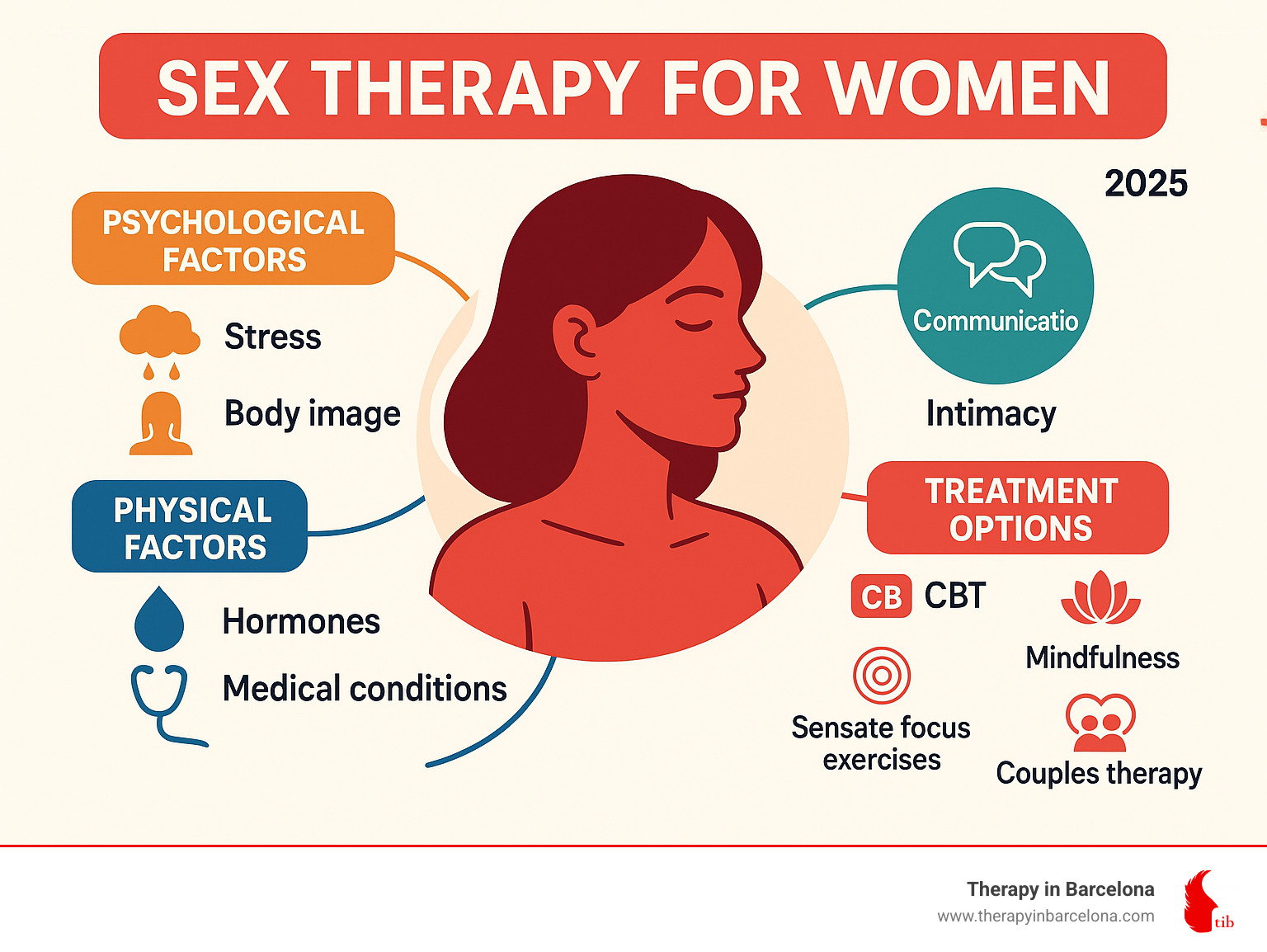
Modern sex therapy uses a holistic approach, building on the foundational work of Masters and Johnson. This means your therapist considers how biological factors (like hormones), psychological elements (like worry or stress), and social influences (like relationship dynamics) all contribute to your sexual wellbeing. The goal is to understand the roots of your concerns while providing practical tools and strategies, often combining talk therapy with structured “homework” to practise at home.
Evidence for sex therapy for women
The effectiveness of sex therapy for women is supported by scientific research. Cognitive Behavioural Therapy (CBT) has shown strong results in helping women with low sexual desire. Many studies published in report that CBT can lead to substantial improvements by helping women challenge unhelpful thoughts about sex and build confidence.
Mindfulness training is another promising approach, helping women connect with their bodies and reduce self-judgement during intimacy. For difficulties with orgasm, directed masturbation training is well supported, helping women explore their bodies and understand their unique pathways to pleasure without pressure.
Scientific research on women’s sexual health concerns, such as that published in Reproductive Health, suggests these therapeutic approaches can create lasting positive change, though outcomes differ from person to person.
Key differences from general psychotherapy
While general psychotherapy is often open-ended, sex therapy for women is typically goal-oriented, often lasting 10–12 sessions. It focuses on specific sexual concerns with clear objectives.
What sets it apart is the use of body-based homework assignments, such as sensate focus (structured touching exercises) or communication scripts. These experiential tasks help you integrate insights from therapy into your real life. While you can attend individually, partners are often encouraged to participate, as addressing couple dynamics can significantly improve outcomes.
Finally, sex therapists have specialised training in sexual anatomy, physiology, and specific therapeutic techniques. At Therapy in Barcelona, our team includes therapists with this specialised training who also understand the cultural considerations that internationals face.
Common Sexual Concerns Women Bring to Therapy
Many women seek sex therapy for women for similar reasons, and understanding these common concerns can help normalise your experience.
Low sexual desire is perhaps the most frequent issue, where women feel disconnected from their sexuality or distressed by a desire mismatch with their partner. Difficulties with orgasm, whether they have been lifelong or have developed more recently, are also common.
Painful intimacy, such as experiences of involuntary pelvic muscle tightening (sometimes referred to as vaginismus) or chronic vulvar pain (sometimes called vulvodynia), can make intimacy feel frightening instead of pleasurable. Body image concerns and cultural shame or guilt can also create significant barriers to sexual enjoyment, especially for international women navigating different cultural norms in Spain.
Finally, partner mismatches in sexual desire or preferences can create tension that affects the entire relationship, leading to feelings of rejection or resentment.

Root causes: mind, body & relationship
Sexual concerns are rarely caused by a single factor. They often stem from a mix of:
- Physical factors: Hormonal changes (menopause, pregnancy), medications (antidepressants, birth control), chronic illness, or even sleep problems.
- Psychological influences: Worry (especially about sexual performance), persistent low mood, or past trauma can interfere with intimacy.
- Relationship dynamics: Poor communication, unresolved conflict, or trust issues can manifest as sexual problems.
- Cultural and societal factors: Messages from family, religion, or media can create shame or unrealistic expectations.
Is sex therapy for women effective for pain disorders?
Yes, sex therapy for women can be highly effective for pain-related concerns, especially when combined with medical care. For involuntary pelvic muscle tightening, therapy often uses graded exposure, a gradual process of reintroducing touch and penetration at your own pace, giving you complete control. This is paired with cognitive restructuring to challenge fearful thoughts about pain and mindfulness techniques to help relax pelvic floor muscles.
Research supports this approach. Studies show that therapy using cognitive restructuring and mindfulness can lead to significant pain reduction for chronic vulvar pain, and therapy incorporating graded exposure has high success rates for concerns about involuntary pelvic muscle tightening. The goal isn’t to push through pain, but to gradually reclaim pleasure and intimacy in a way that feels safe and empowering.
How Sex Therapists Assess & Treat Female Sexual Issues
Starting sex therapy for women is a guided, comfortable process. The journey begins with a comprehensive intake interview where you’ll discuss your concerns, history, and goals in a supportive conversation. Your therapist will likely recommend a medical referral to a gynaecologist to rule out any physical causes, ensuring a collaborative approach to your care.
Core treatment tools
Sex therapy for women uses a toolkit of proven techniques custom to your needs.
Sensate focus, developed by Masters and Johnson, involves structured touching exercises at home that remove the pressure of intercourse, helping couples refind sensual pleasure. Cognitive restructuring (CBT) helps you identify and challenge negative thoughts like “I’m broken,” reducing anxiety and shame. Mindfulness training teaches you to stay present and connected to your body’s sensations during intimacy.
For difficulties with orgasm, directed masturbation offers a private, pressure-free way to explore your body and learn what feels good. Communication skills training can be very helpful, teaching you how to express needs and set boundaries to improve your intimate relationships.
Different therapeutic approaches can help with intimacy and sexual wellbeing in distinct ways. Below is a quick guide to three commonly used methods—CBT, Mindfulness, and Sensate Focus—showing what each emphasises, how it works, and when it might be most useful.
CBT (Cognitive Behavioural Therapy)
Primary Focus: Thoughts, beliefs, and behaviours
Key Techniques: Cognitive restructuring, communication skills, exposure
Best Suited For: Concerns about desire, painful intimacy, and performance worries
Mindfulness
Primary Focus: Present-moment awareness and reducing judgement
Key Techniques: Guided meditation, body scan, mindful touch
Best Suited For: Challenges with arousal, worry, and enhancing pleasure
Sensate Focus
Primary Focus: Building sensual pleasure, connection, and reducing pressure
Key Techniques: Non-demand touching exercises, ban on intercourse
Best Suited For: Arousal and desire issues, performance worries, intimacy challenges
The role of homework & practice
Unlike traditional talk therapy, much of the work in sex therapy happens between sessions. Your therapist will give you practical “homework” assignments designed for exploration in a safe, private setting. These are not tests you can fail.
Assignments might include keeping a sensory diary to increase body awareness, using communication scripts to practise difficult conversations, pleasure mapping to explore your body with curiosity or using clitoral vibrators to aid self-exploration and intimate discovery. These exercises are useful for turning insights from therapy into real-world change, always at a pace that feels manageable and relevant to your goals.
Special Considerations: Trauma, Identity & Relationship Diversity
Effective sex therapy for women is not one-size-fits-all. It honours each woman’s unique story, especially when dealing with trauma, exploring identity, or navigating non-traditional relationships.
Integrating trauma work with sex therapy for women
For women who have experienced sexual trauma, a therapist’s approach must prioritise safety, consent, and empowerment. A trauma-informed sex therapist understands that sexual challenges are often the body’s protective responses. The work is paced to your comfort level, building trust first.
Psychoeducation helps you understand that reactions like feeling disconnected from your body or being on high alert are normal responses to trauma, which can bring immense relief. You’ll learn grounding techniques to stay present and work within the emotional state where you can process feelings without feeling overwhelmed. Reconnecting with your body is done gently, and the focus on consent and boundaries is central to healing. Sometimes, concurrent trauma therapy like EMDR may be recommended.
Supporting exploration of orientation & identity
Modern sex therapy for women provides an affirming space for all identities and relationship styles. Your therapist should use your preferred language and pronouns and understand the impact of minority stress on LGBTQIA+ individuals. The approach avoids heteronormative assumptions, tailoring conversations to your lived experience.
Therapy can support you through the coming-out process, dealing with internalised negative beliefs, or finding community, which is especially important for expats who may feel isolated. For those in polyamorous, open, or kink-aware relationships, therapy can help with managing jealousy, communication, and navigating societal judgement.
The goal is not to push you toward any identity but to help you understand and accept your authentic self. This is particularly valuable for international women in Barcelona, where cultural differences can add another layer of complexity to expressing your sexuality.
Getting Started With Sex Therapy for Women
Taking the first step toward sex therapy for women is a brave act of self-care. Knowing what to expect can make the process feel more comfortable.
Expectations during a sex therapy session
Your first session is a warm, confidential conversation. Your therapist will explain their approach, discuss confidentiality, and learn about your concerns and goals. This is also your chance to see if you feel a good connection, as the therapeutic relationship is key to success.
Confidentiality is paramount, following strict professional guidelines. Fees at Therapy in Barcelona typically range from €80 to €95 for individual therapy and €95 to €120 for couples sessions, with some therapists offering sliding scale rates. While we don’t process insurance claims directly, you may be able to seek reimbursement from your provider. You can find more details on our fees page.

Finding a qualified therapist
While options like the public health system, large online platforms, and local practices exist, finding the right personal fit is essential. Look for professionals with postgraduate qualifications in sexology or sex therapy. In the US, AASECT certification is a key indicator, while in Europe, look for training from reputable institutions.
At Therapy in Barcelona, our differentiators are simple and human: personalised matching with a psychology-trained expat therapist, strict privacy with no data selling, and high-quality, private-pay care. We work in English, and some of our therapists also speak German, French, Spanish, Afrikaans, Portuguese, Swedish, Austrian-German and Swiss-German, Catalan. We are a collaborative group practice supporting adults, couples, teens and families. We have been a trusted practice in Spain since 2011.
We work both online with clients worldwide and offer face to face therapy sessions at our Barcelona office in Eixample. This also makes support accessible if you are based in Madrid, Valencia, Málaga, Alicante, or elsewhere in Spain.
Involving partners & building intimacy
While individual therapy is valuable, including your partner can be very helpful. Couples sessions turn a personal concern into a shared project. Alongside communication skills and homework like sensate focus, your therapist may draw on approaches such as the Gottman Method or Imago Relationship Therapy to support intimacy and understanding without pressure.
Practical tips before booking sex therapy for women
- Schedule a medical check-up: Rule out underlying physical conditions with your GP or gynaecologist first.
- Clarify your goals: Know what you want to achieve, whether it’s reducing pain, increasing desire, or improving communication.
- Prepare questions: Ask your potential therapist about their experience, approach, and session frequency.
- Consider logistics: Decide if you prefer face to face sessions at our Barcelona office in Eixample or the flexibility of online therapy.
- Book a Free Discovery Call: A short chat can help us match you with the right therapist.
Frequently Asked Questions about Sex Therapy
How long does sex therapy usually take?
Sex therapy for women is typically focused and brief. Most women see significant progress within 10 to 12 sessions. The journey is unique to each person, but unlike some forms of open-ended therapy, there is usually a clear endpoint in sight. Your therapist will collaborate with you to set goals and track progress.
Do I need to attend with my partner?
No, you don’t have to. Many women benefit greatly from individual sex therapy for women, especially if concerns are personal, like body image or understanding your own sexual response. However, if your concerns affect your relationship, involving your partner can be transformative. It allows you to work on communication and intimacy dynamics together. The choice is yours, and you can always start individually and invite your partner later.
What if talking about sex makes me anxious?
Feeling anxious is completely normal. Most people feel awkward or embarrassed at first. Sex therapists are trained to create a safe, non-judgmental space where you can feel comfortable. They will build rapport with you and won’t push you to discuss anything before you’re ready. Many women are surprised by how quickly the awkwardness fades as the therapist’s professional, matter-of-fact approach helps normalise these important conversations.
Conclusion
Choosing sex therapy for women is a powerful decision to prioritise your pleasure and wellbeing. It’s an acknowledgement that sexual health is a fundamental part of your overall wellness, not a luxury or a source of shame. A large number of women experience sexual challenges—with some key research suggesting it could be as many as 43%—but you don’t have to steer them alone. Evidence-based solutions can help you heal, grow, and reconnect with your body.
For international women in Barcelona, Valencia, Madrid, Málaga, Alicante or elsewhere in Spain, these challenges can feel even greater. Cultural differences and distance from home can be isolating. Therapy in Barcelona was founded in 2011 to address these unique complexities. Our team of qualified, psychology-trained therapists—many of whom are expats themselves—provides a safe harbour for internationals. We also support clients online across Spain and worldwide.
We understand that your journey is about more than just sexual concerns; it’s about navigating your identity and relationships in a new country. Our personalised matching process connects you with a therapist who gets both the clinical and cultural aspects of your experience.
If you’re ready to explore how sex therapy can support you, help is available face to face in Barcelona and online worldwide. Your pleasure and wellbeing matter.
If you’d like support, you can learn more about Therapy in Barcelona’s online therapy services or book a Free Discovery Call to start your journey.
