


Why Expat Teens Mental Health Matters More Than You Think

Expat teens mental health is a critical concern for families living abroad, yet it often goes unrecognised until problems escalate. Moving to a new country during adolescence—a time already marked by identity formation and social pressure—creates a unique storm of challenges that can significantly affect their emotional well-being.
Quick answers for parents:
- What is it? The emotional and psychological challenges faced by teenagers living internationally, including identity confusion, social isolation, and cultural adjustment stress
- Key warning signs: Withdrawal from family and friends, changes in sleep or appetite, declining school performance, persistent sadness, or increased irritability
- Main risk factors: Frequent relocations, loss of friendship networks, cultural dislocation, language barriers, and feeling caught between cultures
- Most important action: Create open, non-judgemental communication at home and seek professional support when needed
- Where to get help: Culturally sensitive therapists who understand the expat experience, both online and in-person in Spanish cities like Barcelona, Valencia, and Madrid
Moving abroad offers incredible opportunities for families—but for teenagers, it also brings hidden challenges. While parents hope their children will gain confidence, cultural awareness, and global perspective, the emotional cost of constant change is often overlooked.
Your teen isn’t just adjusting to a new address. They’re navigating a new culture, social rules, and sometimes a new language—while still forming their identity. Each move can disrupt their sense of belonging and stability at a critical stage of development.
This guide is for families who relocate and notice their once-confident teen becoming withdrawn, anxious, or isolated. These stories are common among expat families across Spain and beyond.
We’ll explore the emotional world of expat teens, the mental health risks they face, practical ways to support them at home, and how to find professional help when needed—whether you’re in Barcelona, Madrid, or preparing for a move abroad.
Understanding the Unique World of Expat Teens
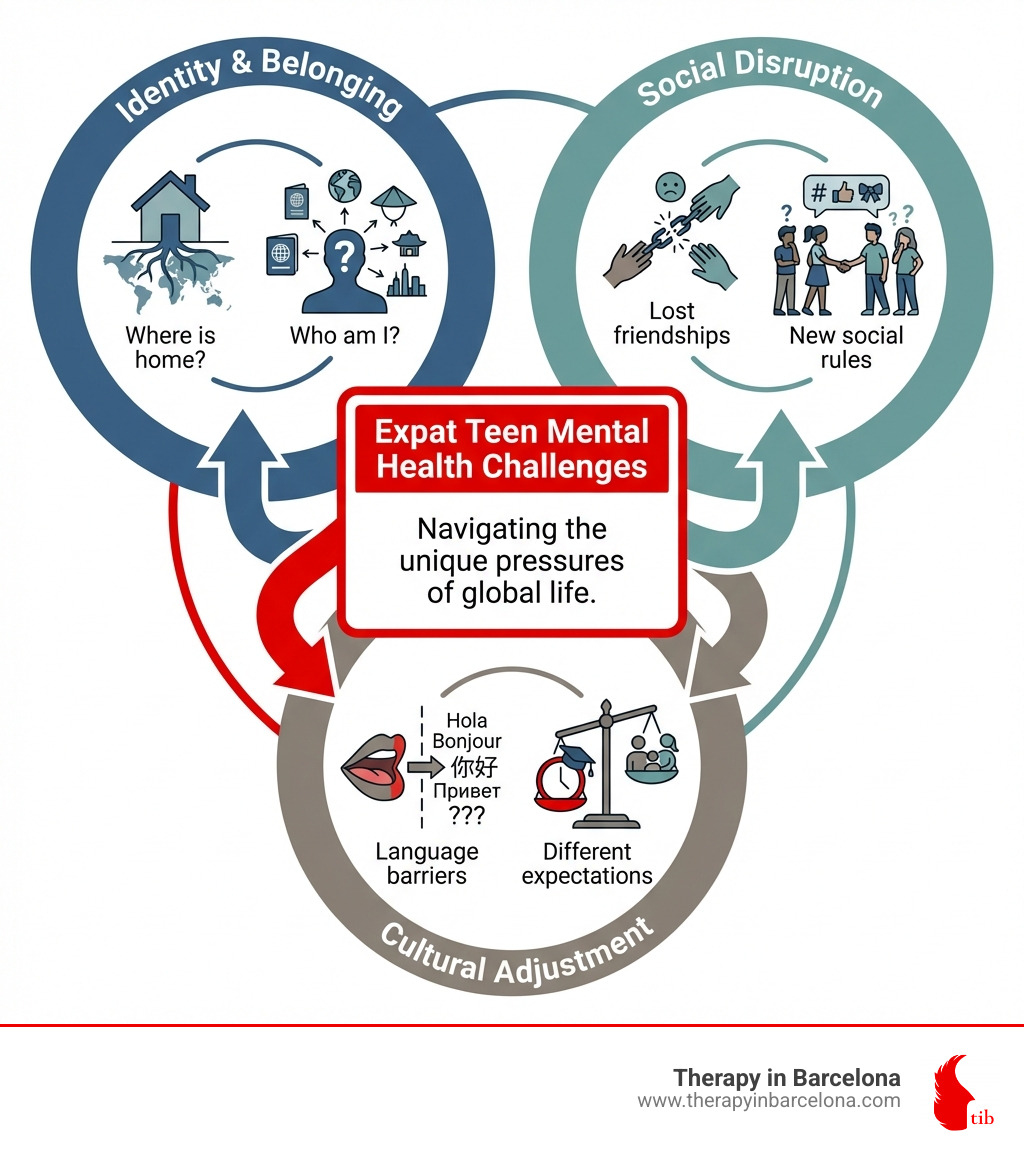
Adolescence is already a time of major change. Adding new countries, cultures, languages, and school systems creates a unique psychological challenge for teens growing up abroad.
Meet Alex, 15, who recently moved from Canada to Madrid. His story reflects what many expat teens experience: excitement quickly giving way to confusion, loneliness, and the struggle to fit in while adjusting to new social rules and missing friends back home.
These teens are often called Third Culture Kids (TCKs) or globally mobile youth. They grow up between cultures, forming a “third culture” that blends their home, host, and international communities. While this builds adaptability and global awareness, it also brings emotional strain.
Some experts use the term Expat Child Syndrome (ECS) to describe this stress. Though not a clinical diagnosis, it captures common experiences such as unresolved grief, identity confusion, and a sense of not fully belonging anywhere—challenges that are especially intense during the teenage years.
Frequent moves, culture shock, and changing schools can take a serious toll on an expat teen’s mental health. Each relocation means starting over—new friends, teachers, routines, and social rules—which can be emotionally exhausting and leave little energy for normal development.
For more insight into how young people cope with these changes, explore resources on adolescent therapy and stress and adjustment in Third Culture Kids.
The TCK Identity: A World of Contradictions
The TCK identity is a mix of privilege and paradox. These teens often develop a global mindset, strong adaptability, and the ability to fit into new environments quickly. But this flexibility can come at an emotional cost.
Many struggle with rootlessness, feeling that “home” is hard to define. Repeated goodbyes can create unresolved grief—losses of friends, routines, and familiar places that are never fully processed. For them, “Where is home?” becomes a deeply personal question.
They may also feel disconnected from peers in their passport country, who can’t easily relate to their experiences. This sense of being misunderstood, combined with constant transition, can quietly weigh on an expat teen’s mental health.
How Relocation Stress Differs by Age
The impact of relocation stress varies significantly depending on a child’s age. While moving is one of life’s most stress-producing experiences for anyone, children and adolescents process it differently.

Relocation stress looks different by age. Younger children may regress—becoming clingy, more dependent, or reverting to earlier behaviours like bed-wetting. They may struggle socially or at school, but their close reliance on parents often helps them adjust with consistent support.
Adolescents face deeper challenges. As they form their identity, peer groups become central. Losing a social circle can feel like losing a part of themselves. Teens may resist the move and later show withdrawal, anger, or disengagement.
Because they understand the impact of relocation more fully—and had no choice in it—teens may feel powerless. Between ages 10 and 15, Expat Child Syndrome is often most intense. The emotional effort of adjusting can also affect focus and lead to a drop in academic performance, even in high-achieving students.
The Landscape of Expat Teens Mental Health
Living abroad can be a rewarding experience, but it also brings significant mental health challenges—particularly for teenagers. Research suggests that expats are almost twice as likely to experience mental health difficulties as those living in their home country, and this increased vulnerability can extend to their children.
Expat teenagers may be especially prone to heightened anxiety, persistent low mood, social withdrawal, disorientation, and struggles with identity following a move. Without adequate support, these difficulties can intensify, leading to more serious emotional or behavioural concerns, including severe anxiety, depression, and substance misuse.
The long-term impacts of unaddressed mental health issues during adolescence can be profound. According to the World Health Organisation, half of all mental health conditions start by the age of 14, and suicide is the fourth leading cause of death among 15-29-year-olds . Early intervention isn’t just helpful; it’s crucial for preventing these difficulties from casting a long shadow over their adult lives.
Common Signs of Mental Health Struggles in Expat Teens
Recognising the signs that your expat teen might be struggling is the first step towards offering support. Sometimes, these signs are subtle, especially as teenagers can be adept at masking their difficulties. However, a keen eye and open communication can make all the difference.

Look out for changes in behaviour or mood that persist over time. Common indicators include:
- Withdrawal from family and friends: Your once-social teen might start spending more time alone, avoiding family activities, or losing interest in connecting with new peers.
- Changes in sleep or appetite: Noticeable shifts in sleeping patterns (insomnia, excessive sleeping) or eating habits (eating significantly more or less than usual) can be red flags.
- Loss of interest in hobbies: Activities they once loved, whether it’s playing football, drawing, or gaming, no longer hold their attention.
- A drop in school performance: This isn’t always about academic ability; sometimes, it’s a sign that their emotional energy is consumed by settling in or other internal struggles.
- Irritability or anger: Increased mood swings, snapping at family members, or expressing frustration more frequently than usual.
- Expressed feelings of hopelessness: Comments about feeling sad, empty, or that things won’t get better.
These behaviours, especially when several appear together, suggest that your teen may be experiencing significant emotional distress that warrants attention.
Why Early Support for Expat Teens Mental Health is Crucial
Adolescence is a period of intense brain development, making it a critical window for intervention. The neural pathways forming during these years are highly impressionable. Addressing mental health challenges early on can prevent them from becoming entrenched, reducing the risk of long-term issues that could impact their adult life.
Early support helps teenagers develop healthy coping skills and emotional resilience to manage future challenges. It also strengthens family relationships by fostering trust and understanding—particularly important for globally mobile families. In line with WHO guidelines on adolescent mental health, early intervention promotes well-being and prevents difficulties from becoming more severe. By acting early, we help expat teens not just cope with transition, but truly thrive.
Building a Strong Foundation: Support Strategies for Families
Creating a supportive home environment is paramount for expat teen mental health issues. As parents, you are their anchor in a constantly shifting world. Whether you’re making a new life in the vibrant city of Barcelona or enjoying the quieter pace of the Costa del Sol, intentional strategies can significantly impact your teen’s well-being.
One of the most powerful tools is open communication. This means creating a safe space where your teen feels comfortable sharing their thoughts and feelings without judgement. Validating their feelings, even if they seem disproportionate to you, is key. Comments like “It sounds like you’re really missing your friends, and that’s completely understandable” can go a long way.
Establishing consistent routines around sleep, meals, and movement provides a sense of stability, which is invaluable when external circumstances are unpredictable. This helps to steady their nervous system and create a predictable rhythm in their new life.
It’s also essential to redefine ‘home’ not just as a physical place, but as a feeling of safety, connection, and belonging within the family unit. This internal sense of home can travel with them, no matter how many times you relocate. The wider expat community can also play a vital role, offering a network of shared experiences and understanding. For families navigating these complex dynamics, resources like family therapy can provide invaluable support and strategies.
Practical Ways Parents Can Help
Supporting your expat teen’s mental health doesn’t require grand gestures; often, it’s the small, consistent actions that make the biggest difference. Here are some practical ways to help:
- Start with safety: Consistent routines. In a world of change, predictability is gold. Establish consistent routines for sleep, meals, and physical activity. Regularity helps ground them and provides a sense of security, whether you’re in Madrid or Alicante.
- Invite nuance: Ask about the hard parts. Instead of just “How was school?”, try “What’s been surprisingly hard this week?” or “What do you miss most about our old life?” These questions open the door to deeper conversations and show you’re interested in their full experience, not just the highlights reel.
- Normalise mixed feelings: Pride and homesickness can coexist. It’s okay to feel excited about a new life while also grieving what’s been left behind. Let them know it’s normal to feel both pride in their adaptability and homesickness for their past. This reduces shame and encourages honesty.
- Model self-care: Show, don’t just tell. Your teens are watching you. Show them how you cope with stress by prioritising your own well-being. Take time for hobbies, connect with friends, and acknowledge your own challenges. This teaches them valuable coping mechanisms.
- Listen more than you advise. The most powerful thing you can offer your young person is presence and patience. Often, they don’t need solutions as much as they need to feel heard and understood. Listen beneath the surface, acknowledge their emotions, and resist the urge to jump in with advice immediately.
The Role of Schools and Community
Beyond the family, schools and the wider expat community play a crucial role in supporting expat teen mental health issues. A welcoming school environment, such as those found in many international schools in Barcelona or Madrid, can make a huge difference.
Many international schools proactively support their students’ emotional well-being. They often implement buddy systems for newcomers, helping them find their footing and realise they are not alone. Transition groups can provide a safe space for students to share their experiences and connect with others going through similar adjustments.
Trusted adults outside the family—such as school counsellors, teachers, or coaches—play a vital role in supporting expat teenagers. They can identify early signs of distress and offer a safe, listening presence. Schools are increasingly recognised as key settings for identifying and supporting young people’s mental health. Creating spaces where teens can openly explore identity, change, and belonging fosters psychological safety, while peer support through clubs or structured activities helps them rebuild social connections and feel part of their new community.
Finding the Right Help: A Guide to Professional Support
Recognising when professional help is needed is a sign of strength, not weakness. For expat families, finding mental health services in a new country can feel daunting, but there are excellent options available. Overcoming the stigma often associated with seeking therapy is the first step towards a healthier future for your teen.
The benefits of therapy for expat teens are vast. It provides a confidential space to process complex emotions, develop coping strategies, and explore identity questions with a neutral, trained professional.
Language barriers can be a significant hurdle, making culturally sensitive care even more essential. This is where services like Therapy in Barcelona shine, offering not only English-speaking therapists in Barcelona but a multilingual team provided by professionals who understand the nuances of expat life.
Whether you’re seeking support in-person in Barcelona or online from anywhere in Spain, understanding your options is key. You can find more information about how online therapy can support globally mobile individuals on our online therapy page.
Comparing Your Therapy Options
When seeking professional help for your expat teen’s mental health, you’ll encounter various options, each with its own advantages and considerations:
- Public healthcare system in Spain: While this can be an accessible option, it often involves language barriers, long waiting lists, and limited understanding of the unique challenges of expat life. As a result, it may not provide the specialised, culturally sensitive support many expat teenagers need.
- Large international online platforms: These platforms offer convenience and access to therapists worldwide, but may lack personalised matching, which can affect the quality of the therapeutic relationship. Data privacy can also be a concern, as some platforms do not meet strict European data protection standards.
- Local private practices: Throughout Spain, you can find many private therapists. The challenge here is finding a good fit—someone who is not only qualified but also speaks your language and understands the expat experience. This often requires significant research and trial-and-error.
- A specialised expat practice like Therapy in Barcelona: This option provides bespoke matching with psychology-trained, culturally aware therapists—many of whom are expats themselves—offering first-hand understanding of cultural adjustment, identity shifts, and relocation stress. Therapy in Barcelona, for example, offers both in-person sessions in Barcelona and online therapy for expats worldwide, ensuring language and cultural understanding are central to care.
What to Look for in a Therapist for Your Teen
Choosing the right therapist is a crucial step in supporting your expat teen’s mental health. Here’s what to prioritise:
- Experience with TCKs or expats: A therapist who has worked with globally mobile youth will understand the nuances of their experience, from unresolved grief to identity confusion. Leigh Matthews, the Australian psychologist and founder of Therapy in Barcelona, for example, built her practice specifically to address this need, having been an expat herself.
- Understanding of cultural adjustment: Look for a professional who is sensitive to the cultural context of your family and your host country, whether that’s the vibrant culture of Barcelona or the more traditional setting of Seville.
- A therapeutic approach that fits your teen: Different teens respond to different styles. Approaches like Cognitive Behavioural Therapy (CBT) can help with thought patterns, while Acceptance and Commitment Therapy (ACT) focuses on values and psychological flexibility. Our team at Therapy in Barcelona offers a diverse range of approaches to cater to individual needs.
- A good connection: The relationship between a teen and their therapist is paramount. An initial consultation, often a Free Discovery Call, can help determine if there’s a good rapport. You can learn more about the diverse and experienced professionals at Therapy in Barcelona on our team page.
Frequently Asked Questions about Expat Teens Mental Health
What is ‘Expat Child Syndrome’ and is it a real diagnosis?
“Expat Child Syndrome” is not a formal clinical diagnosis, it is a descriptive term used to capture the cluster of emotional stressors—such as unresolved grief, identity confusion, and social uprootedness—that can affect globally mobile children and teenagers. While not a medical label, it helps validate a very real set of mental health challenges faced by expat teens.
How can I help my teen make friends in a new country?
Encourage them to join clubs or activities related to their interests, whether it’s a football club in Málaga or a coding class in Valencia. Support them in hosting a small get-together. Help them connect with other expat families through school or community groups, but also gently encourage connections with local teens to foster deeper integration. Making friends takes time, and consistent opportunities are key.
My teen seems fine on the surface. Should I still be concerned?
Adolescents—particularly high-achieving TCKs—often mask their struggles to avoid worrying parents who are also under stress. Keeping communication open and non-judgemental is essential. Gentle check-ins, such as “What’s been the best and hardest part of your week here?”, create space for sharing. Trust your instincts—if something feels off, it’s worth exploring.
The journey of an expat teen is rich with opportunity and unique challenges. Growing up between worlds can foster incredible resilience, empathy, and a global mindset. However, we must acknowledge the emotional weight of this journey. The constant transitions, the search for belonging, and the difficult process of identity formation can significantly impact the adolescent’s mental health.
By fostering open communication, building a stable ‘home base’ within the family, and knowing when to seek professional support, you can help your teen not just survive, but thrive. The team at Therapy in Barcelona, comprised of psychology-trained expat therapists, understands this journey firsthand. We are committed to providing a safe, compassionate, and culturally sensitive environment for internationals adjusting to life abroad in cities like Barcelona, Madrid, and beyond. If you feel your family could use support, we invite you to book a Free Discovery Call to see how we can help.
