


Reconnecting One Page at a Time

A marriage counselling workbook is a structured, self-guided resource designed to help couples improve communication, resolve conflicts, and deepen emotional intimacy through evidence-based exercises. Here’s a quick look at the top-rated workbooks reviewed in this guide:
Top 3 Marriage Counselling Workbooks at a Glance:
- The Seven Principles for Making Marriage Work by John Gottman, PhD – Best for research-based strategies and building friendship
- Hold Me Tight by Dr. Sue Johnson – Best for deepening emotional connection through Emotionally Focused Therapy (EFT)
- The Marriage Counselling Workbook by Emily Cook – Best for a practical, 8-step DIY counselling programme
Moving abroad can amplify the cracks in even the strongest relationships. Take Emily and Tom, a composite couple reflecting many expats we work with at Therapy in Barcelona. Emily, 37, left her HR career in the US when Tom’s software job brought them to Barcelona. While Tom thrived, Emily felt adrift—no job, no identity, and a growing resentment towards Tom that neither could name. Their arguments became more frequent, their silences longer. Emily and Tom are fictional, but their story mirrors many expats’ experiences.
For couples like Emily and Tom, a marriage counselling workbook offers a private, structured way to start working through these challenges. You don’t need to be in crisis to benefit. In fact, the best time to strengthen your relationship is before things feel unmanageable.
Research shows that couples who actively work on their relationship report higher satisfaction and better conflict resolution skills . A workbook provides a roadmap with prompts to understand each other’s needs, exercises to rebuild trust, and space for reflection. You can work through it at your own pace, in the privacy of your own home.
This guide reviews the best marriage counselling workbooks available, helping you find the right fit whether you’re dealing with communication breakdowns, intimacy struggles, or the unique pressures of expat life. Some workbooks are grounded in decades of research, like Gottman’s Seven Principles. Others focus on emotional attachment, like Sue Johnson’s Hold Me Tight. And some provide a clear, step-by-step structure for couples who want a DIY approach.
Whether you’re in Barcelona, Valencia, or Madrid, these workbooks can be a powerful first step. For internationals facing cultural adjustment alongside relationship strain, they offer a way to start the conversation when words feel hard to find. And if you need more support, pairing a workbook with professional couples counselling can make the insights even more actionable.
Why Use a Marriage Counselling Workbook?
Think of your relationship like a garden. You wouldn’t wait until everything is dead before watering it, right? A marriage counselling workbook helps you tend to your partnership before small issues become bigger problems. These workbooks aren’t just for couples in crisis; they’re for anyone who wants to understand their partner better and build something stronger together.
One of the biggest benefits is improved communication. Most arguments aren’t really about the dishes or who forgot to text; they’re about feeling unheard or misunderstood. Workbooks provide structured exercises to help you say what you mean, rather than what comes out in frustration. For couples who find it hard to talk during heated moments, having a framework can make all the difference.
Regular practice with these tools also helps you identify underlying issues driving your conflicts. Perhaps your partner’s comment about your work schedule isn’t about control—it’s about feeling disconnected. A workbook creates a safe space to dig into these roots without blame. You start to see patterns you didn’t notice before, and that awareness alone can shift how you respond to each other.
This process leads to a deeper understanding of each other’s perspectives, triggers, and dreams. You learn what your partner needs to feel loved and why certain topics escalate. Through that understanding, you build emotional intimacy and develop better conflict resolution skills. Instead of attacking each other, you start working as a team.

For many, a workbook offers a private space to explore sensitive topics without a therapist present. This can feel less intimidating, especially if you’re new to relationship work. You can go at your own pace, pause when you need to, and revisit exercises as your relationship evolves.
Workbooks are also a cost-effective alternative or supplement to traditional therapy, making professional-grade tools accessible. They’re particularly useful for addressing specific issues like communication breakdowns, conflict patterns, and intimacy struggles. Some focus on techniques like “I” statements and active listening, while others provide exercises to explore sexual needs or reignite passion.
Instead of vaguely talking about ‘communicating better’, you’re doing exercises that teach you how. You practise new skills in a low-stakes environment. For expats dealing with added pressures, this proactive work is key. In fact, scientific research on couples therapy shows that proactive relationship work—whether through therapy, workbooks, or both—leads to higher satisfaction and better outcomes.
Using a marriage counselling workbook puts you in the driver’s seat of your relationship’s health. It gives you the skills and insights to steer challenges together, rather than letting them pull you apart. Whether you’re in Barcelona, Valencia, or anywhere else, these workbooks can be a powerful first step towards building the partnership you both want.
How to Choose the Right Workbook for Your Relationship
Choosing the right marriage counselling workbook is like finding the right therapist—what works for one couple might not resonate with another. The key is understanding what you need and which approach will speak to both of you.
Start by honestly assessing where your relationship needs the most support. Are you talking past each other in frustrating loops? That signals a communication breakdown. Has the closeness you once felt faded? Those are intimacy issues. Does every disagreement escalate? Recognising your main pain points helps narrow your options.
Next, consider the therapeutic approach. Many workbooks are grounded in established psychological frameworks. The Gottman Method, for example, is research-based and focuses on friendship and conflict management. Emotionally Focused Therapy (EFT) aims to strengthen attachment bonds and break negative cycles. Other approaches like Cognitive Behavioural Therapy (CBT) help shift unhelpful thought patterns, while Acceptance and Commitment Therapy (ACT) encourages accepting feelings and committing to shared values. Scientific research on couples therapy shows these evidence-based methods can significantly improve relationship satisfaction.
Author credentials matter. A workbook by a licenced therapist, psychologist, or recognised relationship expert is more likely to offer strategies tested in real clinical settings. Dr. Sue Johnson (EFT) and Dr. John Gottman bring decades of research and expertise.
Don’t underestimate reading reviews from other couples. Look for feedback from people with similar struggles. Do they find the exercises practical? Are the instructions clear? Reviews can reveal if a workbook feels too academic or genuinely accessible.
Finally, think about your couple goals. Are you looking for a quick tune-up or something more comprehensive to dig into deeper patterns? Some workbooks are designed for specific stages, such as preparing for marriage, while others focus on ongoing growth in areas like communication and conflict resolution.
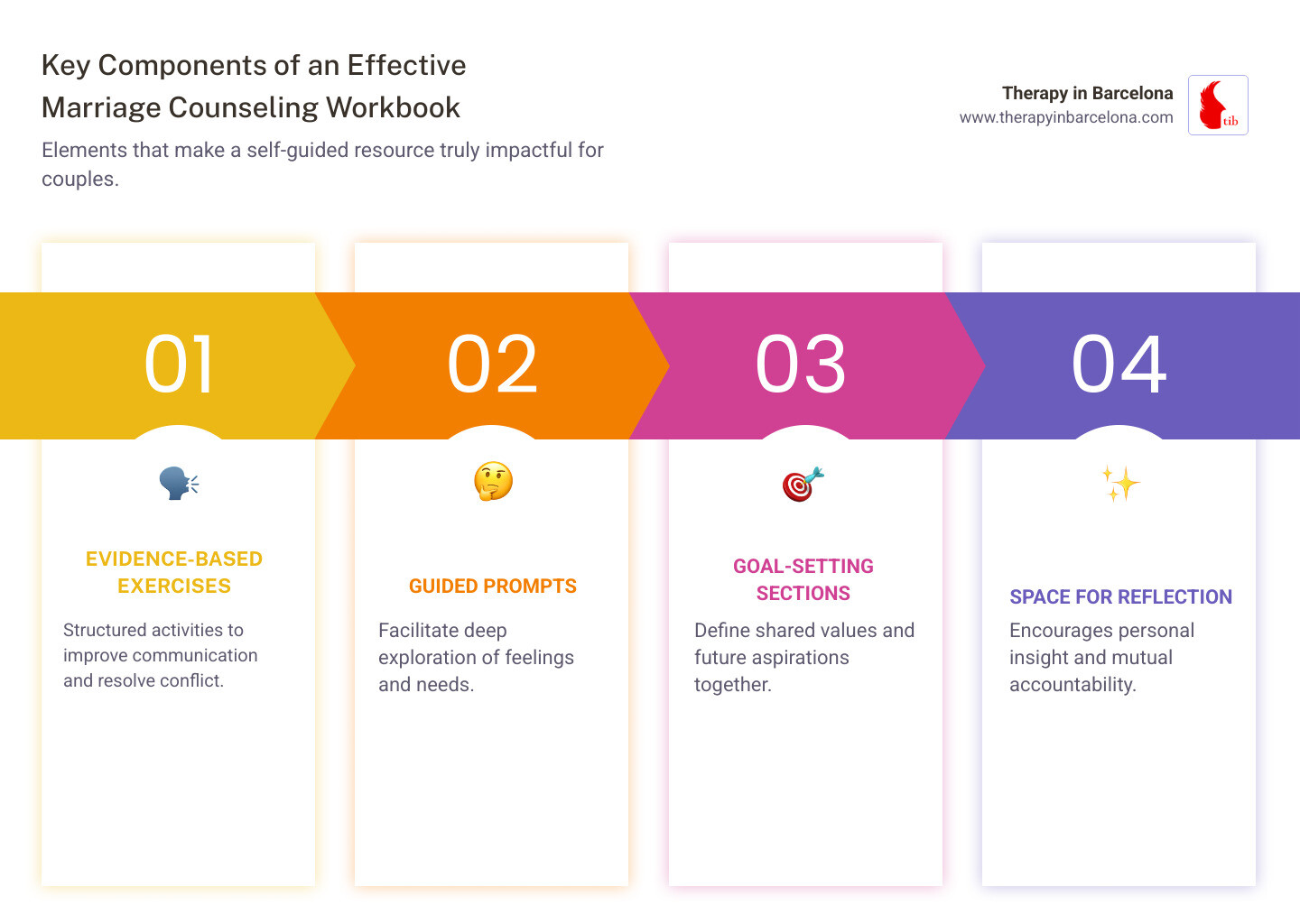
A solid marriage counselling workbook typically includes evidence-based exercises, communication prompts for meaningful conversations, goal-setting sections, and space for reflection, often with case studies to make concepts relatable.
By considering these factors—your needs, the therapeutic approach, author background, reviews, and goals—you can choose a workbook that genuinely fits your relationship and helps you build a stronger, healthier partnership.
Our Top Picks: The Best Marriage Counselling Workbook for Every Couple
Choosing the right marriage counselling workbook can transform how you connect, communicate, and grow together. The best workbook for you depends on what you hope to achieve—whether that is rebuilding trust, managing conflict, or deepening your emotional bond. Here are three highly-rated options, each offering a distinct approach.
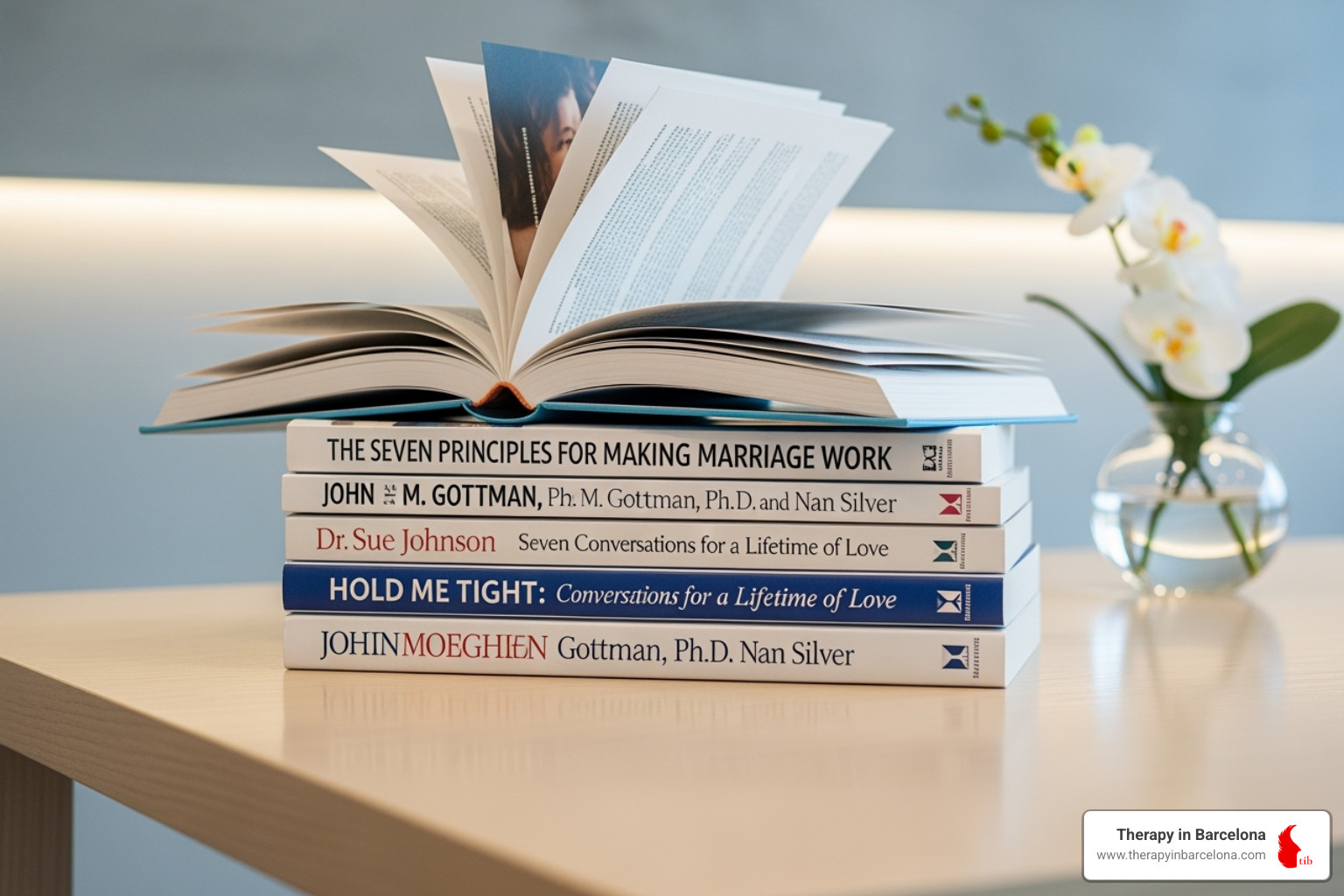
The Seven Principles for Making Marriage Work by John Gottman, PhD
Best for: Couples who appreciate a research-based approach and want practical strategies to build friendship, manage conflict, and create shared meaning.
Dr. John Gottman studied thousands of couples to identify what makes marriages succeed. This workbook distils that research into seven core principles for a more stable, satisfying partnership. It is not about fixing what is broken but strengthening what works and building new, lasting patterns.
The exercises are concrete and actionable. Love Maps help you deepen your knowledge of your partner’s inner world. Turning Towards teaches you to recognise and respond to bids for connection. Solving Solvable Problems offers a structured method for addressing conflicts with compromise and respect. You will also work on Making Life Dreams Come True, supporting each other’s aspirations to build a shared purpose.
This workbook is practical and grounded, giving you tools for daily life. You can explore the seven principles that guide couples on a path to a better relationship.
Hold Me Tight: Seven Conversations for a Lifetime of Love by Dr. Sue Johnson
Best for: Couples looking to deepen emotional connection, rebuild trust, or understand their attachment styles. It is helpful if you feel emotionally distant or stuck in repetitive arguments.
Dr. Sue Johnson, the pioneer of Emotionally Focused Therapy (EFT), guides couples through seven transformative conversations to create a secure emotional bond. The core idea is that relationship distress often stems from insecure attachment; reshaping these bonds creates a safer, more loving connection.
The exercises in Hold Me Tight help you identify negative cycles—repetitive patterns where one partner withdraws and the other pursues. You will learn to find your raw spots, the vulnerable emotions triggered during conflicts. And you will practise creating bonding moments by expressing your needs directly and responding with empathy.
Dr. Johnson illustrates these concepts with case studies, making the exercises feel relevant and accessible. You can learn more about Hold Me Tight.
The Marriage Counselling Workbook: 8 Steps to a Strong and Lasting Relationship by Emily Cook
Best for: Couples who want a practical, step-by-step programme for DIY counselling. It is well-suited for goal-oriented partners who appreciate a structured, actionable approach.
Therapist Emily Cook designed this workbook to empower couples to work through common challenges independently. The 8-step therapeutic structure provides a clear roadmap for addressing issues in a logical, manageable way.
You will start by defining the problem, moving beyond vague complaints to identify specific issues. From there, the workbook guides you through improving communication with tools for active listening and expressing needs. You will work on rebuilding trust and enhancing intimacy, deepening both emotional and physical closeness.
This workbook provides a clear path for couples committed to strengthening their relationship. You can find this practical marriage counselling workbook here.
Each of these workbooks offers something valuable. Whether you are drawn to Gottman’s research, Johnson’s focus on emotional attachment, or Cook’s structured DIY approach, the most important thing is choosing one that resonates with where you are now and where you want to go together.
Making it Work: How to Get the Most from Your Workbook
Buying a marriage counselling workbook is a great first step, but it only works if you use it well. These workbooks are tools, and their effectiveness depends on how you wield them.
First, schedule dedicated time and create a safe space. Treat it like an important appointment. Agree to listen without judgement and to understand, not win. Use ‘I’ statements (‘I feel…’) instead of blaming (‘You always…’).
Be honest and vulnerable. It’s hard, but it’s where growth happens. The workbook is a space to share hidden fears and desires, allowing your partner to truly see you. Acknowledge small wins, too. Did you have a difficult conversation without raising your voices? Celebrating these moments builds momentum.

A Guide to Using a Marriage Counselling Workbook Together
Here’s how to make your workbook sessions productive.
- Set ground rules: No interruptions, no blame, and respect for each other’s feelings.
- Take turns: Both partners should have equal space to share and lead exercises.
- Focus on self-improvement: Reflect on your own patterns and what you bring to the dynamic.
- Apply learnings daily: Use new communication skills during a real conflict.
- Make it a ritual: Light a candle or share tea to make the time something you look forward to.
Here are a few bonding exercises you can weave into your routine:
- Soul Gazing: Hold eye contact for a few minutes without talking. It’s surprisingly powerful.
- Weekly Check-in: Spend 30 minutes a week discussing logistics, feelings, and appreciation.
- Five Things… Go!: Take turns listing five things you appreciate about your partner or your life together.
- Music Shares: Each of you shares a song that resonates right now and explains why.
Ensuring Both Partners Stay Engaged
It’s normal for one partner to be more enthusiastic than the other. Here’s how to keep both of you involved.
- Check in regularly: Ask how the process feels for both of you and what could make it more helpful.
- Respect different paces: Don’t push if one person needs to slow down or process an exercise.
- Focus on shared goals: Remind yourselves why you started—your shared vision for a stronger relationship.
- Acknowledge effort: A simple “Thank you for being open” goes a long way.
- Keep it enjoyable: If an exercise feels like a slog, adapt or skip it. The goal is connection, not compliance.
Workbooks and Professional Therapy: A Powerful Combination
A marriage counselling workbook can be a gentle entry point into relationship work. For couples who aren’t ready for therapy, or who want to explore issues privately first, a workbook offers structure without the cost of weekly sessions. It’s a way to dip your toes in and see what comes up when you start asking harder questions.
But workbooks truly shine when used alongside professional therapy. Many therapists—including our team at Therapy in Barcelona—recommend workbooks as homework. You practise skills between appointments, taking what you’ve learned in the therapy room and trying it out in real life. It helps you arrive at your next session with more clarity, which can deepen the work and speed up progress.
That said, there are times when a workbook isn’t enough. If you’re dealing with significant past hurts, betrayal, or patterns of emotional harm, you need more than exercises on a page. If you’re a high-conflict couple, where arguments regularly escalate, a neutral third party is essential. A therapist can mediate, interrupt harmful cycles, and offer insights that are hard to see when you’re caught in the dynamic yourself.
For expats in Spain, the experience of living abroad adds its own layer of strain. Isolation, cultural adjustment, and the pressure of starting over can magnify existing relationship cracks. A workbook might help a couple talk about it, but a therapist who understands the expat experience can guide them with more nuance and care.
If you’re considering professional support, it’s worth knowing your options. In Spain, alternatives to private therapy include the public health system and large online platforms. The public system can have long waiting lists and may not offer services in English or with cultural sensitivity. Large online platforms are convenient, but they often lack the bespoke therapist matching that makes therapy effective and may not offer the same strict privacy standards. You might get a qualified therapist, but not one who understands the expat context or can offer support in your native language with cultural sensitivity.
Therapy in Barcelona offers something different. We specialise in supporting the English-speaking international community with strict privacy and culturally sensitive care in your native language. Many of our therapists are expats themselves, so we know what it’s like to feel unmoored in a new country. Our bespoke therapist matching means we take time to understand your needs and pair you with a therapist who fits—whether that’s someone trained in the Gottman Method or someone who specialises in attachment and EFT.
Our team of psychology-trained therapists uses a range of evidence-based approaches, including CBT, ACT, and IFS. We offer sessions both in-person at our Barcelona office and online worldwide, including the USA and Canada. Whether you’re in Barcelona, Madrid, Valencia, Málaga, Alicante, or Sevilla, we’re here to support you.
This is a private-pay service, though some of our therapists offer sliding scale fees for those with financial need. If you’re curious whether therapy might be right for you, we invite you to book a Free Discovery Call to discuss your situation and find the right fit.
For more about how we support couples, visit our page on couples counselling services.
Your Relationship is Worth the Work
Strengthening your relationship takes courage, and a marriage counselling workbook can be a powerful ally. Whether you choose the research-backed wisdom of Gottman’s Seven Principles, the emotional depth of Johnson’s Hold Me Tight, or Cook’s practical 8-step approach, you’re taking a meaningful step towards a stronger, more connected partnership.
The beauty of these workbooks lies in their accessibility. They offer structured guidance, evidence-based exercises, and a private space to work through challenges at your own pace. When you dedicate time, practise vulnerability, and integrate what you learn into daily life, you’re not just solving problems—you’re building resilience.
Workbooks are brilliant tools, but they’re not always enough. Sometimes the issues run deeper, and you need a trained professional to help untangle complex patterns, mediate difficult conversations, or address past hurts that feel too big to tackle alone.
This is especially true for expats, as living abroad adds unique pressures that can strain even the strongest relationships. Cultural adjustment, language barriers, and the stress of being far from home can magnify relationship challenges. A workbook can help, but a culturally sensitive therapist who understands the expat experience can offer personalised support that resonates with your unique situation.
If you’re considering professional help, you have options. The public health system in Spain may have long waiting lists and limited English-speaking services. Large online platforms provide convenience but often lack the bespoke matching, strict privacy, and culturally sensitive, native-language support that makes therapy truly effective.
At Therapy in Barcelona, we’ve been supporting internationals since 2011. Our team of psychology-trained therapists—many of whom are expats themselves—understand what it’s like to build a life in a new country. We don’t just match you with the next available therapist; we take time to pair you with someone who can genuinely help. This is a private-pay service, though some therapists offer sliding scale fees for those with financial need—just ask when you book.
Whether you’re in Barcelona, Madrid, Valencia, Málaga, Alicante, or connecting with us online from anywhere in the world, we’re here to support you. We offer both in-person sessions at our Barcelona office and online therapy worldwide, including the USA and Canada.
Your relationship is one of your most valuable assets. Investing in its health—whether through a workbook, therapy, or both—is always worthwhile. If you’d like support to steer these challenges together, book a Free Discovery Call with us today. Let’s talk about what you need and how we can help.
