



Define psychotherapy and you arrive at something both simple and profound: it is a structured, evidence-based form of treatment that uses conversation and psychological methods to help people understand and change troubling thoughts, emotions, and behaviours. Here is a clear breakdown:
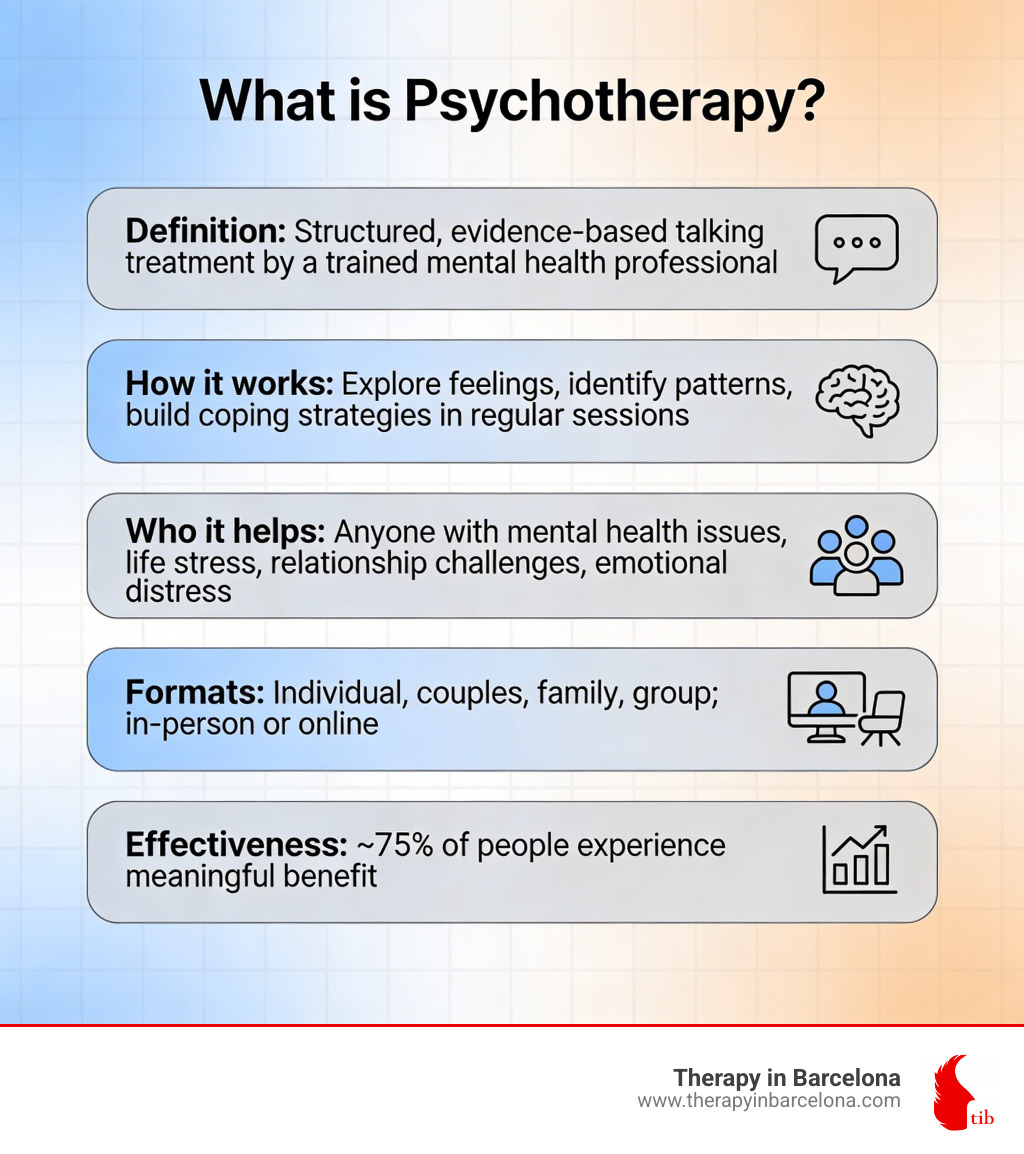
- What it is: Psychotherapy, often called talk therapy, is a treatment provided by a trained mental health professional to help with emotions, thoughts, behaviors, and relationships. Learn more from the APA
- How it works: In regular sessions, you talk through challenges, understand patterns more clearly, and develop healthier ways to cope and respond
- Who it helps: It can support people facing mental health concerns, life transitions, stress, relationship difficulties, trauma, or ongoing emotional distress
- Common formats: Therapy may be individual, couples, family, or group-based, and can happen in person or online
- How long it takes: Some people benefit from short-term support, while others choose longer-term therapy depending on their goals and needs
- Does it work? Research shows psychotherapy is effective for many people, with about 75% experiencing measurable benefits. See the research
At its core, psychotherapy is a safe, confidential space where you and a trained therapist work together — not to fix you, but to help you understand yourself better and move forward.
Perhaps you have been feeling overwhelmed lately. Maybe the stress of a big life change — a move abroad, a difficult relationship, a loss — has left you struggling in ways that feel hard to name. Or perhaps things have been quietly difficult for a long time, and you are only now starting to wonder whether talking to someone might help.
That wondering is, in itself, a meaningful first step.
Psychotherapy, often called talk therapy or psychological treatment, is a professional way to help people with emotional, mental, and relationship challenges. Many approaches exist, including CBT, psychodynamic therapy, DBT, and couples therapy. What they share is a safe, structured relationship with a trained therapist, which research shows is a key part of meaningful change.
For people living abroad — in Barcelona, Valencia, Madrid, or anywhere else far from home — that relationship can feel especially vital. Cultural adjustment, language barriers, identity questions, and the particular loneliness of expat life can make emotional difficulties harder to carry. And yet, finding the right support in a new country is not always straightforward.
This guide is here to help. Whether you are entirely new to therapy or simply trying to understand your options, you will find clear, honest answers to the questions that matter most.
How Professionals Define Psychotherapy Today

The term “psychotherapy” has deep roots. It comes from the Ancient Greek words psyche (meaning spirit or soul) and therapeia (meaning healing or medical treatment). While it was once closely linked to hypnotic suggestion in the late 1800s, it has evolved into a sophisticated, multi-faceted field.
Today, the American Psychological Association defines psychotherapy as a collaborative treatment based on the relationship between an individual and a psychologist. It provides a supportive environment that allows you to talk openly with someone who is objective, neutral, and non-judgmental.
But it is more than just “having a chat.” It is a psychosocial treatment that uses validated psychological methods to help you change your behaviour, increase your happiness, and overcome personal problems. Whether you are dealing with a diagnosed mental health condition or simply feeling “stuck,” therapy offers a structured path toward relief.
Why We Need to Define Psychotherapy for Expats
Living in a foreign country adds a layer of “messiness” to life that those back home might not fully grasp. When we define psychotherapy in an international context, we have to look at cultural adjustment, the isolation of being away from your support network, and the shifts in identity that happen when you move.
Many expats need more than standard therapy. Living abroad can bring cultural stress, relationship strain, family pressure, and major life changes in an unfamiliar system. That is why culturally informed psychotherapy matters: it offers a supportive space where a therapist understands the emotional realities of expat life, not just the symptoms.
For an international student in Madrid or a digital nomad in Málaga, therapy isn’t just about managing symptoms—it’s about finding a sense of belonging and navigating the unique stresses of life abroad. You can read more about how this specific support works in our guide to psychotherapy for expats.
Using Science to Define Psychotherapy Outcomes
If you are a sceptic, you might ask: Does talking really change anything? The answer from the scientific community is a resounding yes.
Research shows that about 75 percent of people who enter psychotherapy show some benefit from it. According to an umbrella review of the efficacy of psychotherapies, most people experience significant symptom relief and are better able to function in their daily lives.
Perhaps the most fascinating insight from modern neuroscience is that psychotherapy actually changes the brain. Studies have shown that for conditions like depression, panic disorder, and PTSD, the brain changes resulting from psychotherapy were remarkably similar to the changes resulting from medication. This demonstrates that “talk therapy” has a physical, measurable impact on how our brains process emotion and stress.
The Main Goals and Benefits of Treatment
The primary goal of psychotherapy is to help you live a more fulfilling life. While the specific objectives vary from person to person, common benefits include:
- Symptom Relief: Reducing the intensity of anxiety, depression, or stress.
- Better Coping Skills: Learning how to manage triggers, road rage, or work-related burnout.
- Self-Discovery: Identifying unconscious patterns that keep you repeating the same mistakes in relationships.
- Improved Relationships: Learning active listening and communication tools to stop the “angry loops” with partners.
- Resilience: Building the “psychological muscles” needed to handle major life changes like divorce or job loss.
Therapy works with the brain’s natural plasticity. By practising new ways of thinking and behaving during your sessions, you are essentially rewiring your brain to respond to the world with more balance and less distress.
Exploring Different Types of Therapy
Therapy is not one-size-fits-all. Different “modalities” or styles of therapy work better for different issues. At Therapy in Barcelona, we use a wide range of evidence-based approaches to ensure we can tailor the work to your specific needs.
- CBT (Cognitive Behavioural Therapy): This is very practical. It helps you identify and change unhelpful thought patterns and behaviours. It is excellent for anxiety and depression.
- ACT (Acceptance and Commitment Therapy): Instead of fighting “bad” thoughts, ACT teaches you to accept them and commit to actions that align with your values.
- IFS (Internal Family Systems): This approach looks at the different “parts” of your personality (like the “inner critic” or the “people pleaser”) and helps them work together harmoniously.
- Psychodynamic Therapy: This is more reflective. It looks at how your past experiences and unconscious mind influence your current behaviour.
- DBT (Dialectical Behaviour Therapy): Originally developed for borderline personality disorder, it is now used widely to help people regulate intense emotions and improve relationships.
- Systemic Therapy: Often used in family or couples work, this looks at the “system” of the relationship rather than just the individual.
- Gottman Method & Imago: These are specific, highly effective tools for couples looking to repair communication and intimacy.
If you are curious about the technical differences, you might want to explore our article on the difference between psychiatrists, psychologists, and psychotherapists.
How Psychotherapy Works: Structure and Relationship
Most people find that therapy works best when it is consistent. Typically, sessions happen once a week and last between 45 and 60 minutes.
However, one of the strongest predictors of whether therapy helps is the therapeutic alliance, meaning the working relationship between therapist and client. Research consistently shows that feeling safe, understood, and able to collaborate in treatment plays a major role in outcomes, often across different therapy methods. You can learn more from the American Psychological Association’s overview of psychotherapy and how it works.
This is why we place such a high priority on personalised matching. We don’t just give you the next available person on a list. We look at your personality, your goals, and your language preferences to find the right fit.
Confidentiality is the bedrock of this relationship. What you say in the room stays in the room, with very few legal exceptions (such as if there is an immediate threat to your life or someone else’s). This safety allows you to be completely honest, which is where real change begins.
Choosing the Right Support: How We Compare
When you are looking for help, you generally have three main options. It is important to be honest about the pros and cons of each.
Public Health Systems vs. Private Care
In Spain, the public health system (Seguridad Social) provides mental health care, but it is often stretched thin.
- Public System: It is free, which is a major plus. However, waitlists can be many months long. Sessions are often short (20-30 minutes) and infrequent. You likely won’t get to choose your therapist, and they may not speak English or understand your cultural background.
- Private Care (like Therapy in Barcelona): This is a private-pay service. Because it is private, we can offer immediate availability, longer sessions, and specialised expat expertise. We can also provide a “compassionate sanctuary” that the busy public system often lacks.
Large Online Platforms vs. Personalised Matching
In recent years, huge international “therapy apps” have become popular.
- Large Platforms: They are often cheaper and use algorithms to match you. However, they have been criticized for high therapist turnover and concerns over data privacy. You may feel like just another number in a giant system.
- Therapy in Barcelona: We offer a bespoke service. Our therapists are all psychology-trained and are expats themselves. We provide a human touch that an algorithm cannot replicate. We take the time to gather information during our intake process because we know that a good match is the key to your success.
Finding Support Across Spain
While our physical offices are located in the heart of Eixample in Barcelona (Calle Paris 162-164), we serve the international community across all of Spain and the world via online therapy.
Whether you are looking for therapy in Barcelona or support in other cities, we have you covered:
- Valencia: A hub with high expat satisfaction where many of our online clients reside.
- Madrid: A cosmopolitan city where internationals often seek our culturally informed care.
- Málaga & Marbella: Popular spots for digital nomads and retirees who need English-speaking support.
- Alicante & Sevilla: Where we help families and individuals navigate life in some of Spain’s most beautiful regions.
Our online therapy is available worldwide, making it a flexible option for those who travel for work or live in more remote parts of the country.
Frequently Asked Questions about Psychotherapy
What should I expect in my first session?
The first session is often an “intake” or assessment. It is a chance for the therapist to understand what brings you to therapy and for you to see if you feel comfortable with them. You might discuss your history, your current struggles, and what you hope to achieve.
It is completely normal to feel nervous. A good therapist will work to put you at ease and establish clear professional boundaries from the start. You can learn more about preparing for your first therapy session in our dedicated guide.
How long does therapy usually last?
There is no fixed timeline. Some people find that a “short-term” approach (8-16 sessions) is enough to handle a specific crisis or learn new skills. Others prefer “long-term” therapy to work through deep-seated patterns or childhood trauma.
Your therapist will monitor your progress with you. The goal is always to empower you to the point where you no longer need the sessions. We provide more detail on this in our article on what the therapy process looks like.
Can therapy be combined with medication?
Yes, therapy can often be a powerful complement to medication. Many individuals find a holistic approach, combining psychotherapy with psychiatric medication, to be most effective for symptom management. Our therapists can collaborate with your prescribing doctor or psychiatrist to ensure a coordinated approach to your well-being.
Conclusion
To define psychotherapy is to define a path toward a better version of yourself. It is an investment in your mental health, your relationships, and your future. Whether you are struggling with the specific challenges of expat life or the universal struggles of being human, you do not have to carry it alone.
At Therapy in Barcelona, we are committed to being the therapists we would want to work with. We offer a safe, multilingual space where you can be yourself, be heard, and begin to heal.
If you are ready to take that next step, we are here to help. Our team of psychology-trained professionals offers support for adults, couples, teens, and families. While we are a private-pay service, some of our therapists offer sliding scale fees for those with financial need—please inquire about this.
If you’d like support, book a Free Discovery Call. Let’s find the right match for your journey.
