


Your Moving to Spain Checklist: What to Do Before, During, and After the Move

A moving to Spain checklist is something almost every relocating expat wishes they had found sooner. Whether you’re heading to Barcelona, Valencia, Madrid, or Málaga, the process involves far more than booking a flight and packing boxes. From visa applications to NIE numbers, healthcare registration to town hall sign-ups, the administrative side of relocating to Spain can feel overwhelming — even before the emotional weight of uprooting your life sets in.
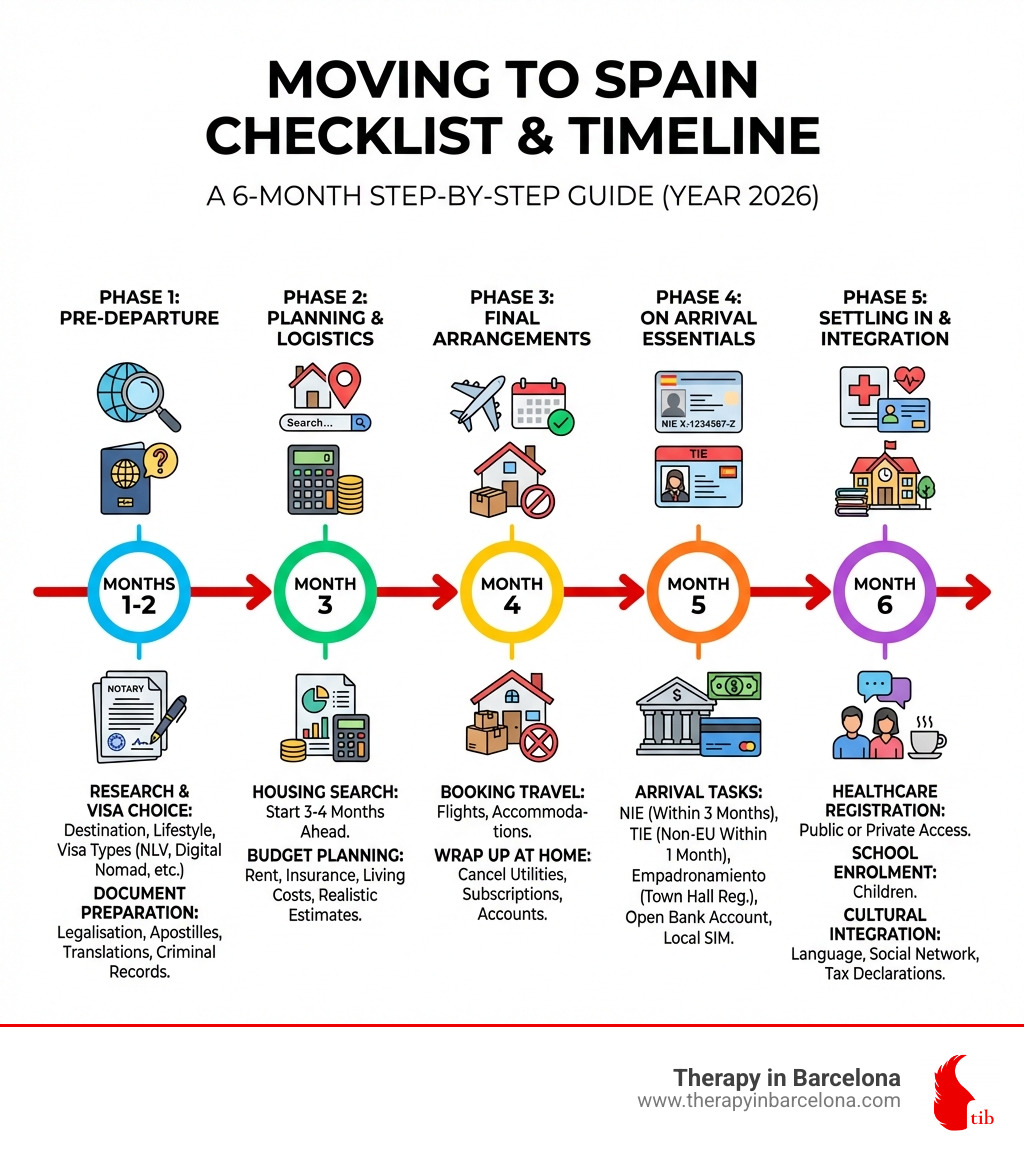
Here is a clear, step-by-step overview of what the process looks like:
Before you leave:
- Research your destination city and lifestyle fit
- Choose the right visa (Non-Lucrative, Digital Nomad, Golden Visa, Student, or Work Visa)
- Gather and legalise essential documents (apostilles, translations, criminal record checks)
- Start your housing search 3-4 months in advance
- Prepare a realistic monthly budget covering rent, insurance, and living costs
- Book your travel and wrap up affairs at home (cancel subscriptions, utilities, and accounts)
On arrival:
- Apply for your NIE number (required for stays over 3 months)
- Register at your local town hall (empadronamiento) — mandatory after 6 months
- Apply for your TIE card (non-EU citizens must do this within 1 month of arrival)
- Open a Spanish bank account
- Get a local SIM card
- Set up healthcare access (public or private insurance)
Settling in:
- Exchange your driver’s licence if required
- Enrol children in school
- Register with a local health centre and choose a GP
- File any required tax declarations
- Begin building your social network and support system
Spain has drawn millions of expats with good reason. The climate, the culture, the food, the relatively affordable cost of living compared to other Western European countries — it all adds up to a compelling case for making the move. But the reality of Spanish bureaucracy can catch even the most organised movers off guard. Long queues, appointment-only processes, and documents that need to be translated, notarised, and apostilled before you even land can make the first few months feel like a full-time job.
And then there is the part that rarely makes it onto the official checklists: how you actually feel once you arrive. The isolation, the language barrier, the disorientation of rebuilding a life from scratch — these are real and common experiences for expats across Spain, from Barcelona to Seville to Alicante. This guide walks you through every practical step, and it also acknowledges that the emotional side of relocating matters just as much as the paperwork.
Phase 1: The Pre-Departure Moving to Spain Checklist

Before you start packing your suitcases, you need a solid foundation. The “planning phase” is where most people either set themselves up for success or create a mountain of stress for their future selves. Research shows that starting your housing search 3 to 4 months in advance is critical in high-demand cities like Madrid or Barcelona.
Budgeting is your next priority. Plan for upfront settling-in costs like a rental deposit, possible agency fees, visa paperwork, translations, and moving expenses. Build a monthly budget that covers essentials first, then lifestyle spending. Costs vary a lot by city, so research your destination early using guides like A Practical Guide to Moving to Spain.
Perhaps the most tedious but vital part of your moving to Spain checklist is document preparation. Most official papers—like birth certificates or marriage licences—must be “legalised” via an Apostille (an international certification) and then translated by a sworn translator (traductor jurado). For a deeper dive into the logistics of these early days, check out A Practical Guide to Moving to Spain.
Choosing Your Ideal Spanish Hub
Spain is incredibly diverse. Your experience in the rainy, green hills of the north will be worlds apart from a sun-baked village in Andalusia.
- Barcelona: A cosmopolitan gateway famous for its modernist architecture and beach access. It’s a hub for digital nomads but comes with a higher cost of living.
- Madrid: The vibrant heart of the country with world-class museums and a social scene.
- Valencia: Often cited for high expat satisfaction, offering a balance of city life, green spaces (the Turia park), and lower rents than the big two.
- Málaga: A tech-growth hotspot with incredible weather and a laid-back coastal vibe.
- Alicante: Very family-friendly and well-connected, popular for those seeking a Mediterranean lifestyle without the Barcelona price tag.
If you’re leaning towards the Catalan capital, our guide on Moving to Barcelona covers the specific nuances of life in the city’s various barrios.
Navigating the Moving to Spain Checklist for Visas
Your nationality dictates your path. EU, EEA, and Swiss citizens have it easier thanks to freedom of movement, but they still need to register as residents if staying over three months. For non-EU citizens (including those from the US, UK, and Canada), you must secure a visa before arrival.
Common visa paths include:
- Digital Nomad Visa: Valid for up to one year initially (renewable up to five). It aims to attract remote talent with simplified taxation.
- Golden Visa: Requires a €500,000 real estate investment (free of encumbrances). It offers residency for the investor and family.
- Non-Lucrative Visa (NLV): Ideal for retirees or those with significant savings who do not intend to work in Spain.
- Student Visa: Requires an acceptance letter from an accredited institution and proof of financial means.
For official requirements, always consult the Spanish Ministry of Inclusion. If you are relocating from North America, you may find our specific resource on Moving to Spain from the US: Your Step-by-Step Guide helpful for navigating consulate appointments.
Phase 2: Essential Admin and Legal Paperwork
Once you land, the “bureaucracy clock” starts ticking. The most important acronyms you will learn are NIE and TIE. The NIE (Número de Identidad de Extranjero) is needed to do everything: opening a bank account, signing a rental contract, or getting an internet connection.
Non-EU citizens must then apply for a TIE (Tarjeta de Identidad de Extranjero), which is the physical residence card, within one month of arrival. Recent updates, such as Royal Decree 1155/2024, continue to refine these processes, making it essential to stay updated on the latest requirements. You can find a clear breakdown of these terms in our guide to NIE, TIE, CUE and Empadronamiento in Spain: Differences and Conditions.
The Importance of Empadronamiento
The empadronamiento (or padrón) is the process of registering your address at the local town hall (ayuntamiento). Think of it as the city’s way of knowing you live there. It is mandatory for anyone staying longer than six months and is a prerequisite for accessing public healthcare, enrolling children in school, or getting a local parking permit. You can find your local town hall directory online to book your cita previa (appointment).
Legalising Your Status
To finalise your residency, you will often need to provide a criminal record check from your home country (issued within the last 3-6 months) and a medical certificate stating you don’t have any diseases that could have serious public health repercussions. These must be apostilled. If you are a British citizen navigating the post-Brexit landscape, see How to Move to Spain from the UK: Visas, Residency and More for specific guidance on the TIE exchange.
Phase 3: Setting Up Your New Life
With the legalities underway, it’s time to make your house a home. Finding long-term housing can be competitive. In cities like Barcelona or Madrid, rooms average €500–€600, while studios can start at €800–€1,100. Always visit apartments in person to check for “interior” vs “exterior” light—a common Spanish distinction that significantly impacts your mood and electricity bill!
Healthcare and Insurance Requirements
Health insurance is a legal requirement for residency.
- Public Healthcare: High quality and accessible if you are employed in Spain and paying social security.
- Private Insurance: Often mandatory for visa applications (like the NLV or Student Visa). It must offer full coverage with no co-payments.
- EU Citizens: Can use the EHIC for temporary stays, but long-term residents should use the S1 form to transfer healthcare rights.
Providers like Cigna Global offer expat-specific plans that meet residency requirements. For more on navigating the system, read Spain Awaits: A Comprehensive Guide to Your Move.
Financial Logistics and the Moving to Spain Checklist
Opening a bank account should be one of your first money tasks after arrival. Traditional banks such as Santander and BBVA can work well for long-term banking, but they often ask for a NIE, proof of address, and income documents. For a quicker setup, many newcomers start with digital options like N26 or Wise, which can make international transfers and everyday spending simpler and lower-cost.
If you plan to work for yourself, you’ll need to register as an autónomo (self-employed). This involves monthly social security payments and quarterly tax filings. It can be complex, so we’ve put together A Comprehensive Guide to Self-Employment (Autonomos) in Spain to help you avoid common pitfalls.
Phase 4: Integration and Emotional Well-being
The paperwork is hard, but the “heartwork” is often harder. Many expats experience a “honeymoon phase” followed by a dip into the disorientation of a new culture or isolation. Language is the biggest bridge; while 99% of the population speaks Spanish (Castilian), learning regional languages like Catalan (in Barcelona) or Basque can significantly deepen your local connections.
Building a social network takes effort. Join language exchanges (intercambios), hiking groups, or coworking spaces. Don’t ignore the emotional toll of the move. Issues like feeling persistently low, homesickness, or the strain on a relationship are common. You can read more about these “unseen” hurdles in The Hidden Challenges of Expats in Spain: Why Many Don’t Last and How to Thrive Living Abroad.
Comparing Support Options for Expats
When life feels messy, as it often does during a relocation, knowing where to turn for mental health support is vital.
Public System Clinicians In Spain, mental health care is available through the Seguridad Social. It is generally free, but the system is often stretched thin.
- Pros: Cost-free.
- Cons: Very long waiting lists; limited choice of therapist; English-speaking specialists are exceptionally rare in the public sector.
Large Online Platforms These are convenient and often the first port of call for those looking for quick access.
- Pros: Easy to book; accessible from anywhere.
- Cons: They often lack local cultural nuance. Some platforms have also faced criticism regarding data privacy.
Local Private Practices This is where Therapy in Barcelona fits in. We are a group practice of psychology-trained therapists who are expats ourselves. Unlike large platforms, we prioritise your privacy with strict protocols and never sell your data. We offer bespoke matching, ensuring you aren’t just given the “next available” person, but a therapist whose expertise fits your needs. We understand the unique challenges of living in Spain because we live here too, providing culturally sensitive support in your native language.
- Pros: Bespoke matching; culturally sensitive; strict privacy.
- Cons: This is a private-pay service. However, some of our therapists offer sliding scale fees for those with financial need—inquire about this.
Frequently Asked Questions about Moving to Spain
What is the difference between NIE and TIE?
The NIE is just a number—your tax ID. You might have a NIE without a residence card (for example, if you bought a house but don’t live here). The TIE is the actual plastic card that proves your right to reside in Spain as a non-EU citizen.
How long is the Digital Nomad Visa valid?
It is typically valid for one year if applied for at a consulate, or three years if applied for from within Spain. It can be renewed for up to five years, at which point you may be eligible for permanent residency.
Is the empadronamiento mandatory?
Yes. If you live in Spain for more than six months, you are legally required to register your address. It is also the only way to prove your “time” in the country, which is vital for future permanent residency or citizenship applications.
Making Your Move a Success
Relocating to Spain is a bold, life-changing move. It requires patience for the bureaucracy and a sense of adventure for the culture. But you don’t have to manage the emotional side of this journey alone.
Therapy in Barcelona was founded in 2011 by Leigh Matthews, an Australian Psychologist who moved to the city and realised how much the international community needed a sanctuary that understood their specific struggles. Today, our team of English-speaking therapists helps adults, couples, and families manage everything from cultural adjustment to deeper mental health concerns.
Whether you are in Barcelona, Valencia, or Madrid, we offer support in person and online. If you’re feeling the weight of the move, we invite you to Book your Free Discovery Call today. Let’s make sure your move to Spain is as “Spain-tastic” as you imagined.
