


Why Couples Therapy Activities Matter for Relationship Growth

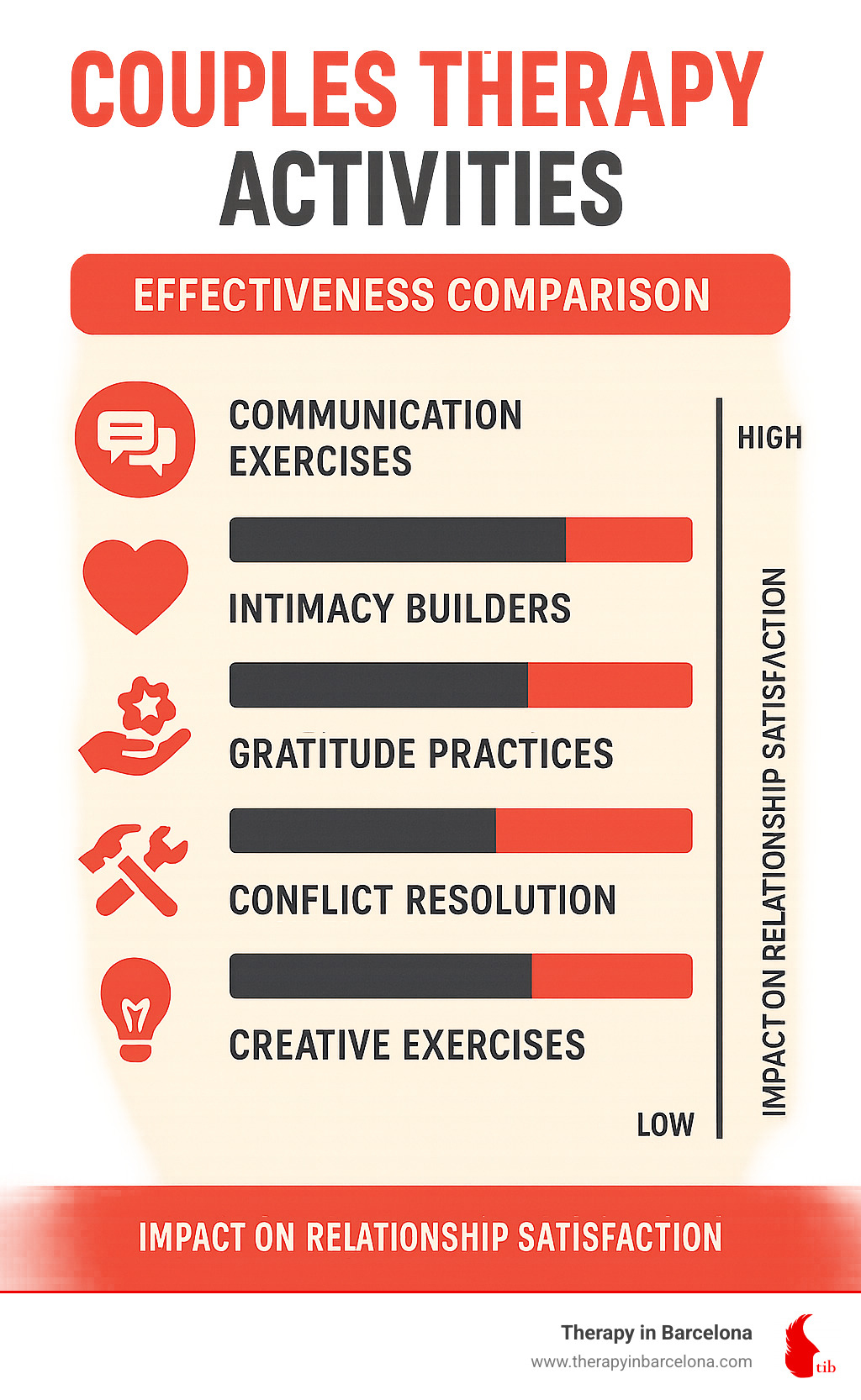
Couples therapy activities are structured exercises designed to improve communication, deepen connection, and resolve conflicts in relationships. Here are the most effective ones at a glance:
- Communication Activities: Active Listening, Back-to-Back Drawing, “I feel _ when _” statements
- Intimacy Builders: Eye Gazing, Extended Cuddle Time, Time Machine memory sharing
- Gratitude Practices: Appreciation Jar, Weekly CEO Meeting, Love Letters
- Conflict Resolution: Slow-Motion Arguments, DEAR MAN technique, Apology Letters
- Creative Exercises: Relationship Vision Board, Memory Lane Mapping, Bucket List Creation
When relationship tensions rise, especially in the pressure cooker of expat life, it’s easy to feel disconnected from your partner. The daily stresses of navigating cultural differences, language barriers, and being far from support networks can amplify existing relationship challenges.
Research shows that couples who engage in structured therapy activities have a greater chance of maintaining a happier, longer relationship compared to those who don’t. These exercises aren’t just busy work—they’re science-backed tools that create new neural pathways and behavioral patterns.
“Often couples forget about the strengths that brought them together in the first place,” notes relationship expert Elaine Aron. Therapy activities help partners refind these strengths while building new skills.
What makes these exercises so powerful? Studies consistently show that experiential learning—doing rather than just talking—creates more lasting change. When couples engage in structured activities, they practice new ways of interacting in a safe, contained environment before applying these skills to real-life conflicts.
For international couples like Sophie and Carlos (a British-Catalan pair navigating cultural differences in Barcelona), or Emily and Tom (Americans adjusting to expat life together), these activities provide concrete tools to bridge gaps in understanding and build resilience.
Couples Therapy 101: How It Works & Why Activities Accelerate Healing
Ever wondered why some couples emerge stronger from challenges while others drift apart? The answer often lies in attachment theory – the foundation of modern couples therapy. This framework helps us understand how our earliest relationships shape our adult connections, especially in moments of conflict.
For international couples living in Barcelona, these dynamics take on extra layers of complexity. Cultural differences in communication styles, varying relationship expectations, and the unique stressors of expat life can amplify normal relationship tensions. When you’re navigating life abroad together, creating a safe space becomes even more crucial.
Here’s the encouraging news: couples therapy activities work remarkably well. Research consistently shows approximately 70% of couples experience positive outcomes from therapy, with the highest success rates among those who actively engage in structured exercises between sessions.
What Is Couples Therapy?
Unlike casual conversations over coffee, couples therapy involves purposeful, goal-focused discussions guided by a neutral professional. This structured approach helps partners improve their relationship in a space with clear boundaries that make difficult conversations productive rather than destructive.
Modern approaches often accept hope-focused models that build on your relationship’s strengths instead of just troubleshooting problems. Sessions typically blend thoughtful discussion with practical exercises designed to develop specific relationship skills you can use long after therapy ends.
At Therapy in Barcelona, we understand that international couples face unique challenges. Many of our therapists are themselves expats who personally understand the complexities of building relationships across cultures while far from familiar support systems. More info about The Art of Healing
Why Activities Beat “Just Talking”
While meaningful conversation is essential, research in neuroplasticity reveals that engaging in activities together creates stronger neural pathways for new behaviors. Here’s why couples therapy activities deliver such powerful results:
Experiential learning creates deeper memory imprints than verbal instruction alone. When you practice a new communication technique during an activity, your brain retains that skill more effectively than if you’d just discussed it.
Activities bypass intellectual defenses that might otherwise block progress. Even reluctant partners often find themselves genuinely engaged in a thoughtfully designed exercise.
The concrete practice of new relationship skills through repetition helps couples integrate positive changes into their daily interactions. Research published in the Journal of Marital and Family Therapy found that couples who completed structured homework between sessions showed twice the improvement of those who only talked during therapy.
Playful elements in therapy activities increase engagement and reduce tension around difficult topics. This “gamification” makes growth work feel less like work.
Measurable progress provides clear benchmarks that boost motivation. Nothing encourages continued effort like seeing tangible improvements.
Studies show that using ‘I’ statements in communication reduces the likelihood of explosive conflicts by 30%. Activities that practice this skill help couples naturally integrate this approach into their everyday interactions. Scientific research on “I-language”
When international couples engage in these structured activities, they’re not just improving communication – they’re building bridges across cultural differences and creating shared experiences that strengthen their unique bond.
21 Couples Therapy Activities to Try Today

Whether you’re working with a professional therapist or simply looking to strengthen your relationship on your own, these couples therapy activities can transform how you connect with your partner. I’ve organized them by focus area to help you find exercises that address your specific relationship needs—especially helpful for international couples navigating the added complexities of expat life in Barcelona.
Communication-Focused Couples Therapy Activities
Communication forms the foundation of every healthy relationship, but it’s particularly crucial for international couples who may be navigating language and cultural differences.
The Active Listening Exercise creates space for genuine understanding. One partner speaks uninterrupted for 3-5 minutes about something on their mind (start with non-controversial topics), while the other listens attentively. The listener then summarizes what they heard before responding. This simple practice can dramatically reduce misunderstandings—something especially valuable when partners come from different cultural backgrounds.
For a more playful approach, try Back-to-Back Drawing. Sit with your backs touching and have one partner describe an image while the other tries to draw it without seeing the original. The laughter that often follows comparing results opens up conversations about how we communicate and the assumptions we make.
The Paper Exercise reveals fascinating insights about your negotiation patterns. Hold a sheet of paper between you and decide together who gets to keep it without tearing it. Watch how you approach this challenge—do you compromise, compete, or collaborate? The patterns that emerge often mirror how you handle larger conflicts.
For important discussions, the 40-20-40 Conversation Structure ensures both voices are heard. Partner A speaks for 40% of the time, both discuss together for 20%, and Partner B speaks for the remaining 40%. This structure is particularly helpful for couples where one partner tends to dominate conversations.
Learning to express feelings without blame is essential, which is why practicing “I Feel _ When _” Statements can be transformative. Replace accusatory “you” language with “I feel [emotion] when [specific behavior happens].” This subtle shift can defuse tension while still clearly communicating your emotional experience.
Intimacy & Connection Couples Therapy Activities
For expat couples separated from their support networks, these connection activities are especially important in maintaining relationship resilience during stressful transitions.
Eye Gazing might feel uncomfortable at first, but sitting face-to-face and maintaining eye contact for 3-5 minutes without speaking can create profound intimacy. Many couples report feeling more connected after this simple exercise than after hours of conversation.
Schedule Extended Cuddle Time—20 minutes of uninterrupted, technology-free physical connection. Focus on your breathing and physical sensations as your body relaxes. This releases oxytocin (the “bonding hormone”) and creates a physical sense of security.
The Time Machine activity invites each partner to write down one positive and one challenging shared memory, then discuss your different perspectives on these experiences. This creates a shared narrative and highlights how you’ve grown together through challenges—particularly meaningful for couples who have weathered the storms of relocating to a new country together.
Synchronized Breathing creates a surprising level of connection. Sit facing each other, hold hands if comfortable, and synchronize your breathing for 2-3 minutes. This physiological attunement can create a calm, centered connection.
Soul Gazing takes eye contact to a deeper level. Gaze into each other’s eyes for 2-5 minutes, then share what emotions or thoughts arose. Many couples report feeling truly “seen” by their partner after this exercise.

Gratitude & Self-Reflection Couples Therapy Activities
In the whirlwind of expat life, gratitude practices help maintain perspective during challenging transitions and cultural adjustments.
Create an Appreciation Jar by writing down something you appreciate about your partner each day and placing these notes in a jar. Read them together weekly or when feeling disconnected. This simple ritual shifts focus from stressors to strengths.
The Naikan Reflection comes from Japanese psychology and involves reflecting on three questions: What have I received from my partner today? What have I given to my partner today? What difficulties have I caused my partner today? Sharing these reflections builds awareness and appreciation while acknowledging impact.
The Weekly CEO Meeting might sound corporate, but scheduling a regular 30-minute “business meeting” for your relationship can prevent small issues from becoming major conflicts. Discuss logistics, unresolved issues, and upcoming events—then end with appreciation and acknowledgment.
The Good Qualities Worksheet invites each partner to list five of their partner’s greatest strengths and share stories that highlight those strengths in action. This shifts focus from problems to positive attributes, reminding you what drew you together.
Writing Love Letters creates space for expressing deeper feelings that might not emerge in daily conversation. Focus on what you value about your partner and your hopes for your relationship. Exchange letters and read them privately before discussing.
Playful & Creative Couples Therapy Activities
Creative activities can bridge language gaps and cultural differences by creating shared experiences that don’t rely solely on verbal communication.
Memory Lane Mapping involves creating a visual timeline of your relationship, including first dates, major decisions, challenges overcome, and happy memories. This strengthens your shared narrative and highlights resilience—particularly meaningful for couples who have steerd international moves together.
Create a Relationship Bucket List of experiences you’d like to share together, from small activities (try a new restaurant) to bigger dreams (travel to Japan). Schedule one bucket list item each month to ensure quality time together and create positive anticipation.
Cooperative Board Games like Pandemic or Forbidden Island require you to work together against the game rather than competing against each other. Notice how you collaborate and communicate under pressure, then discuss what you learn about your partnership.
The Future Dreams Collage invites you to gather magazines, photos, and art supplies to create a visual representation of your hopes for your future together. The discussion about why you chose certain images often reveals shared values and dreams.

Conflict-Resolution & Repair Activities
For cross-cultural relationships, these conflict resolution couples therapy activities are particularly valuable when different cultural backgrounds create misunderstandings about appropriate ways to express disagreement.
The Aftermath of a Fight Guide helps you process conflicts constructively after emotions have cooled. Each partner answers: What triggered me? What was my contribution? What do I need now? What would help us repair? Sharing these responses creates a pathway back to connection.
The DEAR MAN Script (from Dialectical Behavior Therapy) provides a clear structure for making requests without blame. When asking for change, use this format: Describe the situation factually, Express your feelings about it, Assert what you need, and Reinforce how this benefits both of you. This structured approach is especially helpful for international couples who may have different cultural norms around making requests.
These activities aren’t just busy work—they’re practical tools that create new patterns of interaction. For expatriate couples in Barcelona navigating the additional stresses of cultural adaptation, language barriers, and distance from support networks, these structured exercises can provide concrete ways to strengthen your relationship and build resilience together.
Choosing the Right Activity for Every Relationship Stage

Relationships evolve through distinct phases, each with its own joys and challenges. Finding the right couples therapy activities for your specific situation can make all the difference in your growth journey together.
If you’re in a new relationship, you’re likely still finding each other’s worlds. Activities like The Game of Truth can help deepen your understanding of each other in a structured way. Memory Lane Mapping allows you to start creating your shared story, while exploring Shared Hobbies builds connection through experience rather than just conversation.
For long-term partners who’ve been together for years, the focus often shifts to rekindling the spark that may have dimmed with time. Soul Gazing can reignite intimacy that’s faded amidst daily responsibilities. The Weekly CEO Meeting helps prevent small irritations from building up, while the Future Dreams Collage reconnects you with shared hopes that might have been put on hold.
High-conflict couples face different challenges altogether. If arguments have become your primary mode of communication, the DEAR MAN Script provides a framework for making requests without triggering defensiveness. Slow-Motion Arguments help you identify where communications break down, while the 40-20-40 Conversation structure ensures both voices are equally heard.
Intercultural relationships bring unique complexities, especially in Barcelona’s international community. Creating a Relationship Vision Board helps bridge cultural differences in expectations and values. Naikan Reflection, with its focus on gratitude and impact, can transcend cultural communication styles. Communication Role-Play exercises allow partners to practice navigating cultural misunderstandings in a safe environment.
LGBTQ+ couples often steer additional stressors from family dynamics or societal pressures. Building resilience through the Appreciation Jar creates a reservoir of positive memories to draw from during challenging times. The Relationship Bucket List helps maintain focus on shared joys rather than external stressors, while the Good Qualities Worksheet reinforces the unique strengths each partner brings.
Blended families juggle complex relationship dynamics that extend beyond just the couple. Creating a Family Vision Board helps align everyone’s expectations. Weekly Family Meetings establish healthy communication patterns that include all family members, while developing Shared Rituals builds a sense of belonging for everyone involved.
At Therapy in Barcelona, we understand the unique challenges faced by international couples. Our therapists—many of whom are expats themselves—bring understanding of navigating relationships across cultural differences, language barriers, and the complexities of building a life together far from familiar support systems.
Tips for Therapists & DIY Couples
Whether you’re working with a professional or exploring these activities on your own, creating the right environment is essential for meaningful progress.
Always prioritize safety first. Both partners should feel emotionally secure before attempting vulnerable exercises. This is especially important when addressing sensitive topics that might trigger past wounds.
Get consent before starting any activity. Discuss what you’ll be doing and ensure both partners are genuinely willing to participate—pressure only creates resistance.
Start small with lower-intensity exercises before tackling deeper issues. For example, begin with the Appreciation Jar before attempting the more vulnerable Soul Gazing.
Regularly check in with each other during activities. Simple questions like “How are you feeling right now?” can prevent overwhelm and build trust.
Remember to pace yourselves. One thoughtfully completed activity will yield more benefit than rushing through several. Quality of engagement matters more than quantity of exercises.
For international couples, cultural backgrounds significantly influence comfort with different activities. Some cultures value direct emotional expression, while others prize privacy or restraint. Be mindful of these differences and adapt activities accordingly, creating a blend that honors both partners’ cultural comfort zones.
Tracking Progress & Avoiding Common Pitfalls
The journey through couples therapy activities isn’t just about doing exercises—it’s about growing together and measuring that growth along the way. As an expat couple navigating Barcelona (or anywhere else), tracking your progress helps you see how far you’ve come, especially during those challenging moments when change feels slow.
Setting SMART goals can transform how you approach these activities. Instead of vaguely promising to “communicate better,” try something specific: “We’ll practice active listening for 10 minutes three times weekly.” Make your goals measurable by tracking how often you practice, achievable given your busy schedule, relevant to your unique challenges, and time-bound with regular check-ins to evaluate progress.
Even the most committed couples encounter roadblocks along the way. Watch for common pitfalls like resistance (when one partner isn’t fully engaged), time constraints (especially common for busy expat professionals), or misapplication (using activities at inappropriate times or in unhelpful ways).
Some couples fall into the trap of “repair avoidance”—using activities as a way to sidestep deeper issues rather than addressing them. Others struggle with perfectionism, expecting immediate change after just one or two exercises.
Remember what research tells us about relationship rituals: consistency matters more than perfection. A study on rituals of connection found that couples who establish regular connection habits, even simple ones, report significantly higher relationship satisfaction over time. The key isn’t doing everything perfectly—it’s showing up consistently for each other.
Measuring Success Together
How do you know if your couples therapy activities are actually working? Look beyond the activities themselves to the quality of your relationship:
Decreased conflict intensity is often the first noticeable change. Arguments may still happen, but they resolve more quickly and leave less emotional damage in their wake.
Increased positive interactions start to outweigh negative ones. You might notice more spontaneous affection, appreciation, and genuine enjoyment of each other’s company.
Improved understanding creates a sense of being truly “known” by your partner. Those moments of “you just don’t get me” become less frequent.
Better problem-solving emerges as you find solutions more collaboratively, drawing on new communication skills and deeper empathy.
Improved emotional intimacy develops as you both feel safer sharing vulnerable feelings and experiences with each other.
For international and intercultural couples, success might also include better navigation of cultural differences. Perhaps you’re finding new ways to blend holiday traditions or negotiate family expectations across cultures. The resilience you build through these activities can be especially valuable when facing the unique challenges of expat life—from language barriers to homesickness to creating new support networks together.
At Therapy in Barcelona, we’ve seen countless international couples transform their relationships through consistent practice of these activities, finding deeper connection despite—and sometimes because of—the unique challenges of building a life together abroad.
Frequently Asked Questions about Couples Therapy Activities
How often should we practice these activities?
When it comes to couples therapy activities, quality truly matters more than quantity. Most couples find that dedicating time to 1-2 structured activities each week creates meaningful change without feeling overwhelming.
Think of these activities like plants that need regular tending—consistency is what helps them grow. Small daily practices, like adding to an Appreciation Jar, can easily become part of your routine with minimal time investment. The key isn’t cramming in as many exercises as possible, but rather creating a sustainable rhythm that works for both partners.
As one of our international clients shared, “Setting aside just 20 minutes twice a week for these activities made a huge difference in how connected we felt, especially during our challenging first year in Barcelona.”
Can these activities replace professional couples therapy?
While these couples therapy activities can significantly strengthen your relationship, they work best as companions to professional therapy rather than replacements—especially for couples navigating serious conflicts or long-standing issues.
Think of it like learning a language: apps and self-study materials help, but having a skilled teacher guides your progress more effectively. A trained therapist can help identify which activities will benefit your specific situation and provide guidance on implementing them in ways that feel safe and productive.
For expat couples dealing with the added layers of international relocation, cultural adjustment, and distance from support networks, professional support becomes particularly valuable. When both partners come from different cultural backgrounds, a therapist can help bridge communication gaps that activities alone might not address.
How do we adapt activities when one partner is reluctant?
If your partner seems hesitant about trying couples therapy activities, start with something light and enjoyable rather than diving into intense emotional exercises. Setting a brief time limit—”Let’s just try this for 10 minutes”—can reduce pressure and make the experience feel more approachable.
Focus conversations on how both of you might benefit, and be willing to modify activities to match your partner’s comfort level. Reluctance often stems from fear or discomfort rather than lack of caring.
One international couple we worked with found success by starting with a cooperative board game—an activity that felt more like fun than therapy—before gradually working up to more emotional exercises. A skilled couples therapist can help address underlying concerns and build comfort with these activities at a pace that works for both partners.
Many expat couples find that addressing cultural differences in how emotions are expressed and relationships are maintained can help reduce reluctance and create a shared understanding of why these activities matter.
Conclusion
Relationships are living, breathing entities that require nurturing and care—especially when you’re navigating the unique challenges of international living together. The couples therapy activities we’ve shared throughout this article aren’t just exercises; they’re lifelines that help you strengthen your connection when the stresses of expat life threaten to pull you apart.
Whether you’re struggling with communication barriers, feeling disconnected after a move abroad, or simply wanting to deepen an already strong partnership, these 21 activities provide concrete tools to help you grow together rather than drift apart. The beauty of these exercises lies in their adaptability—they work for couples at any relationship stage, from newly committed partners to those who’ve weathered decades together.
For international couples, the challenges can be particularly complex. Cultural differences in how you express love, manage conflict, or even define relationship roles can create misunderstandings that these activities help bridge. When you’re far from familiar support networks, your relationship often becomes your primary source of emotional support, making its health even more crucial.
Relationship growth happens through small, consistent efforts rather than grand gestures. Setting aside just 20 minutes twice a week for one of these activities can yield more lasting results than a romantic weekend once a year. The key is commitment and consistency—showing up for each other regularly with curiosity and care.
At Therapy in Barcelona, we understand the unique dynamics of cross-cultural relationships and expat life because we’ve lived them ourselves. Our therapists are fellow internationals who bring both professional expertise and personal understanding to supporting couples through the complexities of building a life together abroad.
Which activity resonates most with you and your partner? Perhaps start with something playful like the Back-to-Back Drawing exercise if you’re feeling disconnected, or try the Appreciation Jar if you want to cultivate more gratitude in your relationship. The simple act of choosing one activity and scheduling time to practice it together is already a meaningful step toward a more connected partnership.
Your relationship deserves this investment of time and attention. After all, having a strong partnership makes every other challenge of international living more manageable—and every joy more meaningful when shared.
