


Why International Students Need Specialised Counselling Support

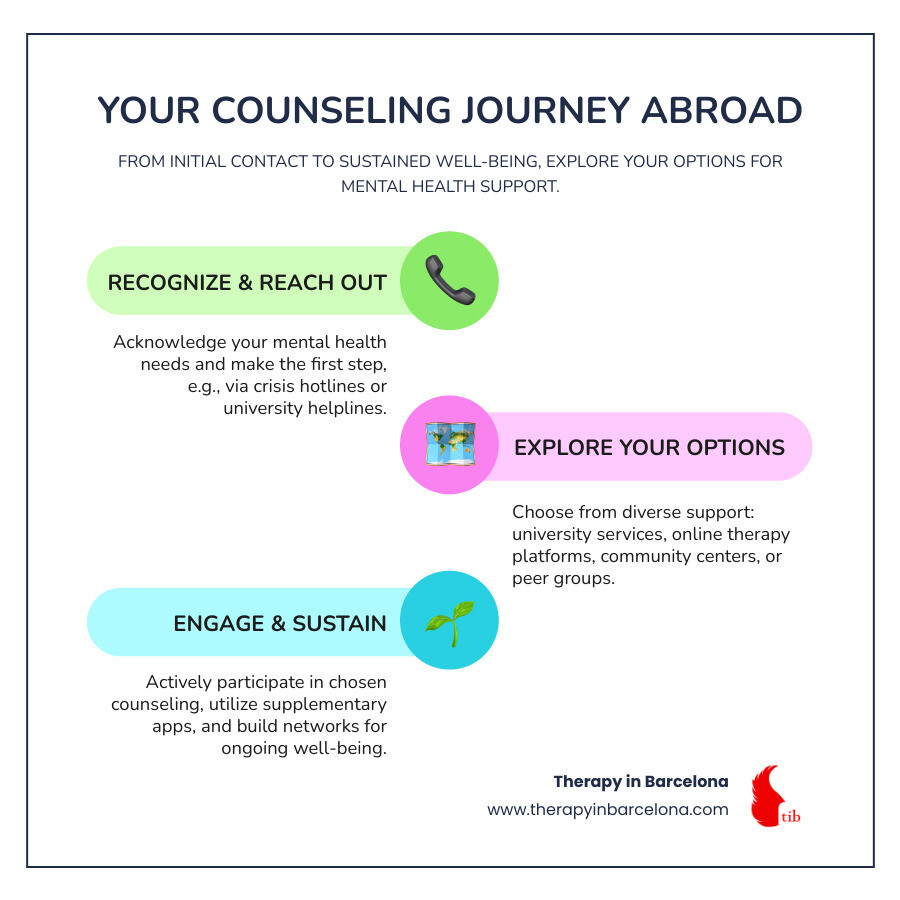
Counselling for international students addresses the unique emotional and personal challenges of studying abroad, including cultural adjustment, language barriers, academic pressure, and social isolation. Here are the main options available:
- University counselling services: Free or low-cost support through student health centres.
- Online therapy platforms: Culturally diverse therapists with flexible scheduling.
- Community mental health services: Sliding scale fees and specialised programmes.
- Crisis hotlines: 24/7 support
- Peer support groups: International student associations and mentoring programmes.
- Wellbeing apps: Tools for daily mood tracking and coping strategies.
Studying abroad brings excitement and pressure. Research shows international students report significantly higher levels of loneliness than their local peers (Sawir et al., 2008, Journal of Studies in International Education). Cultural adjustment and language barriers can contribute to feelings of worry, persistent sadness, and being overwhelmed.
Despite facing greater emotional and personal challenges, international students often hesitate to seek professional help. Cultural stigma, unfamiliarity with local systems, or confidentiality concerns hold them back. More universities and support providers now recognise these unique needs. Services like the GuardMe Mental Wellness Student Support Program offer 24/7 access. Many counselling centres train staff in culturally sensitive approaches.
Why Counselling for International Students Matters
Studying abroad brings unexpected emotional challenges. While domestic students face typical university pressures, international students encounter additional stressors that impact their emotional wellbeing. Specialised counselling for international students isn’t just helpful—it’s essential.
International students consistently report higher levels of loneliness than their domestic peers (Lipson et al., 2022, Journal of Affective Disorders Reports). Navigating a new culture, combined with language barriers and academic pressure, creates a unique form of strain. Yet many hesitate to seek help. Cultural stigma, language concerns, or unfamiliarity with local healthcare systems get in the way.
Recognition of these challenges is growing. More institutions develop culturally sensitive approaches. Specialised services bridge this gap. Scientific research on the international student experience informs better support strategies, helping universities understand what students need.
The Emotional Impact of Studying Abroad
Leaving behind family, friends, and cultural touchstones is profound. Homesickness can feel like genuine grief for the life you’ve left behind. Many students feel caught between two worlds, never fully present in either.
Identity shifts catch many off guard. The confident person you were back home might feel shy when struggling to express complex thoughts in a second language. To illustrate, consider Ana, a fictional composite character created to represent the common challenges faced by students abroad. A 20-year-old from Brazil studying in Barcelona, her vibrant personality feels muted as she steers new social customs. She questions who she is. This emotional upheaval is a natural response to a major life transition.
Common Emotional Experiences of International Students
The pressures of international study can show up in specific ways. Feelings of worry can stem from academic performance, visa requirements, and financial concerns. A sense of low mood or sadness can arise from prolonged isolation and difficulty forming meaningful connections. This can lead to persistent feelings of being overwhelmed, where feeling drained becomes normal, affecting sleep and concentration.
Peer isolation creates a painful cycle. The harder it is to connect, the lonelier you feel. This makes reaching out even more difficult. Traditional university counselling services may lack the cultural competency to address these interconnected challenges. Recognising these patterns is the first step toward finding the right support. University services or specialised practices like Therapy in Barcelona understand the expat experience.
Understanding the Unique Challenges Faced Abroad
The journey of an international student involves a complex mix of challenges that can significantly impact emotional wellbeing. These aren’t minor adjustments but profound shifts that require immense resilience.

Culture Shock & Acculturative Challenges
Culture shock is a process with several phases: an initial honeymoon phase, a frustration phase where difficulties surface, an adjustment phase of developing coping skills, and finally an acceptance phase. For example, a student from Japan might find the direct communication style in a city like Madrid or Barcelona jarring, leading to misunderstandings.
Acculturative challenges refer to the emotional strain of adapting to a new culture. Constantly negotiating different norms, values, and behaviours is exhausting and can contribute to feeling constantly overwhelmed.
Language and Communication Barriers
Even with years of language study, living and learning in a new country is a challenge. ‘Translation fatigue’—the mental exhaustion from constantly processing a foreign language—is real. It can make academic tasks harder and social interactions draining.
Beyond fluency, cultural nuances in humour, sarcasm, and non-verbal cues can lead to a fear of miscommunication. This can fuel social isolation. Access to therapists who are multilingual or highly attuned to these nuances is invaluable. At Therapy in Barcelona, we work in English, and some of our therapists also speak German, French, Spanish, Afrikaans, Portuguese, Swedish, Austrian-German and Swiss-German. This makes a real difference.
Academic & Immigration Pressure
International students often face intense ‘perfectionism pressure’ driven by family expectations, financial investment, and the link between academic performance and visa status. The fear of failure isn’t just about grades; it’s about potentially losing scholarships or the right to stay in the country.
For students in countries with strict post-graduation work permit rules, the stakes are even higher. This constant pressure can create an undercurrent of worry, making it difficult to focus on looking after yourself.
Exploring Counselling Options: On-Campus, Online & Community
Finding the right emotional support as an international student is achievable. You have several options, each designed to meet different needs and circumstances.

On-Campus Services & Programmes
Your university is the most logical place to start. Most institutions offer counselling for international students through their student health centres at no cost. Services typically include initial consultations, individual therapy, and workshops on managing pressure and cultural adjustment.
University counsellors understand academic pressures. Many universities offer specialised support like the GuardMe Mental Wellness Student Support Program, which provides 24/7 access to tele-counselling and chat services. This helps when dealing with different time zones or late-night feelings of worry.
Be aware of limitations. University counselling centres often have waiting lists and are designed for short-term support. Professional licensing restrictions may prevent university counsellors from providing services if you’re physically located outside their state or country, such as during holidays back home.
Online Counselling for International Students
Online counselling for international students offers flexibility that traditional services can’t match. You can book sessions outside standard office hours. This works well for managing classes, part-time work, and calls with family across time zones.
Another key benefit is cultural matching. Online platforms provide access to more therapists, increasing your chances of finding someone who shares your cultural background or has experience with international students. Research shows online therapy can be as effective as in-person meetings.
At Therapy in Barcelona, we make quality, culturally sensitive support accessible globally. We offer bespoke therapist matching so you’re paired with someone who fits your needs. We maintain strict privacy—we don’t sell your data.
Community & Peer Resources
Sometimes the most powerful support comes from those who share your experience. International student societies at most universities organise events and create safe spaces to share challenges without judgment. Peer mentoring schemes pair new students with experienced ones who offer practical and emotional support.
For immediate support: in Spain call 112 (emergency), 024 (Línea 024, suicide crisis), or Teléfono de la Esperanza 717 003 717 (24/7 listening). If you’re linked to the UK, try Nightline, Samaritans 116 123, or Shout text 85258.
While these resources don’t replace professional counselling for international students, they serve as crucial bridges to support and community.
Choosing the Right Counsellor & Preparing for Sessions
Finding the right counsellor is personal, especially for an international student. It’s about finding someone who understands your unique experience of living abroad.

Checking Cultural Sensitivity & Qualifications
When seeking counselling for international students, cultural sensitivity is vital. You have the right to ask potential therapists about their experience. Consider questions like: “Do you have experience working with international students?” or “How do you incorporate cultural factors into your approach?” A good therapist welcomes these questions.
Language support makes a huge difference. Being able to express complex emotions in your preferred language is transformative. Multicultural competence means a therapist understands how culture shapes everything from expressing distress to family dynamics.
At Therapy in Barcelona, cultural sensitivity is central. We’re a group practice of highly qualified, psychology-trained therapists—many are expats themselves. We work with adults, couples, teens and families. We offer therapy in English, and some of our therapists speak German, French, Spanish, Afrikaans, Portuguese, Swedish, Austrian-German and Swiss-German, so you can express yourself authentically. Depending on your goals, we may draw on evidence-based approaches such as CBT, ACT, Schema Therapy, DBT skills, Systemic or Psychodynamic therapy. For couples, our therapists use i.e. the Gottman Method and Imago.
Preparing for Your First Appointment
A little preparation helps you make the most of your first session. Here are practical tips:
- Set clear goals: Think about what you want to achieve. Managing feelings of worry, coping with homesickness, or having a safe space to process your experiences.
- Jot down key stressors: Make a simple list of what’s bothering you. Academic pressure, visa worries, or loneliness.
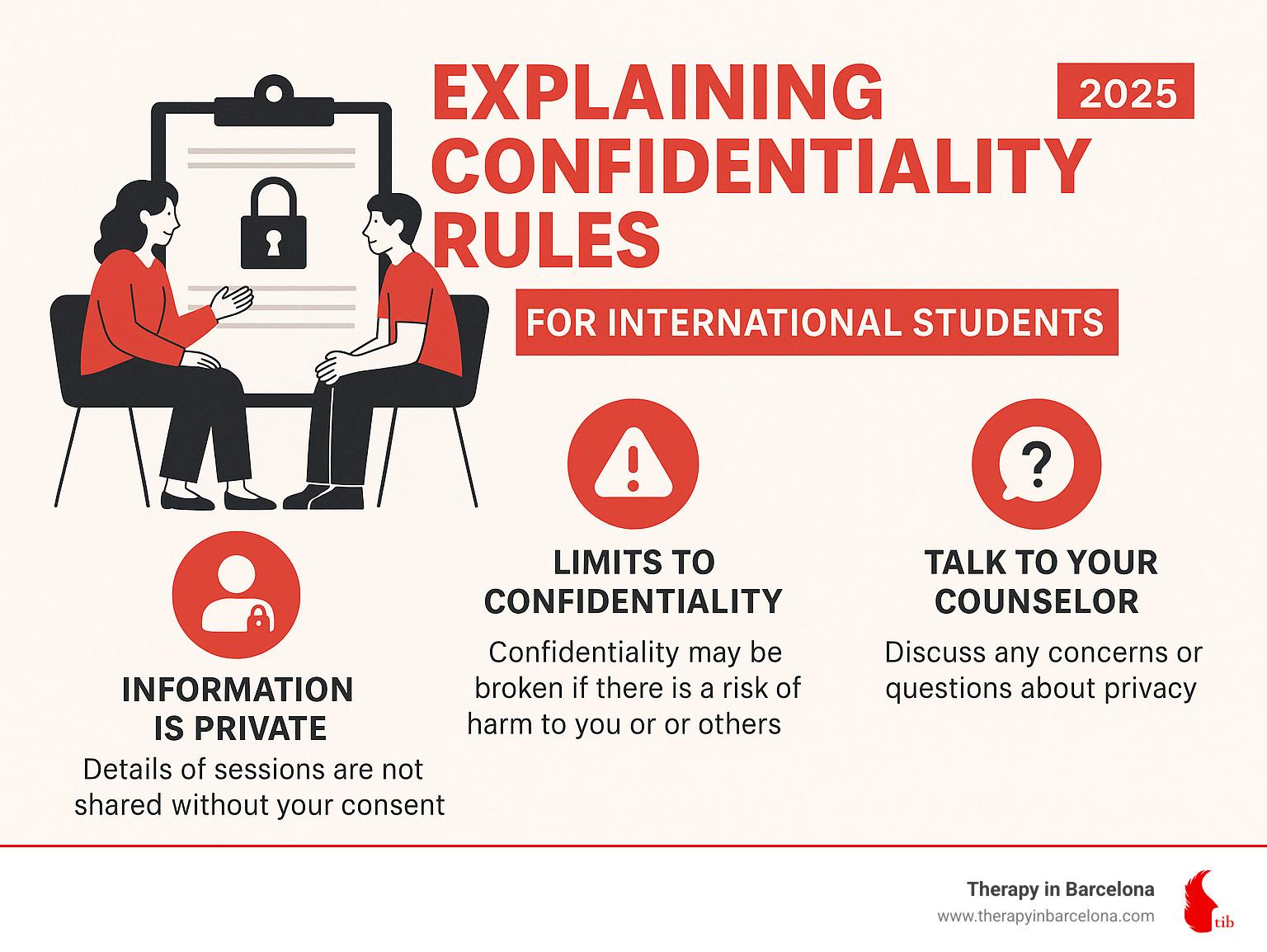
- Understand confidentiality: Therapists maintain strict confidentiality. It’s good to understand the legal limits, such as in cases of severe risk of harm.
- Mention practical issues: If you have visa concerns or upcoming travel dates, let your therapist know early.
- Be open: It’s okay to be nervous. Your therapist is there to help, not judge.
Therapy in Barcelona offers a Free Discovery Call—a short conversation with our lovely intake coordinators to understand your needs so we can match you with the most suitable therapist. This personalised matching recognises that finding the right therapeutic relationship is key to your journey.
Overcoming Barriers to Counselling for International Students
Despite the clear need for counselling for international students, several barriers prevent them from seeking help. Addressing these challenges is crucial for fostering a supportive environment.
Tackling Stigma and Building Support Networks
In many cultures, discussing emotional wellbeing feels like admitting failure or bringing shame to your family. This cultural stigma is a significant hurdle. You might worry that seeking counselling means you’re weak.
Peer storytelling breaks down these barriers. Hearing from other international students who have benefited from counselling makes it feel less daunting. Universities train faculty and staff to spot students who are struggling and offer support without judgment.
Campus campaigns that frame emotional wellbeing as part of overall health help shift the conversation. Building support networks through student associations and cultural clubs creates a foundation where discussing challenges feels natural. Acknowledging you need support is a sign of strength, not weakness.
Making Counselling Affordable & Accessible
Therapy can feel financially out of reach when you’re managing tuition and living costs. But there are options to explore.
Student insurance often covers counselling services. Check your policy details. Some universities offer bursaries or emergency funds for emotional support. Online platforms and community support centres may offer sliding scale fees, where cost is adjusted based on your income.
At Therapy in Barcelona, collaborators set their own prices, typically ranging from €80 to €95 for individual therapy. Some therapists offer sliding scale places. It’s worth asking if cost is a concern. You can find more details on their fees page.
Privacy concerns are another barrier. Some students worry that seeking help could impact their visa status. Professional therapy services operate under strict confidentiality rules. At Therapy in Barcelona, we’re a private-pay practice. We keep your information secure. We don’t sell your data. Getting support when you need it is an investment in your academic success and overall wellbeing.
Frequently Asked Questions about Counselling for International Students
Navigating emotional support in a new country feels complex. Here are answers to common questions about counselling for international students.
How can international students access counselling services?
You have several pathways to support:
- University counselling centres: Often free or low-cost. A great first step.
- Online therapy platforms: Offer flexibility, convenience, and access to culturally sensitive therapists. Services like Therapy in Barcelona specialise in supporting internationals online.
- Community support services: May offer affordable, sliding-scale fees in cities like Valencia or Málaga.
- Private practices: Provide highly personalised, long-term care.
- 24/7 crisis hotlines: For immediate, confidential support.
Is counselling confidential for international students?
Yes. Counselling for international students operates under the same strict confidentiality protections as all professional therapy. Licensed therapists are legally and ethically bound to protect your privacy. What you share in sessions won’t be disclosed to your university, family, or immigration authorities without your explicit consent.
The only exceptions are legally mandated and exist to protect safety. When there’s an imminent risk of harm to yourself or others, or in cases of suspected child abuse. These limits are standard for all professional therapy.
Does online therapy for international students work?
Absolutely. Research consistently shows that for many common challenges, online therapy is as effective as in-person sessions (Barak et al., 2008, Journal of Technology in Human Services). For international students, it offers unique advantages:
- Accessibility: Attend sessions from anywhere. Fit therapy around your schedule and time zone.
- Comfort: Many students feel more relaxed and open when speaking from their own familiar space.
- Wider Choice: Online platforms give you access to more therapists. This increases the chance of finding someone who speaks your language or understands your cultural background.
While not suitable for severe crises, online therapy is highly effective for common challenges like homesickness, feelings of worry, and being overwhelmed. The key is finding a provider like Therapy in Barcelona, whose therapists are expats themselves and understand your situation.
Conclusion
Starting on an international academic journey is transformative and challenging. If you take one thing from this guide: seeking support is a sign of strength, not weakness. The challenges you face—homesickness, cultural confusion, academic and visa pressures—are normal parts of the student expat experience.
Reaching out for help early makes all the difference. It prevents manageable pressure from becoming overwhelming. You don’t have to steer these challenges alone. Whether you start with your university’s counselling centre or explore online options, there are people who understand what you’re going through.
Counselling for international students is support designed for the unique layers of your journey. At Therapy in Barcelona, our culturally sensitive team knows the expat experience because we’ve lived it. Since 2011, we’ve supported internationals through the ups and downs of life abroad. We offer personalised therapist matching and multilingual support in a safe, confidential space.
Our team works online with clients worldwide, including in the USA and Canada. We also offer face-to-face therapy sessions in our Barcelona office. We maintain strict privacy and don’t sell your data. When you’re ready to talk, we’re ready to listen.
For more information, visit our services page or book a Free Discovery Call to learn how we can support you.
