


Why LGBTQ+ Couples Counselling Matters

LGBTQ+ couples counselling offers specialised relationship support that acknowledges the unique challenges queer relationships face, from navigating societal discrimination to building connection without heteronormative blueprints. If you’re wondering whether affirming therapy could strengthen your bond, here’s what it offers:
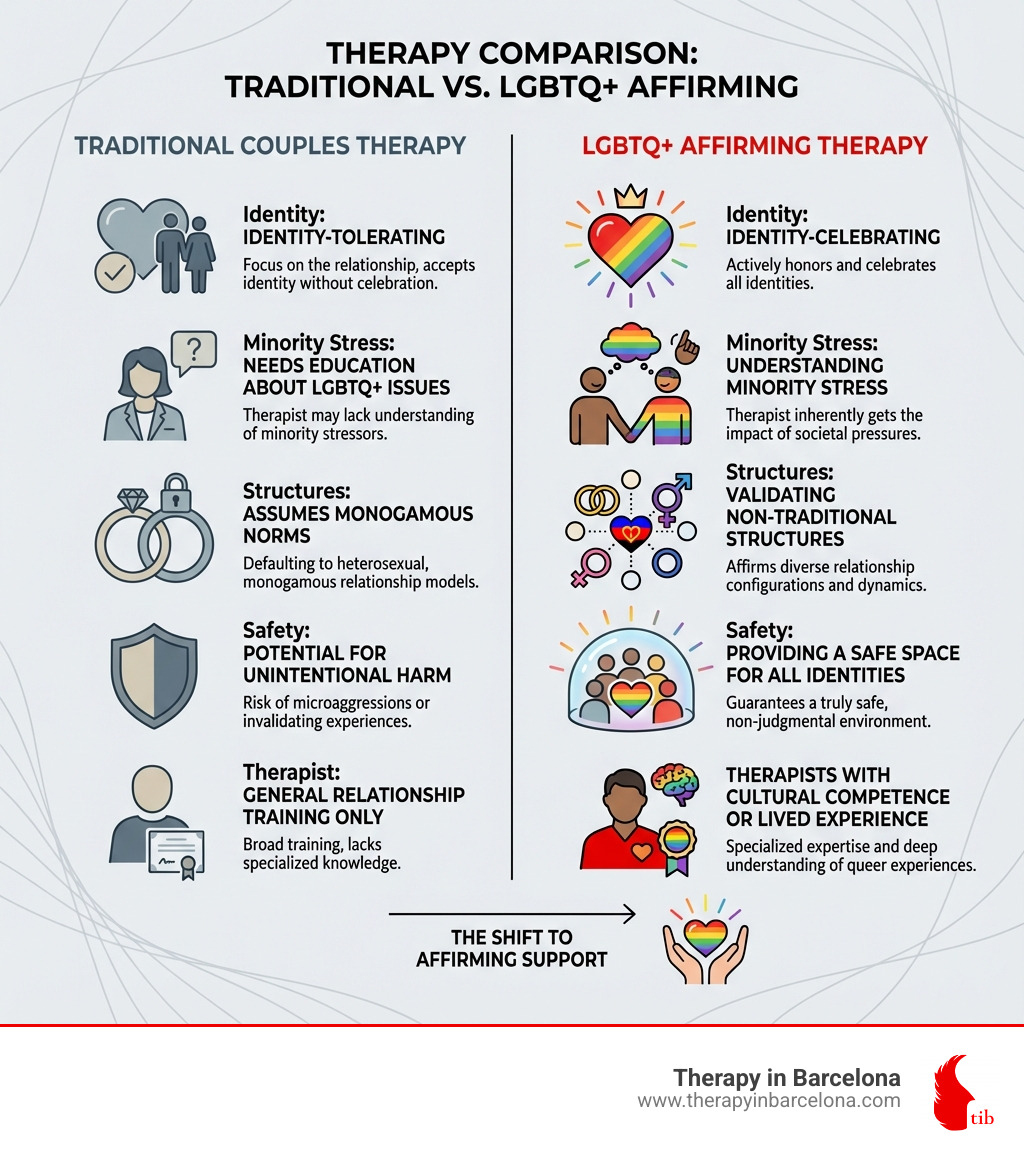
- A truly safe space where your identity is celebrated, not just tolerated
- Support for unique challenges like mismatched ‘outness’ levels, family rejection, or gender transition
- Tools for deeper intimacy through communication skills custom to queer relationship dynamics
- Help navigating life milestones like parenthood, non-traditional structures, or relationship transitions
- Therapists with lived experience who understand minority stress without needing you to explain it
Every relationship encounters rough patches. But when you’re part of the LGBTQ+ community, those challenges often come with added layers. You might be dealing with family members who don’t accept your partnership, navigating different comfort levels around being ‘out’, or simply lacking models for what a thriving queer relationship looks like. Perhaps you’ve felt the weight of microaggressions in public spaces, or noticed how societal pressures seep into your private moments together.
Research shows that LGBTQ+ couples share many of the same relationship needs as any couple—trust, communication, intimacy—but they also face distinct stressors that heterosexual couples typically don’t encounter. Poor communication affects all relationships, but for queer couples, it’s often complicated by having grown up with only heterosexual relationship models to reference. Without clear examples of healthy LGBTQ+ partnerships, many couples struggle to determine what healthy boundaries and behaviours look like in their own relationships.
This is where affirming relationship support makes a real difference. It’s not just traditional couples therapy with a rainbow flag in the corner. It’s therapy designed from the ground up to honour your identity, validate your experiences, and help you build the strong, joyful partnership you both deserve. Whether you’re in Barcelona, Valencia, Madrid, or connecting online from anywhere in the world, the right support can help you move from surviving to thriving together.
Understanding the Unique Landscape of LGBTQ+ Relationships
LGBTQ+ relationships can be deeply joyful, but they also often carry pressures that other couples may not face in the same way. Things like discrimination, family rejection, coming out, and internalised shame can shape how partners connect, communicate, and feel safe together. That is why support that understands queer relationships matters.
How Societal Pressures and Family Dynamics Impact Your Bond
The world, despite progress, can still be a tricky place for queer couples. Societal pressures manifest in various forms, from overt discrimination and legal challenges to subtle microaggressions in daily life. Imagine holding your partner’s hand in public in a new city like Sevilla or Zaragoza and wondering if you’ll face judgement or worse. These external stressors can create a constant undercurrent of anxiety, impacting how safe and secure a couple feels, both individually and together.
Family dynamics often add another layer of complexity. For many, the coming out process can be fraught with fear of rejection. If a partner’s family is unaccepting, it can force difficult decisions about boundaries, leading to feelings of loss, guilt, or isolation for one or both partners. Therapy can help couples steer these conversations, establish healthy boundaries with family members, and find ways to build external validation and support systems—what many in the community call “chosen family”.
The Internal Journey: Identity, Coming Out, and Self-Acceptance
LGBTQ+ couples also navigate deep internal experiences around identity, coming out, and self-acceptance. Partners are not always in the same place. One may be fully out and confident, while the other is still questioning, private, or unsure. That gap can create stress, hurt, or misunderstandings. With empathy, honesty, and support, couples can handle these differences in a way that protects trust and connection.
Supporting a partner through gender transition or exploring sexual orientation can bring growth, change, and stress into a relationship. It often asks for honest communication, patience, and room for both partners’ feelings. Therapy can offer a steady, affirming space to talk through fears, adjust together, and stay connected. It also helps couples build self-acceptance, push back against external pressure, and strengthen a bond rooted in mutual care and respect.
What Makes LGBTQ+ Affirming Therapy Different?
LGBTQ+ affirming therapy is more than just being “tolerant” of queer identities. It’s about creating a therapeutic environment where your identity is not just accepted, but actively celebrated and understood. This distinction is vital because, for many LGBTQ+ individuals, past experiences with non-affirming spaces can lead to distrust or hesitation in seeking help.

An affirming therapist understands that LGBTQ+ clients know their own lives best. They work with an anti-oppressive, culturally competent approach, so they already recognize how minority stress and systemic bias can affect a relationship. That means less time explaining your identity and more time focusing on what you need as a couple.
Research also points to the value of this approach. Studies in psychology have shown that when therapists clearly demonstrate understanding and affirmation, clients are more likely to feel supported and helped. In practice, that means an openly LGBTQ+ affirming environment is not just nice to have. It can make therapy feel safer, more validating, and more effective.
Creating a Truly Safe and Affirming Space
A genuinely safe and affirming space is foundational to effective LGBTQ+ couples counselling. This goes beyond just being polite; it involves a deep understanding and respect for queer culture and experiences. It means a therapist consistently uses correct pronouns without needing to be reminded, and understands that identity is fluid and complex. Here’s what makes such a space:
- Using correct pronouns: A simple yet crucial act that validates a person’s identity and shows respect. If you want to understand more about why pronouns are important, you can explore resources like this one.
- Understanding queer culture: This means a therapist is aware of the community’s history, challenges, and triumphs, allowing them to grasp nuances without extensive explanation from clients.
- Not having to educate your therapist: Clients should feel they can bring their full selves and their specific relationship dynamics (including non-traditional structures) without having to teach their therapist basic concepts.
- Validating all experiences: This includes validating experiences of discrimination, joy, chosen family, and the unique ways queer relationships are formed and maintained.
- A sex-positive, kink-affirming, and poly-affirming stance: For many LGBTQ+ couples, relationships may involve diverse expressions of sexuality and structure. An affirming therapist accepts these aspects without judgment, understanding that they are valid components of a healthy relationship.
The Role of Cultural Competence in LGBTQ+ Couples Counselling
Cultural competence in LGBTQ+ couples counselling extends to a therapist’s ability to understand and integrate various intersecting identities. This means recognising that a queer couple’s experience might also be shaped by their race, neurodiversity, socio-economic status, or cultural background. For instance, a queer immigrant couple in Barcelona might face challenges that are distinct from those of a local queer couple, or a neurodivergent queer couple might experience communication differently.
Therapists with lived experience, or strong LGBTQ+ training, often bring more nuance and empathy to the work. They are usually better prepared to use an intersectional, trauma-informed, and anti-oppressive approach. In simple terms, that means they understand that relationship stress is not just personal. It can also be shaped by discrimination, exclusion, and cultural norms that do not fit queer lives. Good affirming therapy helps couples feel empowered, respected, and free from heteronormative assumptions.
The Transformative Benefits of LGBTQ+ Couples Counselling
Engaging in LGBTQ+ couples counselling offers a wealth of benefits that can profoundly strengthen your relationship. It’s a space where you can not only address current challenges but also build a more resilient, intimate, and joyful future together. The focus isn’t just on fixing problems, but on fostering growth and celebrating the unique beauty of your partnership.

One of the most significant outcomes is the ability to foster emotional intimacy. In a world that sometimes denies the validity of queer love, therapy can help couples create a sanctuary of deep connection. It provides tools for healthy conflict resolution, allowing partners to steer disagreements constructively rather than letting them erode their bond. This ultimately builds resilience, enabling the couple to face external stressors as a united front. You can learn more about general couples counselling services and their benefits here.
Building Deeper Communication and Emotional Intimacy
Poor and destructive communication is a major presenting issue for all couples seeking therapy, and LGBTQ+ couples are no exception. However, for queer couples, the lack of non-heteronormative relationship models can make it even harder to develop effective communication strategies. Affirming therapy steps in to fill this gap.
Therapists help couples practice active listening so both partners feel heard and understood. They also support couples in expressing needs clearly, without blame or criticism, which makes difficult conversations feel safer and more productive.
Understanding attachment styles, such as anxious or avoidant patterns, can also be useful. These patterns often shape how people respond to conflict, closeness, and reassurance. When couples explore them together, they can start to notice the habits that keep them stuck, interrupt negative communication cycles, and build a more secure emotional connection. In an affirming therapeutic space, vulnerability becomes less risky and more healing, helping partners deepen trust and intimacy.
Fostering Resilience and Self-Acceptance as a Couple
In the face of ongoing minority stress and societal pressures, building resilience as an LGBTQ+ couple is paramount. Affirming therapy helps partners validate each other’s experiences of these stressors, creating a powerful sense of “us against the world” in a positive way. It encourages the creation of shared meaning and rituals that celebrate the unique aspects of their relationship.
Celebrating relationship milestones, big or small, reinforces the strength and longevity of their bond. Therapy can also guide couples in building a supportive community around them, whether that’s through friends, family, or other queer networks. It fosters individual and shared self-acceptance, allowing both partners to accept their authentic selves and their love, strengthening their ability to experience and share queer joy together.
Finding the Right Path: Effective Approaches and Therapists
Finding the right therapist for LGBTQ+ couples counselling is a crucial step towards a stronger, more connected relationship. It’s not just about finding any therapist, but one who possesses the qualifications, specialisations, and, most importantly, the affirming perspective needed to truly support queer couples. The benefits of online therapy have made access to these specialised professionals much easier, regardless of where you are in Spain—be it Málaga, Alicante, or Gran Canaria.
When considering therapy, it’s helpful to understand that while many therapeutic approaches are effective, their application within an LGBTQ+ affirming framework is key. You’ll want to look for therapists who explicitly state their commitment to queer-affirming care and ideally have experience or specific training in working with LGBTQ+ individuals and relationships.
Therapeutic Approaches That Work for LGBTQ+ Couples
Several evidence-based therapeutic approaches have proven particularly effective in LGBTQ+ couples counselling, especially when applied with an affirming lens:
- Emotionally Focused Therapy (EFT): EFT is a structured, evidence-based approach that focuses on strengthening the emotional bond between partners. It helps couples identify, understand, and transform the emotional patterns that drive disconnection and conflict. For LGBTQ+ couples, EFT helps create secure attachment, addressing fears of rejection or abandonment often amplified by minority stress. It allows couples to explore vulnerable emotions beneath anger or withdrawal, fostering deeper empathy and connection.
- Cognitive Behavioural Therapy (CBT): CBT helps couples identify and shift negative thought patterns, beliefs, and behaviours impacting their relationship. In an LGBTQ+ affirming context, CBT is adapted to account for specific social stressors and identity experiences. It can help couples reframe internalised negative beliefs (e.g., “I’m not worthy of love” or “I’ll always be abandoned”) that may stem from painful past experiences or societal stigma.
- The Gottman Method: This popular approach focuses on building healthy communication, emotional connection, and trust. It provides practical tools for conflict management, enhancing friendship, and creating shared meaning. The Gottman Method has been adapted for same-sex couples, recognising the universal principles of healthy relationships while also acknowledging the unique context of queer partnerships.
- Somatic Therapy: This approach helps individuals and couples connect with their bodily sensations to process difficult past experiences and emotional patterns. For LGBTQ+ individuals who may have experienced body shame or difficult experiences related to their identity, somatic therapy can be powerful in reclaiming their bodies and fostering a sense of safety and joy.
- Narrative Therapy: Narrative therapy helps individuals and couples re-author their life stories, separating themselves from problem-saturated narratives. For LGBTQ+ couples, this can mean challenging societal narratives that pathologise their relationships and instead, building empowering narratives of resilience, love, and strength.
When selecting a therapist, it’s helpful to ask about their experience and approach. Here are a few key questions to consider during an initial consultation:
- What is your experience working with LGBTQ+ couples?
- How do you ensure your practice is LGBTQ+ affirming?
- What therapeutic approaches do you use, and how do you adapt them for queer relationships?
- Do you have experience with non-traditional relationship structures like polyamory, if relevant to your needs?
- How do you address issues of discrimination or minority stress in therapy?
How to Find a Qualified LGBTQ+ Affirming Therapist
Finding the right therapist for LGBTQ+ couples counselling can feel overwhelming. Public services, large online platforms, and local private practices all play a role, but not every option offers truly affirming, culturally sensitive care. For many LGBTQ+ couples, especially expats, a personalised approach can make it easier to feel understood, safe, and supported.
Therapist directories are a useful place to start, especially when you can filter for LGBTQ+ issues, couples counselling, and affirming care. Community referrals can help too. Asking trusted friends, queer community groups, or local organisations often leads to therapists who are both skilled and genuinely understanding.
At Therapy in Barcelona, we understand the importance of this match, especially for expats navigating life in a new country like Spain. Our unique selling point is our commitment to strict confidentiality and personalised therapist matching. Unlike large platforms that may use algorithms or sell client data, we guarantee your privacy and take the time to understand your specific needs and concerns.
This allows us to connect you with a psychology-trained expat therapist who has the appropriate training, experience, and personality fit. Our therapists are based in Barcelona but offer online sessions worldwide, enabling access to highly specialised care. This bespoke approach ensures you find a therapist who can offer truly culturally sensitive and affirming support, whether you’re in Barcelona, Madrid, Valencia, or any of the other hubs across Spain.
The initial consultation is a crucial step. Use this opportunity to interview the therapist, ask about their experience, and gauge if their approach and personality resonate with both partners. Trust your instincts; the connection and therapeutic alliance with your therapist is the most important factor for a successful outcome.
Navigating Life’s Milestones and Relationship Structures
LGBTQ+ couples counselling isn’t just for addressing problems; it’s also a powerful tool for navigating life’s big moments and supporting diverse relationship structures. From planning a family to maintaining ethical non-monogamy, therapy can provide guidance and strengthen your bond through every phase. For general family support, you can find more information here.
Preparing for Parenthood as an LGBTQ+ Couple
The journey to parenthood for LGBTQ+ couples often involves unique considerations. Whether through adoption, surrogacy, or other methods, there are often legal complexities and societal attitudes that require careful navigation. In Spain, for example, the legal landscape for LGBTQ+ parenting, while progressive, still requires understanding and sometimes advocacy.
Counselling can help couples discuss and define parental roles outside of traditional gender norms, ensuring both partners feel equally invested and recognised. It provides a space to process anxieties and fears about becoming parents, build a strong support system, and prepare for the unique joys and challenges of raising a family as an LGBTQ+ couple.
Support for Non-Traditional Relationship Structures
The LGBTQ+ community has long been at the forefront of defining relationships on their own terms. Ethical non-monogamy, polyamory, and open relationships are more prevalent and often more openly accepted within queer communities. However, these structures come with their own set of communication needs and potential challenges.
LGBTQ+ couples counselling offers a non-judgmental space to explore and strengthen these relationships. Therapists can help partners craft clear communication agreements, learn to manage jealousy constructively, and set healthy boundaries that respect the needs and desires of all individuals involved. The goal is to build relationships based on transparency, trust, and mutual consent, ensuring that all partners feel secure and valued.
Frequently Asked Questions about LGBTQ+ Couples Counselling
How do I know if my relationship would benefit from therapy?
Many couples wonder if therapy is “bad” or a “last resort.” The truth is, it’s a proactive step towards a healthier, more fulfilling relationship. You might benefit from LGBTQ+ couples counselling if you experience:
- Constant conflict: You find yourselves having the same arguments repeatedly without resolution.
- Feeling disconnected: You feel more like roommates than romantic partners, or there’s a lack of emotional or physical intimacy.
- Navigating a major life transition: This could include moving to a new city like Madrid, a career change, gender transition, or preparing for parenthood.
- Intimacy issues: You’re struggling with sexual connection or other forms of intimacy.
- A desire to proactively strengthen your bond: Even if things are good, therapy can help you build an even stronger foundation and learn new tools for growth.
Is online therapy as effective for couples?
Yes, absolutely. Online therapy can be highly effective for couples, and it often offers real advantages for LGBTQ+ partners and expats who want access to affirming support. Research from the American Psychological Association suggests telepsychology can work as well as in-person care for many people and situations. You can read more about telepsychology effectiveness here.
For LGBTQ+ couples, online therapy can make affirming support much easier to access, especially if local options are limited. It is often helpful for people in smaller towns in Spain or expats who want an English-speaking therapist who understands queer relationships. It also offers privacy, comfort, and more flexibility, which can make starting and continuing therapy feel more manageable.
What if my partner is hesitant to start therapy?
It’s common for one partner to feel hesitant or even resistant to starting therapy. This can stem from various reasons: fear of blame, uncertainty about the process, past negative experiences, or simply discomfort with vulnerability. If your partner is hesitant, it’s important to approach the conversation with empathy and without blame.
- Start with an open, non-blaming conversation: Express your desire to strengthen the relationship and explore how therapy could help both of you, rather than focusing on what’s “wrong” with one person.
- Suggest a single, no-commitment call: Many therapists, including those at Therapy in Barcelona, offer a Free Discovery Call. This can be a low-pressure way for your partner to experience the therapeutic space and meet the therapist without feeling locked into a long-term commitment.
- Frame it as a tool for strengthening the relationship: Emphasise that therapy is about gaining tools for better communication and deeper connection, not about fixing something that is broken. It’s an investment in your shared future.
An affirming therapist will understand this hesitation and can help create a safe space for both partners to explore their feelings about therapy itself.
Your Relationship Deserves to Thrive
Your love story is unique and deserves a space where it can be celebrated and strengthened. Seeking support is a powerful act of commitment to each other and to your shared happiness.
At Therapy in Barcelona, our team of psychology-trained expat therapists understands the layers of navigating life and love abroad. We offer personalised matching to connect you with a professional who gets it, providing culturally sensitive care both online (worldwide, including USA and Canada) and in our Barcelona office. If you’d like support to strengthen your bond, book a Free Discovery Call with our team.
