


When Words Keep Failing You: What a Couples Communication Workshop Can Actually Do

A couples communication workshop is a structured, skills-based learning experience designed to help partners communicate more clearly, listen more deeply, and break the patterns that keep pulling them apart. If you’re wondering whether one might help your relationship, here’s a quick overview:
What a couples communication workshop typically offers:
- Practical communication tools you can use immediately, not just theory
- A safe, private setting where you and your partner practise skills together — without sharing personal details with a group
- Expert guidance on active listening, expressing needs, and managing conflict
- Evidence-based methods such as the Gottman Method or Nonviolent Communication
- Formats ranging from half-day events to weekend retreats, and online options for those who can’t attend in person
- Results that are often faster than traditional weekly therapy — one workshop can cover what might take months of sessions
Who it’s for:
- Couples who feel emotionally distant or stuck in the same arguments
- Newlyweds and engaged couples wanting to build strong foundations
- Long-term partners who’ve drifted apart
- Expat couples navigating the added pressure of living abroad
There’s a moment many couples recognise: you’re mid-conversation, and somehow it has gone sideways again. Nobody meant for it to happen, but one person feels unheard, the other feels attacked, and whatever the original point was has been completely lost. It’s exhausting — and surprisingly common.
Most of us were never actually taught how to communicate in relationships. We picked up patterns from our families, carried them into our partnerships, and hoped love would do the rest. Sometimes it does — for a while.
But when stress, life transitions, or simply the weight of daily routine piles up, those untrained habits start to show. For expat couples in Barcelona, Valencia, or Málaga, the pressures of relocation, cultural adjustment, and building a new life from scratch can accelerate that unravelling significantly.
The good news is that communication is a skill. And skills can be learned.
That’s exactly the premise behind a couples communication workshop — that the way two people talk to each other isn’t fixed, and that with the right tools and a bit of dedicated time, real change is possible.
Research backs this up: live workshops have shown positive results for 86% of attendees based on exit surveys (as documented in relationship efficacy studies), which is a meaningful figure for something you can complete in a single weekend.
This guide walks you through everything you need to know — from how workshops work and what you’ll actually learn, to how to find the right format for your relationship.
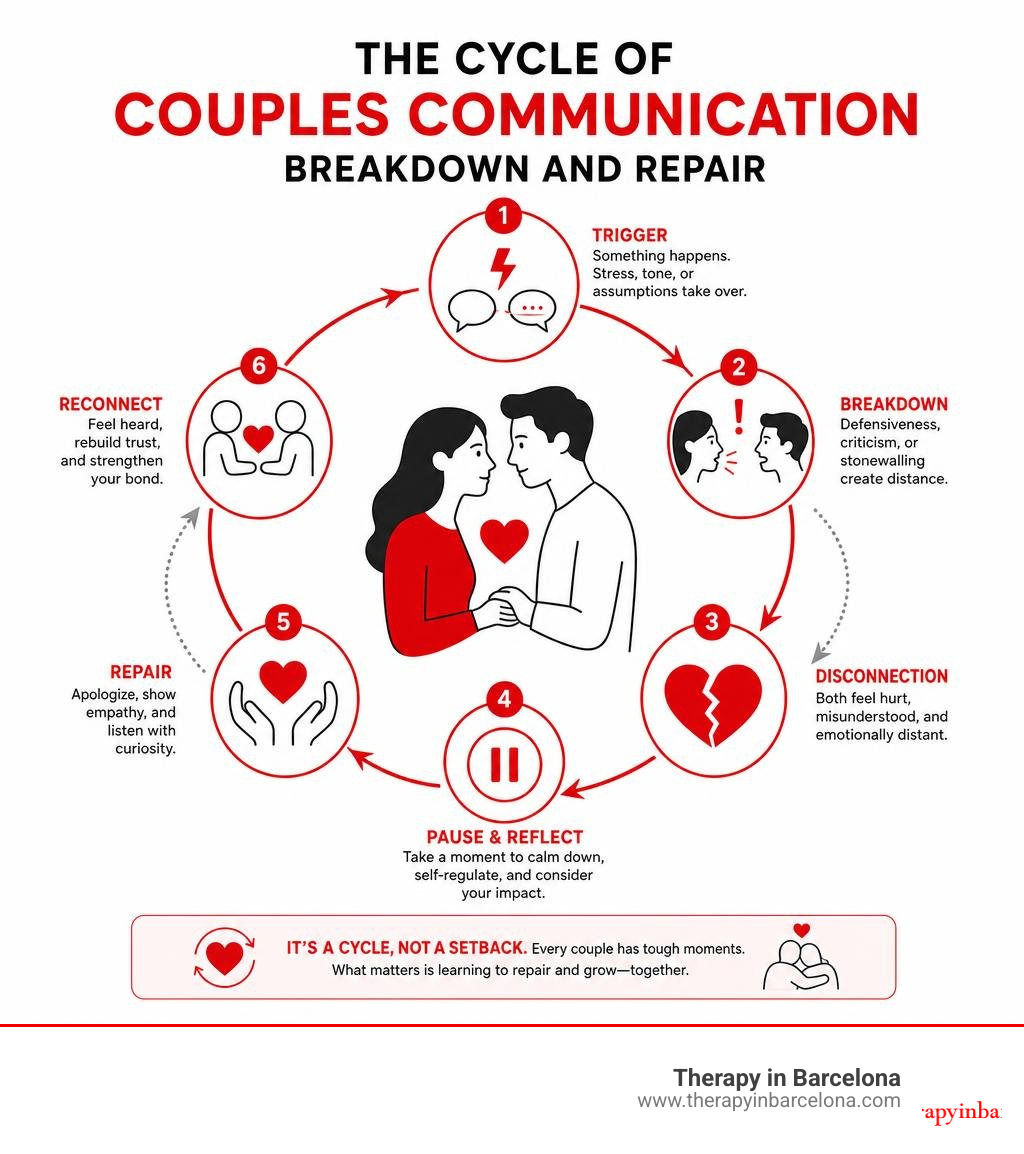
What is a Couples Communication Workshop and How Does It Work?
A couples communication workshop is fundamentally different from traditional couples therapy. While therapy often focuses on parsing through the historical roots of your conflicts, a workshop is highly educational and skills-based. Instead of analysing why you fight, a workshop shows you how to stop fighting in circles.
This proactive, educational format is designed to give you a shared vocabulary. Rather than sitting on a therapist’s couch and talking about your week, you sit together in a structured environment—either in person or online—and learn specific frameworks. Think of it as a masterclass for your relationship.
Many of the most effective workshops are grounded in decades of relationship science. They frequently draw from established therapeutic models:
- The Gottman Method: Based on over forty years of research with thousands of couples, this approach focuses on managing conflict, building trust, and fostering deep friendship.
- Imago Relationship Therapy: This model teaches couples to view conflict as an opportunity for growth, using structured dialogue to heal old emotional wounds and restore connection.
If you want to understand how these concepts translate into a therapeutic setting, you can read more about how professionals structure these dialogues in our guide to From Misunderstandings to Meaningful Conversations: A Guide to Couples Communication Therapy.
What to Expect in a Couples Communication Workshop
Many people hesitate to sign up for a workshop because they picture a group therapy session where they will be forced to share their deepest secrets with strangers. Thankfully, reputable workshops do not operate this way.
Instead, you can expect a mix of:
- Guided Instruction: A qualified facilitator explains a concept, illustrates it with examples, and demonstrates the tool.
- Private Practice: You and your partner turn to each other to practise the tool using your own relationship examples. In-person events often have spaced-out seating or private breakout rooms to ensure your conversations remain strictly confidential.
- Communication Labs: These are structured, hands-on exercises where you practise active listening, de-escalation, and expressing appreciation. The facilitator is usually on hand to offer quiet, one-on-one coaching if you get stuck.
To get a sense of the exact types of practice you might encounter, explore The Ultimate Guide to Couples Therapy Exercises for a Stronger Bond.
For those looking for a quick, focused dive, formats like a one-day couples communication workshop or a five-hour intensive session provide highly concentrated toolkits that fit easily into a busy schedule.
Who Benefits Most from a Couples Communication Workshop?
Workshops are not just for relationships in crisis. In fact, learning these skills when things are going well is often the best strategy.
- Engaged Couples and Newlyweds: Proactive skill-building helps you establish healthy habits before negative communication loops become deeply ingrained. Programmes specifically tailored for premarital or early marriage stages are excellent for this phase of life.
- Long-Term Partners: Couples married for decades often find that life changes—such as children leaving home or retirement—require them to rediscover each other.
- Busy Professionals: When work, family, and life admin take over, couples can easily drift into becoming “roommates.” A short, intensive weekend retreat or a half-day event offers a dedicated space to realign your goals.
The Core Benefits of a Couples Communication Workshop
The primary goal of any relationship workshop is to shift your dynamic from “you versus me” to “us versus the problem.” When you step away from your daily routine to focus entirely on your partnership, several key shifts happen.

1. Rebuilding Emotional Safety
When communication breaks down, partners often walk on eggshells, worried that any topic might trigger a massive argument. Workshops teach you how to create emotional safety. When you both know how to bring up difficult subjects without triggering defensiveness, you can finally talk about the “landmines” in your relationship.
2. Learning the Art of De-escalation
Arguments are inevitable, but escalation is optional. You will learn how to recognise when your body is entering a “fight-or-flight” state (somatic flooding) and how to take productive breaks. You’ll practise tools to slow down the conversation, manage urges to interrupt, and respond with curiosity instead of defense.
3. Fostering Deep Intimacy and Friendship
True intimacy relies on being seen, heard, and understood. Through structured exercises, you will learn to express genuine appreciation and turn toward each other’s emotional needs.
Simple shifts, such as learning how to use “I-statements” to express your feelings without assigning blame, can completely change the tone of your household. You can learn the practical mechanics of this tool in our article on How and When to Use I-Statements.
4. Aligning Your Shared Vision
Many couples spend years reacting to daily demands without ever discussing where they are heading. Many workshops incorporate vision-boarding or value-alignment exercises. This helps you map out a shared future, ensuring your individual hopes, dreams, and values are respected.
For those looking to explore these benefits in a structured format, options range from local events to comprehensive weekend packages or specialised couples workshops.
Addressing Expat Relationship Challenges in Spain
Living abroad is an incredible adventure, but it also acts as a pressure cooker for relationships. Whether you are living in Barcelona, Madrid, Valencia, Alicante, or Málaga, the expat experience introduces unique stressors that can strain even the strongest partnerships.

Consider a fictional composite example of a 34-year-old from the UK who moved to Spain with their partner for a new job opportunity, reflecting common challenges faced by international couples.
Back home, the couple had an established support network of family, friends, and colleagues. After relocating, that safety net disappeared. One partner was consumed by a demanding new role, while the other struggled with the language barrier, local bureaucracy, and unexpected feelings of isolation.
With no one else to lean on, they began expecting each other to be their sole source of emotional support, social connection, and practical help. Minor disagreements about the division of domestic tasks quickly escalated into bitter arguments about their decision to move. They felt like slightly hostile strangers living in a beautiful Spanish city.
This is where targeted relationship tools become essential. Expat couples must learn to:
- Navigate the “Mental Load”: Relocating involves endless logistics—from visas to finding apartments and schools. Workshops help couples share this load equitably.
- Manage Cultural Adjustment Stress: One partner may adapt faster than the other, leading to feelings of resentment or guilt.
- Build a Two-Person Team: When you are far from home, your partner is your primary teammate. Learning to support each other through vulnerability is crucial.
If you are currently experiencing these pressures, starting with small, daily changes can make a massive difference. Read our guide on 10 Small Couple Exercises That Have Big Results to start rebuilding your connection today.
Navigating Your Support Options in Spain
When expat couples realise they need support, they often struggle to know where to turn. Spain offers several pathways, but they vary significantly in their suitability for international couples.
Public Healthcare System
- What it is: The state-run medical system in Spain.
- The Reality: The public mental health system is overstretched, with long waiting lists, brief sessions, and few fluent English-speaking therapists specialising in couples communication.
Large Online Platforms
- What it is: Global, venture-backed therapy apps.
- The Reality: These platforms are convenient but often lack personalised matching, have high therapist turnover, and raise concerns about data privacy.
Local Spanish Practices
- What it is: Private clinics staffed by local psychologists.
- The Reality: Spain has many excellent therapists, but communicating complex emotions in a second language can be exhausting, and local therapists may not fully understand the unique challenges of expat life.
Therapy in Barcelona
- What it is: A specialised, private-pay group practice established in 2011.
- The Reality: We personally match you with qualified, psychology-trained expat therapists who understand relocation firsthand. We offer culturally sensitive, multilingual care with strict privacy and zero data selling.
For those looking to combine a vacation with relationship growth, Spain is also home to world-class retreats. You can explore options such as THE 10 BEST Retreats for Couples in Málaga for 2026 or THE 10 BEST Couples Retreats in Alicante for 2026 to find a relaxing environment to do this important work.
Frequently Asked Questions About Relationship Workshops
It is completely normal to have questions before signing up for a workshop. Here are the answers to the most common queries couples have.
For a deeper dive into how professional communication coaching can support your partnership, take a look at Talk It Out: Your Guide to Communication Therapy.
Will we have to share our private issues with the group?
No. This is the most common concern, and the answer is a resounding no. A high-quality couples communication workshop is an educational event, not group therapy.
You will attend with other couples, but all exercises remain private between you and your partner. The group is only for facilitator-led teaching and demonstrations.
If you are looking for local options, you can find similar highly private formats in major cities worldwide.
How do workshops differ from weekly couples therapy?
The main differences lie in structure, pace, and focus:
- Weekly Therapy: Typically meets for 50 to 60 minutes once a week. It is highly retrospective, focusing on your unique history, deep-seated emotional wounds, and weekly conflicts. It is a slow, steady process of healing.
- Workshops: These are intensive, forward-looking, and highly structured. Over a half-day or a weekend, you receive a concentrated dose of tools, frameworks, and practice sessions. It is designed to give you a rapid injection of skills to get your communication back on track quickly.
Many couples find that a workshop is an excellent catalyst. It can help you break a painful communication loop in a weekend, which you can then integrate and deepen through ongoing, weekly therapy.
Are these workshops inclusive of all relationship types?
Yes. Modern relationship workshops are designed to be inclusive and welcoming to all couples. Whether you are married, dating, LGBTQIA+, non-monogamous, or in an intercultural partnership, the fundamental laws of human connection and communication remain the same.
The focus is on how minds and bodies react to conflict, how to express needs clearly, and how to build emotional safety. These principles apply to all loving partnerships, regardless of their structure or orientation.
Moving Forward Together
At Therapy in Barcelona, we understand that relationship struggles can feel incredibly isolating, especially when you are living far from your original home. Since 2011, our practice—founded and managed by Leigh Matthews, an experienced Australian Psychologist and expat herself—has been a trusted sanctuary for the international community.
Leigh’s personal journey of navigating an intercultural marriage, adapting to life in Spain, and raising a family in a foreign country inspired her to build a team of highly qualified, empathetic expat professionals who truly understand your reality.
If your relationship is feeling strained, you do not have to navigate this alone. We provide a private-pay service with personalised therapist matching to ensure you work with a professional who fits your specific needs. Some of our therapists also offer sliding scale fees for those with financial need, which you are welcome to inquire about.
We offer face-to-face sessions at our central offices in Barcelona (located in the beautiful Eixample district) as well as online therapy worldwide (including the USA and Canada) for expats living in Madrid, Valencia, Alicante, Málaga, Marbella, or anywhere else in the world.
Whether you are looking to join a structured event or prefer the highly tailored focus of weekly sessions, our team is here to support you.
If you are ready to stop repeating the same arguments and start rebuilding your connection, explore our services for couples counselling in Barcelona.
If you’d like support, book a Free Discovery Call today. Let’s work together to help you and your partner feel seen, heard, and understood once again.
