


Is Your Relationship Losing Its Spark? Here’s What Couples Intimacy Counselling Can Do

Couples intimacy counselling is a specialised form of therapy that helps partners rebuild emotional closeness and physical connection when a relationship starts to feel distant, stuck, or strained. If your relationship feels more like a logistics operation than a loving partnership — managing work, kids, and daily life while quietly drifting apart — you’re far from alone.
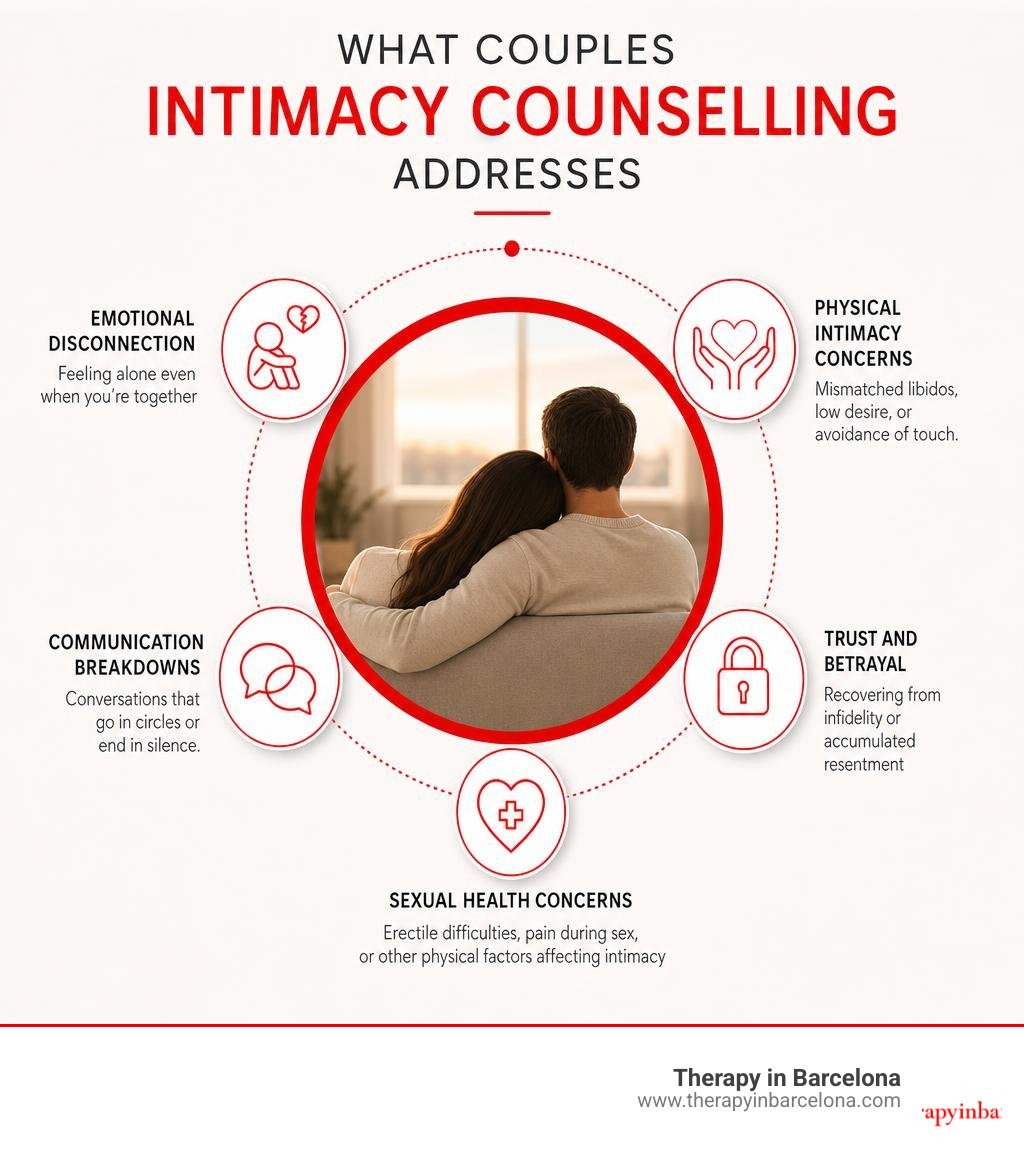
Here’s a quick overview of what intimacy counselling addresses:
- Emotional disconnection — feeling alone even when you’re with your partner
- Physical intimacy concerns — mismatched libidos, low desire, or avoidance of touch
- Communication breakdowns — conversations that go in circles or end in silence
- Trust and betrayal — recovering from infidelity or accumulated resentment
- Life transitions — relocation, career changes, becoming parents, or cultural adjustment
- Sexual health concerns — erectile difficulties, pain during sex, or other physical factors affecting intimacy
Research suggests that close to 60% of couples who seek therapy also present with a sexual concern. The encouraging news is that evidence-based couples therapy approaches can be highly effective. Approaches such as Emotionally Focused Therapy (EFT) or the Gottman Method — successfully meet their relationship goals.
For couples living abroad — in Barcelona, Valencia, or Madrid — the pressures of expat life can quietly compound these challenges. A move to a new country reshapes identity, strains routines, and can widen the gap between partners who are each coping in different ways.
For many international couples, relocating abroad can bring unexpected challenges. One partner may thrive in a new role and quickly build a sense of purpose and connection, while the other may struggle after leaving behind a career, support network, or familiar identity.
Over time, feelings of dependence, disconnection, resentment, or loneliness can begin to affect the relationship. These are common experiences for expat couples and are exactly the kinds of issues that intimacy counselling is designed to help address.
Modern relationships carry an enormous weight. Partners are often expected to be each other’s best friend, co-parent, lover, confidant, and emotional anchor — all at once. When that pressure builds without the right support, even deeply loving couples can find themselves struggling to reconnect.
What is Couples Intimacy Counselling and How Does It Work?
Many couples assume relationship therapy is only for resolving conflict. While communication and conflict resolution are important, couples intimacy counselling focuses on strengthening emotional and physical connection, helping partners move beyond the day-to-day and reconnect more deeply.
Intimacy is not a single, static feeling. It is a dynamic mix of emotional vulnerability, intellectual alignment, shared experiences, and physical affection. When one of these areas breaks down, the others often suffer. For instance, if you do not feel emotionally safe with your partner, it is very difficult to feel physically relaxed or sexually desire them.
In therapy, a trained professional helps you look beneath the surface of your daily interactions. Instead of simply talking about who did the washing up, you will explore the underlying communication patterns that cause you to pull apart. The process involves:
- Identifying your unique relationship blueprint and attachment styles.
- Recognising defensive strategies (like shutting down or criticising) that block closeness.
- Cultivating a shared language to express desires and fears without triggering defensiveness.
- Finding ways to rebuild both physical and emotional safety step-by-step.
By addressing the root causes of distance, couples intimacy counselling helps you shift from a state of co-managing life to truly sharing it. If you want to understand the different therapeutic routes available, you can explore more about discovering couples intimacy therapy options or look into professional relationship support to see how structured guidance can shift long-standing patterns.
Common Obstacles to Connection in Modern Relationships
Maintaining a close bond is challenging under normal circumstances, but modern life introduces specific pressures that can quietly erode a couple’s connection.

Mismatched Libidos and Sexual Desire
It is entirely normal for partners to experience different levels of sexual desire. However, mismatched libidos can easily lead to a painful cycle of pursuit and withdrawal. One partner feels rejected, while the other feels pressured, eventually causing both to avoid physical touch altogether to prevent awkwardness or disappointment.
Stress Languages and Burnout
We all react to stress differently. When overwhelmed, one partner might want to talk and seek comfort, while the other might withdraw to process silently. Without understanding these differences, couples often misinterpret each other’s coping mechanisms as a lack of love or support.
You can learn more about identifying these patterns in our guide on identifying stress languages for international couples.
The Expat Pressure Cooker
Living abroad can be exciting, but it often means leaving behind familiar support networks. Without nearby friends and family, partners may place greater emotional demands on each other, increasing the risk of disconnection, resentment, and relationship strain.
When you are dealing with these heavy adjustments, unresolved conflicts can easily build up, causing physical and emotional intimacy to fade. If you are noticing these signs in your relationship, reading about how therapy helps with intimacy issues can offer valuable perspective.
For those based in the Spanish capital, accessing specialised couples therapy in Madrid can provide targeted, local support to help you manage these unique life transitions together.
Rebuilding Connection Through Couples Intimacy Counselling
Rebuilding a relationship does not happen by accident; it requires a structured, evidence-based approach. In couples intimacy counselling, therapists draw on proven methods to help partners step out of destructive cycles and find their way back to each other.
Two of the most widely respected frameworks are the Gottman Method and Emotionally Focused Therapy (EFT):
- The Gottman Method focuses on building a strong “Relationship House” by strengthening friendship, managing conflict constructively, and creating shared meaning. It teaches practical skills to replace criticism and defensiveness with appreciation and curiosity.
- Emotionally Focused Therapy (EFT) is based on attachment theory. It helps partners identify their recurring “negative dance” (such as one partner pursuing while the other withdraws) and understand the deeper, vulnerable emotions driving those actions.
By working within these frameworks, systemic counselling helps couples see that the problem is not either individual, but rather the cycle they get caught in. This shift in perspective is incredibly freeing, allowing partners to collaborate against the cycle instead of fighting each other.
The success rates speak for themselves: 70-75% of couples experience significant, lasting improvements in relationship satisfaction when working with these research-backed methods. To understand how these clinical approaches translate into real-world change, you can read our detailed breakdown of how couples therapy works.
Practical Tools and Techniques Taught in Therapy
Therapy provides a safe environment to learn and practise new relational skills. Rather than just offering advice, a skilled therapist guides you through experiential exercises that you can eventually use independently at home.

These core techniques focus on rebuilding three essential pillars:
- Active Listening: Learning to listen to your partner with the sole intention of understanding their perspective, rather than preparing your defence or counter-argument.
- Creating Emotional Safety: Practising vulnerability by sharing soft emotions (like fear, sadness, or loneliness) instead of hard emotions (like anger or blame).
- Healthy Conflict Resolution: Developing strategies to de-escalate arguments before they spiral, allowing you to discuss difficult topics without damaging your bond.
At-Home Exercises in Couples Intimacy Counselling
To bridge the gap between therapy sessions and daily life, couples are often encouraged to practise gentle exercises at home. These might include:
- Sensate Focus: A structured series of touch exercises developed by Masters and Johnson. It temporarily removes the pressure of sexual performance, focusing instead on mindfulness, sensory awareness, and non-demand physical touch.
- Intentional Date Nights: Moving beyond logistics conversations to focus on play, novelty, and emotional connection.
- Daily Connection Rituals: Simple habits, such as a six-second hug or a brief appreciation check-in, to maintain a sense of closeness.
For practical steps you can start using today, take a look at our collection of simple intimacy exercises for every couple.
Rebuilding Trust and Safety After Betrayal
When a relationship has been fractured by infidelity, secrets, or broken promises, rebuilding safety requires a deeply intentional approach. Intimacy counselling provides a structured path for recovery by guiding couples through:
- Atonement: Creating space for the hurt partner to express their pain, and for the practising partner to offer genuine, non-defensive accountability.
- Attunement: Rebuilding a new foundation of transparency, honesty, and consistent actions.
- Attachment: Designing a new relationship blueprint that addresses the vulnerabilities of the past while looking forward.
Reclaiming closeness after betrayal is a gradual process, but with dedicated guidance, it is entirely possible to build a relationship that is stronger and more resilient than before. For deeper insights on this journey, explore upgrading your marriage intimacy.
Choosing the Right Path: Sex Therapy vs. General Counselling
When looking for professional support, it can be difficult to know whether to book a session for general couples counselling or seek out a specialised sex therapist. Understanding the differences can help you choose the most effective path forward.
To help you decide, here is a comparison of how these two approaches address relationship challenges:
General Couples Counselling
- Primary Focus: Communication, conflict resolution, co-parenting, life transitions, and overall emotional connection.
- How It Works: Helps partners identify relational cycles, improve daily communication, and resolve external stressors.
- Best Suited For: Couples who feel emotionally distant, argue frequently, or are managing major life changes (like relocation or career shifts) but do not have deep-seated sexual difficulties.
Specialised Sex Therapy
- Primary Focus: Sexual function, mismatched desire, physical intimacy, difficult past sexual experiences, and physical barriers to connection.
- How It Works: Integrates psychological support with physiological education, addressing specific sexual concerns directly and non-judgementally.
- Best Suited For: Couples where sexual issues are the primary source of distress, or where physical intimacy has completely stopped due to anxiety, pain, or medical conditions.
When to Seek Specialised Couples Intimacy Counselling
While general counselling is excellent for relational alignment, specialised sex therapy is highly recommended if you are experiencing specific concerns such as erectile difficulties, painful intercourse, or severe anxiety around physical touch.
Addressing these issues with a specialist helps untangle the emotional pressure from the physical experience, ensuring both partners feel supported and understood. To learn more about this specialised support, read about the benefits of sex therapy for couples.
Frequently Asked Questions about Intimacy Therapy
How long does intimacy counselling typically take?
There is no single timeline for therapy, as every couple’s journey is unique. Some couples experience a positive shift in their communication and connection within 6 to 12 sessions. For deeper challenges, such as recovering from infidelity or working through long-standing emotional disconnection, ongoing support over several months may be beneficial.
The goal of therapy is to equip you with practical tools so you can confidently maintain your progress long after the sessions end.
Is intimacy counselling suitable for LGBTQIA+ and non-monogamous couples?
Yes, absolutely. Modern intimacy counselling is designed to be inclusive, respectful, and supportive of all relationship structures, sexual orientations, and gender identities.
Whether you are in monogamous, consensually non-monogamous, polyamorous, or queer relationship dynamics, a qualified therapist provides a non-judgemental space tailored to your specific values and lifestyle.
Can we do intimacy counselling online?
Yes. Virtual sessions are highly effective and offer a flexible option for busy professionals, parents, or long-distance couples. Secure online platforms allow you to connect with a specialised therapist from the comfort of your own home, making it easier to fit consistent support into your routine.
This is particularly valuable for international expats who want to access English-speaking, culturally sensitive care regardless of where they are currently living.
Taking the Next Step in Your Relationship Journey
If your relationship has lost its spark, you do not have to wait for a crisis to seek support. Reaching out early is one of the most proactive steps you can take to protect and nurture your connection.
When considering your options, it is helpful to understand how different pathways compare:
- The Public Healthcare System: Often provides affordable mental health support, but waiting lists can be long, and access to specialised, English-speaking couples therapists may be limited.
- Large Global Platforms: Offer convenient, app-based matching, but may lack specialist expertise in expatriate challenges and can raise concerns around data privacy.
- Therapy in Barcelona: Since 2011, we have supported the international community with culturally sensitive therapy tailored to life abroad. We specialise in carefully matching clients with highly qualified, psychology-trained therapists who understand the unique challenges of expatriate life, while ensuring the highest standards of privacy and care.
We offer private-pay, highly confidential sessions both in-person at our central Barcelona offices in Eixample and online for expats worldwide. For those facing financial challenges, some of our therapists offer sliding-scale fees based on need.
If you are ready to rebuild your emotional safety and reignite your connection, we are here to support you.
Book a couples counselling session in Barcelona or schedule a Free Discovery Call today to find the perfect therapist match for your relationship.
