


Understanding the Gap: Being Alone vs. Feeling Lonely

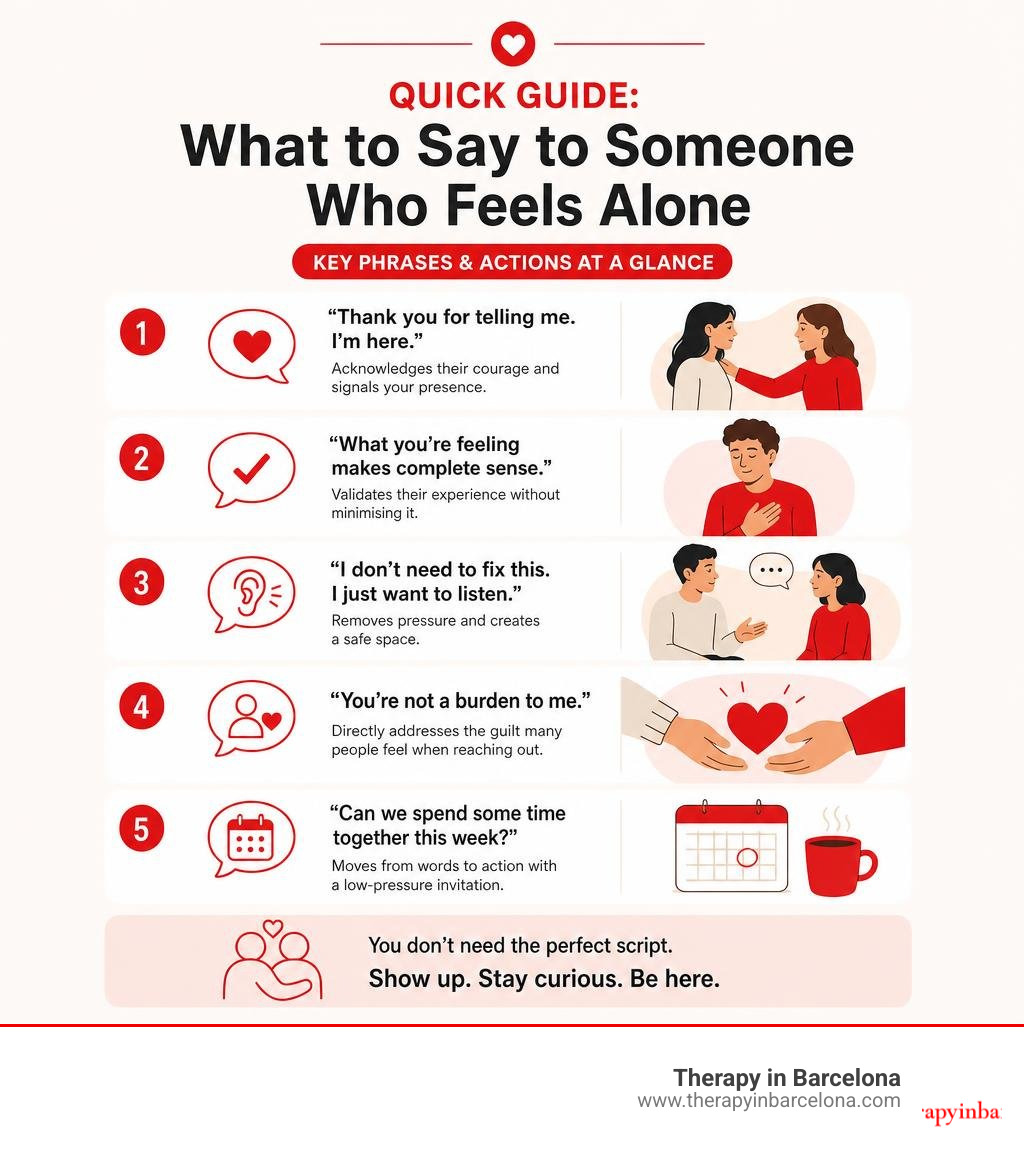
Knowing what to say to someone who feels alone can feel impossibly hard — but it matters more than most people realise. Here are the most important things you can say:
- “Thank you for telling me. I’m here.” — Acknowledges their courage in opening up and signals your presence without pressure.
- “What you’re feeling makes complete sense.” — Validates their experience without minimising it.
- “I don’t need to fix this. I just want to listen.” — Removes the expectation of solutions and creates a safe space.
- “You’re not a burden to me.” — Directly addresses the guilt many people feel when reaching out.
- “Can we spend some time together this week?” — Moves from words to action with a low-pressure, concrete invitation.
If someone has just told you they feel alone, you don’t need the perfect script. You need to show up, stay curious, and resist the urge to make the feeling disappear.
Loneliness is one of those emotions that quietly spreads. According to the U.S. Department of Health and Human Services, the United States declared a full epidemic of loneliness in 2023 — and in England alone, around 3 million people report feeling lonely often. Yet despite how common it is, most of us still freeze when someone we care about admits they’re struggling with it.
Loneliness doesn’t always look the way we expect. It can exist in a relationship, a busy workplace, or a crowded street in a new city. For many internationals adjusting to life in Barcelona, Valencia, or Madrid, it arrives quietly — even when life appears exciting from the outside.
We also often worry about saying the wrong thing, so we stay silent or offer reassurance that misses the mark. Comments like “you’ll be fine” or “at least you’ve got so much going for you” are well-intentioned but can leave someone feeling even more misunderstood.
This guide is here to help. Whether you’re supporting a friend, a partner, a family member, or a colleague, you’ll find practical language, real context, and clear guidance on what actually helps — and what to avoid.
Before choosing your words, it helps to understand what the person is actually experiencing. There is a profound difference between physical solitude and the subjective pain of loneliness.
Being alone is a physical state. It means there is no one else in the room. For many, this is a positive experience — a quiet evening to rest, read, or recharge. Solitude is often chosen and nourishing.
Feeling lonely, however, is a subjective emotional state. It is a form of “social hunger” — a painful gap between the relationships you have and the relationships you actually want. You can be surrounded by crowds of people, attend lively social events, or even be in a long-term relationship, and still feel deeply isolated.
This experience is common among many internationals. Life may look exciting from the outside, with new opportunities, regular contact with colleagues, and a social calendar that appears full.
Yet beneath the surface, many people find themselves missing the deep, emotionally intimate friendships and sense of belonging they left behind. While every situation is different, this struggle is a familiar part of adapting to life in a new culture.
When someone like says they feel alone, they are not asking for more names in their contact list. They are expressing a lack of meaningful, mutual connection. If you want to dive deeper into this feeling, you can read about the 10 things you’re feeling when you’re lonely to better understand the emotional landscape.
How to Spot the Quiet Signs of Isolation
Not everyone will find the courage to say, “I feel lonely.” In fact, because of the social stigma surrounding loneliness, many people go to great lengths to hide it. They might mask their isolation behind humour, a busy work schedule, or a constantly friendly demeanour.
To support someone, you must learn to notice the subtle shifts in their behaviour. Here are a few quiet indicators that someone might be struggling:
- Social withdrawal: They suddenly stop showing up to regular group chats, decline invitations they would normally accept, or become slow to reply to messages.
- Over-engagement with routine tasks: They might bury themselves in work, spending excessive hours at the office or focusing entirely on mundane chores to distract themselves from the quiet.
- Increased reliance on passive digital connection: Spending hours scrolling through social media or watching others connect online, which often worsens the comparison trap.
- Changes in communication style: Their texts might become unusually brief, or they might speak in a flat, monotone voice, sharing less about their personal life than usual.
- Physical symptoms: Unexplained fatigue, changes in sleep patterns, or a general drop in energy levels can all stem from prolonged social isolation.
If you notice these patterns, it is worth paying closer attention. Isolation can quietly feed into deeper mental health struggles. For a clearer picture of how these two experiences interact, you can explore whether isolation is fuelling depression.
What Do You Say to Someone Who Feels Alone?
When someone trusts you enough to share their loneliness, the moment is fragile. Your primary goal is not to solve their life, but to validate their reality.
Many of us reflexively try to “fix” the problem. We suggest clubs to join, apps to download, or tell them to “just get out more.” While well-intentioned, this approach can feel dismissive. It implies that their loneliness is a simple logistical problem they haven’t been smart enough to solve.
Instead, start with validation. According to relationship experts, the most important words you can say in a crisis are simply reassuring them they are not alone. You want to show them that you are willing to sit with them in the quiet, uncomfortable space of their feelings.
Here are a few ways to structure your response, depending on what they need:
- If they need immediate emotional comfort: “Thank you for sharing this with me. It takes a lot of courage to say it out loud, and I want you to know I’m right here with you.”
- If they feel like a burden: “You are not bringing me down, and you don’t have to put on a brave face for me. I value our connection, and I’m glad you reached out.”
- If they are feeling lost: “I hear you, and what you are going through sounds incredibly heavy. We don’t have to figure it all out today. Let’s just take it one step at a time.”
For more practical phrases and scripts, you can consult this extensive guide on how to support someone who is lonely or read through 150+ comforting things to say to someone who feels alone. If they have expressed feeling completely lost, you can find tailored advice on what to say when they feel lost and alone.
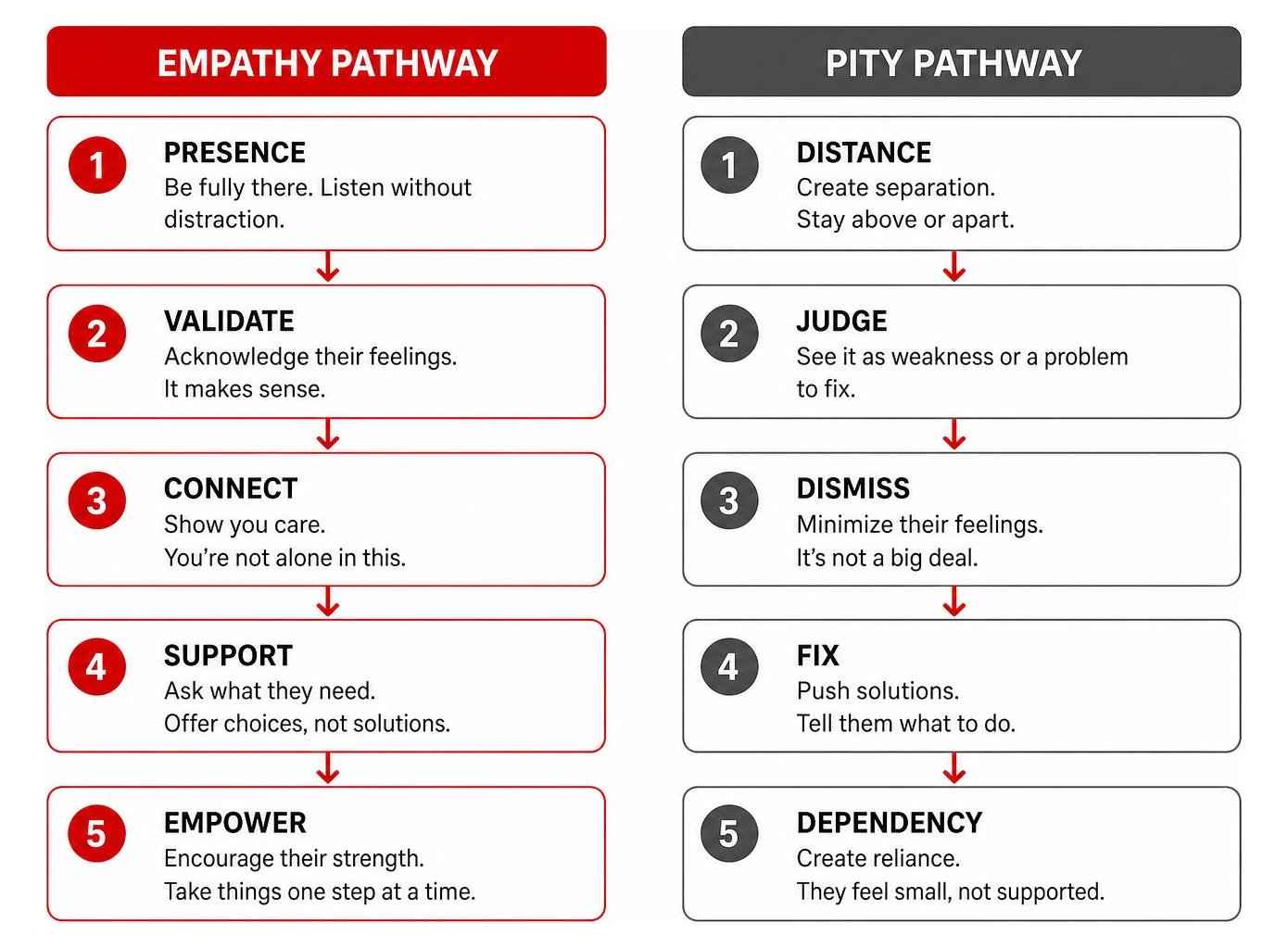
To help manage your own approach, keep this simple comparison in mind:
If you are looking for general strategies to help someone manage these feelings, our guide on how to manage loneliness and isolation offers excellent context.
What Do You Say to Someone Who Feels Alone Over Text?
In our digital-first world, many of these conversations happen on a screen. Texting can feel safer for someone who is struggling, as it allows them to compose their thoughts without the pressure of an immediate, face-to-face response. However, digital communication can also feel cold if your replies are generic or slow.

When someone texts you about feeling isolated, respond promptly and warmly. Keep your messages low-pressure, making it clear that they don’t have to write a long reply if they don’t have the energy.
Here are a few text-friendly options you can send:
- “Hey, I was just thinking about you today. No need to reply if you’re busy, but I wanted to send a little warmth your way.”
- “I’m so glad you texted me. I don’t have all the answers, but I’m always in your corner. Want me to call you, or would you prefer to just text?”
- “I’m free this evening if you want to chat. Even if you just want to send funny memes back and forth, I’m here.”
- “Just a quick reminder: you matter to me. I’m sending you a massive virtual hug today.”
What Do You Say to Someone Who Feels Alone After a Major Life Change?
Major life transitions are prime breeding grounds for acute loneliness. A painful breakup, the loss of a loved one, or relocating to a new country can instantly shatter a person’s established support network.
For expats moving to Spanish hubs like Madrid, Valencia, or Málaga, this isolation is often compounded by language barriers and cultural differences. The initial excitement of the “honeymoon phase” fades, leaving them face-to-face with the reality of building a life from scratch.
When supporting someone through a major transition, acknowledge the specific weight of their change:
- After a breakup: Avoid saying “there are plenty of fish in the sea.” Instead, try: “It is completely natural to feel a massive void right now. You lost a partner and a routine. I’m here to help you rebuild, slowly.”
- After a loss: “I can’t imagine how quiet the house feels right now. I don’t expect you to be ‘over’ this. I’m here to sit with you in the quiet.”
- After relocating abroad: “Moving to a new city like Valencia is incredibly brave, but it is also exhausting. It takes time to find your people. Let’s do a video call this week so you can speak your native language and vent.”
If they are struggling to find their footing, you can share these 33 reminders for when you’re feeling lonely or explore our guide on how to stop feeling lonely and depressed.
What to Avoid Saying to Someone Experiencing Loneliness
Sometimes, our desire to comfort others leads us to say things that actually increase their sense of isolation. When someone shares their pain, they want to be heard, not managed.
Here are the most common conversational traps to avoid:
- Toxic positivity: Telling someone to “look on the bright side” or “just focus on the good things.” This teaches them that their difficult emotions are unacceptable to you.
- Minimising their reality: Saying “everyone feels lonely sometimes” or “you have so many friends, how can you be lonely?” This invalidates their subjective experience and makes them feel guilty for struggling.
- Pity instead of empathy: Responding with pity can feel patronising and create distance. Empathy, by contrast, means meeting someone where they are and connecting with them as an equal.
- Unsolicited advice: Launching into a checklist of solutions before they have had a chance to fully express themselves.
Instead of trying to fix the feeling immediately, focus on simple presence. For practical tips on how to handle these moments constructively, read our advice on 7 ways to stop feeling lonely.
Tailoring Your Response: Friends, Partners, and Coworkers
The way you respond should always respect the boundaries of your relationship. You wouldn’t support a casual colleague the same way you would a romantic partner or a lifelong friend.

- For close friends: You can be direct and highly personal. Offer consistent, practical check-ins. Say things like, “I’ve noticed you’ve been a bit quiet lately. I love you, and I’m here whenever you’re ready to talk.”
- For romantic partners: Loneliness within a relationship can be especially painful. If your partner shares this feeling, try not to get defensive. Instead, acknowledge it and focus on reconnecting: “Thank you for telling me. Let’s find ways to spend more meaningful time together.”
- For coworkers: Offer genuine warmth while maintaining professional boundaries, especially in remote work settings. A simple acknowledgement such as, “I know remote work can feel isolating at times. If you’d like to chat outside of work, I’d be happy to,” can help someone feel more connected.
Practical Actions to Ease the Weight of Isolation
Words are a powerful foundation, but they often need to be backed up by action. When someone is deeply lonely, they often lack the emotional energy to initiate social contact. You can make a massive difference by taking the lead and proposing low-pressure, concrete activities.
Here are a few practical actions you can take:
- Propose “side-by-side” activities: Sitting face-to-face across a table can feel like an interview. Instead, suggest walking through a park, visiting a museum, or working quietly next to each other in a local library. This takes the pressure off constant conversation.
- Send a small, thoughtful gesture: A playlist of their favourite songs, a book you think they’d enjoy, or a quick postcard can remind them that they exist in your thoughts even when you aren’t together.
- Include them in casual routines: Invite them to join you for everyday tasks. “I’m running some errands and grabbing groceries this afternoon — want to tag along?” This feels less high-stakes than a formal dinner invitation.
- Help them find local community: If they are new to Spain, encourage them to explore local interest groups. Our guide on creating a sense of belonging abroad offers excellent starting points, and you can also share tips on making friends abroad.
For more ideas on how to support a peer, the Young Scot guide on helping someone who is lonely provides highly accessible strategies.
Moving Forward: Ongoing Support and Professional Guidance
Loneliness is rarely solved in a single conversation. It requires consistent, ongoing connection to slowly rebuild a person’s sense of safety and belonging. Check in a few days after they open up, and keep showing up even if they occasionally decline your invitations.
However, it is also important to recognise the limits of your support. If someone has been experiencing deep, chronic loneliness for months, if they are showing signs of feeling persistently down, unmotivated, or overwhelmed, or if they are withdrawing entirely from life, they may need professional mental health support.
You can gently plant the seed by saying: “I love supporting you, but I want you to have all the resources you deserve. Have you ever thought about speaking to a professional who specialises in helping people navigate these transitions?”
If you are worried that they are in immediate distress or experiencing suicidal thoughts, please guide them toward crisis resources.
Navigating the Alternatives for Mental Health Support
When looking for professional support, it helps to understand the different avenues available. Here is a straightforward comparison of the options internationals typically navigate in Spain:
Public Healthcare Systems
- How it works: Accessing local public mental health services (such as the CatSalut system in Catalonia).
- Pros & Cons: It is highly cost-effective as it is publicly funded. However, it often involves long waiting lists, strict regional boundaries, and significant language barriers if you do not speak fluent Spanish or Catalan.
Large Digital Therapy Platforms
- How it works: Global, venture-backed apps that use automated algorithms to match users with available online practitioners worldwide.
- Pros & Cons: These platforms are accessible and convenient, but often rely on automated matching, may lack expat-specific cultural understanding, and can raise concerns about data privacy.
Bespoke Private Practice (Therapy in Barcelona)
- How it works: Personalised, culturally sensitive therapy tailored specifically for the English-speaking international community.
- Our Differentiators: We offer human-led therapist matching, experienced expat therapists, strict privacy, and flexible online and in-person sessions in Barcelona. Sliding-scale fees are available with select therapists.
Frequently Asked Questions About Supporting Someone Who Feels Lonely
How can I help someone who is lonely but refuses to talk?
If someone isn’t ready to talk, don’t push. Offer gentle, low-pressure support through a message, a walk, or simply letting them know you’re there when they’re ready.
Is loneliness a mental health condition?
No, loneliness is not a mental health condition. It is a natural human signal that our need for connection is not being met. However, when it becomes chronic, it can contribute to challenges such as anxiety, low mood, and reduced self-esteem.
How do I support a friend who has just moved to a new city like Madrid or Barcelona?
Help them bridge the gap between their old life and their new home. You can encourage them to maintain regular video calls with loved ones back home while slowly exploring their new environment. Suggest local expat communities, language exchanges, or hobby classes.
Most importantly, validate the fact that cultural adaptation takes time and that feeling lonely during the first few months is a completely normal part of the expat journey.
Supporting Someone Who Feels Alone
At its core, supporting someone who feels alone is not about having perfect answers or solving their logistical problems. It is about human presence. By offering validation, checking in consistently, and resisting the urge to dismiss their pain with quick fixes, you can help them feel seen, heard, and valued.
If you or someone you care about is struggling to find a sense of belonging abroad, you don’t have to navigate it alone.
Therapy in Barcelona was founded in 2011 by Leigh Matthews, an Australian Psychologist and expat herself, who recognised the profound need for culturally sensitive, English-speaking mental health care for the international community.
With over 20 years of clinical experience — including 14 years dedicated to supporting internationals in Spain — Leigh has built a collaborative team of trusted professionals committed to walking alongside you.
If you’d like support, book a Free Discovery Call today to find your personalised therapist match. We offer in-person sessions at our welcoming Eixample offices in Barcelona, as well as online therapy worldwide.
