


Why Expats in Alicante Struggle to Find the Right Mental Health Support

Counselling for internationals in Alicante is more accessible than many expats realise — but knowing where to start can feel overwhelming, especially when you’re already stretched thin from the demands of building a new life abroad.
Here is a quick overview of what is available and how to access it:
- English-speaking therapy: Online and in-person counselling is available in English for expats, digital nomads, families, and couples living in Alicante.
- Who it helps: Expat adults, international couples, expatriate families, remote workers, retirees, and international students.
- Common issues addressed: Feeling anxious, persistently down, lonely, adjusting to a new culture, burnout, relationship strain, identity shifts, and grief.
- How to find a therapist: Through specialist expat therapy platforms, international directories, or services like Therapy in Barcelona that offer personalised matching and online sessions across Spain.
- Formats available: Online therapy (flexible, accessible from anywhere) and in-person sessions depending on the provider.
- Cost: This is a private-pay service. Some therapists offer sliding scale fees for those with financial need — you can ask about this when you enquire.
- First step: Most providers offer a free initial call so you can assess fit before committing.
Alicante is an easy city to fall in love with. The light is generous, the pace is liveable, and the coastline does something good for the soul.
Many internationals arrive with genuine excitement — and that excitement is real. But once the practicalities settle, once the novelty fades and the bureaucracy kicks in, a quieter set of feelings often surfaces.
Feeling anxious, flat, or disconnected is hard to name when everything around you looks fine.
That experience is more common than it might seem. Loneliness can exist in plain sight in a lively city. Feeling persistently down does not always look dramatic — sometimes it just feels like exhaustion, or like going through the motions of a life you worked hard to build.
And yet many expats in Alicante wait a long time before seeking support, often because they are not sure where to look, or because they feel they should be managing better.
This guide is here to change that. Whether you have just arrived or have been in Alicante for years, whether you are navigating feelings of worry on your own or working through something with a partner or family, there is support available — and finding it does not have to be complicated.
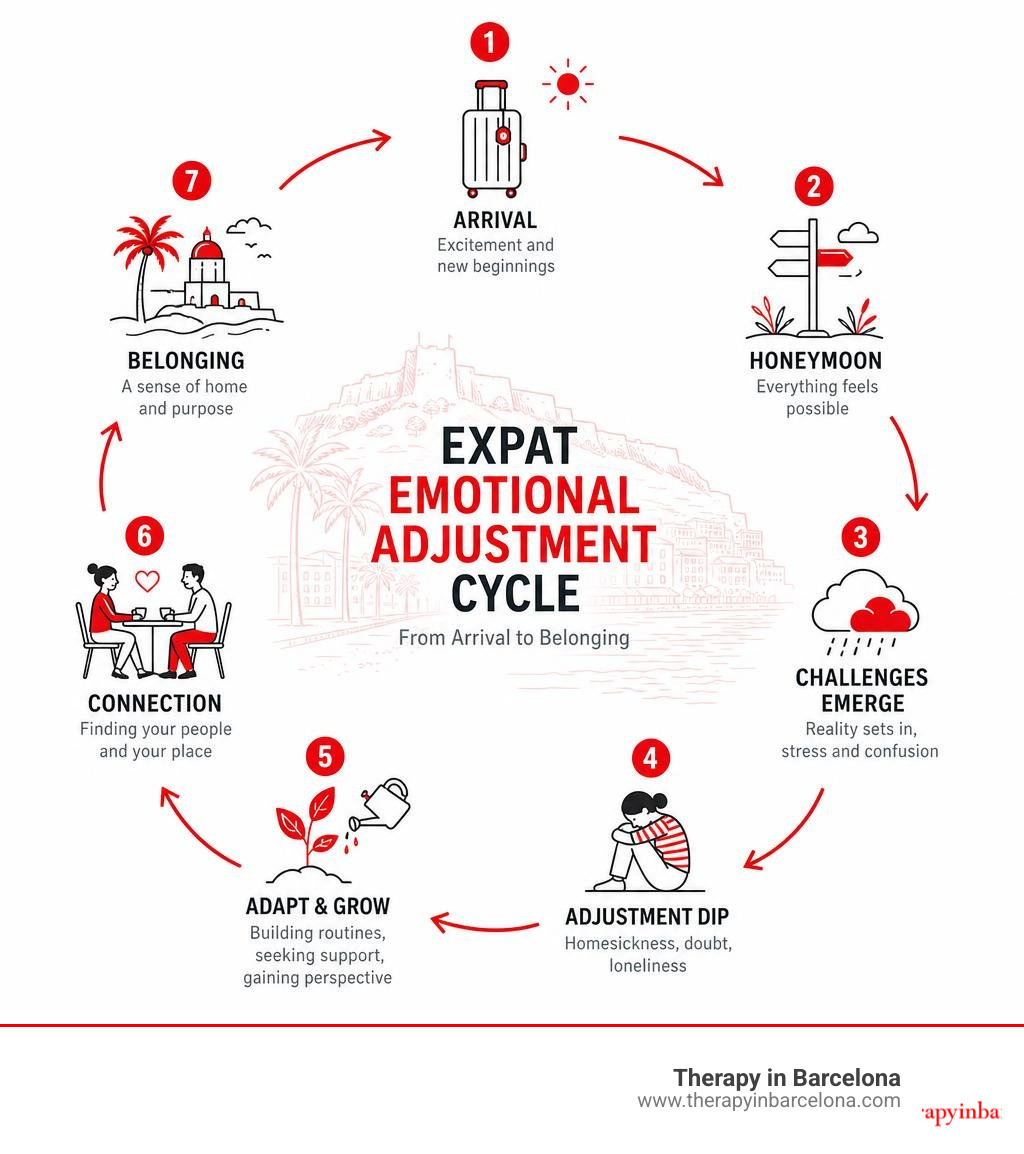
Counselling for Internationals Alicante: Why Expats Struggle in the Sun

Moving to the Costa Blanca is often framed as the ultimate lifestyle upgrade. We picture long afternoons by the Mediterranean, relaxed tapas dinners, and a slower, healthier pace of life. Yet, the reality of relocating to a new country is rarely a seamless transition.
For many internationals, the sun-drenched backdrop of Alicante can actually make emotional struggles feel more isolating. When you are surrounded by holidaymakers and palm trees, it is easy to feel that you have no right to feel down, anxious, or lonely.
This psychological mismatch makes expat life uniquely challenging. After the busy first months of finding housing, opening bank accounts, and handling paperwork, the emotional impact of relocation often begins to emerge.
Without your usual support networks, familiar routines, and cultural touchpoints, minor setbacks can feel like major crises. This vulnerability is explored deeply in our guide on The Hidden Challenges of Expats in Spain: Why Many Don’t Last and How to Thrive Living Abroad, which looks at the psychological shifts that occur after the “honeymoon phase” of moving abroad fades.
The Reality Behind the Postcard
Underneath the postcard-perfect lifestyle, many internationals in Alicante find themselves dealing with silent struggles:
- Expat Burnout: The cognitive load of constantly translating, adapting, and problem-solving in an unfamiliar environment can lead to a state of chronic exhaustion.
- Anxiety and Low Mood: Language barriers, career disruptions, and the pressure to “live the dream” can trigger persistent worry, overthinking, and feelings of flatness.
- Identity Loss: When you leave behind your professional network, your social status, and your daily habits, it is common to ask, “Who am I when I am away from everything that used to define me?”
- Relationship Strain: Relocating as a couple can expose existing fault lines. Without external support systems, partners often rely solely on each other for emotional validation, creating an unsustainable dynamic.
Understanding that these feelings are a normal response to an abnormal amount of change is the first step toward healing. You can read more about navigating these emotional waves in our comprehensive resource, Thriving Abroad: A Guide to Expat Mental Health.
Tailored Counselling for Internationals Alicante
Why is generic therapy often not enough for expats? Many local mental health services, while highly professional, are built around the cultural and linguistic assumptions of the host country.
For an international resident, having to translate your deepest vulnerabilities into a second language can feel like an exhausting barrier. Emotional expression is deeply tied to our primary language; it is where our nuances, humour, and early memories live.
Furthermore, therapists without cross-cultural experience may not fully understand the grief of leaving home, the challenges of bicultural relationships, or the stress of Spanish residency. Specialised counselling for internationals in Alicante ensures your therapist understands these realities.
Rather than pathologising your struggles, an expat-focused practitioner recognises them as natural responses to cultural transition. For practical strategies on managing these specific transitions, see An Essential Guide to Navigating Expat Life Challenges.
Effective Therapy Approaches for Expats and Digital Nomads

Therapy is not a one-size-fits-all process. Different psychological approaches offer different tools, and the right method depends entirely on what you are experiencing. For internationals navigating the fluid, often rootless nature of expat or digital nomad life, certain evidence-based therapies are particularly effective.
At Therapy in Barcelona, our practitioners utilise a blend of these modern modalities to help clients find their footing. To understand how these approaches are structured for life on the move, you can read Mental Health on the Move: A Guide to Expat Counseling.
Addressing Anxiety and Low Mood Abroad
When feelings of worry and low mood manifest in an expat context, they often present as nervous system dysregulation or existential confusion. Here are some of the most effective approaches used to address these struggles:
- Cognitive Behavioural Therapy (CBT): This approach helps you identify and challenge the unhelpful thought patterns that fuel worry—such as catastrophising about your ability to adapt to Spain or overthinking social interactions.
- Acceptance and Commitment Therapy (ACT): ACT is highly effective for expats because it focuses on accepting difficult emotions rather than fighting them, while helping you clarify your core values so you can build a meaningful life in your new home.
- Internal Family Systems (IFS): IFS views the mind as made up of different “parts” (such as a protective part that wants to keep you safe by isolating, or a critical part that blames you for feeling unhappy). It helps you understand these internal dynamics with compassion.
- Somatic Therapy and Nervous System Regulation: Moving countries can keep your body in a state of high alert. Somatic approaches help you release physical tension and calm your nervous system, allowing you to feel safe in your body even when your external environment is unfamiliar.
- Logotherapy and Existential Support: Relocation often triggers questions of meaning and purpose. Logotherapy helps you find personal significance and direction amidst career changes or identity shifts.
For a broader look at how regional transitions and mental health intersect across Spain—from the Mediterranean coast of Alicante to the bustling hubs of the north—explore From Andalucia to Valencia: A Comprehensive Guide to Expat Mental Health in Spain.
Support for Couples and Families
Relocating is a major life transition that impacts the entire family unit. International couples often face unique challenges, especially in bicultural partnerships where different cultural expectations around family obligations, parenting, and communication can clash.
To support these relationships, couples therapy often incorporates the Gottman Method or Imago Relationship Therapy, focusing on breaking cycles of conflict, improving active listening, and rebuilding intimacy.
Expatriate families also have to support children and teenagers as they navigate new school systems and social environments.
These young people, often referred to as Third Culture Kids (TCKs), can experience a complex mix of grief for the friends left behind and anxiety about fitting into a new culture. Providing a safe space for them to process these transitions is vital for the wellbeing of the whole family.
If you are planning or navigating a family relocation, our guide, Spain Awaits: A Comprehensive Guide to Your Move, offers valuable insights into managing these family transitions smoothly.
How to Find an English-Speaking Therapist in Spain
Finding a therapist who speaks your language and understands your cultural background is crucial for successful therapy. However, navigating the mental health landscape in a foreign country can feel like a maze.
For a detailed roadmap on how to start this search, read our guide on Finding an English Speaking Therapist in Spain.
Comparing Your Therapy Options in Alicante
When looking for mental health support in Alicante, you have several different pathways. Each option has its own advantages and limitations, and understanding these can help you make an informed choice.
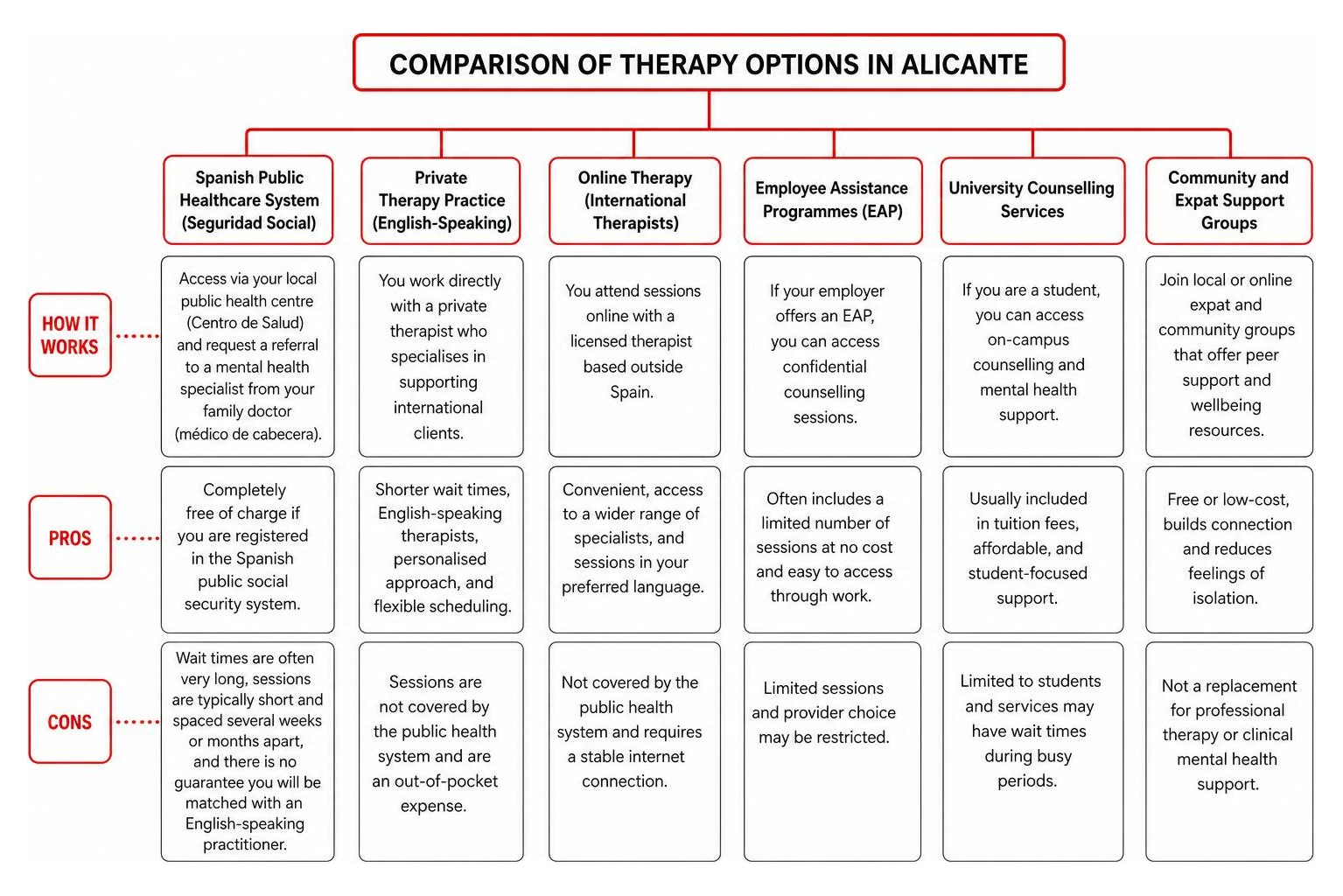
The Spanish Public Healthcare System (Seguridad Social)
- How it works: You access this system by visiting your local public health centre (Centro de Salud) and requesting a referral to a specialist from your family doctor (médico de cabecera).
- Pros: It is completely free of charge if you are registered in the Spanish public social security system.
- Cons: Wait times are often very long, sessions are typically short and spaced several weeks or months apart, and there is no guarantee you will be matched with an English-speaking practitioner.
Local Private Practices in Alicante
- How it works: You search for independent psychologists or clinics operating within the Alicante province and book sessions directly.
- Pros: Offers the possibility of face-to-face, in-person sessions in your local area.
- Cons: Highly limited availability of fully qualified, native-level English-speaking therapists who specialise in expat-specific issues.
Large Online Therapy Platforms
- How it works: Global directory sites match you with therapists worldwide based on a basic questionnaire.
- Pros: High availability of therapists and flexible scheduling.
- Cons: Often relies on automated algorithms rather than human matching. Many of these platforms use subscription models, do not vet for specific expat-lived experience, and may sell or share your personal data.
Bespoke Matching Services (Therapy in Barcelona)
- How it works: A dedicated, human-led intake team reviews your specific goals, preferences, and challenges, and hand-picks the most suitable therapist from a curated team of qualified expat professionals.
- Pros: Highly personalised matching, strict privacy standards (we never sell your data), and therapists who are themselves psychology-trained expats offering culturally sensitive support in your native language.
- Cons: This is a private-pay service and is not covered by the Spanish public healthcare system. Invoices can be provided for insurance claims, but reimbursement cannot be guaranteed. Some therapists may also offer sliding-scale fees.
What to Look For in a Qualified Practitioner
When choosing a therapist, it is important to look beyond just language fluency. To ensure you receive safe, ethical, and high-quality care, consider the following credentials:
- Psychology Training: Ensure your practitioner holds a university degree in psychology or counselling from a recognised institution.
- Professional Accreditation: Look for therapists registered with professional bodies, such as the Colegio Oficial de Psicología (COP) in Spain, or equivalent national registries in their home countries (e.g., BACP in the UK).
- Expat Lived Experience: A therapist who has personally navigated the challenges of living abroad will have a deeper, more intuitive understanding of your struggles.
- Clear Ethics and Confidentiality: Your therapist should clearly explain their confidentiality policies and ethical standards from your very first session.
If you are looking to explore other regional resources, you can also search for certified English-speaking therapists in other major hubs across Spain, such as Madrid, Las Palmas de Gran Canaria, Málaga, or Marbella.
Choosing Between Online and In-Person Therapy
One of the most common decisions expats face is whether to seek in-person therapy in their local area or opt for online sessions. Both formats are highly effective, but they suit different lifestyles and needs.
How Online Counselling for Internationals Alicante Bridges the Gap
For many internationals living in Alicante, online therapy is not just a convenient alternative—it is often the most practical way to access high-quality, specialised care. Here is why online sessions have become the preferred choice for many expats and digital nomads:
- Access to Specialists: Rather than limiting your search to the small pool of English-speaking therapists physically located in Alicante, online therapy allows you to connect with highly specialised expat therapists based anywhere in Spain or globally.
- Consistency While Travelling: If you travel frequently for work, return home to visit family, or lead a location-independent lifestyle, online therapy ensures you can maintain your weekly sessions without interruption.
- Comfort and Privacy: Speaking about deeply personal issues from the comfort and safety of your own home can make it easier to open up. It also eliminates the stress of commuting to an office in an unfamiliar city.
- Flexible Matching: Online platforms make it much easier to match you with a therapist who truly fits your personality and therapeutic goals, rather than settling for whoever happens to have an office nearby.
At Therapy in Barcelona, we provide professional online therapy services to expats worldwide, ensuring you have access to consistent, culturally sensitive support no matter where your journey takes you.
Frequently Asked Questions about Expat Therapy in Alicante
How do I know if my therapist is properly qualified in Spain?
In Spain, psychologists should hold a recognised psychology degree and be registered with the relevant professional body. At Therapy in Barcelona, all therapists are fully qualified, professionally registered, and experienced in supporting the international community.
Can I get therapy in languages other than English?
Yes. Many international therapy teams are multilingual.
At Therapy in Barcelona, we offer therapy in English, and several of our therapists also speak other languages, including German, French, Spanish, Afrikaans, Portuguese, Austrian-German, and Swiss-German.
Being able to speak in the language that feels most emotionally natural to you is incredibly supportive for the therapeutic process.
Is online therapy as effective as face-to-face sessions?
Yes, research has shown that online therapy, also known as teletherapy, can be effective for many common mental health struggles, including feelings of worry, low mood, stress, and relationship issues.
The American Psychological Association notes that telepsychology can offer meaningful access to care when delivered ethically and securely.
The success of therapy relies heavily on the “therapeutic alliance” – the relationship and trust you build with your therapist. For many expats in Alicante, that connection can be established just as deeply over a secure video connection, especially when the therapist understands international life and speaks the language you feel most comfortable using.
Finding Your Path Forward with Therapy in Barcelona
Building a life in Alicante is a beautiful, brave endeavour, but it is completely normal to need support along the way. You do not have to navigate the quiet struggles of relocation, anxiety, or loneliness on your own.
Therapy in Barcelona was founded in 2011 by Leigh Matthews, an Australian trained and registered psychologist who experienced the challenges of moving to Spain firsthand.
Recognising how difficult it was to find high-quality, English-speaking mental health support that truly understood the foreign experience, Leigh built a dedicated sanctuary of expat professionals to support the international community.
Today, our team of highly qualified, psychology-trained therapists offers compassionate, evidence-based care tailored to your unique journey. We work with adults, couples, teenagers, and families, providing online therapy across Spain and face-to-face sessions in our Barcelona office.
If you are ready to take the first step toward feeling more grounded, connected, and at home in your life abroad, we are here to support you.
If you’d like support, book a Free Discovery Call today to get matched with the right therapist for your needs.
